
 Worksheets
Radiator Standards Quiz
Total questions: 53
Worksheet time: 27mins
In what year did the BS EN 442 specification for radiators and convectors replace BS 3528 in the UK?
1996
1997
1995
1998
From which date did all radiators manufactured in Europe need to conform to the European standard BS EN 442?
1 July 1997
1 January 1997
1 July 1996
1 January 1996
What percentage of heat is convected in modern panel radiators?
85%
50%
70%
95%
What is the primary function of the fins on the back of a panel radiator?
To radiate heat
To create convection currents
To cool the radiator
To increase water flow
What is the recommended minimum distance for fitting radiators from the floor?
100mm
150mm
200mm
250mm
Which radiator connection method is considered the most efficient but can look unsightly?
Top – bottom – same end (TBSE)
Top – bottom – opposite ends (TBOE)
Bottom – bottom – opposite ends (BBOE)
Top – top – same end (TTSE)
Which radiator connection method is rarely found except on some one-pipe systems?
Top – bottom – opposite ends (TBOE)
Bottom – bottom – opposite ends (BBOE)
Top – bottom – same end (TBSE)
Top – top – opposite ends (TTOE)
What is the usual and most common method to pipe radiators, showing little pipework?
Top – bottom – opposite ends (TBOE)
Top – bottom – same end (TBSE)
Bottom – bottom – opposite ends (BBOE)
Bottom – top – same end (BTSE)
Which type of heat emitter is most common with factory-fitted grills?
Seam top
Compact
Rolled top
Flat top
What is the height range supplied by manufacturers for radiators?
200–800mm
300–900mm
400–1000mm
500–1100mm
Which type of heat emitter is described as the least popular and older type?
Seam top
Compact
Rolled top
Flat top
What is the starting length for radiators supplied by manufacturers?
200mm
300mm
400mm
500mm
What is the primary purpose of a kick-space heater?
To cool down a room
To blow warm air into a room
To provide lighting
To filter air
Where are kick-space heaters typically installed?
On the ceiling
Under the kitchen unit or vanity unit
In the middle of the room
Outside the building
Kick-space heaters are designed for rooms with what kind of wall space?
Large wall space
Limited wall space
No wall space
Outdoor spaces
What is the primary function of the fins attached to the copper heat exchanger in a fan convector?
To increase the surface area for heat exchange
To decrease the weight of the unit
To improve the aesthetic design
To reduce noise levels
What component is installed below the heat exchanger in a fan convector?
A low volume electric fan
A water pump
A thermostat
A cooling coil
How do fan convectors heat up large areas quickly?
By using a high-speed fan
By having a large number of fins
By operating with a heat exchanger and fan
By using solar power
What type of heat exchanger does a skirting convector use?
Finned copper heat exchanger
Plate heat exchanger
Shell and tube heat exchanger
Air-cooled heat exchanger
What is the main disadvantage of a skirting convector?
High energy consumption
Dust can block the fins and stall the convection current
Requires frequent maintenance
Difficult to install
Where is a skirting convector typically installed?
On the ceiling
Around a room instead of skirting boards
In the center of the room
Under the floor
What material were traditional column radiators primarily made from?
Steel
Aluminum
Cast iron
Copper
What is the relationship between the number of columns in a radiator and its heat output?
More columns, less heat output
More columns, greater heat output
Fewer columns, greater heat output
Number of columns does not affect heat output
Which materials are modern column radiators made from?
Steel and aluminum
Copper and brass
Plastic and rubber
Wood and glass
What was the original purpose of designing low-surface-temperature radiators (LSTs)?
To reduce energy consumption in homes
To prevent surface temperatures from exceeding 43°C
To improve the aesthetic design of radiators
To increase the heating efficiency in large buildings
Which organization were LSTs originally designed for?
The Red Cross
The World Health Organization
The NHS (National Health Service)
The United Nations
In addition to the NHS, where else were the regulations for LSTs adopted?
High schools and universities
Nurseries, primary schools, and homes for the elderly
Office buildings and shopping malls
Sports facilities and gyms
What are the possible uses for towel rails?
Only in a wet central heating system
Only with an electrical element
In a wet central heating system or independently with an electrical element
Only as a decorative piece
Which of the following is a style that towel rails can come in?
Inverted radiator
Spiral coil
Flat panel
Wooden frame
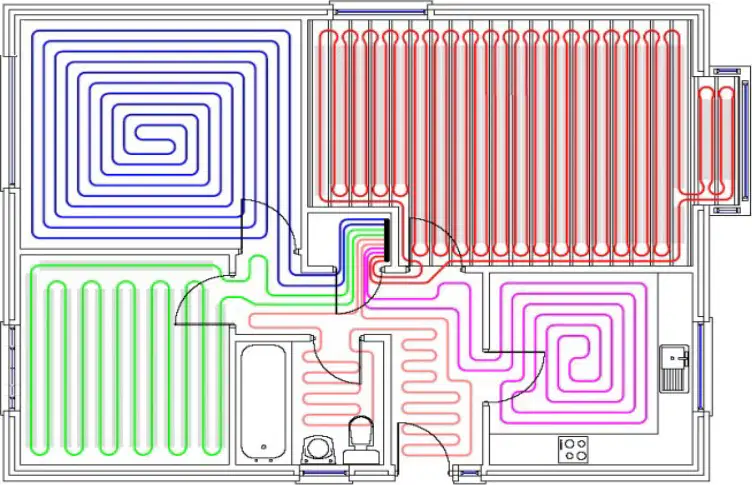
How does under-floor heating differ from conventional heat emitters?
It uses radiators to emit heat.
The floor itself becomes the heat emitter.
It requires external heaters.
It uses ceiling panels to emit heat.
What is one of the main reasons for the growing popularity of under-floor heating systems?
High maintenance requirements
Limited flexibility
Comfort and economy
High installation costs
What is the minimum temperature required at the manifold for under-floor heating systems?
40°C
55°C
65°C
75°C
What temperature can be used via a ground source for under-floor heating systems?
30°C
40°C
50°C
60°C
What is the primary function of the manifold in an under-floor heating system?
To cool the water
To blend and distribute the heated water
To increase the water pressure
To filter impurities from the water
What is the approximate temperature difference between the floor and ceiling in an under-floor heating system?
10°C
8°C
6°C
4°C
In an under-floor heating system, where is the heat primarily concentrated?
At the ceiling level
At the floor level
Evenly throughout the room
Near the windows
Which of the following is an advantage of under-floor heating?
Lower temperature for operation
High installation costs
Takes longer to heat up a room
Not always suitable to every situation
What is a disadvantage of under-floor heating?
Lower potential fuel costs for the customer
Suited to solar systems
High component costs
Even heat over the floor area
Under-floor heating is suited to which of the following systems?
Ground source heat pump
High installation costs
Takes longer to heat up a room
Not always suitable to every situation
Which of the following is NOT an advantage of under-floor heating?
Even heat over the floor area
No heat emitters on the wall
High installation costs
Suited to solar systems
What are the two main methods used by heat emitters?
Conduction and convection
Convection and radiation
Radiation and conduction
Conduction and insulation
What type of convection can heat emitters use?
Natural and artificial
Natural and forced
Forced and artificial
Forced and insulated
What is BS EN 442 a specification for?
Boilers and heaters
Radiators and convectors
Air conditioners and fans
Insulation and ductwork
What does Delta T represent in the context of radiators?
The difference in pressure
The difference in humidity
The difference in temperature
The difference in volume
What are some considerations a plumber must take into account when installing heat emitters?
Cost effectiveness, customer comfort, system control, environmental issues, best practice
Color of the emitters, size of the room, type of flooring, ceiling height, window placement
Brand of the emitters, warranty period, installation speed, noise level, energy source
Number of emitters, type of paint, wall thickness, roof material, furniture arrangement
Where are radiator valves normally installed in the UK?
Top female tapings of the radiator
Bottom female tapings of the radiator
Side female tapings of the radiator
Middle female tapings of the radiator
What does BBOE stand for in the context of radiator valves?
Bottom and Back Opposite Ends
Bottom and Bottom Opposite Ends
Bottom and Bottom Original Ends
Bottom and Back Original Ends
Occasionally, where are radiator valves still found fitted?
Top and side opposite ends
Top and bottom opposite ends
Side and bottom opposite ends
Top and middle opposite ends
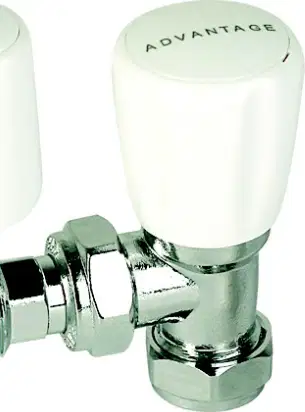
What is the primary function of wheel head valves in a radiator system?
To increase water pressure
To allow the radiator to be turned on and off
To heat the water
To filter impurities from the water
In conjunction with which other valve are wheel head valves closed to enable a radiator to be drained and removed?
Pressure relief valve
Thermostatic valve
Lock-shield valve
Safety valve
What is the primary purpose of lock-shield valves in a radiator system?
To increase water pressure
To balance the system
To heat the room faster
To reduce noise
What should be noted if a radiator is removed for decorating?
The color of the radiator
The number of turns made to close the valve
The size of the radiator
The temperature of the room
What is removed from the valve to install the lock-shield?
The valve body
The wheel head
The pipe
The radiator

