
Font size
 Worksheets
AP Bio Midterm Review
Total questions: 100
Worksheet time: 4hrs 55mins
Triglycerides need….
3 glycol and 2 fatty acids
1 glycerol and 3 fatty acid


Diffusion with the help of transport proteins is called
phagocytosis
Na-K Pump
Facilitated Diffusion
Active Transport
What happens to a cell when exposed to a hypertonic solution?
shrivels
swells
stays the same

When organisms maintain a stable internal environment it is known as
homeostasis
differentiation
maintenance
transformation
Organelles that package cellular materials and transports them within the cell or out of the cell.
Golgi Body
Endoplasmic reticulum
Large central vacuole
Lysosomes

The location where the enzyme and substrate bind is the...
allosteric site
inhibition site
reaction site
active site
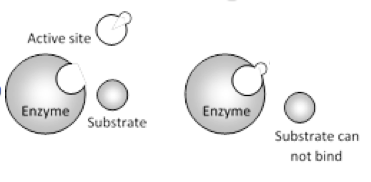
This image shows...
Competitive Inhibition
Uncompetitive Inhibition
Noncompetitive Inhibition
Normal enzyme function
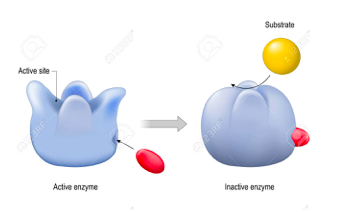
This image shows...
Competitive Inhibition
Uncompetitive Inhibition
Noncompetitive Inhibition
Normal enzyme function

The point of the Krebs Cycle is to...
Produce high amounts of ATP using a proton gradient
Move high energy electrons through series of proteins to eventually bind with O2, creating water and protons
Break down pyruvate to produce electron carrier molecules, FADH2 and NADH, as well as CO2 and ATP as byproducts
Use ATP and NADPH to produce 6 carbon sugars
What effect does adding an enzyme to a reaction cause?
increasing the time it takes for the reaction to occur
increases the activation energy
decreases the activation energy
increasing the amount of energy necessary for the reaction
Enzyme X has an optimum rate of reaction at 97 degrees Fahrenheit. How would rate of reaction be affected if temperature fell to 92 degrees Fahrenheit?
increase - not as hot
decrease - no substrate would be produced
increase - more substrate would be produced
decrease - cause a change in the shape of the protein
What is true of glycolysis?
produces a net of 2 ATP
occurs in the mitochondria
produces ATP through oxidative phosphorylation
produces 34ish ATP
all of the above are true
What serves as the final acceptor of the electrons moving down the ETC during cellular respiration?
sulfur
carbon dioxide
ATP
oxygen
Which of these options does NOT describe a eukaryotic organism's DNA?
A and T pairs will be approximately equal to C and G pairs
It is double stranded and linear
It forms chromosomes that are circular
It is semi-conservative when it replicates
Dialysis tubing was filled with a solution that consisted of 95% solvent and 5% solute. The dialysis tubing was placed in a beaker filled with a solution that consisted of 98% solvent and 2% solute. Using this information, which statement is correct?
The solutes will diffuse through the membrane but not the solvent
The net flow of solvent is into the dialysis tubing
The dialysis is in a hypertonic solution
The relation of the dialysis tubing to its environment is isotonic
Which of the following would be able to pass through the membrane the easiest?
Small, hydrophobic substances
Small, polar substances
Molecules like sucrose and glucose
Small, hydrophilic molecules
One difference between plant and animal cells is that plant cells have ...
Lysosomes
A central vacuole
Centrosomes
Flagella
A certain type of specialized cell contains an unusually large amount of Rough Endoplasmic Reticulum.
Which of the following functions is this cell type most likely specialized to perform?
The production and secretion of lipids
The destruction of toxic materials produced in other cells of the organism
The synthesis of polysaccharides for energy storage
The production and secretion of proteins

Which enzyme functions best in acidic environments?
neither enzyme
Enzyme A
Enzyme B
Both enzymes
The main difference between the rough and smooth ERs is that the rough ER can ____, while the smooth can't.
break down toxins
package lipids
produce ATP
package protein
In a dehydration synthesis reaction whenever water is removed, the remaining bod tends to be a shared electron bond which is the strongest bond. Which one is correct?
Ionic
Hydrogen
Covalent
Hydrolysis
Hydrogen bonds are going to be weak bonds that occur whenever a negative charged molecule is attracted to a (a) charged molecule.
Hydrogen bonds between molecules of water towards the surface of water provide (a) which would allow an insect to walk on water.
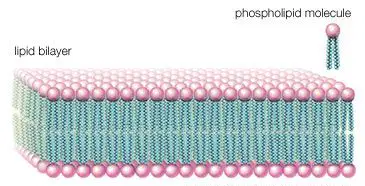
Which explains the orientation of the phospholipid bilayer molecules?
The nonpolar parts are attracted to the internal and external environments of the cell
The hydrophilic phosphate groups of the molecules are attracted to the internal and external environments of the cell
The hydrophilic phosphate groups are NOT attracted to the internal and external environments of the cell
The hydrophobic phosphate parts are attracted to the proteins that are embedded within the membrane
Both plants and fungi have cell walls. The function of a cell wall is an added layer of protection and support. Where are the cell walls located in both organisms.
Both have cell walls that surround the outside of the cell membrane
Both have cell walls that are located on the inside of the cell membrane
Plants have an external cell wall while fungi have an internal cell wall
Plants have an internal cell wall while fungi have an external cell wall
A coupled reaction is a reaction that requires an energy-releasing reaction often coupled with a reaction that requires an (a) of energy. (such as ATP -> ADP + P)
When dealing with enzymes, they tend to be substrate specific. At times, molecules of similar structure could act as competitive inhibitors. If you increase the original substrate but maintain the inhibitor to a constant, then what do you expect to occur?
More of the inhibitor will go through the reaction
The original substrate will bind to the inhibitor cancelling it out
The enzyme will be denatured
Competitive inhibition will decrease since more active sites will be filled by the original substrate
A simple definition of an enzyme would be that it is a protein that catalyzes a reaction by -
increasing the reaction's equilibrium constant
decreasing the free energy of the reaction
increasing the amount of energy released
lowering the activation energy
Enzymes are proteins that can be denatured, making the enzyme inactive. Which of the following could be an example of enzyme denaturing.
Placing it in boiling water
Adding more substrate to it
Removing all the substate from it
adding more of the same enzyme
Mitochondria are effective because of the flaps in their inner membrane. If a mutation changes these flats into flat smooth surfaces then the mitochondria -
becomes more efficient since more ions will go though
becomes more efficient because the volume of the mitochondria increases
become less efficient because the mitochondria is less permeable to large molecules
becomes less effective because the surface area will decrease
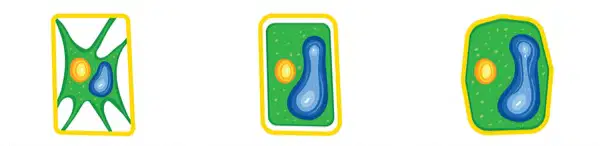
Three plant cells are shown. The first cell was placed in a sugar solution, the second cell was placed in pond water, and the third cell was placed in distilled water. Which statement is accurate about the observations represented in the diagram.
Cell 1- net movement of sucrose out of the cell
Cell 3-net movement of sucrose into the cell
Cell 1- net movement of sucrose into the cell
Cell 3- net movement of sucrose out of the cell
Cell 1- net movement of water out of the cell
Cell 3- net movement of water into the cell
Cell 1- net movement of water into the cell
Cell 3- net movement of water out of the cell
The main difference between the two types of transport is the direction of the concentration gradient along with the fact that passive transport ______ require energy and active transport ______ require energy.
does not, does not
does not, does
does, does
does, does not

If ATP is no longer available for this process, what is the most likely effect?
The molecules will move in the other direction through the protein
The molecules will continue to move through the protein but at a slower rate
The molecules will stop moving through the protein
The molecules will start moving through the phospholipid bilayer
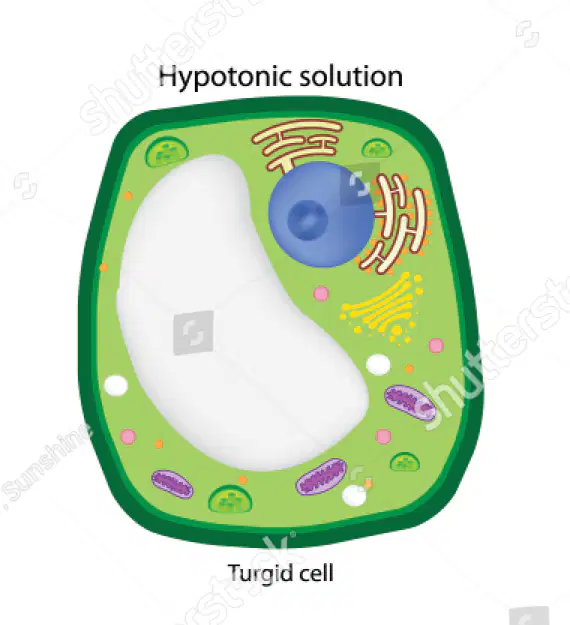
This diagram represents a plant cell in a HYPOTONIC solution. If you notice, the vacuole is full of water making the cell exhibit turgor pressure. The cell is considered to be (a) compares to the solution.
Earlier in the year we learned about the importance of surface area to volume ratios. We understood that cells tend to "cheat" this system by finding ways to increase this surface area by using folds. Mitochondria are some of these organelles that have these folds as part of their structure. If muscle cells have a higher requirement of ATP than other cells and ATP will be synthesized withing the inner membranes of the mitochondria, then a scientist can claim that -
the inner membrane of mitochondria should have more folds, increasing the surface area
the intermembrane of the mitochondria should be more permeable to allow large enzymes to pass through
the outer membrane of the mitochondria should be thicker, allowing for rapid diffuson
the outer membrane of the mitochondria should have more folds increasing the surface area
Lysosomes play an important role in cellular activity, but its main function is to-
cause a decrease in the synthesis of enzymes
break down macromolecules for nutrients
store materials
modify and package proteins

This model shows a cell being engulfed by a larger cell. A scientist claims that this smaller cell originated from a free-living prokaryotic cell. What evidence best supports the scientist's claim?
The organelle has a phospholipid membrane
The organelle has proteins in the membrane
The organelle has a double membrane
The organelle has an aqueous environment inside

The second law of Thermodynamics define
Entropy
Energy
Enthalpy
Heat
What does ATP synthase most likely do?
Create ATP.
Break down ATP.
Break down Glucose.
Create Glucose.

Energy
the capacity for doing work
the heat coming from the sun
the vitamins we get from food
a unit for thermodynamics
Try it: What is the purpose of cellular respiration
To synthesize lipids
To synthesize carbohydrates
To synthesize ATP
To provide oxygen to working tissues
Try it: Fermentation occurs
as a primary source of ATP in animals
in the absence of oxygen
in the presence of oxygen
in bacterial cells only
Try it: Which of the following conduct cellular respiration
plants only
animals only
plants and animals
anaerobic organisms only


Which lipid molecule is a saturated fat?
top
bottom

What level of protein structure is in the image?
primary
secondary
tertiary
quarternary

What level of protein structure is in the image?
primary
secondary
tertiary
quarternary

What level of protein structure is in the image?
primary
secondary
tertiary
quarternary
What level of protein structure is in the image?
primary
secondary
tertiary
quarternary
This type of carbohydrate is made by autotrophs, like plants, for long term energy storage
glycogen
cellulose
starch
This carbohydrate is used for when extra glucose is needed quickly in animals. It's also stored in muscles and our liver
starch
glycogen
cellulose
This carbohydrate is made by plants for use in their cell wall for protection and support
starch
glycogen
cellulose
The allele frequency of p=.20 What is the percentage of Heterozygous Dominant genotype?
.80
.04
.32
.64
The allele frequency of p=.20 What is q?
.80
.04
.32
.64
If 98 out of 200 individuals in a population express the recessive phenotype, what percent of the population would you predict to be heterozygous?
70%
30%
42%
49%
All of the following molecules are produced by the Kreb's cycle EXCEPT
CO2
Pyruvate
FADH2
NADH
Where does the electron transport chain take place inside the cell?
The cristae of the inner mitochondrial membrane.
On the ribosome.
In the cell cytoplasm.
In the mitochondrial matrix.
In yeast, the energy stored in NADH powers the production of
carbon dioxide only
ethanol and carbon dioxide
lactic acid
pyruvate
Where is the most ATP made during aerobic cellular respiration?
Calvin Cycle
Oxidative phosphorlyation
Glycolysis
Kreb's Cycle
The Kreb's cycle occurs in the
mitochondrial cristae
cytosol
mitochondrial matrix
ribosome
During respiration, the net energy gain during the glycolysis phase is
2 ATP
4 ATP
8 ATP
36 ATP
What are the electron carriers in cellular respiration?
NADPH
ATP and pyruvate
NADH, FADH2
ATP synthase
What is the final electron acceptor for the electron transport chain in respiration?
NAD+
carbon dioxide
Oxygen
glucose
In cellular respiration, the energy for most ATP synthesis is supplied by
high-energy phosphate bonds in organic molecules.
a proton (H+) gradient across a membrane.
converting oxygen to ATP
transferring electrons from organic molecules to pyruvate.
What are the 3 stages of cellular respiration in the correct order?
Krebs, Glycolysis, Electron Transport Chain
Glycolysis, Krebs, Electron Transport Chain
Electron Transport Chain, Krebs, Glycolysis
Which of the following happen during the Electron Transport Chain?
High energy electrons travel down the ETC, pumping H+'s into the intermembrane space
H+'s travel down the ETC, pumping high energy electrons into the intermembrane space
Electrons diffuse through ATP Synthase, turning it so it can make ATP

Anaerobic means without ________?
Nitrogen
Carbon Dioxide
Oxygen
Phosphorus

Which of the following is NOT true regarding enzymes.
They are made of proteins
They lower the activation energy of a reaction
They are non-specific and can only be used once in a chemical reaction.
The increase the rate of a reaction

This image shows oxidative phosphorylation, which is made of two steps. These steps are...
ETC and chemiosmosis
chemiosmosis and the Krebs Cycle
ATP Synthase and Glycolysis
Calvin Cycle and ETC

The breakdown of ATP into ADP is useful because...
It stores energy that can be used later
The energy released by this exergonic reaction can be coupled with other endergonic reactions for cells to do work
ADP is smaller and can be stored in cells easily
It releases the least amount of energy, making it most efficient.

