
 Worksheets
Semester 1 Eco Review
Total questions: 70
Worksheet time: 1hrs 21mins


The one factor that a scientist changes during an experiment. (It affects the results of the experiment).
Controlled Variable
Dependent Variable
Independent Variable

The factors that stay the same throughout the experiment.
Controlled Variable
Dependent Variable
Independent Variable
Organism
Made up of organs that work together to prefrom a specific task
Basic unit of life
Made of organ systems that work together to sustain life
Made up of cells that have the same shape and function
An organism that only eats plants
Niche
Herbivore
Carnivore
Producer
Energy molecule
ATP
C₆H₁₂O₆
Light Photon
ADP
An organism that eats both consumers and
producers
Spagivore
Carnivore
Omnivore
Herbivore
Organisms that do not make their own food
Autotroph
Prodcucer
Chemotroph
Consumer
An organism that breaks down dead organisms
(ex: bacteria, fungus)
Heterotroph
Consumer
Scavenger
Decomposer
A diagram of one energy flow/path through an
ecosystem
Food Pyramid
Food Chain
Food Web
Food Circle
A diagram that shows all energy relationships
Food Pyramid
Food Chain
Food Web
Food Circle
Organisms that make their own food
Heterotroph
Chemotroph
Consumer
Producer
The role or job that a species has in an
ecosystem
Niche
Producer
Consumer
Omnivore


True or False. In this pyramid the consumers on each level only get about 10 percent of energy that the plants have stored.
True
False

During photosynthesis, the atoms in the water and carbon dioxide ________ to form oxygen and glucose.
Change
Multiply
Rearrange
Disappear
Plants are called producers because they...
Produce energy
Make their own food
Are edible
Grow from seeds
How does most of the water needed by the plant get into its leaves?
It enters through the stomata
The roots absorb it and then it travels up the stem
It's made during a chemical reaction in the leaf
The flowers capture water and deliver it to the leaves
In which way are photosynthesis and cellular respiration similar?
Both processes destroy energy.
Both create energy.
Photosynthesis breaks down sugar while cellular respiration produces sugar.
Both processes transfer energy from one form to another.
What is the correct equation for cellular respiration?
oxygen + sugar -> carbon dioxide + water + Energy
carbon dioxide + sugar + Energy -> carbon dioxide + water
carbon dioxide + water -> oxygen + sugar + Energy
carbon dioxide + water + Energy -> oxygen + sugar
What is important about cellular respiration?
It produces energy from the sun.
It forms sugar.
It transforms sugar into a usable form of energy (ATP)
Only plants perform this process.
One molecule produced by animals during cellular respiration is
carbon dioxide
glucose
oxygen
chlorophyll

Glucose molecules store _____________.
chemical energy
kinetic energy
gravitational potential energy
heat energy
Your food is digested into ______________.
Hamburgers
Glucose
Fructose
Sucrose
Which statement is true regarding cellular respiration?
The reactants of cellular respiration are identical to the reactants of photosynthesis.
The reactants of cellular respiration are obtained from the products of photosynthesis.
The products of cellular respiration are the same as the products of photosynthesis
Cellular respiration only occurs in autotrophs, photosynthesis occurs only in heterotrophs.
A relationship between two organisms in which one organism benefits and the other is not affected...
Mutualism
Competition
Parasitsm
Commensalism

Cattle egrets forage (feed) in fields among cattle. The egret gets easy access to flying insects stirred up by the cattle, and the cattle are unaware if they are there or not.
mutualism
commensalism
competition
parasitism
What does symbiosis mean?
Living separately, no relationship between 2 species
Living together, close relationship between 2 species
Living separately, long distance relationship between 2 species
When one species kills and eats another
A relationship between two organisms in which both organisms benefit
Mutualism
Competition
Parasitsm
Commensalism

Fungi form lichens (a small plant) by living in a close relationship with algae. The fungus provides a protective home for the algae, and gathers nutrients from rainwater. The algae gathers energy from the sun using photosynthesis. Both organisms share nutrients with each other.
commensalism
mutualism
parasitism
predation
Interactions occurring between organisms of the same species.
Inter-specific interactions
competition
balance
Intra-specific interactions
Example of Intra-specific Interactions
Moose compete for mates
birds fly south
bears hibernate
plants go through photosynthesis
Hawks and foxes compete for mice for food.
Interference competition
Inter-specific interactions
Mitosis
Meiosis
Interactions occurring between two or more species.
Interference Competition
Competition
Photosynthesis
Inter-specific interactions
Carbon molecules cannot be created or destroyed
True
False
Not enough information to answer
____________________ is a part of oceans, air, rocks, soil, and all living things.
Nitrogen
Water
Carbon
Silver
How do animals get carbon?
By eating plants and or other animals.
They absorb it from the atmosphere.
From the ground
They do not get carbon from anywhere.
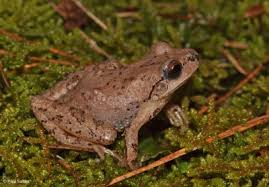
Invasive species alter the ecosystem by _____ in number quickly. This leads to _____ food for the native species.
increasing, less
increasing, more
decreasing, less
decreasing, more

