
 Worksheets
Biology Quiz Review
Total questions: 51
Worksheet time: 31mins
Which organelle is responsible for cellular respiration?
Chloroplast
Nucleus
Mitochondria
Ribosome
What are the products of photosynthesis?
Carbon dioxide and water
Glucose and oxygen
Oxygen and ATP
Water and ATP
Which type of protein catalyzes chemical reactions inside the cell?
Structural proteins
Messenger proteins
Enzyme proteins
Transport proteins
What happens to enzymes when exposed to extreme temperature or pH?
They become more active
They denature
They multiply
They change color
Which body system is responsible for sending and receiving signals to control body functions?
Muscular system
Endocrine system
Nervous system
Digestive system
Which of the following structures is present in eukaryotic cells but absent in prokaryotic cells?
Ribosomes
Nucleus
Cytoplasm
Capsid
What is the function of a capsid in viruses?
To provide energy
To protect DNA
To transport nutrients
To replicate RNA
Which type of DNA is found in prokaryotic cells?
Linear
Circular
Double-stranded
Fragmented
How do eukaryotic cells reproduce?
Binary fission
Budding
Mitosis
Fragmentation
What is the definition of passive transport?
Movement of molecules across the cell membrane using energy.
Movement of molecules across the cell membrane without energy.
Movement of molecules against the concentration gradient.
Movement of molecules with the use of protein pumps.
Which type of passive transport involves the diffusion of water molecules?
Diffusion
Facilitated Diffusion
Osmosis
Endocytosis
What is required for active transport to occur?
No energy
Water molecules
Energy (ATP)
Concentration gradient
During which phase of the cell cycle does DNA replication occur?
G0 Phase
G1 Phase
S Phase
G2 Phase
In which stage of mitosis do chromosomes line up in the middle of the cell?
Prophase
Metaphase
Anaphase
Telophase
What happens when there is a disruption in the cell cycle?
Cells divide normally and healthily.
Cells stop dividing completely.
Cells divide uncontrollably, forming tumors.
Cells become larger but do not divide.
Which of the following is a cause of cell cycle disruption?
Regular exercise
Genetic mutations
Healthy diet
Adequate sleep
What is the role of petals in plants?
They produce pollen.
They are important for attracting pollinators.
They absorb sunlight for photosynthesis.
They transport water and nutrients.
What is phototropism?
Growth response to gravity
Growth response to water
Growth response to light
Growth response to temperature
What is the function of xylem in plants?
Transports sugars and amino acids
Transports water and minerals from roots to leaves
Produces flowers and fruits
Stores energy in the form of starch
What is the role of mycorrhizal relationships in fungi-plant interactions?
Fungi help plants absorb nutrients
Fungi provide shade to plants
Fungi protect plants from insects
Fungi increase plant height
Which type of mutation involves a base being deleted?
Deletion
Insertion
Substitution
Translocation
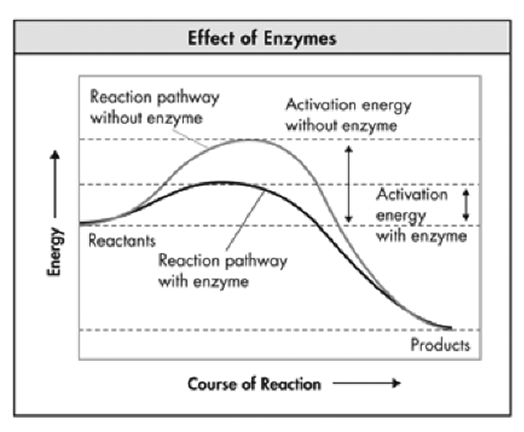
What is the primary function of enzymes in biochemical reactions?
To lower the activation energy
To increase the temperature
To change the pH level
To provide energy
What does a nucleotide consist of?
Phosphate, deoxyribose sugar, nitrogenous base
Protein, lipid, carbohydrate
Water, salt, glucose
Amino acid, peptide, enzyme
Which type of RNA carries genetic information from DNA to ribosomes?
Messenger RNA
Transfer RNA
Ribosomal RNA
Catalytic RNA
What is the function of carbohydrates in the body?
Provide quick energy.
Build and repair tissues.
Store genetic information.
Make up cell membranes.
Which of the following is a monomer of proteins?
Monosaccharides
Amino acids
Nucleotides
Fatty acids
What is the primary function of lipids?
Provide quick energy.
Store and transmit genetic information.
Long-term energy storage and insulation.
Build and repair tissues.
Which biomolecule's monomers are nucleotides?
Carbohydrates
Proteins
Lipids
Nucleic acids
What is the first step in DNA replication?
Base pairing
Unwinding
Transcription
Translation
Which enzyme unwinds and separates the DNA strands during replication?
Primase
Ligase
Helicase
Topoisomerase
What is the role of DNA polymerase in DNA replication?
Unwinds the DNA strands
Synthesizes RNA primers
Links nucleotides to form new strands
Seals gaps between DNA fragments
During which phase of interphase does DNA replication occur in somatic cells?
G1 phase
S phase
G2 phase
M phase
In DNA, which base pairs with adenine (A)?
Cytosine (C)
Guanine (G)
Thymine (T)
Uracil (U)
What is the function of a gene?
Carries all genetic information
Codes for a specific protein or trait
Synthesizes RNA primers
Prevents DNA from over-coiling
What is the process called where unspecialized cells become specialized to perform specific functions?
Cell Division
Cell Specialization
Cell Mutation
Cell Respiration
Which of the following is a factor influencing cell differentiation?
Gene Mutation
Gene Expression
Gene Deletion
Gene Cloning
What do environmental factors trigger in cells?
Gene Deletion
Gene Activation
Gene Suppression
Gene Mutation
What is created during the transcription process in cells?
DNA
Proteins
Messenger RNA (mRNA)
Lipids
How do insulin and glucose work together in the body?
They increase blood pressure.
They regulate blood glucose levels.
They decrease oxygen levels.
They increase heart rate.

Which process occurs inside of mitochondria?
Cellular Respiration

What is cellular respiration?

The diagram below represents a structure involved in cellular respiration. The release of which substance is represented by the arrows?
glucose
carbon dioxide
oxygen
DNA

What is the correct equation for cellular respiration?
6O2 + C6H12O6 -> 6CO2 + 6H2O + ATP Energy
6O2 + C6H12O6 + Energy -> 6CO2 + 6H2O
6CO2 + 6H2O -> 6O2 + C6H12O6 + ATP Energy
6CO2 + 6H2O + Energy -> 6O2 + C6H12O6

In which part of the plant cell does photosynthesis take place?
Nucleus
Mitochondria
Chloroplast
Ribosome


Which choice correctly shows the gas input and output of plants during photosynthesis?
Input: Oxygen
Output: Carbon dioxide
Input: Water vapor
Output: Glucose
Input: Carbon dioxide
Output: Oxygen
Input: Light
Output: Water vapor
6CO2 + light + 6H2O --> 6O2 + Glucose
6CO2 + sugar + 6H2O -----> 6O2 + light
6O2+ light + 6H2O --> 6CO2 + Sugar
6CO2 + 6O2 + 6H2O --> Light+ Sugar
In which organelle does photosynthesis take place?
Nucleus
Mitochondria
Chloroplast
Ribosome
What is the molecule called that carries genetic information?
Protein
Carbohydrate
DNA
Lipid

