
Font size
 Worksheets
Unit 5 Test Review
Total questions: 111
Worksheet time: 2hrs 4mins
What were the major classical empires that emerged and collapsed during this time period?
Ottoman Empire, Inca Empire, Aztec Empire
Roman Empire, Han Dynasty, Gupta Empire
Byzantine Empire, Mongol Empire, Mughal Empire
Egyptian Empire, Persian Empire, Babylonian Empire
How did the medieval period contribute to the rebuilding and reconsolidation of societies after the fall of classical empires?
Anarchy, rise of atheism, and suppression of knowledge and culture
Industrialization, decline of religion, and destruction of knowledge and culture
Feudalism, spread of Christianity, and preservation of knowledge and culture
Monarchy, isolation of societies, and abandonment of classical traditions
Describe the role of feudalism in the medieval rebuilding and reconsolidation.
Provided governance, protection, and social structure
Resulted in the decline of social structure
Led to the establishment of democratic governments
Caused widespread famine and disease
Discuss the impact of the Silk Road on the interactions and diffusion during this time period.
The Silk Road only led to the diffusion of technologies, not religions and languages
The Silk Road had no impact on interactions and diffusion during this time period
The Silk Road facilitated the exchange of goods, ideas, and cultures between the East and West, leading to the diffusion of technologies, religions, and languages.
The Silk Road only facilitated the exchange of goods, not ideas and cultures
Explain the spread of Islam and its influence on interactions and diffusion between 600-1450.
The spread of Islam was a result of isolationist policies and lack of missionary activities, leading to minimal influence on interactions and diffusion between 600-1450.
The spread of Islam was due to the decline of trade routes and lack of conquest, leading to minimal influence on interactions and diffusion between 600-1450.
Islam spread primarily through peaceful negotiations and agreements, resulting in minimal influence on interactions and diffusion between 600-1450.
The spread of Islam was facilitated by trade, conquest, and missionary activities, leading to its influence on interactions and diffusion between 600-1450.
What were the major factors that led to the spread of Christianity during 600-1450?
Christianity spread primarily through isolationist policies and lack of missionary activities.
Christianity spread due to the decline of trade routes and lack of conquest.
Christianity spread primarily through peaceful negotiations and agreements.
The spread of Christianity was facilitated by trade, conquest, and missionary activities.
Discuss the role of the Silk Road in the spread of Buddhism.
The Silk Road only led to the diffusion of Buddhism, not other religions and languages.
The Silk Road had no impact on the spread of Buddhism.
The Silk Road facilitated the exchange of goods, ideas, and cultures between the East and West, leading to the diffusion of Buddhism.
The Silk Road only facilitated the exchange of goods, not the spread of Buddhism.
Discuss the role of the Trans-Saharan trade routes in the spread of Islam.
The Trans-Saharan trade routes only led to the diffusion of Islam, not other religions and languages.
The Trans-Saharan trade routes had no impact on the spread of Islam.
The Trans-Saharan trade routes facilitated the exchange of goods, ideas, and cultures between Africa and the Middle East, leading to the diffusion of Islam.
The Trans-Saharan trade routes only facilitated the exchange of goods, not the spread of Islam.
What were the major factors that led to the spread of Buddhism during 600-1450?
Buddhism spread primarily through isolationist policies and lack of missionary activities.
Buddhism spread due to the decline of trade routes and lack of conquest.
Buddhism spread primarily through peaceful negotiations and agreements.
The spread of Buddhism was facilitated by trade, conquest, and missionary activities.
What were the primary causes of the Hundred Years' War?
Economic instability and religious conflicts
Disputes over land and succession to the French throne
Spread of the Black Death and the fall of the Roman Empire
Establishment of trade routes and the spread of Christianity
Discuss the impact of the Hundred Years' War on the political landscape of England and France.
The war had no significant impact on the political landscape of England and France
The war led to the decline of feudalism and the rise of national identity in both countries
The war resulted in the establishment of democratic governments in both countries
The war caused widespread famine and disease, leading to political instability
What were the major impacts of the Black Death on European society in the 14th century?
The Black Death led to a significant increase in population and prosperity.
The Black Death had no significant impact on European society.
The Black Death led to a significant decrease in population, labor shortages, and social and economic changes.
The Black Death only affected the health of the population, with no other significant impacts.
Discuss the role of the Black Death in the decline of feudalism.
The Black Death had no impact on the decline of feudalism
The Black Death led to the decline of feudalism by causing a shortage of labor
The Black Death led to the strengthening of feudalism by causing a surplus of labor
The Black Death only affected the social structure in Asia, not Europe

The map indicates that
Mali was a major source and hub of the gold trade
slavery existed in the western Sudan
Europeans had begun to make inroads in West Africa
Mali remained isolated from Europe and the Middle East

Which of the following best describes an effect of the establishment of the Mongol Empire upon Silk Road long distance trade?
The Silk Road trade declined because the Mongol merchants preferred to use maritime long-distance trade networks instead.
The Silk Road trade increased because the Mongol conquests helped connect more regions of Eurasia economically and commercially.
The Silk Road trade was not affected by the Mongol conquests because the tribal and nomadic nature of Mongol society meant that Mongol demand for luxury goods was virtually nonexistent.
The Silk Road trade collapsed following the Mongol conquests because most trading cities along the Silk Roads were destroyed and never recovered.

The thirteenth-century map of Constantinople shown below indicates that the city
was located on an island
was highly fortified against outside attacks
tolerated many religions
looked down on trade and commerce

The map below shows what significant economic developments?
Trade connections that linked the Hellenistic and Mauryan empires to African cities from 300 through 150 B.C.E.
Trading networks that promoted the growth of new cities from 600 C.E. through 1450 C.E
Chinese dominance of Indian Ocean trading networks because of the voyages of Zheng He in the 1400s C.E.
Changes in Indian Ocean trading networks that resulted from technological innovations from 1450 C.E. through 1750 C.E.

The photograph below shows a fourteenth century C.E. mosque in the city of Xi’an, central China. This image most clearly supports which of the following conclusions about the spread of Islam?
Early Muslim communities in China adopted local architectural styles for their religious buildings.
Political instability in fourteenth-century China encouraged the spread of Islam.
Islam spread to China before Buddhism did.
Early Muslim communities in China disguised their mosques as Confucian academies.

The illustration would be most useful to a historian studying which of the following?
Transportation and maritime technologies
Large-scale trading organizations
Geographic patterns of currents and winds in the Indian Ocean
The expansion of the Umayyad Caliphate

The map shows which of the following empires at its greatest extent?
The empire of Alexander the Great
The Mongol Empire
The Russian Empire
The Byzantine Empire
Which of the following is a potential LIMITATION for a primary source?
Author strongly motivated by a particular agenda
Author had firsthand knowledge of the events described
Document was produced during the events
Document captures multiple potential points of view
The Ming Dynasty followed the collapse of the Mongol ___________ dynasty.
Yuan
Song
Tang
Han
The Forbidden City is located in the heart of China's capital-
Beijing
Nanjing
Tokyo
New Delhi
Zheng He's voyages took him to
the Americas.
Europe.
Japan and Korea.
Southeast Asia, India, and East Africa.
In the early 1400s, during the Ming Dynasty, Zheng He was sent by his emperor on sailing voyages to
search for gold and other riches in Africa
defeat the Mongol navy in the East China Sea
show China's interest in trade and display the power and splendor of China
discover an ocean route to North America
Zheng He was which of the following?
China's greatest explorer (was Muslim)
A chef from China
A Russian worker
A Japenese builder
Under the Tang and Song dynasties, many things were invented including gunpowder, compass and
moveable type
family
tea cups
tributes
Q1. Mughal means ____________?
muslim
mongol
Ghenghis Khan
Empire
Q9. Why did Shah Jahan built the Taj Mahal?
As a palace for his wife
As a tomb for his wife
To honor the common people of the Mughal Empire
To match the accomplishments of his father
Q9. Why did Shah Jahan built the Taj Mahal?
As a palace for his wife
As a tomb for his wife
To honor the common people of the Mughal Empire
To match the accomplishments of his father
Who founded the Mughal Dynasty in India?
Babur
Akbar
Genghis Khan
Gandhi
What is the correct location of the Mughal Empire


Mehmed II conquered this city in 1453 for the Ottoman Empire
Vienna
Constantinople
Lepanto
Belgrade
How did Islam spread in West Africa?
Through trade
Through conquest
Who was the first leader of Mali?
Mansa Musa
Sundiata
Sunni Ali
Askia Muhammad
What is NOT something that Ibn Battuta praised Mali for?
Its safety
Its justice system
Its strict adherence to Muhammad's teachings
Its devotion to Islam
Which ruler of Mali is considered to be the wealthiest person in world history?
Sunni Ali
Askia Muhammad
Djenne
Mansa Musa
Which was an important center of trade and education in Songhai?
Djenne
Timbuktu
Koumbi Saleh
Niani
Why did Songhai eventually fall?
Because its leaders could not govern well.
Because it was conquered by the Almoravids.
Because it lacked modern weaponry like gunpowder.
It fell for unknown reasons.


What is one way that Medieval and Renaissance artists differ?
Renaissance art focuses more on religion
Medieval artists were more realistic
Renaissance artist turned to Roman and Greek works for inspiration
They are the same

Which of these famous structures did Michelangelo paint?
the Louvre
the Coliseum
the Sistine Chapel
the Eiffel Tower
Which of these statements describes a change brought about by the Renaissance?
Society was dominated by the church.
Society began to value individualism.
Society was focused on warfare.
Society was dominated by lords.


Who invented the Printing Press?
Gutenberg
Erasmus
More
Who wrote the Praise of Folly?
Gutenberg
Erasmus
More
Who wrote Utopia?
Gutenberg
Erasmus
Sir Thomas More

Who wrote the essay "The Prince?"
Michelangelo
Machiavelli
Erasmus
Sir Thomas More

The statue of "David" was created by _____________.
Da Vinci
Michelangelo
Erasmus
Gutenberg

-modern essay on government
-absolute rule
-ends justifies the means
These ideas are from______________________.
The Prince
Utopia
The Praise of Folly
Mona Lisa

Middle Ages art focused on ______________________.
church
salvation
individual
kings

Which was not an important city state in Italy during the Renaissance?
Florence
Venice
Genoa
Constantinople
-Sonnets
-humanist scholarship
Which Renaissance leader?
Petrarch
Michelangelo
Da Vinci
Machiavelli
If someone is devious and ruthless, especially in politics, they might be called
Antagonistic
Philosophical
Belligerent
Machiavellian
Which is NOT a reason the Renaissance began in Italy?
Rich trading ports
They never had the Black Plague
Wealthy cities could support the arts
Home to Rome, which everyone was trying to copy
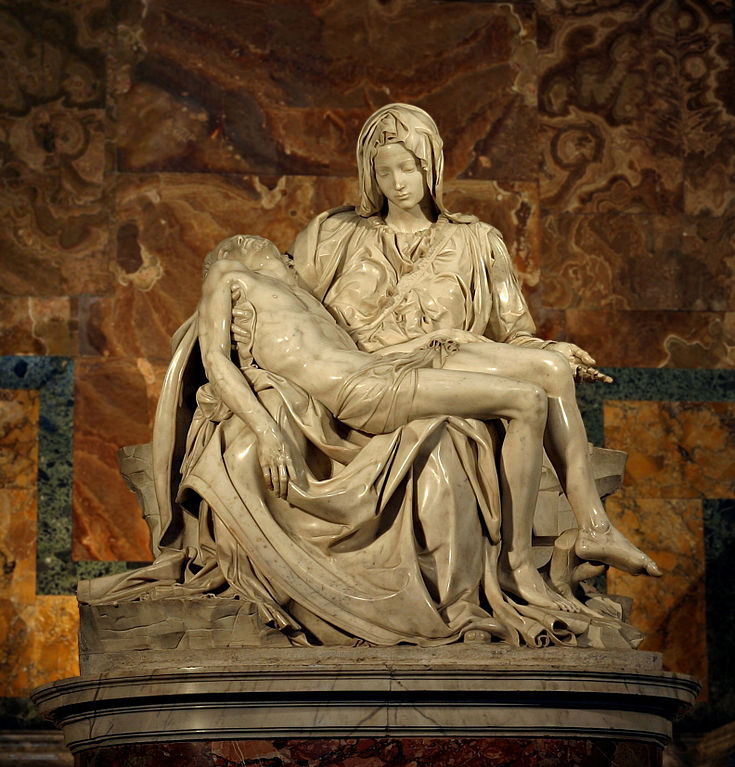
Who created this?
Leonardo da Vinci
Theodore Mancini
Michelangelo
Donatello
Which was NOT a characteristic of Renaissance art?
More secular subjects than before
More focus on perspective than before
More realistic human figures than before
More religious subjects than before
The growth of which types of areas helped to spur on the Renaissance?
Urban
Rural
Which do you think is the best example of a "Renaissance Man"?
Joe paints portraits, loves calculus, writes articles on anatomy, and is an expert gardener.
John is an expert in computer science and can program any type of computer.
Jeb is great at almost every sport--basketball, football, soccer, and tennis.
Jethro is a fantastic writer and writes not only poetry but also essays and novels.
Which group of people were used as the scapegoat for the black death?
Arabs
Jews
Roman Catholic Church
Artists
Which is NOT a way that the black death paved the way for the Renaissance?
There was a labor shortage so working conditions and pay improved for the poor.
It was more difficult than ever for people to move up in social class.
People moved from villages to cities, where there was a better flow of ideas.
The Roman Catholic Church lost some of its power and people had more freedom.
In the painting School of Athens, the great thinkers of ancient Greece and Rome are featured, as well as architecture from those ancient cultures. This is an example of
Humanism
Classicism
Totalitarianism
Sectarianism
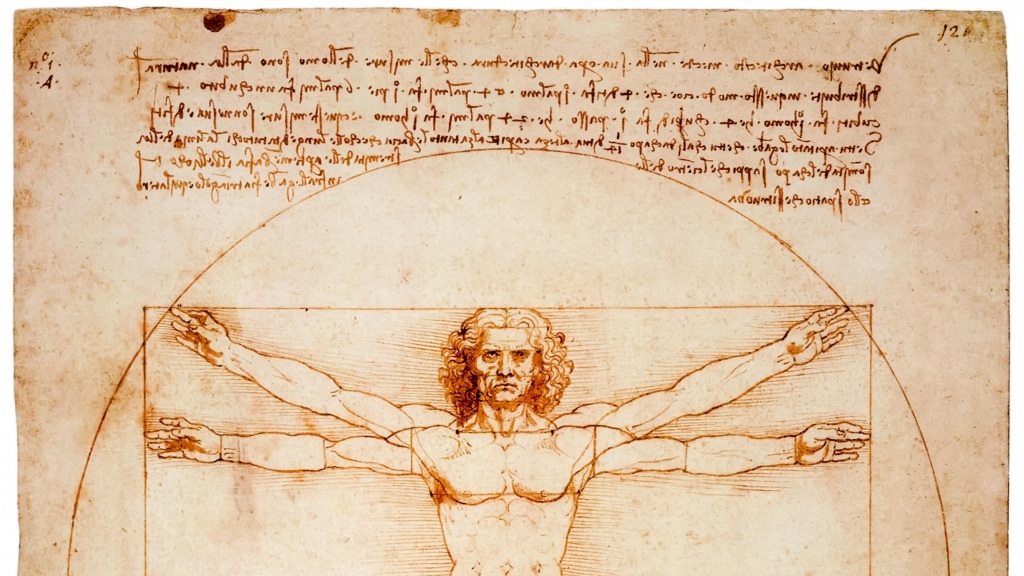
Leonardo da Vinci called this famous drawing
Vitruvian Man
Architectural Man
Renaissance Man
Vienna Man
You need someone to finance your artwork. You need a...
Patron
Banker
Professor
Financial analyst
Who said "The end justifies the means"?
Medici
Donatello
Machiavelli
Castiglone
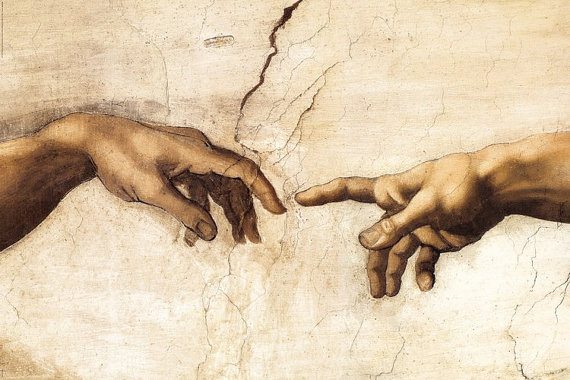
You would find this painting by Michelangelo on the ceiling of what building?
The Metropolitan Museum of Art
The Louvre
The Smithsonian
Sistine Chapel
Which date would be included in the Renaissance era?
1200
1400
1800
1900
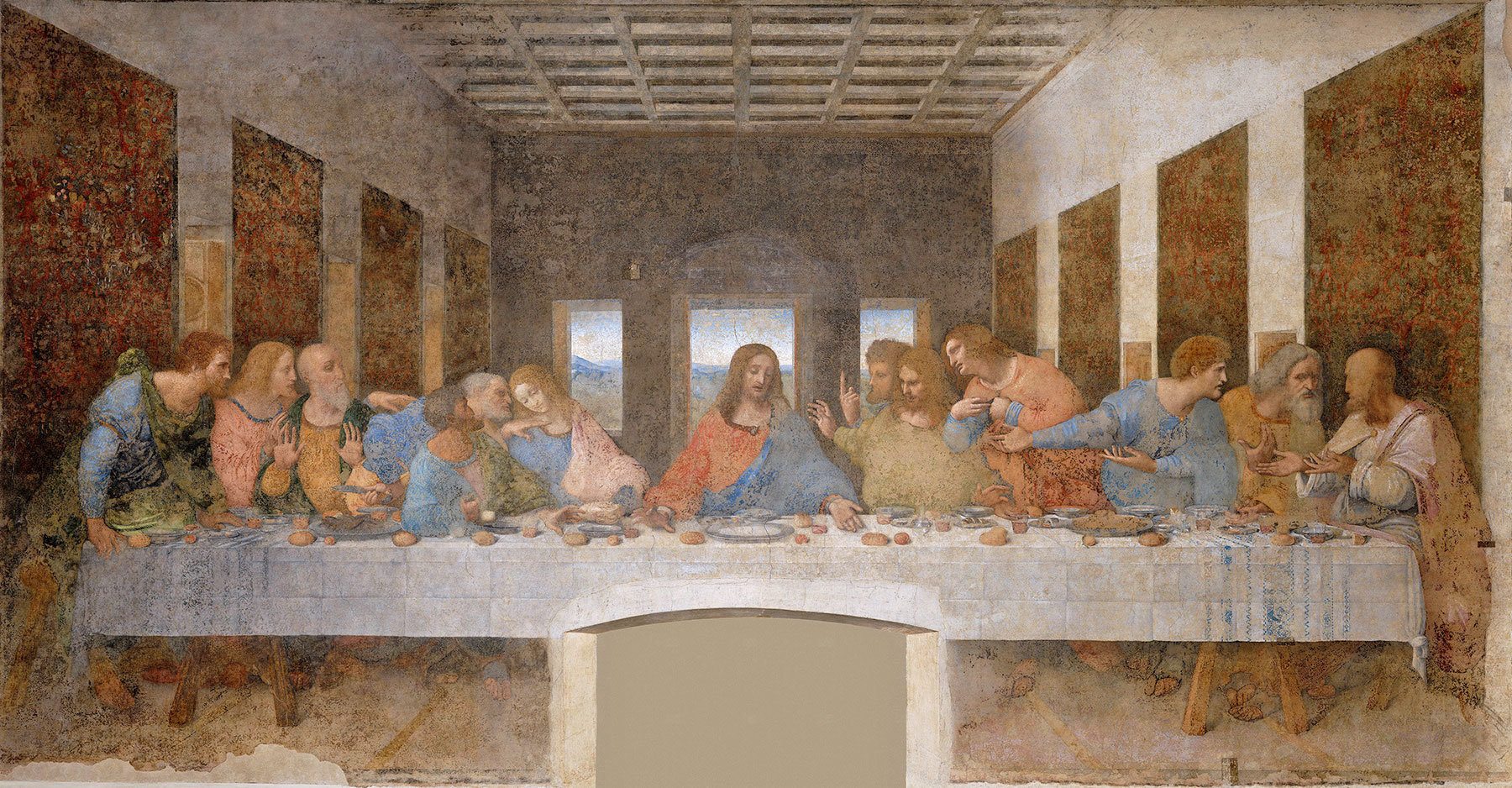
In this painting, the large area in the foreground (front) shrinks down to the smaller area in the back, giving it dimension. This is an example of....
Secularism
Perspective
Water color techniques
Pointilism
Renaissance art focused on the individual and worldly matters as well as Christianity.
True
False
Event that increased the demand for trade goods, developed banking principles and led to the Renaissance.
Black Death
Pax Romana
Crusades
Hundred Years' War
A political, social, economic, and cultural "rebirth" from the 1300's to the 1500's C.E.
Middle Ages
Reformation
Classical Era
Renaissance
Author of The Prince who believed rulers should have absolute power.
Machiavelli
Erasmus
Sir Thomas More
Petrarch
"Father of Humanism" who wrote sonnets to Laura and preserved Greco-Roman manuscripts.
Petrarch
Johann Gutenberg
Erasmus
Sir Thomas More
The Renaissance emerged from Italian city-states like Florence, Venice, and Genoa.
True
False
Which is NOT an impact of the Gutenberg Press
Books were cheaper
Literacy rates increased
People began to study the Bible for themselves
Literacy rates decreased
Who wrote The Praise of Folly?
Petrarch
Johann Gutenberg
Erasmus
Sir Thomas More
Who wrote Utopia?
Petrarch
Johann Gutenberg
Erasmus
Sir Thomas More
Who wrote Hamlet, Romeo & Juliet, and Macbeth?
Machiavelli
Shakespeare
Virgil
Homer
Intellectual movement that focused on human potential and studying subjects like rhetoric, history, poetry, and grammar.
Humanism
Middle Ages
Classical Era
Crusades

Before the Reformation, Christian churches were ___________
Jewish
Roman Catholic
Muslim
None of the Above
Why did Luther disagree with the selling of indulgences?
He believed they should cost more.
He believed people had to work to earn salvation.
He believed salvation was a gift of grace.
He believed his 95 Theses could get people to Heaven.

