
 Worksheets
Mucle
Total questions: 32
Worksheet time: 21mins

Which muscle is highlighted?
Rotator cuff
Infraspinatus
Teres major
Teres minor

The two large, flat muscles (D) that cover the lower back, extend and adduct the humerus.
Deltoid
Triceps brachii
Trapezius
Latissimus dorsi
These diamond-shaped muscles (A) extend the head, elevate, depress, adduct, and stabilize the scapula.
Deltoid
Triceps brachii
Trapezius
Latissimus dorsi

These muscles (D) flex the vertebral column, rotate the trunk and bend it laterally.
External oblique
Internal oblique
Rectus abdominis
Transversus abdominis
These paired straplike muscles (A) are the most superficial muscles of the abdomen. They flex the vertebral column and compress the abdomen during defecation, childbirth, and forced breathing.
External oblique
Internal oblique
Rectus abdominis
Transversus abdominis

This fairly weak muscle (E) resides mainly in the forearm.
Brachioradialis
Brachialis
Pectoralis major
Biceps brachii
This two-headed muscle (C) bulges when the elbow is flexed.
Brachioradialis
Brachialis
Pectoralis major
Biceps brachii
This large fan-shaped muscle (B) covers the upper part of the chest. It adducts and flexes the arm.
Trapezius
Deltoid
Pectoralis major
Biceps brachii
This triangle-shaped muscle (A) forms the rounded shape of your shoulders, abducts the arm, and is a favorite injection site.
Trapezius
Deltoid
Pectoralis major
Biceps brachii

This muscle (K) flexes your neck. Some people call this the "prayer" muscle. It can also rotate the head toward the shoulder and tilt the head to the side.
Platysma
Sternocleidomastoid
Occipitalis
Trapezius
This chewing muscle (J) closes the jaw by elevating the mandible.
Occipitalis
Trapezius
Masseter
Temporalis
This muscle (I) covers the posterior aspect of the skull and pulls the scalp posteriorly.
Occipitalis
Frontalis
Cranial aponeurosis
Temporalis
This muscle (H) lies over the temporal bone and helps the masseter close the jaw.
Trapezius
Platysma
Sternocleidomastoid
Temporalis
This muscle (F) pulls the corners of the mouth inferiorly, producing a downward sag of the mouth (the "sad clown" face).
Sternocleidomastoid
Platysma
Masseter
Temporalis
This muscle (E) closes the mouth and protrudes the lips. It is often called the "kissing" muscle.
Orbicularis oris
Buccinator
Zygomaticus
Orbicularis oculi
This muscle (C) is called the "smiling" muscle because it raises the corners of the mouth upward.
Orbicularis oris
Buccinator
Zygomaticus
Masseter
This muscle (B) allows you to close your eyes, squint, blink, and wink.
Orbicularis oris
Orbicularis oculi
Zygomaticus
Platysma
This muscle (A) allows you to raise your eyebrows and to wrinkle your forehead.
Cranial aponeurosis
Temporalis
Frontalis
Occipitalis

extensor digitorum
flexor carpi radialis
palmaris longus
flexor carpi ulnaris
brachioradialis

fibularis longus
soleus
gastrocnemius
tibialis anterior
popliteus

Action of the quadriceps (Rectus femoris and Vastus muscles)?
extends leg at knee
extends thigh at hip
flexes leg at knee
flexes thigh at hip

Which muscle is highlighted in the picture? (Deep muscle)
Soleus
Gastrocnemius
Semitendinosus
Semimebranosus

What muscles are highlighted in the picture?
Adductor Muscles
Tibialis Anterior
Iliopsoas
Quadriceps Femoris

What is this muscle
sarcasticus
notorius
sartorius

What is this muscle?
sartorius
gluteus maxillus
gluteus medius


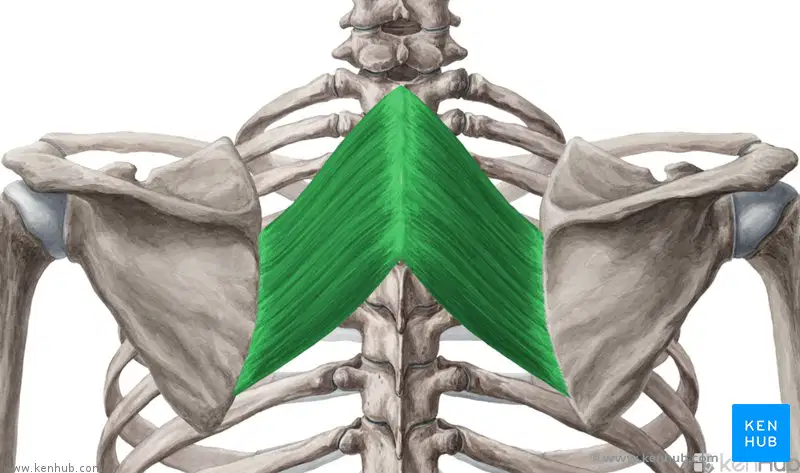
What is this
Rhomboid major
Triceps
Extensor

What is this
Rhomboid
Triceps
Extensor
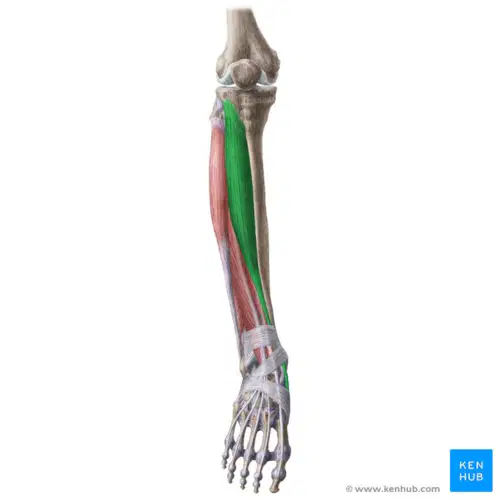
What is this
Tibialis Anterior
Fbularis longus
Adducation

Were is the muscle were the lungs are
Intercostal
External obliques
Rector

