
 Worksheets
Chemistry Sem1 Exam 2025
Total questions: 82
Worksheet time: 2hrs 43mins
(there are 2.54 cm in an inch)
16.54 cm
120.23 cm
106.68 cm
8.71 cm
How many significant figures: 450 m
3
2
1
0

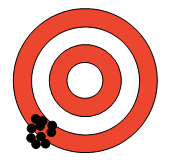
Which Student is the most Precise?
Alex
Shandra
Luis

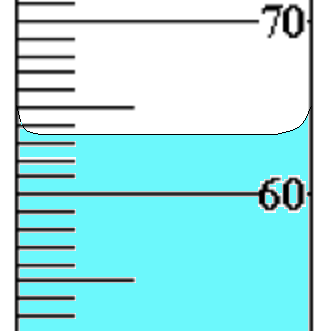
What is the length of the red line?
68 cm
6.85 cm
6.9 cm
7.00 cm
Convert 1.23 Mg to ________ g
1230000 g
0.000000123 g
1230 g
0.000123 g

A(n) ______________ is formed when two or more elements chemically combine.
Compound
Element
Mixture

The melting point of the sample is
-60 ºC
20 ºC
60 ºC
100 ºC


What type of material is pictured?
Element
Compound
Heterogeneous mixture
Homogeneous mixture

Classify Kool-Aid as one of these 4 types of matter.
Element
Compound
Homogeneous mixture
Heterogeneous mixture

Lauren wants to separate salt from water. What separation technique should she use?
Evaporation
Filtration
Chromatography
Which mixture can be separated using a filter?
sand and iron filings
saltwater
sand and water
none of the above

How would you classify a chocolate chip granola bar?
Element
Compound
Homogeneous Mixture
Heterogeneous Mixture

How would you classify coffee?
Element
Compound
Homogeneous Mixture
Heterogeneous Mixture

What does the atomic number of an element represent?
The number of protons in the nucleus
The number of neutrons in the nucleus
The total number of protons and neutrons in the nucleus
The total number of protons and electrons in an atom
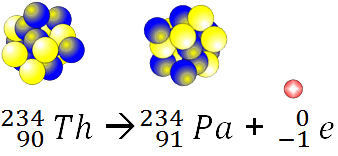
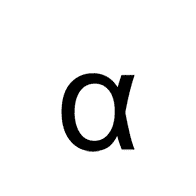
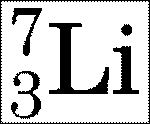

How many electrons can the p sublevel hold?
2
3
6
8
What is the maximum number of electrons that an orbital can have?
2
6
8
10

Why are line emission spectra used to identify stallar gases?
They are easy to analyze
They are all unique like a "fingerprint"
I have 92 electrons and was used in the first atomic bomb called "Fat Man"... Who am I?
Radium
Zirconium
Niobium
Uranium
I am an Alkaline Earth Metal in Period 6. Who am I?
Cesium
Calcium
Barium
Polonium
Period 4 and form -1 ions
Bromine
Potassium
Fluorine
Selenium
The most reactive nonmetal
Fluorine
Francium
Chlorine
Neon
The only metalloid in period 3
Silicon
Aluminum
Germanium
Arsenic
I have 3 valence electrons, found in detergents and only have one letter in my symbol.
hydrogen
fluorine
boron
phosphorous
What are the vertical columns on the periodic table called?
Groups
Periods
Elements
Valence electrons

Which elements are colored red?
nonmetals
metals
metalloids
What was a major contribution of Dmitri Mendeleev to the development of the periodic table?
He discovered the electron.
He arranged elements by increasing atomic mass and predicted the existence of undiscovered elements.
He introduced the concept of atomic number.
He discovered radioactivity.
What is the formula for sodium nitride
NaNO3
NaN3
NaN
Na3N
What do we call electrons in the highest energy level of an atom?
orbital electrons
cations
anions
valence electrons
A charged group of atoms that behave as a single unit
covalent compounds
molecular compounds
polyatomic ions
a molecule
LiBr is called
lithium bromine
lithium (I) bromine
lithium bromide
lithuim (I) bromide
The name of FeCl₂ is
iron chloride
iron (II) chloride
iron (I) chloride
iron dichloride

What is shown in the picture
"Sea of Electrons" model
ionic compound
alloy
The ability to be hammered into shapes
malliability
ductility
softness
hardened steel
Why do metals conduct electricity?
They are shiny
The electrons are held tightly within the lattice
The electrons are delocalized and able to move
The electrons are shared between two metal ions
What is the formula of gallium oxide?
Ga2O3
GaO
GaO3
Ga3O

What ionic charge would an element with this electron dot diagram take on?
(a)
What two types of atoms make a covalent bond?
2 nonmetals
2 metals
1 nonmetal & 1 metal
2 noble gases
Polar molecules are ....
symmetrical
asymmetrical
Which image shows a polar covalent bond?


What is the correct Lewis Dot Structure for NF₃?


Using the VSEPR model, predict the geometric shape of nitrogen trifluoride.
trigonal pyrimidal
trigonal planer
bent
tetrahedral
Identify the reaction type:
C2H6 + O2 --> CO2 + H2O
Double displacement
Synthesis
Acid base
Combustion
What is the right part of a chemical equation called?
2H2 + O2 ---> 2H2O
Reactants
Yields
Products
Chemical Equation
Mg + __HCl ---> MgCl2 + H2
What coefficients are needed to balance the equation?
___Al + ___ O2 ---> 2Al2O3
3,2
3,4
4 , 3
4,2
Which of the following is diatomic (magic 7). Select all that apply
calcium
hydrogen
sulfur
magnesium
chlorine

Match the type of chemical reaction below.
Synthesis reaction
Na+ Cl2 → NaCl
Decomposition reaction
2KI −> 2K + I2
Single displacement reaction
Pb + FeSO4 ----> PbSO4 + Fe
Double displacement reaction
BaCl2+2KI −> 2KCl + BaI2
Combustion reaction
CH4+O2→CO2+H2O
_Al +_HCl --> _H2 +_AlCl3
Br2 (l) + KI (aq) →
What will the balanced equation be if you react:
CaCl2 + NaOH
CaCl2 + 2 NaOH --> Ca(OH)2 + 2 NaCl
CaCl2 + 2 NaOH --> CaOH + 2 NaCl
CaCl2 + 2 NaOH --> CaNa2 + 2 ClOH
no reaction
If I add potassium phosphate to barium nitrate in a double displacement reaction. Use solubility chart to identify the precipitate.
Ba3(PO4)2
KNO3
Ba(NO3)2
K3PO4
You mix two solutions together and get a precipitate. Write an equation for mixing iron(II) iodide with potassium phosphate (don't worry about balancing it)
FeI2 + K3PO4 → Fe3(PO4)2 + KI
FeI + K2PO4 → K2I + FePO4
FeI2 + K3PO4 → FeK3 + I2PO4

