
Font size
 Worksheets
Muscular System Exam - MAP
Total questions: 102
Worksheet time: 1hrs 1mins
The outermost layer of a muscle is called the:
Fascicle
Perimysium
Endomysium
Epimysium
A myofibril is made up of many ______.
Muscle fibers
Endomysium
Sarcomere
Femoris
The part of the muscle that remains stationary is called the:
Insertion
Origin
Lateral
Antagonist
When the sodium gates open, ____________ enters the cell, and ____________ leaves the cell.
Potassium, Sodium
Sodium, Calcium
Sodium, Potassium
Calcium, Potassium
Which muscle abducts the arm?
Pronator Teres
Infraspinatus
Teres major
Deltoid
Which muscle rotates the arm laterally?
Infraspinatus
Gracilis
Sartorius
Zygomaticus
Which muscle flexes the vertebral column?
Linea Alba
Rectus Femoris
Rectus Abdominus
Latissimus Dorsi
Which muscle helps with dorsiflexion and inversion of the foot?
Gastrocnemius
Tibialis Anterior
Gracilis
Semimembranosus
The muscle that performs the opposite action of the prime mover is called the ____________________________.
antagonist
agonist
synergist
fixator
The muscle that stabilizes a joint is called a (a) .
Which muscles do flexion of the elbow?
Biceps Brachii
Triceps Brachii
Brachialis
Deltoid
Which muscle puckers the lips?
Orbicularis Oris
Masseter
Temporalis
Buccinator
Which muscles draw the angle of the mouth downward?
(a)
What is the contractile unit of the muscle?
(a)
What motion is your wrist in when you do a push up?
Flexion
Extension
Abduction
Adduction
What motion is your torso doing when you do a sit up?
Flexion
Extension
Rotation
Lateral Flexion
What motion is your hip joint doing when you sit criss-cross applesauce?
Flexion
Extension
External Rotation
Internal Rotation
What motion is your ankle doing when you stand on your tip toes to reach something on a tall shelf?
(a)
What motion is your forearm doing when you hold a bowl?
Supination
Pronation
Flexion
Extension
Fill in the blank: Fast Twitch muscle fibers are primarily used for ______ activities.
A) Endurance
B) Short bursts of speed
C) Flexibility
D) Balance
Which of the following best describes the Sliding Filament Theory?
It explains how muscles contract by the sliding of actin and myosin filaments.
It describes the process of photosynthesis in plants.
It is a theory about the movement of tectonic plates.
It explains the water cycle.
In the Sliding Filament Theory, the _______ filaments slide past the _______ filaments to cause muscle contraction.
A) actin, myosin
B) myosin, actin
C) collagen, elastin
D) elastin, collagen
What is the primary function of the neuromuscular junction?
Transmit nerve signals to muscles
Store calcium ions
Produce red blood cells
Regulate body temperature
At the neuromuscular junction, the neurotransmitter _______ is released to stimulate muscle contraction.
Dopamine
Serotonin
Acetylcholine
Norepinephrine
Which of the following muscles is located in the Face and Neck region?
Biceps
Trapezius
Masseter
Quadriceps
Fill in the blank: The _______ muscle is located in the Arm section and is responsible for flexing the elbow.
A) Biceps brachii
B) Trapezius
C) Quadriceps
D) Triceps Brachii
Which muscle is located in the upper back and is responsible for moving the shoulder blades?
Trapezius
Latissimus Dorsi
Gluteus Maximus
Hamstring
The muscle responsible for extending the thigh at the hip is the ______.
Trapezius
Latissimus Dorsi
Gluteus Maximus
Hamstring
What muscle did McVey tear?
Bicep
Hamstring
Quadricep
Tricep
Who wrote The Star-Spangled Banner?
George Washington
Thomas Jefferson
Francis Scott Key
Benjamin Franklin
How many states start with the letter N?
4
8
5
3
7
Finish this statement: Just a small town girl, livin' in a lonely world, she:
took the midnight train going anywhere
played the piano in a bar
born and raised in South Detroit
became a star
Which muscle is primarily responsible for plantar flexion of the foot?
Deltoid
Rectus Femoris
Tibialis Anterior
Soleus
What is the role of the sarcoplasmic reticulum in muscle contraction?
Store and release calcium ions
Produce ATP
Transmit nerve signals
Generate muscle fibers
Which muscle group is involved in knee extension?
Latissimus Dorsi
Quadriceps
Hamstrings
Gluteus Maximus
Thick filaments within a myofibril are (a)
Thin filaments in a myofibril are (a)
The energy needed to perform a muscle contraction comes directly from what high energy molecule?
(a)
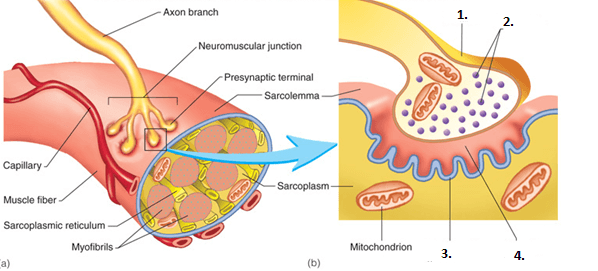
synaptic cleft (synapse)
The neuron that transmits an impulse from the central nervous system to the muscle is called a:
sensory neuron
motor neuron
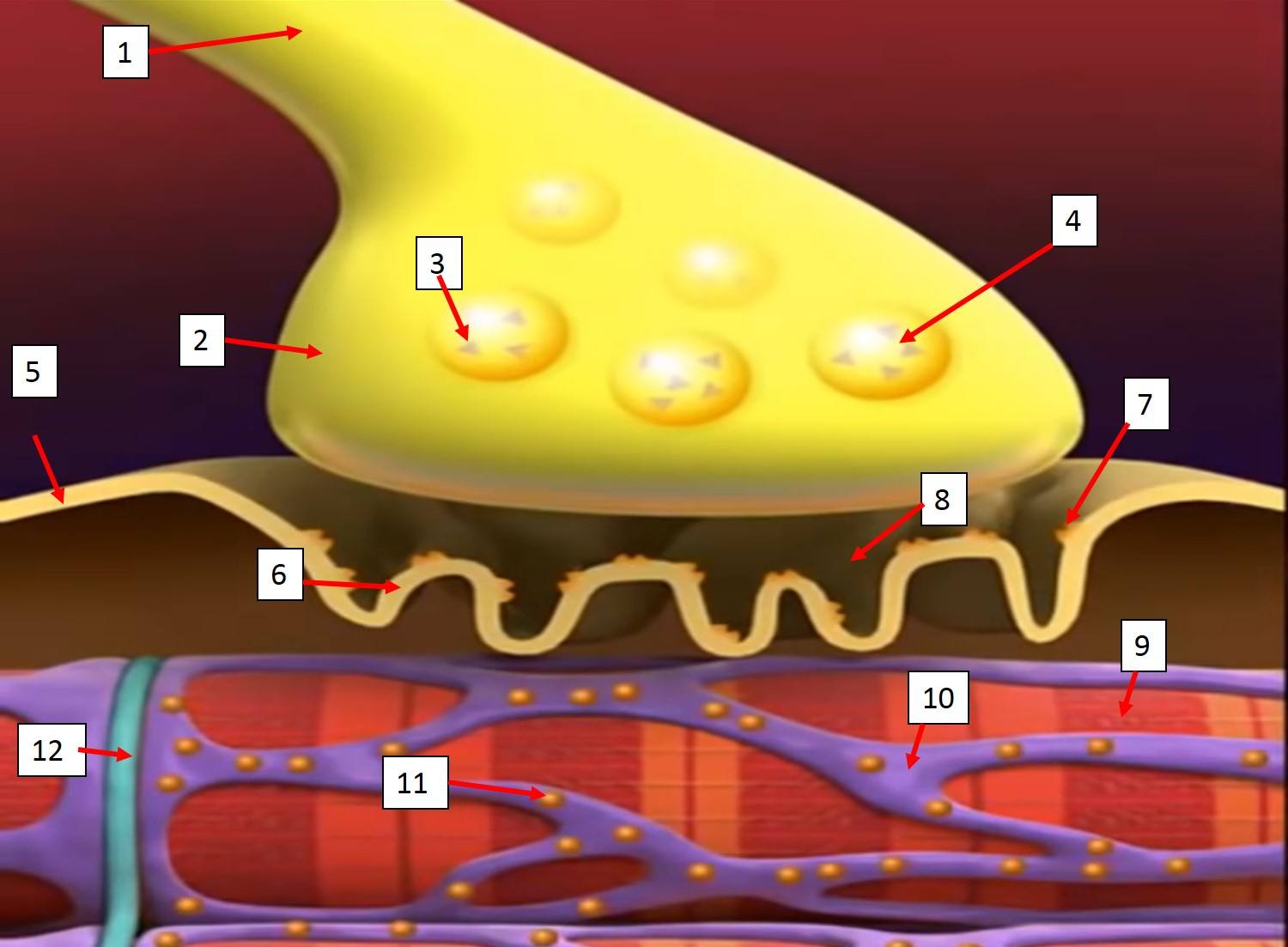
The organelle that stores ACh in the axon is identified as #4
(a)
___are regulatory proteins that cover the myosin binding site on the actin.
troponin-tropomyosin
sarcomere
sarcolemma
sarcoplasmic reticulum
Calcium binds to (a) of the troponin-tropomyosin complex.
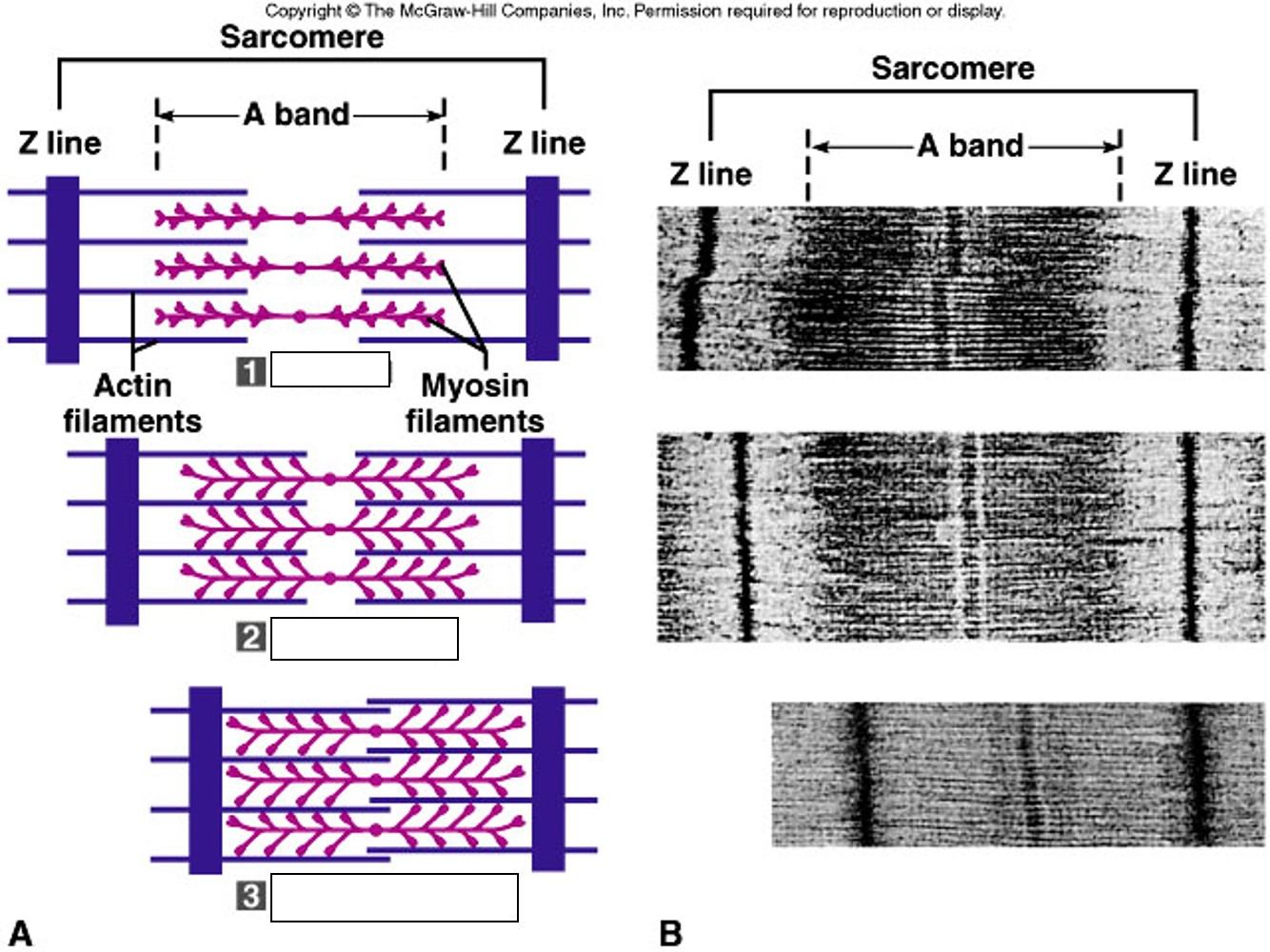
A ___extends from one Z disc to another Z disc.
Sarcolemma
Neuromuscular junction
Sarcomere
Motor end plate
___gets shorter during contraction.
actin
myosin
troponin-tropomyosin
none of these
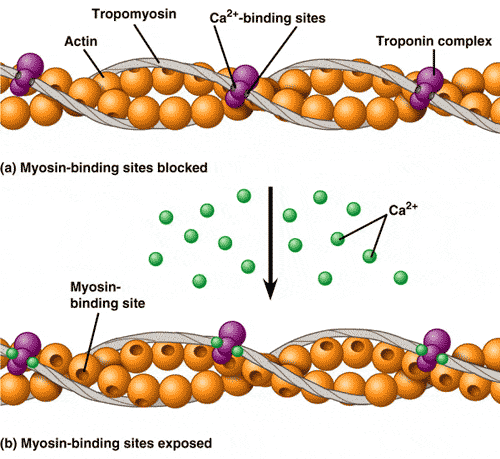

Calcium is going to bind to the protein (a) This will cause (b) to change shape because the (c) moves and exposes the (d) .


ACh that diffuses across the synaptic cleft attach to
sodium gates on muscle fiber
troponin on the actin molecule
the sarcomere to stimulate contraction
myosin heads to form crossbridges

Biceps brachii
Triceps brachii
Occuli
Trapezius

(a)


Rectus abdominis
Gastrocnemious
Tibialis anterior
Serratus anterior

Rectus abdominis
Gluteus maximus
Tibialis anterior
Serratus anterior
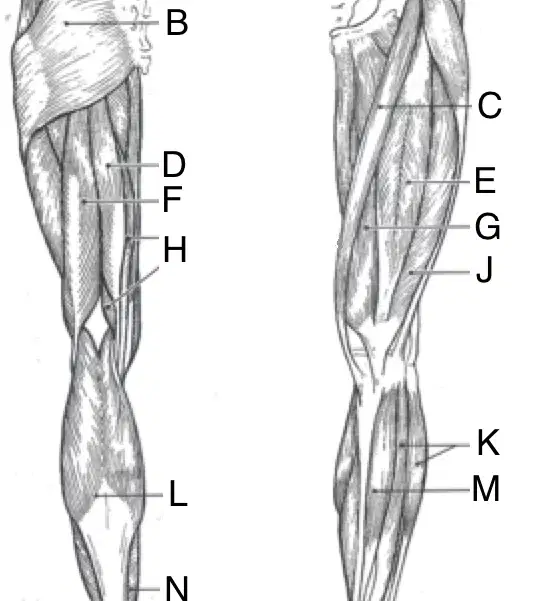
What is "J "?
Vastus Lateralis

Sartorius

Identify the muscle
gastrocnemius
semitendinosis
biceps femoris
semimembranosis

What muscle is this?
Gluteus maximus
Gluteus medius
Adductor magnus
Gracilis

The muscle shown in the image is (a)
Epimysium is...
connective tissue that surrounds the whole muscle
connective tissue that surrounds bundles (fascicles) of 10 to 100 muscle cells.
connective tissue that separates individual muscle cells.
Perimysium is...
connective tissue that surrounds the whole muscle
connective tissue that surrounds bundles (fascicles) of 10 to 100 muscle cells.
connective tissue that separates individual muscle cells.

The muscle shown in the image is the (a) .

What muscle is highlighted?
(a)

What muscle is highlighted?
Latissimus dorsi
Latissimus frontalis
Sartorius
Rectus femoris

The muscle highlighted is the (a) .

What muscle is highlighted in the picture?
Triceps brachii
Biceps brachii
External Oblique
Deltoids
The muscle movement that occurs when you move your hand from an open palm to a fist is called (a) .

Identify muscle H
Transversus abdominis
Rectus abdominis
Intercostal muscle
Internal obliques
External obliques
Identify muscle G
Transversus abdominis
Rectus abdominis
Intercostal muscle
Internal obliques
External obliques
Identify muscle F
Transversus abdominis
Rectus abdominis
Intercostal muscle
Internal obliques
External obliques

(a)

How does blocking the release of acetylcholine impact muscle function?
Without acetylcholine muscles will remain contracted.
Without acetylcholine muscle will not contract.
Acetylcholine would build up in the synapse.
All of the above could be true.
Chewing, elevates and protracts mandible
masseter
temporalis
frontalis
buccinator
flexes and rotates head
sternocleidomastoid
buccinator
platysma
temporalis
The muscle that flexes the vertebral column is (a)
protracts scapula, raises arm
serratus anterior
deltoid
pectoralis minor
pectoralis major
extends and adducts the arm
latissimus dorsi
pectoralis major
pectoralis minor
teres major
(a) dorsiflexes the foot, inverts the foot

Platysma
Elevate corners of mouth (smile)
Depress (lower) corners of mouth (frown)
Pucker lips
Sucking Motion

Pectoralis Major
Adduct and flex shoulder
Abduct and flex shoulder
Adduct and extend shoulder
Abduct and extend shoulder

Rotator Cuff (Pick TWO true statements)
Prime mover for flexing shoulder
Fixator for shoulder joint
Very difficult to injure
Made up of four muscles
Fill in the blank: The ability of muscle tissue to return to its original shape after being stretched is called _______.
A) Extensibility
B) Elasticity
C) Contractility
D) Excitability
Which of the following is NOT a characteristic of smooth muscle?
A) Involuntary
B) Striated
C) Can be stretched
D) Found in hollow organs.
Fill in the blank: The ability of muscle tissue to receive and respond to a stimulus is known as ______.
Contractility
Excitability
Flexibility
Elasticity
Which muscle type is striated and involuntary?
Skeletal Muscle
None of the above
Cardiac Muscle
Smooth Muscle
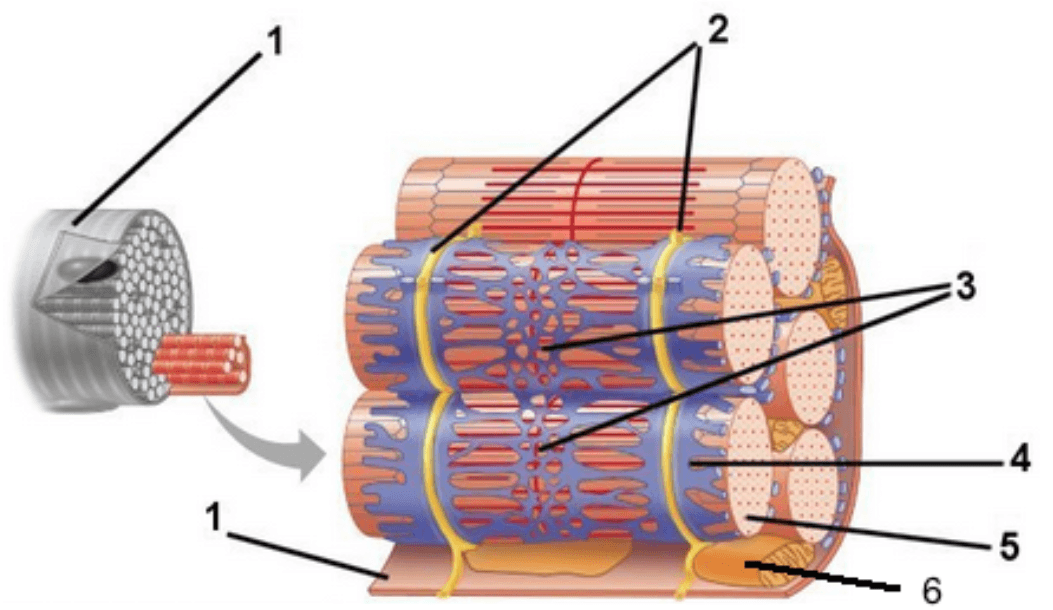
What is shown in the colored part of this diagram?
a whole muscle
five muscle fibers
five muscle fascicles
five myofibrils
Moves towards the midline
Abduction
Supination
Adduction
Pronation
Muscles work in opposition (opposing pairs) to each other
False
True
Muscles are attached to the bones by:
cartilage and fascia
ligaments and tendons
tendons and fascia
ligaments and cartilage
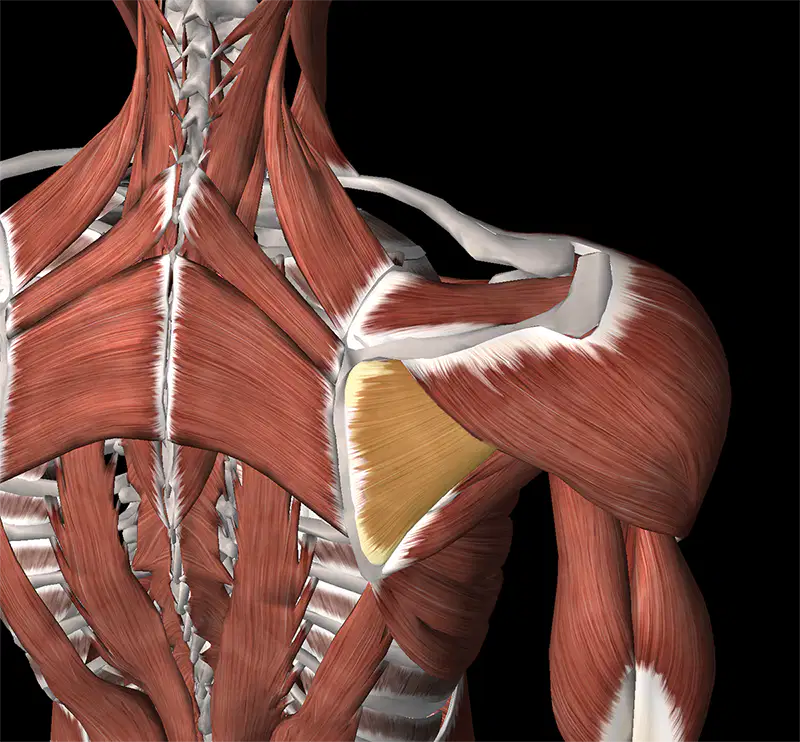
name the highlighted muscle
(a)

What muscle is #4
supraspinatus
infraspinatus
teres minor
subscapularis

