
 Worksheets
APHuG Unit 4 Review Terms
Total questions: 60
Worksheet time: 30mins
A state is a synonym for a
territory
country
unit
member
The Kurdish people are examples of which of the following?
A people with a sovereign state.
A nation.
A stateless nation.
A nation-state.
What is the largest multinational state?
USA
Indonesia
Russia
China
What two states does the Basque nation exist within?
Northern Spain and France
Southern Spain and Morocco
Catalonia and Spain
Western Spain and Portugal
(Unit 4) Eastern Europe during the 1940's through the early 1990's can be identified as a
region dominated by theocracies
region with no political conflicts
homogeneous region
shatterbelt
When a sign is at a border it is a
administered boundary
delimited boundary
demarcated boundary
militarized boundary
superimposed boundary
superimposed boundary
a political boundary placed by powerful outsiders on a developed human landscape
a boundary where crossing is unimpeded
a boundary that is heavily guarded and discourages movement; N & S Korea example
a political boundary which dictates territory regained that was once yours previously
European Union
an association of European nations formed in 1993 for the purpose of achieving political and economic integration.
a traditionally European desire to create and have a state of ones own
provinces that have been granted a certain degree of political and cultural autonomy, or freedom from centralized authority by the government
a group of people with a common political identity who do not have a territorially defined, sovereign country of their own located in central Europe
subsequent boundary
a political boundary placed by powerful outsiders on a developed human landscape
a boundary identified by a physical object or feature
A boundary drawn after a cultural landscape is already in place
a former boundary line that is still discernible and marked by some cultural landscape features
U.N.
international organization formed in 1945 to increase political and economic cooperation among 193 member countries.
An internal organization of a state that allocates most powers to units of local government.
an association of European nations formed in 1993 for the purpose of achieving political and economic integration.
the parts of the ocean in which no government has sovereignty
antecedent boundary
a boundary line established before the area in question is well populated such as a physical feature
a boundary identified by placing a physical object or feature to denote the boundary
A boundary drawn after a cultural landscape is already in place
a former boundary line that is still discernible and marked by some cultural landscape features
Heartland Theory
Created by Friedrich Ratzel. The view that states resemble biological organisms with life cycles that include stages of youth, maturity, and old age.
Created by Halford MacKinder. Hypothesis proposed by Halford MacKinder that held that any political power based in the heart of Eurasia could gain enough strength to eventually dominate the world.
Created by Nicholas Spykman. The theory that the domination of the coastal fringes of Eurasia would provided the base for world conquest.
Proposed by Harry Truman. The political theory that if one nation comes under Communist control then neighboring nations will also come under Communist control
Rimland Theory
Created by Friedrich Ratzel. The view that states resemble biological organisms with life cycles that include stages of youth, maturity, and old age.
Created by Halford MacKinder. Hypothesis proposed by Halford MacKinder that held that any political power based in the heart of Eurasia could gain enough strength to eventually dominate the world.
Created by Nicholas Spykman. The theory that the domination of the coastal fringes of Eurasia would provided the base for world conquest.
Proposed by Harry Truman. The political theory that if one nation comes under Communist control then neighboring nations will also come under Communist control
Multistate nation
a group of people with a common culture living in a territory and having a strong sense of unity
A state whose territory corresponds to that occupied by a particular ethnicity that has been transformed into a nationality
nation that transcends the borders of two or more states
An area organized into a political unit and ruled by an established government with control over its internal and foreign affairs.
exclusive economic zone EEZ
the seazone extending 200 nautical miles from the coast over which a state has special rights as to the exploration and use of marine resources
Between 12 and 24 nautical miles from shore, a state may enforce laws concerning pollution, taxation, customs, and immigration
A boundary that follows the distribution of cultural characteristics.
Attempt by one country to establish settlements and to impose its political, economic, and cultural principles in another territory.
A small state such as Switzerland might benefit from a _____ system of government, whereas a large state such as Russia might benefit from a ______ system of government
unitary / federal
democratic / autocratic
federal / unitary
autocratic / democratic
city-state / nation-state
The attempt by one country to force its political control over another territory is
constitutionality.
colonialism
self-determination
sovereignty.
What four states does Kurdistan exist within?
Syria, Lebanon, Jordan, and Armenia
Turkey, Armenia, Iran, and Georgia
Syria, Turkey, Iran, and Iraq
Iran, Iraq, Saudi Arabia, and Israel
A state that has freedom over its own affairs has...
Balkanization
Nationalism
Sovereignty
Pluralism
Which of the following is a good example of a Relic boundary?
The Berlin Wall
The Himalayan Mountains
The Red Sea
The Latitude Line diving the US & Canada
Which of the following steps is when boundaries are drawn on a map?
Defining
Delimiting
Demarcating
Adminstering
Which of the following explains why Korea and Vietnam were viewed as shatterbelts during the
Cold War?
Korea and Vietnam were politically controlled by regional powers.
Korea and Vietnam kept two political adversaries geographically separated.
Korea and Vietnam fragmented into new states due to internal tensions.
Korea and Vietnam tried to control land and sea areas around their states.
Korea and Vietnam experienced conflict due to a dispute between global powers.
Which of the following is an accurate comparison of devolutionary movements in Spain and
Canada?
There is an economic aspect to the Quebecois independence movement, while the Catalans focus mainly on culture.
Both independence movements utilize cultural distinctiveness as their only reason for seeking independence.
Both independence movements focus on religious differences with the nations they currently belong to
There is an economic aspect to the Catalan independence movement, while the Quebecois focus mainly on cultural differences.
Both independence movements utilize economic power as their main reason for seeking independence
Which of these best describes the Scramble for Africa?
Imperialist powers sliced Africa amongst themselves by drawing borders on a map
Diplomats worked with tribal leaders to determine how to colonize countries in Africa
European countries worked to finance capital expansion in African nations through loans.
The United States used the Roosevelt Corollary to prevent nations from colonizing Africa.

Why did large numbers of Hindus and Muslims migrate immediately after India gained its independence?
Many jobs were being outsourced overseas.
The government offered housing incentives in newly developed areas.
Religious pilgrimages to neighboring countries were required based on their beliefs.
The subcontinent was divided into countries based primarily on the location of religious majorities.
What term is defined as a new way to exert control over developing countries through indirect means (economic, political, and/or cultural power), instead of through direct military political control?
Federal state
Unitary state
Colonialism
Imperialism
Neocolonialism
What term is refers to how trade and technology have made the world into a more interconnected and interdependent place?
Imperialism
Globalization
Devolution
Supranationalism
Neocolonialism
What term is defined as the transfer of political power from the central government to sub-national levels of government (Ex. Regional, state, local governments)?
Centrifugal force
Centripetal force
Devolution
Ethnic cleansing
Ethnic separatism
What term is a defined area within a state that has a high degree of self-governance and freedom from its parent state?
Example: Navajo Nation in the U.S.
Autonomous Region
State
Nation
Nation-State
Stateless Nation
What term is defined as a strategic strait or canal which could be closed or blocked to stop sea traffic?
Choke Point
Stateless Nation
Shatterbelt
Autonomous Region
Channel
The boundaries that define who represents you in the government
Democratization
Voting district
NATO
UN
the law that governs international water
demarcation
delimitation
UNCLOS
chokepoint
If there is less than 400 nautical miles between two states then ____ will be used
Median Line Principle
UNCLOS
Law of the Sea
Consequence Principle
States may gain or lose congressional representation as population levels change. This process is called:
gerrymandering
redistricting
realignment
reapportionment
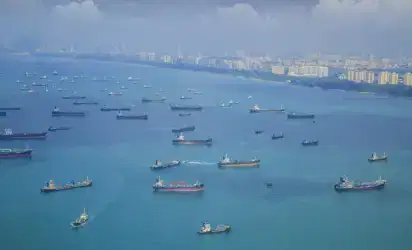
The Suez Canal, Panama Canal, and the Strait of Malacca are examples of
Choke Points
Shatterbelts
Nation-States
Superimposed Boundaries
What is territoriality?
the willingness of a person or group of people to defend a space that they claim
people being okay with giving up their land
defending an area
none of the above
A _____ is a capital city that has been moved to a new location for economic or strategic reasons.
Relocated Capital
Forward Capital
Moved Capital
Consequent Capital

