
 Worksheets
Intro to A&P Test Review
Total questions: 40
Worksheet time: 20mins
Which of the following is the correct sequence, going from simplest to most complex, in the levels of structural organization of the human body:
cellular level, chemical level, tissue level, organ system level, organismal level, organ level
chemical level, cellular level, tissue level, organ level, organ system level, organismal level
chemical level, tissue level, cellular level, organ system level, organ level, organismal level
cellular level, chemical level, tissue level, organ level, organ system level, organismal level
cellular level, tissue level, chemical level, organ level, organ system level, organismal level
The study of the function of the body and body parts is called:
physiology
homeostasis
negative feedback
irritability
anatomy
Which of the following activities does not represent an anatomical study:
making a section through the heart to observe its interior
observing the parts of a reproducing cell
examining the surface of a bone
studying how the nerves conduct electrical impulses
viewing muscle tissue through a microscope
Which of these structures is the most complex:
a molecule
organ system
a cell
a tissue
an organ
In anatomical position:
the body is erect with the feet parallel and the arms hanging at the sides with the palms facing forward
the body is lying face up with the feet parallel and the arms at the sides with the palms facing forward
the body is lying face down with the feet parallel and the arms at the sides with the palms facing backward
the body is erect with the feet parallel and the arms hanging at the sides with the palms facing backward
the body is lying face up with the feet parallel and the arms at the sides with the palms facing backward
Which of the following is NOT a necessary life function:
nutrients
responsiveness
movement
maintaining boundaries
metabolism
A section that divides the body on the longitudinal plane into equal right and left parts is called:
oblique
median (midsagittal)
frontal
transverse
coronal
Which type of section could be used to separate the thoracic cavity from the abdominopelvic cavity:
dorsal
coronal
sagittal
transverse
ventral
The lymphatic system:
picks up fluid leaked from blood vessels and returns it to the blood
responds to internal and external changes by activating appropriate muscles and glands
produces heat
synthesizes vitamin D
secretes hormones that regulate processes such as growth, reproduction, and nutrient use (metabolism) by body cells
The system that takes in oxygen and releases carbon dioxide to the exterior is the:
cardiovascular system
muscular system
respiratory system
urinary system
reproductive system
The system that controls and coordinates the body through hormones is the:
nervous system
endocrine system
skeletal system
integumentary system
digestive system
The muscular system consists of the:
skeletal muscles and the muscles of the heart
skeletal muscles
muscles of the heart and those in the walls of the hollow organs
muscles of the heart
muscles in the walls of hollow organs
The ovary is part of which of the following two systems:
digestive and respiratory systems
endocrine and respiratory systems
reproductive and respiratory systems
reproductive and endocrine systems
digestive and endocrine systems
Which system covers the external surface of the body and manufactures vitamin D:
integumentary system
nervous system
endocrine system
lymphatic system
skeletal system
Elimination of metabolic wastes from the body is the function of the:
digestive and urinary systems
digestive system
urinary system
respiratory system
digestive and respiratory systems
Which of the following systems is matched most accurately to the life function it provides:
respiratory system - digestion
nervous system - excretion
muscular system - maintaining boundaries
nervous system - responsiveness
integumentary system - movement
Your body thermostat is located in a part of the brain called the hypothalamus. Which of the following elements of a control system does this area in the brain represent:
afferent pathway
effector
efferent pathway
stimulus
control center
Which of the following elements of a control system detects a change:
effector
efferent pathway
stimulus
control center
receptor
Positive feedback systems:
regulate heart and breathing rates, and operate in such a way that the initial stimulus is enhanced and increases
regulate heart and breathing rates, and operate in such a way that the initial stimulus is shut off or reduced
regulate heart and breathing rates
operate in such a way that the initial stimulus is enhanced and increases
operate in such a way that the initial stimulus is shut off or reduced
Which of the following is the correct order of elements in a control system?
receptor, stimulus, afferent pathway, control center, efferent pathway, effector, response
stimulus, receptor, afferent pathway, control center, efferent pathway, effector, response
effector, stimulus, efferent pathway, control center, afferent pathway, receptor, response
stimulus, receptor, efferent pathway, control center, afferent pathway, effector, response
receptor, stimulus, efferent pathway, control center, afferent pathway, effector, response
In describing the relationship of the thoracic and spinal cavities:
the thoracic cavity is inferior to the spinal cavity
the thoracic cavity is ventral to the spinal cavity
the thoracic cavity is medial to the spinal cavity
the thoracic cavity is proximal to the spinal cavity
the thoracic cavity is superior to the spinal cavity
The dorsal body cavity houses the:
spinal cord and brain
heart and lungs
tongue
urinary and reproductive organs
digestive and reproductive organs
The stomach, liver, intestines, bladder, rectum, and reproductive organs are housed in the:
abdominopelvic cavity
cranial cavity
thoracic cavity
spinal cavity
dorsal cavity
The region that contains the navel is the:
inguinal region
carpal region
anterior knee
umbilical region
orbital region
The lungs and heart are in the ________ body cavity.
thoracic
dorsal
abdominopelvic
cranial
spinal
What does the term "Inferior" mean in anatomical terminology?
Above
Below
Behind
In front of
What does the term "Lateral" refer to in anatomical terms?
Toward the midline
Toward the side
Away from the body surface
Close to the origin of the body part
In anatomical terminology, what does "Medial" mean?
Toward the midline
Away from the body surface
Farther from the origin of a body part
Behind
What is the meaning of "Superior" in anatomical terms?
Below
Above
Behind
In front of
What does "Proximal" mean in anatomical terminology?
Farther from the origin of a body part
Close to the origin of the body part
Away from the body surface
Toward the side
In anatomical terms, what does "Ventral" refer to?
Behind
In front of
Below
Above
What does "Dorsal" mean in anatomical terminology?
Behind
In front of
Toward the midline
Away from the body surface
What is the meaning of "Deep" in anatomical terms?
Toward the midline
Away from the body surface
Below
In front of
What does "Distal" mean in anatomical terminology?
Close to the origin of the body part
Farther from the origin of a body part
Toward the midline
Behind

Label A points to the ________ cavity.
Cranial
Thoracic
Abdominal
Pelvic

Label B points to the ________ cavity.
Thoracic
Cranial
Spinal
Pelvic
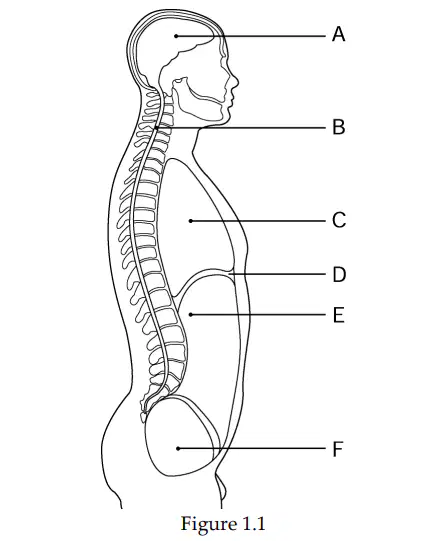
Label C points to the ________ cavity.
Abdominal
Cranial
Thoracic
Pelvic
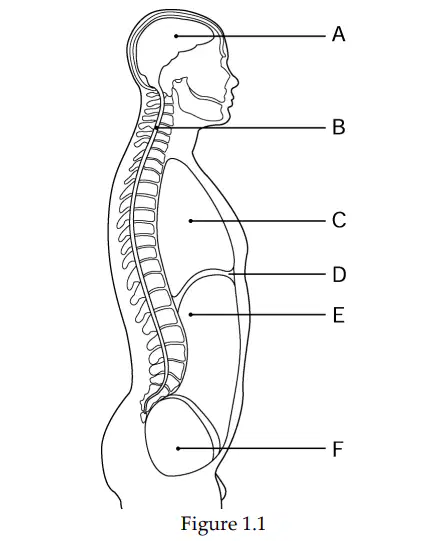
Label D points to the ________.
Diaphragm
Cranial cavity
Thoracic cavity
Pelvic cavity
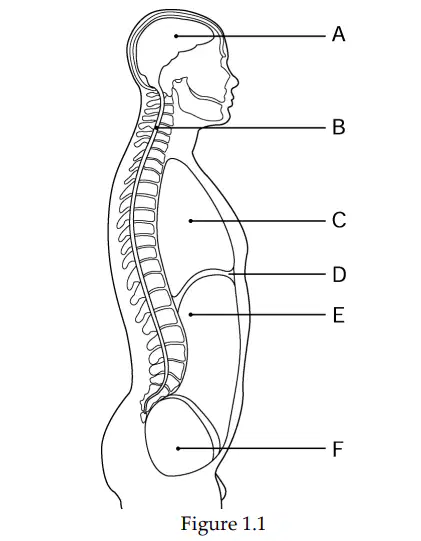
Label E points to the ________ cavity.
Pelvic
Cranial
Thoracic
Abdominal
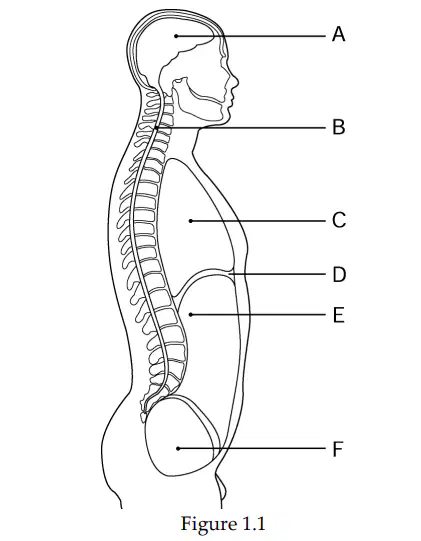
Label F points to the ________ cavity.
Pelvic
Cranial
Thoracic
Abdominal

