
 Worksheets
Honors Biology BM 2 Review: Enz, Cell cyc, Photo, Resp
Total questions: 181
Worksheet time: 3hrs 7mins
Enzymes are an example of
Lipids
Carbohydrate
Protein
Nucleic Acid
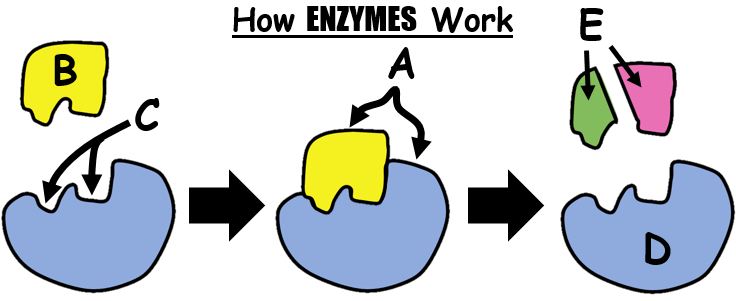
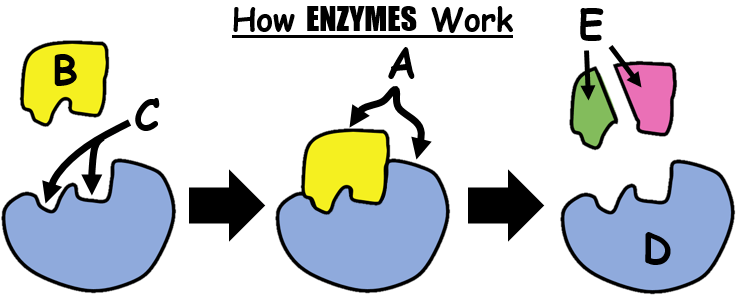
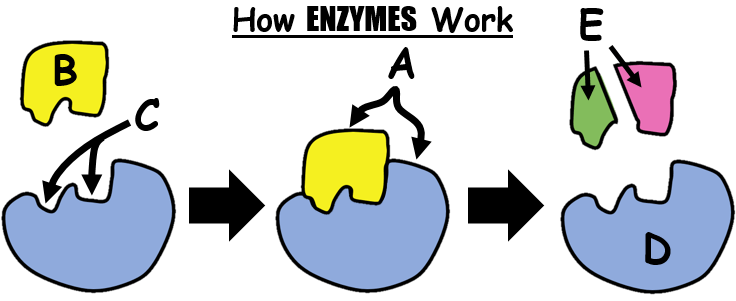
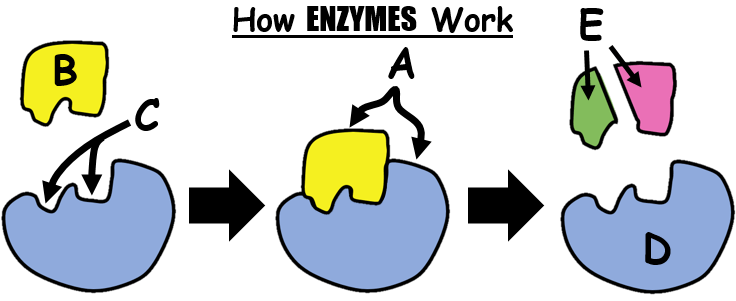
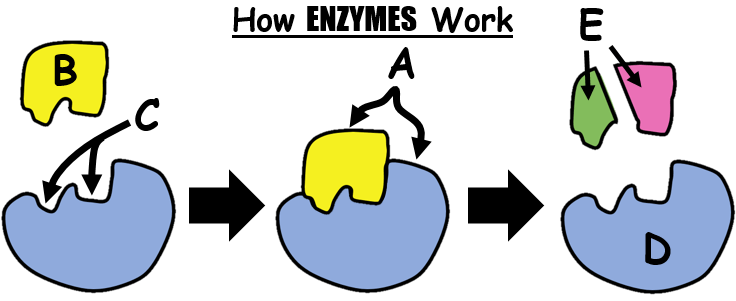
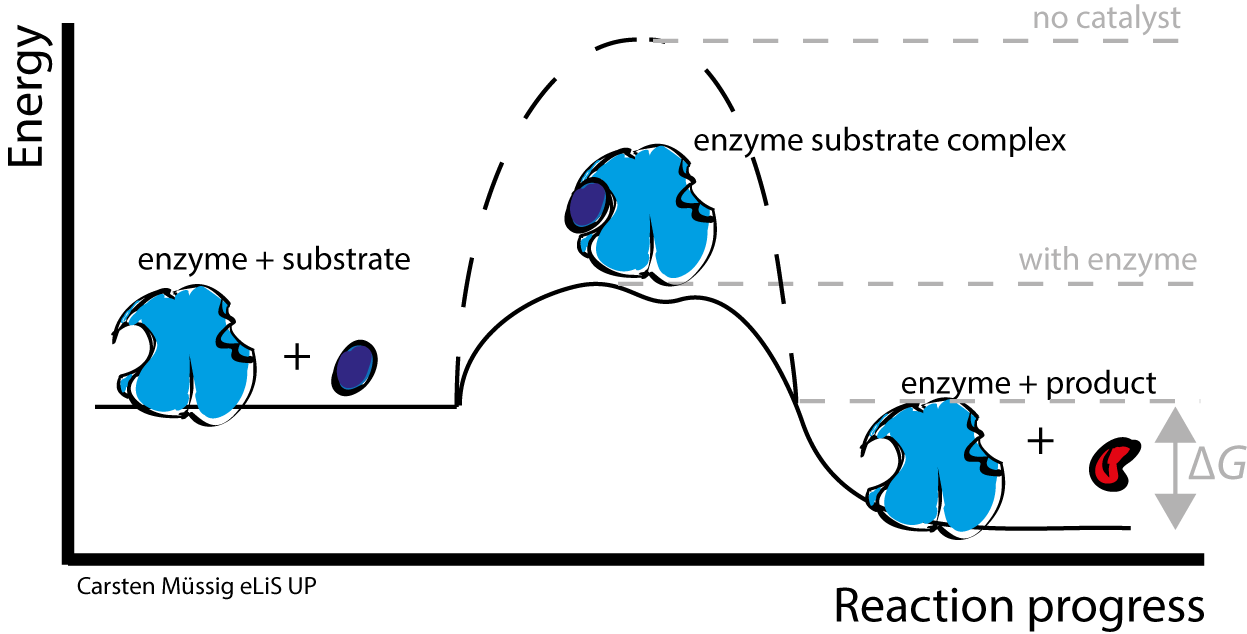
What happens when enzymes are heated to a high temperature?
The enzymes die.
The shape of the enzyme are changed and it denatures
The enzymes' amino acid sequence changes.
The enzymes remain the same
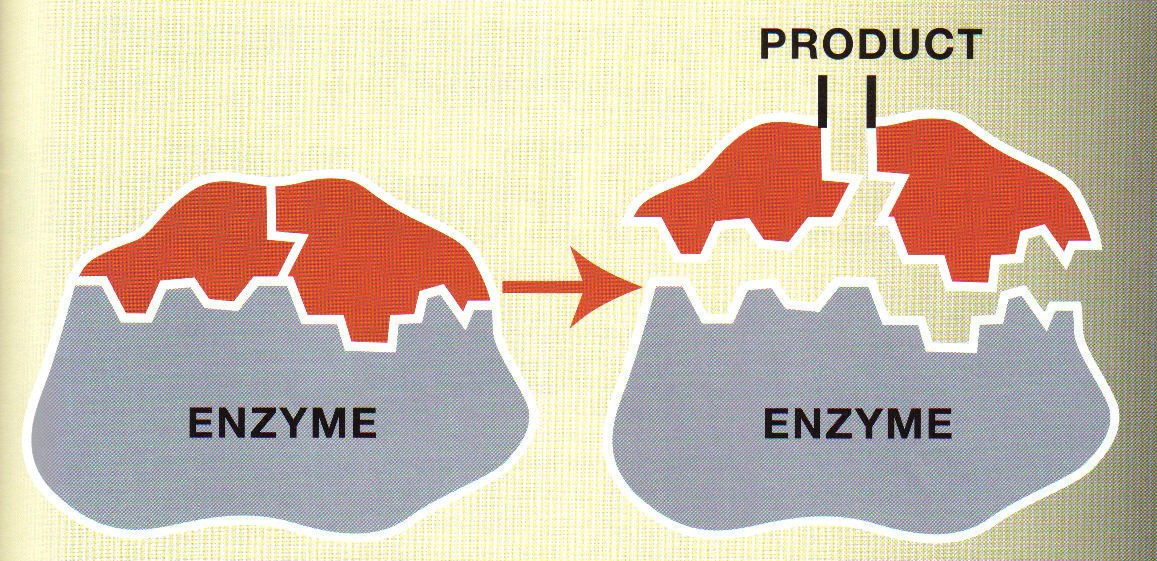
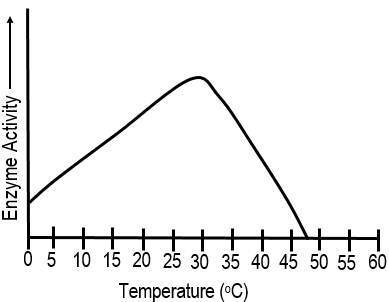
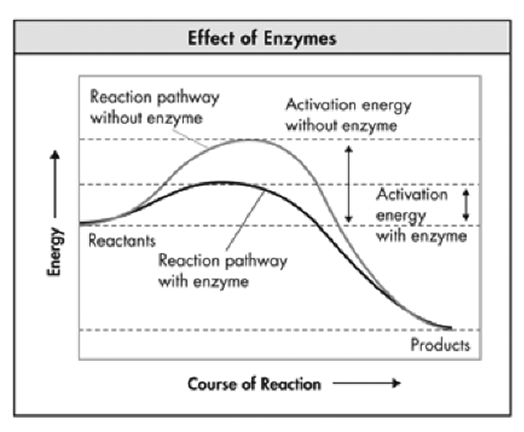

At which stage does the E/S complex first form?
1
2
3
4
At which stage does the active site lose its shape if the enzyme becomes denatured?
1
2
3
4
When an enzyme becomes denatured, its active site loses it shape. This means that the ______________ chains in the protein (enzyme) become disrupted and cause the protein to unravel and lose its shape.
hyrocarbon
amino acid
nucleic acid
glycoprotein
Enzymes are what type of biomolecule?
lipids
nucleic acids
proteins
carbohydrates

Ava is studying human physiology and is looking at a graph comparing enzyme activity at different temperatures. Which enzyme would function best in the human body?
A (blue)
B (red)
Both
Neither

James is conducting an experiment on an enzyme commonly found in the human stomach. At a pH of 4, what could happen to this enzyme?
It would catalyze the digestion of proteins at a faster rate.
It would have no effect on its activity.
It would function at its optimum activity level.
It would possibly denature and lose function.

In a science fair experiment, Oliver and Emma observed that under optimal pH, Catalase can speed up the complete decomposition of H2O2 in about _____ seconds.
20
40
60
80
During a science fair, Michael presented an experiment on the enzyme Catalase. He explained that if the pH of Catalase were altered, it would function better at a pH of ____.
1-2
4
12
7 or 8
The rate of enzymatic activity decreases after optimum temperature because enzymes start to (a) .

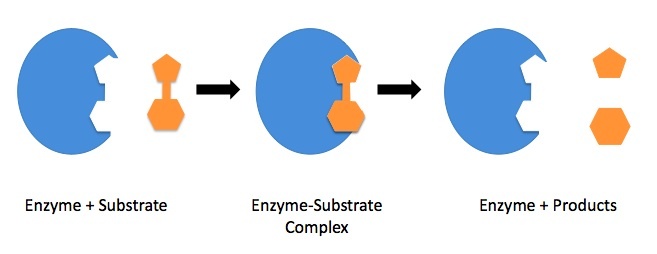
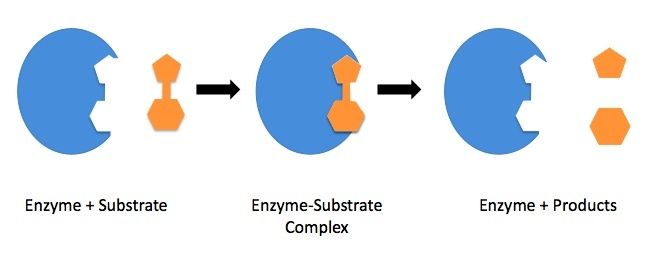
A receptor site that a molecule can bind to that changes the shape of the active site is called a(n):
Allosteric Site
Active Site
Activation site
Reactant site
How does pH affect enzyme action?
B. Enzymes denature at neutral pH
D. Enzymes are not affected by pH
A. Enzymes work best at all pH levels
C. Each enzyme has an optimum pH for activity
What is the effect of temperature on enzyme activity?
D. Enzymes are not affected by temperature
C. Enzymes denature at extreme temperatures
B. High temperatures prevent enzyme reactions
A. Low temperatures speed up enzyme reactions
What happens when enzymes are denatured?
D. Enzymes increase in activity
A. Enzymes lose their substrate specificity
B. Enzymes become more efficient
C. Enzymes change shape and lose function
What happens when the active sites of enzymes become saturated?
The enzyme denatures
The reaction rate increases
The reaction rate decreases
No further increase in reaction rate
What is the purpose of increasing enzyme concentration in a reaction?
To stabilize the substrate
To inhibit the enzyme
To decrease the rate of reaction
To increase the rate of reaction
What type of inhibition occurs when a molecule binds to the active site of an enzyme?
Competitive inhibition
Non-competitive inhibition
Mechanism-based inhibition
Feedback inhibition
How do non-competitive inhibitors affect enzyme activity?
Increase the rate of reaction
Decrease the rate of reaction
Denature the enzyme
Have no effect on the rate of reaction
How does substrate concentration affect enzyme activity?
A. High substrate concentration speeds up enzyme activity
B. Low substrate concentration denatures enzymes
C. Substrate concentration has no effect on enzyme activity
D. Enzymes work best at all substrate concentrations
How do allosteric inhibitors affect enzyme activity?
They bind to the active site of the enzyme
They increase enzyme activity
They bind to a site other than the active site, altering enzyme shape
They prevent substrate binding to enzymes
What is the effect of substrate specificity on enzyme activity?
Enzymes with high substrate specificity can bind to a wide range of substrates
Enzymes with low substrate specificity can only bind to a specific substrate
Substrate specificity has no impact on enzyme activity
Enzymes with high substrate specificity can only bind to a specific substrate
Where in the cell does cellular respiration take place?
Golgi apparatus
Ribosomes
Mitochondria
Chloroplasts
Where in the cell does photosynthesis take place?
Chloroplasts
Ribosomes
Mitochondria
Golgi Apparatus
If carbon dioxide is removed from a plant's environment, what would you expect to happen to its production of sugar (glucose)?
More sugars would be produced
No sugars would be produced
The same number of sugars would be produced, but without carbon dioxide
Carbon dioxide does not affect the production of sugars in plants
An acorn that weighs one or two ounces can grow into an oak tree weighing as much as 3 to 4 tons! Where does all of that matter come from?
Mostly from the carbon dioxide found in the air
Mostly from the oxygen found in the air
Mostly from the water absorbed by the roots of the tree
Mostly from the nutrients found in the soil

Where does the Calvin Cycle take place?
Thylakoid
Grana
Stroma
Stoma
Where does the light reaction take place?
Thylakoid
Grana
Stroma
Stoma
Which of the following happens in the light reaction?
Water is split into hydrogen and oxygen.
Organic molecules are formed.
ATP is generated.
NADPH is oxidized.
Chlorophyll absorbs all wavelengths of light.
True
False
It is the process where light splits water into hydrogen and oxygen.
Carbon fixation
Reduction
Photolysis
Hydrolysis
Which wavelength of light is reflected by the chlorophyll?
Blue
Green
Yellow
Red
The Calvin cycle is also called the dark reaction because it does not need light energy, but it doesn't usually occur at night. Why?
It is too cold for the reaction to take place.
CO2 concentrations decrease at night.
The Calvin cycle depends on the products of the light reaction.
Plants usually open their stomata at night.


Which of the following equations represents the overall chemical reaction for photosynthesis?
6O2+ 6H2O → C6H12O6+ 6O2
C6H12O6 + 6H2O→ 6O2+ 6O2
6CO2+ 6H2O→ C6H12O6+ 6O2
6O2 + 6H2O→ C6H12O6 + 6CO2


Why does the rate of photosynthesis decrease at high temperatures?
Enzymes are denatured
Enzymes do not have enough kinetic energy
The light-DEPENDENT reaction of photosynthesis needs... (multi-select)
Water
Light
Chlorophyll
Carbon Dioxide
The light-INDEPENDENT reaction of photosynthesis needs...
Water
Light
Chlorophyll
Carbon Dioxide
What is the electron carrier molecule for photosynthesis?
FAD
NADP+
NAP+
GLUT+
The light-DEPENDENT reactions produce (select all that apply)
ATP
NADPH
Oxygen
Sugar
The light-INDEPENDENT reactions produce (select all that apply)
ADP
NADP+
Oxygen
Sugar
What is the name for the light-INDEPENDENT reaction of photosynthesis?
Krebs Cycle
Water Cycle
Calvin Cycle
Carbon Cycle

Identify what is shown in the picture
chlorophyll
stomata
carbon dioxide
veins
What protects Stomata and helps it in opening and closing?
Guard Cells
Leaf
Stem
Carbon Dioxide
Of the selection given, select all that are correct parts of a leaf.
Palisade Mesophyll
Upper Epidermis
Esophagus
Guard cell

What is the relationship between the plant and the duck?
"A" represents oxygen produced by the duck and "B" represents carbon dioxide produced by the plant
"A" represents carbon dioxide produced by the plant and "B" represents oxygen produced by the duck
"A" represents oxygen produced by the plant and "B" represents carbon dioxide produced by the Duck
"A" represents the sunlight received by the plant and "B" represents the oxygen produced by the duck

Which describes the transfer in this image?
Carbon Dioxide from the air becomes glucose in the plant. The deer ingest the glucose and it becomes carbon.
Carbon Dioxide from the air becomes water in the plant. The deer ingest the water and it becomes oxygen.
Oxygen from the air becomes carbon dioxide in the plant. The deer ingest the carbon dioxide and it becomes carbon.
Water from the air becomes Oxygen in the plant. The deer ingest the Water and it becomes Oxygen.
What is released as a waste product from photosynthesis?
CO₂
H₂O
C₆H₁₂O₆
O₂
Which "energy-carrying molecules" are produced from the light-dependent reaction?
Carbon-Dioxide & Water
ATP & NADPH
Glucose & ATP
Glucose & Water
What is produced from the light-independent reaction in photosynthesis?
Glucose
NADPH
ATP
Oxygen
What does the prefix "chemo" mean? Ex: CHEMO-synthesis
Light
Color
Cell
Chemical
What is another name for the light-dependent reaction in photosynthesis?
Calvin Cycle
Chloroplast
Electron Transport Chain
Chlorophyll
What are the PRODUCTS of photosynthesis?
CO₂ and O₂
H₂O and O₂
CO₂ and H₂O
C₆H₁₂O₆ and O₂
What are the REACTANTS for photosynthesis?
CO₂ and O₂
H₂O and O₂
CO₂ and H₂O
C₆H₁₂O₆ and O₂
One molecule of G3P is made during a single turn of the Calvin Cycle. How many G3P molecules does it take to make one glucose?
1
2
3
4
Where in the chloroplast does the Calvin Cycle take place?
thylakoids
matrix
stroma
nucleus
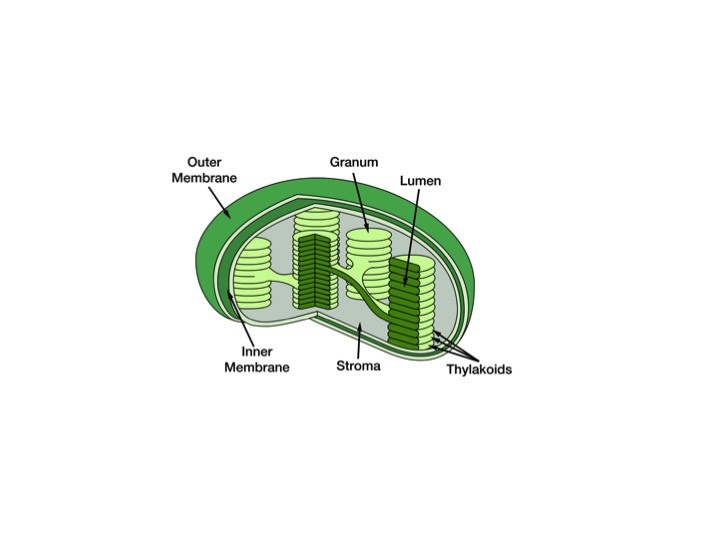

What does light do when it strikes the chlorophyll molecules of photosystems I and II?
Light causes glucose to be synthesized directly inside the chlorophyll molecules of the photosystems.
Light causes electrons to get excited (gain energy) and travel down the electron transport chain embedded in the thylakoid membrane.
Light causes the conversion of water into carbon dioxide, oxygen, and electrons.
Light directly causes carbon dioxide to attach to RuBP during the carbon fixation stage of the Calvin Cycle.

Which of the following is true?
PS1 comes before PSII
PSII comes before PS1

Water splits into what three things?
oxygen, electrons, hydrogen ions
electrons, ATP, and NADPH
Rubisco, RuBP, G3P
hydrogen ions, electrons, carbon dioxide
ATP and NADPH are made in the _______________ and used in the _________________
Stroma, Chlorophyll
Calvin cycle, Krebs cycle
dark reactions, light reactions
light dependent reactions, light independent reactions
ATP stands for
After the product
photosynthesis
ADP
adenosine triphosphate
ADP stands for
cytoplasm
Adenosine diphosphate
mitochondria
Automatic data process
Glycolysis occurs in which part of the cell?
ADP
Chloroplast
Cytoplasm
Mitochondria
What three things are needed for cellular respiration to happen?
Glycolysis
kreb cycle
oxidative phosphorylation

Examine the illustration of the photosynthesis equation. How does the equation relate to both photosynthesis and cellular respiration, and what is the connection between the two processes?
Photosynthesis utilizes energy to build carbohydrates, while cellular respiration metabolizes carbohydrates.
Photosynthesis utilizes energy to metabolize carbohydrates, while cellular respiration builds carbohydrates.
Photosynthesis and cellular respiration both utilize carbon dioxide and water to produce carbohydrates.
Photosynthesis and cellular respiration both metabolize carbohydrates to produce carbon dioxide and water.
make energy

Where does Glycolysis occur inside the cell? (first step in the overall process)
Cytoplasm
Mitochondria
Chloroplast
Nucleus
Atoms cannot be created or destroyed, merely rearranged
_________________ are the molecules and atoms that exit or are made from a chemical reaction.
Reactants
Products
Which molecule is NOT a high energy hydrogen carrier?
FADH2
NADH
oxygen
Where does the Citric acid cycle take place?
matrix of mitochondria
chloroplast
cytoplasm
Inner membrane of mitochondria
Each glucose (6C) produces how many pyruvic acid (3C) molecules?
5
2
3
4
Which step of aerobic cellular respiration makes the most ATP?
Glycolysis
Citric Acid Cycle
Electron Transport Chain
Light Dependent Reactions
Glycolysis provides a cell with a net gain of
2 ATP
4 ATP
32 ATP
36 ATP
What is the fate of pyruvic acid if oxygen is not present?
Stored in muscles for later use
Enters citric acid cycle
Converted to acetyl CoA through linking step
Converted to lactic acid via fermentation pathway
What happens to the carbon atoms in glucose during cellular respiration?
They are exhaled as CO2
They disappear
They are broken down and dissolve
They stay in the mitochondria forever
What statement best describes what happens in the electron transport chain?
NADH and FADH2 drop off hydrogens to form large quantities of ATP
pyruvic acid is formed from breaking down glucose
CO2 is released and H2O and ATP
glucose is broken down and ATP is formed
What is the role of oxygen in cellular respiration?
combines with other oxygen atoms and is liberated from cells
it is a waste product
provides the energy for the whole process of respiration
acts as the final electron acceptor
If oxygen is not present, pyruvate molecules undergo what?
Fermentation
Degradation
Biosynthesis
Biology
Where exactly does the citric acid cycle take place within the cell?
The cell membrane
Cytoplasm
The inner membrane of the mitochondria
the mitochondria
In the final stage of the electron transport chain what do hydrogen ions and electrons combine with to form water?
Oxygen
ATP synthase
Carbon dioxide
ADP
What are the products of fermentation in plant cells and yeast?
(a)
What product of photosynthesis is used during cellular respiration?
Glucose
Oxygen
ATP
ADP
What is the purpose of a cell constantly producing ATP?
provide the cell with energy
provide the cell with energye
To keep the cell running
To help it stay alive
Which of the following is the best definition for MEIOSIS?
the process of two haploid cells uniting
the counting of chromosomes within a diploid cell
a two-step process that reduces the number of chromosomes in half such that there is only one copy of all the chromosomes
the equational division of a cell into two identical copies
True or False? Before cells undergo meiosis they pass through interphase first.
true
false

In humans, the haploid number of chromosomes is ____.
23
46
69
92

In which stage of MEIOSIS does crossing over occur? (The exchange of genetic material between chromosomes in a tetrad.)
Anaphase I
Metaphase I
Prophase I
Telophase I
In Metaphase I, tetrads line up along the _______.
mitotic spindle
centrosomes
equatorial plane
contractile ring
In Anaphase I, the _________ are separated by the pulling of the spindle fibers to opposite poles of the cell.
homologous pairs of chromosomes
sister chromatids
centromeres
centrosomes
Check all of the following that DO occur during Telophase I and cytokinesis.
The separated homologous chromosomes are at opposite poles of the cell.
The cell divides in two.
The chromosomes do not uncoil, since they are getting ready for Meiosis II.
Sister chromatids are pulled away from each other.
At the start of Meiosis II, which of the following is NOT true?
There are two cells.
The cells are haploid.
The chromosomes are paired up as homologues.
DNA is present as two sister chromatids joined at the centromere.
In Prophase II, the_________ reforms and the spindle fibers attach to each chromosome.
mitotic spindle
centrosomes
nucleus
cell plate
In Metaphase II, _________ line up on equatorial plane.
homologous pairs of chromosomes
single chromosomes (made up of 2 sister chromatids)
tetrads
centrosomes
In Anaphase II, the _________ separate.
Homologues
Sister Chromatids
Tetrads
Centrioles
How many cells are formed at the end of Meiosis II?
2
3
4
8
True or False. In Meiosis II, there are TWO cells that go through each phase at the same time.
true
false
Which of the following does NOT happen during Telophase II?
the nuclei reform
each cell begins to split evenly in two
the chromosomes duplicate
the nuclei contain a haploid number of chromosomes
Which of the following are CORRECT observations about the differences between MITOSIS and MEIOSIS? (Check all that apply.)
Mitosis produces cells that identical to the parent cell.
Meiosis produces cells that have half the number of chromosomes as the parent cell.
All cells go through INTERPHASE as part of the cell cycle, whether it goes to mitosis or meiosis next.
In both types of cell division, the chromosomes are only duplicated once.
Only in Mitosis, do you see chromosomes pair up to form a tetrad.
Which part of MEIOSIS is identical to MITOSIS?
Meiosis I
Meiosis II
The products of MEIOSIS have _______ number of chromosomes.
haploid
diploid
Gorillas have 48 chromosomes in their skin cells. How many chromosomes would a female gorilla have in her egg cells?
12
24
48
96
Mangos have a diploid number of 40. How many chromosomes would you expect to find in the peel of a mango?
10
20
40
80

The G1, S, and G2 are parts of which phase of the cell cycle?
Prophase
Interphase
Telophase
Anaphase
Cells of organisms must replicate for?
Growth
Replacement of dying cells
Repair of damaged cells
All of the above

Why do cells go through mitosis?
to make food from sunlight
to get air into the cells
to create proteins
to reproduce, grow, and repair/replace cells
How many chromosomes does a human somatic (body) cell have?
46
23
42
26

What is this phase of Mitosis?
Prophase
Metaphase
Anaphase
Telophase


Is the following cell diploid or haploid?
Diploid
Haploid


Check the two correct boxes:
Plant Cell - cell plate; Animal Cell - cleavage furrow
Plant Cell - cleavage furrow; Animal Cell - cell plate
A disorder in which some of the body's cells lose the ability to control growth.
growth factor
human growth hormone
cancer
tumor
Mass of rapidly dividing cells that can damage surrounding tissue.
growth factor
human growth hormone
cancer
tumor
Apoptosis is
the process of programmed cell death
the process of programmed cell growth
the process of programmed cell birth
the process of programmed cell regulation
Cyclin is a family of proteins that regulates what?
Mitosis
Meiosis
Cell Cycle
Interphase
Which type of tumor causes more damage?
malignant
benign
premalignant
Which is a function of cyclins?
Cyclins are carbohydrates that regulate DNA replication during the mitosis phase of the cell cycle.
Cyclins are glycoproteins that repair DNA in the beginning of cell cycle.
Cyclins are proteins that regulate when and how often a cell divides.
What is the purpose of interphase in the cell cycle?
active cell growth and cytokinesis
active growth and metabolism of the cell
active division of the plasma membrane before mitosis
None of These
An organism is living in a rapidly changing environment. Sexual reproduction is advantageous to an organism in this situation because–
sexual reproduction produces more offspring than asexual reproduction within a given time period.
sexual reproduction produces offspring with more variation, some of which may be better adapted to a new environment.
sexual reproduction requires more time to complete, allowing the environment to become more stable.
offspring produced by sexual reproduction grows to maturity more rapidly
Scientists can determine whether a colony of sea anemones was produced sexually or asexually by ___________.
counting the number of individual polyps
Examining the diet of each polyp
Examining the genetic diversity of each polyp
Looking at environmental stability over time.
Which of the following is a characteristic of asexual reproduction?
It involves male and female gametes.
It produces genetically identical offspring.
It produces small number of offspring.
It is most common in humans
In meiosis, the original cell is __________ . This means it has __________ sets of chromosomes.
diploid; 2
diploid; 3
haploid; 2
haploid; 3
After duplication, at what point does a cell become two cells with identical DNA?
starting in prophase
end of anaphase
end of cytokinesis
at the end of interphase

SB1b. A diagram of meiosis is provided below. The diagram clearly represents meiosis because of which of the following items?
The process happens in exactly three steps.
The number of chromosomes remains constant throughout.
The end result is cells with half the genetic material.
There is a representation of genetic mutation.

