wayground logo

Free Printable Worksheets

Font size

S
M
L
XL
Worksheets

2019-2020 9th grade Finals Study Questions

Total questions: 180

Worksheet time: 2hrs 28mins

Name
Class
Date
1.
A series of steps used by scientists to solve a problem or answer a question. 
a)
scientific method
b)
recipe
c)
data collection
d)
metric system
2.
Which is NOT a step in the scientific method?
a)
Make observation
b)
Form a theory
c)
Collect data
d)
Form a hypothesis
3.
A testable explanation to a problem that has not yet been tested. 
a)
data
b)
theory
c)
hypothesis
d)
fact
4.
This variable in an experiment is the one being changed by the scientist. 
a)
dependent variable
b)
independent variable
c)
data
d)
control group
5.
Testing a hypothesis often involves a(n):
a)
answer
b)
experiment
c)
problem
d)
safety check
6.
What is a hypothesis?
a)
A hypothesis is the right answer to an experiment.
b)
A hypothesis is the wrong answer to an experiment.
c)
A hypothesis is an educated guess.
d)
I don't know.
7.
The name of the information that you get from your experiment (you organize it into charts and graphs).
a)
observations
conclusion
b)
data
c)
variables
d)
hypothesis
8.
An experiment is performed on plants to see how different liquids affect plant growth. Each plant in the experiment is given a different liquid; water, apple juice, or milk. Each plant has the same amount of soil, sunlight, and listens to the same music. In this investigation, the independent variable is ...
a)
The type of plant
b)
The amount of sunlight
c)
The type of music
d)
The type of liquid
9.
Dependent variable means
a)
the scientist controls what to test
b)
educated guess
c)
ask a question
d)
what is being measured
10.
If you increase the amount of spinach you eat, then you will increase the iron in your blood. 
What's the dependent variable?
a)
increase the amount of iron in your blood
b)
spinach you eat
11.
What is the first step in the scientific method?
a)
Ask a question
b)
Conclusion
c)
No Horse Play
d)
Observe
12.
If I ride my bike to school instead of walking, then I will get to school faster. What is the dependent variable?
a)
True
b)
How fast you get to school
c)
Riding a bike or walking
d)
False
13.
Will a construction paper air plane fly faster than an airplane made from notebook paper? Choose the best hypothesis.
a)
If I make a paper airplane from notebook paper, then it will fly faster than construction paper.
b)
Yes.
c)
No.
d)
I think the construction paper air plane will fly faster.
14.
If I study for my scientific method test, then I will have a better test score. What is the dependent variable?
a)
Scientific Method
b)
Studying
c)
Independent variable
d)
Test score
15.
If I listen to Mr. Castro's instructions, then I will have less accidents in the lab. What is the independent variable?
a)
Yes
b)
Maybe
c)
Listening or not listening to instructions
d)
Likelihood of having an accident in lab 
16.
If I read this question carefully, then I will answer it correctly. What is the independent variable?
a)
I hope so
b)
Yes
c)
Reading or not reading carefully
d)
Likelihood of a correct answer
17.
What are the first two steps of the scientific method in order?
a)
1, 2
b)
Observation, Ask a question
c)
Ask a question, For a hypothesis
d)
Make a plan, Experiment
18.
Mr. McNiece wanted to see how different types of music affected students' pulse rates. She played different types of music: heavy metal, rap, R&B, alternative, pop, country, and classical music. Identify the independent variable.
a)
classical music resulted in the highest pulse rate
b)
high pulse rate
c)
pulse rate
d)
types of music
19.
Mr. McNiece wanted to see how different types of music affected students' pulse rates. She played different types of music: heavy metal, rap, R&B, alternative, pop, country, and classical music. What constant should be considered when doing this experiment?
a)
types of music
b)
use all dead people
c)
using a different student for each music type
d)
amount of time the music was played
20.
Nick wanted to see how high an ice cube would float in different temperatures of water. Identify the independent variable.
a)
amount of water
b)
height of ice cube
c)
temperature of water
d)
size of ice cube
21.
Mr. McNiece wanted to see how different types of music affected students' pulse rates. She played different types of music: heavy metal, rap, R&B, alternative, pop, country, and classical music. Identify the independent variable. 
a)
pulse rate
b)
types of music
c)
classical music resulted in the highest pulse rate
d)
Mr. McNiece
22.
Tiffany was investing how fast it took Hayden to react to different sounds. Identify the dependent variable. 
a)
different sounds
b)
how much time it took Hayden to react
c)
Hayden
d)
the trumpet playing over and over
23.
Nick wanted to see how high an ice cube would float in different temperatures of water. Identify the dependent variable.
a)
amount of water
b)
temperature of water
c)
height of ice cube
d)
temperature the ice cube was at its' highest height
24.
Mario studied how far room temperature water would spurt out of a platic milk carton when 3mm holes were punched at different heights from the bottom of the container. Identify the dependent variable
a)
3 mm holes
b)
distance water traveled out of carton
c)
different heights of holes in container
d)
ice water from Iceland
25.
Which of the following correctly lists the steps of the scientific method?
a)
Observe, Experiment, Hypothesize, Analyze, Conclude
b)
Observe, Hypothesize, Analyze, Experiment Conclude
c)
Observe, Hypothesize, Experiment, Analyze, Conclude
d)
Observe, Analyze, Hypothesize, Experiment, Conclude
26.
How many variables are tested in a controlled experiment?
a)
one
b)
two
c)
three
d)
several
27.
Which of the following terms refers to a group that receives treatment with the independent variable?
a)
Constant group
b)
Control group
c)
Dependent group
d)
Experimental group
28.
Which of the following terms refers to the group that receives no treatment with the independent variable?
a)
Constant group
b)
Control group
c)
Dependent group
d)
Experimental group
29.
Which of the following terms refers to the variable that is manipulated (changed) by the experimenter?
a)
Experimental Controls
b)
Test Controls
c)
Dependent Variable
d)
Independent Variable
30.

Subatomic particles with a negative charge

a)

Electrons

b)

Neutrons

c)

Protons

d)

Quarks

31.
Subatomic particles with a positive charge
a)
neutrons
b)
atomic mass
c)
protons
d)
isotopes
32.
Measure mainly of the nuclear particles: protons + neutrons
a)
Subatomic Particles
b)
Atomic Number
c)
Atomic Mass
d)
Gluons
33.
Value representing the number of protons in an element
a)
Atomic Mass
b)
Mass Number
c)
Valence Electrons
d)
Atomic Number
34.
Subatomic particles that are neutral in charge
a)
Neutrons
b)
Protons
c)
Nucleus 
d)
Electrons
35.
Atoms of the same element with a different number of neutrons
a)
Ion
b)
Gluons
c)
Isotope
d)
Quarks
36.
A charged atom
a)
Ion
b)
Isotope
c)
Electron Cloud
d)
Quark
37.
The smallest particle of an element that shows all the properties of that element.
a)
Subatomic Particles
b)
Atom
c)
Quarks
d)
Gluons
38.
Where electrons are likely to be found as they travel around the nucleus
a)
Nucleus
b)
Electron Cloud
c)
Within a Proton
d)
Within a Neutron
39.
A tiny but very dense, positively charged portion of the atom that holds most of the atomic mass
a)
Electron Shells
b)
Orbitals
c)
Electron Cloud
d)
Nucleus
40.
Arrangement of elements organized by atomic number
a)
Electron Cloud 
b)
Periodic Table 
c)
Electron Configuration
d)
None of these
41.
Discovered the electron within the atom
a)
Thomson
b)
Chadwick 
c)
Schrodinger & Heisenberg
d)
Dalton
42.
Believed that atoms of the same element are identical to each other
a)
Bohr
b)
Rutherford
c)
Dalton
d)
Thomson
43.
Calculation used to find the number of neutrons in an atom
a)
Atomic Mass - Atomic Number
b)
Atomic Number - Atomic Mass
c)
Atomic Mass - Electrons
d)
none of these
44.
The scientist responsible for "discovering" the nucleus is:
a)
Bohr
b)
Rutherford
c)
Schroedinger
d)
Einstein
45.
The nucleus of an atom can be described as:
a)
spacious and negatively charged
b)
dense and positively charged
c)
spacious and positively charged
d)
dense and negatively charged
46.
Electrons are not factored into atomic mass because:
a)
They are so small their mass is negligible
b)
They're not in the nucleus
c)
They're too big
d)
They move so quickly their mass is zero
47.
What does the nucleus of an atom contain?
a)
Electrons and neutrons
b)
Protons and neutrons
c)
Neutrinos and positrons
d)
DNA and RN
48.
The word "atom" comes from a Greek word that means
a)
Invisible
b)
Indivisible
c)
Undivided
49.
What scientist is best known for his "Plum Pudding" model of the atom?
a)
J.J. Thomson
b)
Ernest Rutherford
c)
John Dalton
d)
Democritus
50.
What contribution did John Dalton make to atomic theory? 
a)
He discovered that every atom was positively charged. 
b)
He discovered that every element consisted of one type of atom that couldn't be divided. 
c)
He discovered that atoms had nuclei. 
d)
He discovered that atoms could be divided into smaller parts. 
51.
Place the following scientists in order, from earliest to latest: 
Rutherford, Dalton, Bohr, Thomson
a)
Dalton, Rutherford, Bohr, Thomson
b)
Thomson, Dalton, Rutherford, Bohr
c)
Dalton, Thomson, Rutherford, Bohr
d)
Bohr, Dalton, Rutherford, Thomson
52.
How did Thomson build upon Dalton's model? 
a)
His model was the same.
b)
He put electrons in orbitals.
c)
He discovered the nucleus.
d)
He discovere subatomic particles (electron).
53.
Which scientist developed the atomic theory?
a)
JJ Thomson
b)
Ernest Rutherford
c)
John Dalton
d)
James Chadwick
54.
The scientist responsible for "discovering" the nucleus is:
a)
Bohr
b)
Rutherford
c)
Schroedinger
d)
Einstein
55.
Atom 1 has Mass=12  Protons=6
Atom 2 has Mass= 14 Electrons=6
Are these atoms isotopes of each other or different elements?
a)
Different Elements - Mg & Si
b)
Different Elements - Ar & Ca
c)
Isotopes of Carbon
d)
Isotopes of Magnesium
56.
This particle determines what element you have - the elements identity.
a)
electron
b)
proton
c)
neutron
d)
valence shell
57.
What is the mass number and name of an element with 8 protons and 8 neutrons?
a)
16 - Carbon
b)
16 - Oxygen
c)
24 - Oxygen
d)
8 - Neon
58.
What is the atomic number?
a)
the number of protons
b)
the number of protons and neutrons
c)
the number of neutrons
d)
the number of protons and electrons
59.
What is the mass number defined as?
a)
the number of protons
b)
the number of protons and neutrons
c)
the number of neutrons
d)
the number of protons and electrons
60.
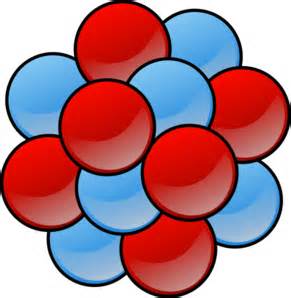
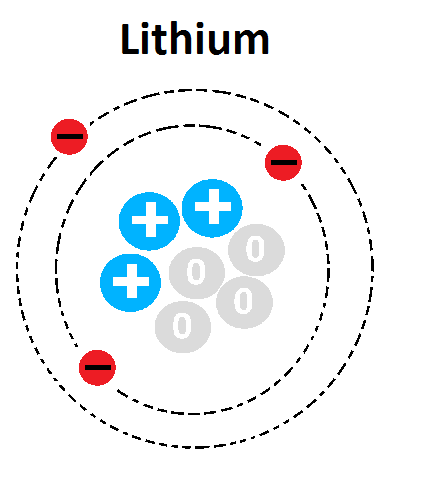
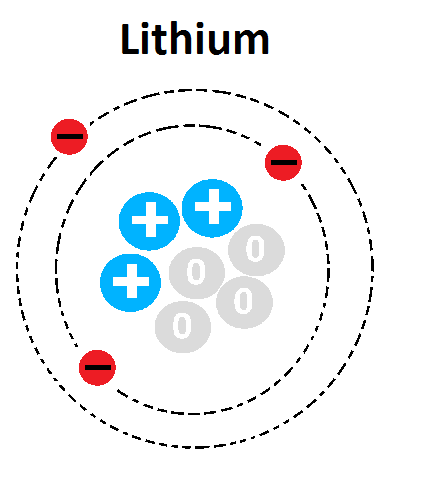
What is the atomic number of this atom?
a)
1
b)
3
c)
4
d)
7
61.

What is the mass number of this atom?

a)

1

b)

3

c)

4

d)

7

62.

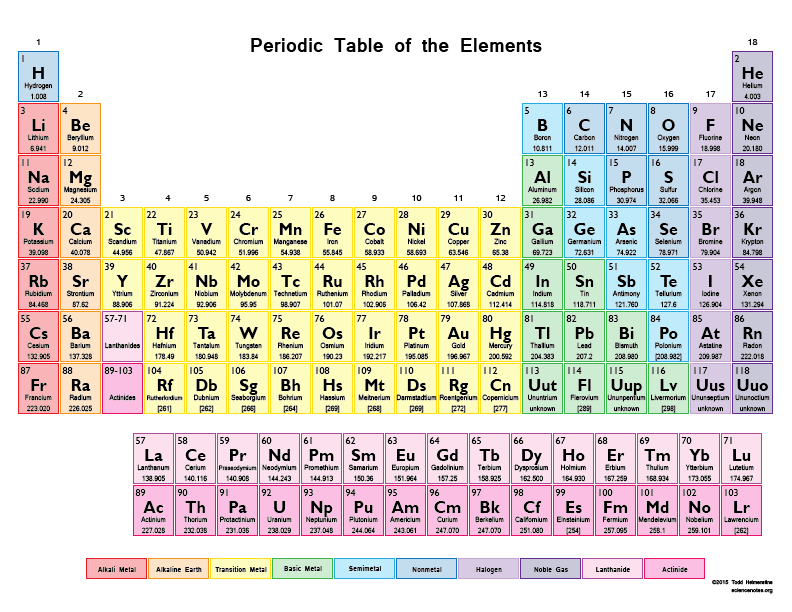
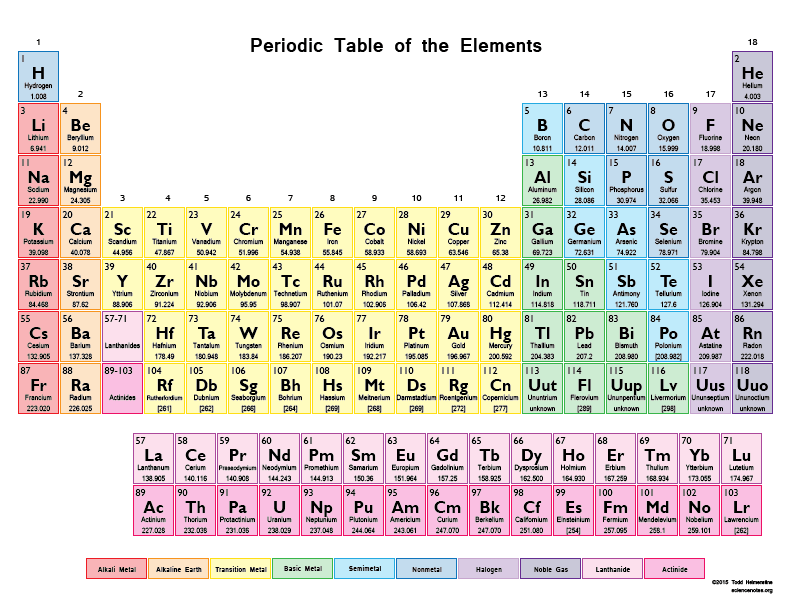
What is the atomic number of Barium, Ba? (enlarge the periodic table)

a)

20

b)

38

c)

56

d)

88

63.

What is the atomic number of Nickel? (enlarge the periodic table)

a)

110

b)

28

c)

46

d)

78

64.

How many protons are in a sodium atom, Na? (tap to enlarge the periodic table)

a)

Sodium has 1 proton.

b)

Sodium has 3 protons.

c)

Sodium has 11 protons

65.

An element has the mass number 12 and atomic number 6. The number of neutrons in it is:

a)

6

b)

10

c)

4

d)

8

66.

Atoms of the same element which have a different number of neutrons are called _________________.

a)

ions

b)

isotopes

c)

quarks

d)

molecules

67.

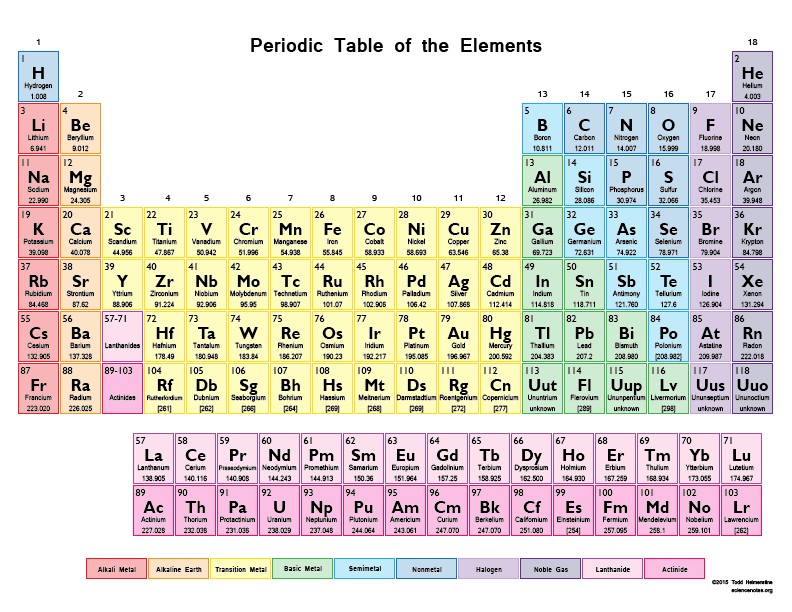
How many neutrons does C-14 [atomic #6] contain? (tap to enlarge the image)

a)

6

b)

7

c)

14

d)

8

68.

How many neutrons does an atom of the isotope Neon-22 have? (tap to enlarge the image)

a)

12

b)

10

c)

22

d)

20

69.

The number in Kr-84 represents what about Krypton?

a)

The number of electrons

b)

The number of protons

c)

The mass number

70.

Isotopes have different numbers of

a)

protons

b)

neutrons

c)

electron

d)

properties

71.

All living things or organisms in an ecosystem are

a)

None

b)

biotic factors

c)

abiotic factors

72.

Which of the following is NOT a biotic factor?

a)

Coyote

b)

air

c)

elephant

73.
Which of the following is not an abiotic factor?
a)
sun
b)
temperature
c)
soil
d)
grass
74.
Which of the following is not a biotic factor?
a)
mushroom
b)
air
c)
elephant
d)
coyote
75.
Temperature, light, air, water, and soil are all  _____  parts of the environment
a)
alive
b)
biotic 
c)
abiotic
d)
living
76.
A system made up of organisms interacting with one another
a)
biology
b)
abiotic
c)
biotic
d)
ecosystem
77.

Is a tree considered abiotic or biotic?

a)

Biotic

b)

Abiotic

c)

Neither

78.

Is water considered abiotic or biotic?

a)

Abiotic

b)

biotic

c)

neither

79.

Is your cellphone considered abiotic or biotic?

a)

Abiotic

b)

biotic

c)

neither

80.
A is the prefix that means ____________.
a)
life
b)
living
c)
not/ without
d)
biotic factor
81.

Bio means _________.

a)

non-living

b)

not/without

c)

life

d)

living

82.

What is a habitat?

a)

A way an animal behaves.

b)

A group of the same animals living together.

c)

A specific place where an animal naturally lives.

d)

When an animal lives in a place that is not their home eg. a zoo

83.

An organism that hunts another organism as a source of energy is called a

a)

prey

b)

producer

c)

herbivore

d)

predator

84.

Which organism represents a primary consumer

a)

Lion

b)

Hyena

c)

Zebra

d)

Grass

85.

Which organism absorbs energy from the sun?

a)

Lion

b)

Hyena

c)

Zebra

d)

Grass

86.

How much energy is transferred when an organism consumes its food?

a)

90%

b)

50%

c)

10%

d)

1%

87.

Which is considered an abiotic resource

a)

Bones

b)

Fallen Leaves

c)

Water

d)

Shrubs

88.

Parasitism is a relationship in which

a)

An organism hunts a prey, like a lion hunts a zebra

b)

An organism draws its energy from the sun, like a flower

c)

An organism provides source of energy for another organism, like dog with fleas

d)

An organism flees from another organism, like a rabbit running from a dog

89.
An organism's _________ is defined as the environment in which it lives.
a)
habitat
b)
niche
c)
social structure
d)
ecosystem
90.

The ecological role an organism performs in their specific environment is considered the organism's...

a)

Habitat

b)

Population

c)

Biome

d)

Niche

91.
Herbivores, Carnivores, and Scavengers all belong to which niche below?
a)
Consumers
b)
Producers
c)
Decomposers
d)
Predators
92.
Bacteria and fungi are examples of which niche below?
a)
decomposers
b)
omnivores
c)
carnivores
d)
scavengers
93.
Birds on Christmas Island all live in the same habitat but they prey on fish of different sizes and feed in different places.
Thus, each species occupies a distinct (different) ____________.
a)
community
b)
niche
c)
resource
d)
population
94.
Any relationship in which two species live closely together is called ________, which means “living together.”
a)
mutualism
b)
commensalism
c)
symbiosis
d)
predation
95.
This kind of relationship between species in which both benefit is known as __________.
a)
predation
b)
parasitism
c)
commensalism
d)
mutualism
96.
Relationships in which one organism lives inside or on another organism and harms it are called: 
a)
parasitism
b)
mutualism
c)
commensalism
d)
herbivory
97.
The spider and web in the antlers is an example of ______________, a relationship in which one organism benefits and the other is neither helped nor harmed.
a)
commensalism
b)
mutualism
c)
parasitism
d)
herbivory
98.
Which animal is the apex predator?
a)
hawk
b)
lizard
c)
snake
d)
grass
99.
Which animal is not the apex predator but, a predator to a mouse?
a)
hawk
b)
rabbit
c)
snake
d)
grass
100.
Which of the following is a herbivore?
a)
cricket
b)
frog
c)
hawk
d)
shrew
101.
Organisms that create their own energy from sunlight or chemicals
a)
Herbivore
b)
Omnivore
c)
Autotroph
d)
Heterotroph 
102.
All of the living and nonliving things in an area that interact with each other are called a/an ______.
a)
community
b)
habitat
c)
population
d)
ecosystem
103.
An organism that uses an outside source of energy like the sun to create energy-rich food molecules.
a)
Consumer
b)
Producer
c)
Decomposer
d)
Parasite 
104.
An organism that obtains energy by eating other organisms.
a)
Consumer
b)
Producer
c)
Decomposer
d)
Detriov
105.
Organisms that break down dead or decaying organisms.
a)
Decomposers
b)
Producers
c)
Consumers
106.
An organism that obtains energy by consuming plants and animals.
a)
Omnivores
b)
Carnivores
c)
Herbivores
107.
Found at the base of a food chain (also known as autotrophs)
a)
Producers
b)
Primary Consumer
c)
Secondary Consumer
d)
Tertiary Consumer 
108.
How many herbivores are in this web?
a)
1
b)
2
c)
3
d)
4
109.

The first trophic level is

a)

Carnivore

b)

Producer

c)

Primary Consumer

d)

Herbivore

110.

tertiary consumers

a)

Eat the primary consumer

b)

Eat plants and animals

c)

Consume the producer

d)

eat the secondary consumer

111.

a primary consumer is always a

a)

omnivore

b)

carnivore

c)

omnivore or herbivore

d)

herbivore

112.

a producer always

a)

eats other producers

b)

gets energy from the sun

c)

is a herbivore

d)

is a plant

113.
The arrows in a food chain or web represents what?
a)
They point to the organism that is being eaten.
b)
It shows how sunlight flows within an ecosystem.
c)
They show what direction the energy is flowing between organisms. 
d)
They represent how water is transferred within a habitat.
114.
A group of a particular species living and interacting in the same area
a)
Community
b)
Population
c)
Organisms
d)
Biosphere
115.
Different populations living and interacting with each other in the same area
a)
Biome
b)
Ecosystem
c)
Community
d)
Niche
116.
What does a food web represent?
a)
All connections of energy flow throughout all organisms in a habitat.
b)
The specific ways that mutualism is carried out.
c)
A single pathway or energy flow between organisms. 
d)
How carnivores get their food. 
117.
A wolf eats a rabbit, that just ate some berries.  What would you call the rabbit?
a)
Producer
b)
Omnivore
c)
Primary Consumer
d)
2nd order Heterotrph
118.
Which of the following illustrates the correct ordering of trophic levels?
a)
decomposers-carnivores-autotrophs-herbivores
b)
herbivores-autotrophs-carnivores-decomposers
c)
autotrophs-herbivores-carnivores-decomposers
d)
carnivores-producers-omnivores
119.
An organism that gets energy from breaking down dead organisms, non-living material or waste is a(an) ___________.
a)
producer
b)
consumer
c)
decomposer
d)
autotroph
120.
The process of plants using energy from the sun to create the first trophic level is called?
a)
Photosynthesis
b)
Chemosynthesis
c)
Cellular Respiratation
d)
Primary Producers
121.
Which of the following is the most simple level of ecological organization?
a)
A community
b)
An individual or species
c)
A population
d)
An ecosystem
122.
A collection of organisms that belong to different populations but all live in the same area and interact with one another.
a)
Population
b)
Ecosystem
c)
Community
d)
Ecosphere
123.
A collection of organisms that make up a community as well as all of the nonliving aspects of the environment.
a)
Population
b)
Community
c)
Habitat
d)
Ecosystem
124.
Which of the following is a population?
a)
hawks, barred owls, and eagles on NC coast
b)
mountain stream
c)
all the frogs in a pond
d)
blue-tailed skinks (lizards) around a barn
125.
The temperate decisuous forest, the tropical rain forest, the desert, and the tundra are all examples of...
a)
the biopshere.
b)
biomes.
c)
ecosystems.
d)
communities.
126.
What are the ecological levels of organization from smallest to the largest?
a)
organism, population, community, ecosystem, biome, biosphere
b)
organism, community, population, ecosystem, biome, biosphere
c)
organism, population, community, biome, ecosystem, ecosphere.
d)
organism, community, population, biome, ecosystem, ecosphere
127.

Jacob is going out to his grandparents farm. On the farm is a stream that he likes to fish in. While he is fishing he sees many different species of fish as well as maple and oak trees and dragonflies. What Jacob is seeing is an example of what level of organization?

a)

organism

b)

population

c)

community

d)

ecosystem

128.
Abby is walking to school with her best friend Jaylyn. They begin talking about everything they see including the ash trees, grass, weeds, ants, and people. They also notice how cold it is, how there are several large puffy clouds out, and how the sun is just starting to come up.  What level of organization are they discussing?
a)
community
b)
ecosystem
c)
biome
d)
biosphere
129.
Antonio and Javier are astronauts in space looking back at Earth and discussing how all the life on Earth interacts with each other as well as the nonliving things. What level of organization are they discussing?
a)
A community
b)
A biome
c)
An ecosystem
d)
A biosphere
130.
Andrea is on the grils cross country tream. She is heading out for a run when she comes across 20 Canadian geese.  What level of organization is this group of Canadian geese?
a)
organism
b)
population
c)
community
d)
biome
131.

Which term is the best explaination as to the difference between a population and a species.

a)

Species can reproduce but populations can not

b)

Population refers to a specific groups of organisms where species refers to multiple groups of different organisms

c)

Population takes into account location and time but species does not.

d)

There is not a difference between a species and a population.

132.

Which of the following includes ONLY biotic factors?

a)

Population

b)

Ecosystem

c)

Community

d)

Population and Community

e)

Population, Ecosystem and Community

133.

Match the picture with the group/term that it belongs to.

Fox

a)

Organism

b)

Population

c)

Community

d)

Species

134.

A __________ includes all living and non-living things in an environment.

a)

population

b)

niche

c)

community

d)

ecosystem

135.
Which climate zone is found at the red star?
a)
Tropical
b)
Temperate
c)
Polar
136.
Increased carbon dioxide may cause global warming by trapping more ____________ in the atmosphere.
a)
water
b)
gases
c)
heat
d)
water vapor
137.
Scientists observe the thickness of a tree's _________ to learn about past climate conditions.
a)
rings
b)
branches
c)
roots
d)
bark
138.
An important principle scientists follow to determine ancient climates is _____________________.
a)
larger plants and animals require warmer climates
b)
if an organism today needs certain conditions to live, then a similar organism that lived in the past needed similar conditions
c)
Earth was warmer long ago, so the climates were too
d)
climatic changes today occur faster than in ancient times
139.

Global warming is known as the gradual increase in _________________ of the atmosphere.

a)

precipitation

b)

sun spots

c)

temperature

d)

ocean currents

140.

Clues to ancient climates were like come from...

a)

ice cores

b)

fossil tree rings

c)

plant pollens

d)

all of the above

e)

Only tree rings and pollen

141.

The sun's rays are least direct near the equator.

a)

True

b)

False - near the poles

c)

False - at high altitudes

d)

False - far from the ocean

142.
Which of the following is NOT a greenhouse gas?
a)
Carbon dioxide CO2
b)
Methane CH4
c)
Water vapor
d)
Nitrogen N2
143.
A continuously hot climate with an enourmously high precipitation level is which climate? 
a)
Rainforest
b)
Savanna
c)
Steppe
d)
Meditteranean
144.
Which climate type is a very cold, very dry frozen grassland?
a)
Subarctic
b)
Tundra
c)
Ice Cap
d)
Humid Continental
145.

The meteorologist predicts that tomorrow, it will be very windy outside.

a)

Weather

b)

Climate

146.

Sara’s grandparents moved to Arizona last year. They told Sara they would really enjoy living there because it is hot and dry for most of the year.

a)

climate

b)

weather

147.

According to the graph, what is the average temperature of Mumbai in January?

a)

60

b)

80

c)

95

d)

75

148.
How does latitude influence climate?
a)
The closer you are to the equator the higher the temp
b)
Winds bring rain to the coast from the seas
c)
The higher the altitude the colder the temperature
d)
Ocean Currents affect precipitation
149.
All of the following are causes of Global Warming except
a)
Rotation of the Earth
b)
Deforestation
c)
Increases in Greenhouse Gases
d)
Burning Fossil Fuels
150.
______ is the average pattern for weather over a long period of time.
a)
climate
b)
weather
c)
forecast
d)
sunlight
151.
What is happening in our atmosphere at a certain time and place.
a)
weather 
b)
front
c)
climate
d)
zone
152.
Which statement about Hawaii refers to its climate?
a)
A blizzard occurs on one of Hawaii’s tallest mountain peaks.
b)
A high temperature of 37.8°C was recorded earlier today in Hawaii.
c)
The mountains were shaded by cumulus clouds on a Tuesday afternoon.
d)
The coolest months are February and March.
153.

What is the measure of distance in degrees north and south from the equator?

a)

latitude

b)

longitude

c)

elevation

d)

meters

154.

the Latin word "corona," which means ...........

a)

virus

b)

bacteria

c)

crown

d)

clown

155.

8. Are antibiotics effective in preventing and treating the new coronavirus?

a)

Yes

b)

No

c)

Unsure

156.

Coronavirus infections are likely to be more serious for:

a)

Teens

b)

Active Adults

c)

Frequent Flyers

d)

People with weakened immune systems

157.

Which symptom cannot Viruses cause ?

a)

fever

b)

pneumonia

c)

swollen

d)

diarrhea

158.

How is the coronavirus spread?

a)

Through the air by sneezing, coughing

b)

Through the air by birds

c)

Through the ground by worms

d)

Through the water by fish

159.

How long should you wash your hands?

a)

40 seconds

b)

30 seconds

c)

20 seconds

160.

A virus infects a host in order to:

a)

Take in nutrients

b)

Make the host sick

c)

Make copies of itself

d)

Destroy the host's cells

161.

After an initial infection, B-cells recognize the measles virus. How is this helpful in human immune response?

a)

The B-cells use this recognition to defend the body against other pathogens, such as bacteria.

b)

The B-cells more quickly recognize and respond to any other virus that invades the body.

c)

The B-cells produce antibodies more quickly if the measles virus is encountered again.

d)

The B-cells transfer this recognition to T-cells, which will then devour the viruses.

162.
The purpose of the immune system is to:
a)
Help germs invade your body
b)
Fight off sickness
c)
Make your nose run
d)
Give you diarrhea
163.
What are the 4 types of GERMS?
a)
parasite,ouchy,bug,animal
b)
parasite, fungi, animal,insect
c)
parasite,fungi,virus,bacteria
d)
bug,bird,goat,bear
164.
Produced by B cells and designed to mark antigens to be destroyed.
a)
Antigens
b)
Active Immunity
c)
Antibodies
d)
Antibiotics
165.
What do memory cells do?
a)
Kills the virus
b)
Eats the virus
c)
Patrol the area and make the immune system work faster next time.
d)
Makes antibodies
166.

These are important because they remember the pathogen for the future.

a)

Macrophage

b)

Lymphocyte

c)

Memory T and B cells

d)

Antibodies

167.

What attaches to antigens and tags the pathogen for destruction?

a)

Pathogen

b)

Antibodies

c)

B-cells

d)

Lymphocyte

168.

What is the molecule located on the outside of a pathogen that the immune system recognizes?

a)

Lymphocyte

b)

Antigen

c)

Pathogen

d)

Inflammation

169.

What is the specific response targeting a specific pathogen?

a)

Immune response

b)

Antigen

c)

Memory T and B cells

d)

Antibodies

170.

What micro-organism is responsible for causing disease?

a)

Pathogen

b)

Antibodies

c)

B-cells

d)

Lymphocyte

171.

T or F - Vaccines work be directly attacking the disease.

a)

true

b)

false

172.

T or F - Viruses can be treated with antibiotics.

a)

true

b)

false

173.

What is the role of the immune system?

a)

To pump blood throughout the body

b)

To protect the body from disease-causing agents

c)

To contain disease-causing organisms to a single area of the body

d)

To give Mr. Elwonger something to test us over

174.

Which of the following virus causes Covid-19 ?

a)

SARS- Cov-2

b)

Ebola

c)

Hantavirus

d)

MERS

175.

Which of the following disease is caused by the novel Coronavirus?

a)

SARS-COV-2

b)

Hants Pulmunary Syndrome

c)

COViD-19

d)

MERS

176.

The genetic material of SARS-COV-2 comprises of

a)

Protosova

b)

DNA

c)

RNA

d)

Chrominome

177.

Which of the following symptoms are not observed in Covid-19 patient ?

a)

Fever

b)

Cough

c)

Breathing difficulties

d)

Big boils on the skin

178.

From where coronavirus got its name?

a)

1. Due to their crown-like projections.

b)

Due to their leaf-like projections

c)

Due to their surface structure of bricks.

d)

None of the above

179.

What are the precautions that need to be taken to protect from the coronavirus?

a)

Add more garlic into your diet.

b)

Visit your doctor for antibiotics treatment

c)

Add more garlic into your diet.

d)

Cover your nose and mouth when sneezing.

180.

Which virus is responsible for Covid-19?

a)

MERS-2

b)

H1N1

c)

SARS-COV-1

d)

SARS-COV-2