
 Worksheets
Practice Final
Total questions: 182
Worksheet time: 2hrs 25mins
Name
Class
Date
1.
An organism that produces its own food supply from inorganic compounds is called a(an)
a)
heterotroph
b)
consumer
c)
detritivore
d)
autotroph
2.
What is the original source of almost all energy in most ecosystems?
a)
carbohydrates
b)
sunlight
c)
water
d)
carbon
3.
What is the term for each step in the transfer of energy and matter within a biological community?
a)
energy path
b)
food web
c)
trophic level
d)
food pyramid
4.
Autotrophs make up the _______ level in all ecosystems.
a)
First
b)
Second
c)
Third
d)
Fourth
5.

symbiotic relationship in which both organisms benefit
a)
competition
b)
Mutualism
c)
nitrogen fixation
d)
energy pyramid
6.

A living relationship between two species in which one organism is harmed is called...
a)
mutualism
b)
commensalism
c)
parasitism
d)
niche
7.

What does a food web represent?
a)
All connections of energy flow throughout all organisms in a habitat.
b)
The specific ways that mutualism is carried out.
c)
A single pathway or energy flow between organisms.
d)
How carnivores get their food.
8.

The image provided is an example of a(n):
a)
Carnivore
b)
Herbivore
c)
Producer
d)
Autotroph
9.

The image provided is an example of a(n):
a)
Producer
b)
Autotroph
c)
Consumer
d)
Insect
10.
Which of the following would be the definition of a detritivore?
a)
Animals that eat insects.
b)
Organisms that feed on rocks, recycling the nutrients back into the ground.
c)
Organisms that eat only pants
d)
Things that feed on dead organisms, recycling the nutrients back into the ground.
11.
The nonliving aspects of an ecosystem.
a)
Abiotic factors
b)
Biotic factors
12.
Water temperature would be an example of ...
a)
A biotic factor
b)
An abiotic factor
13.
A place where an organism lives.
a)
Terrain
b)
Habitat
c)
Community
d)
Population
14.
Organisms that can capture energy from inorganic, nonliving sources.
a)
Producers
b)
Consumers
c)
Detritivores
d)
Carnivores
15.
The general name for organisms like animals and fungi that get their energy from eating other organisms.
a)
Producers
b)
Consumers
c)
Detritivores
d)
Carnivores
16.
An organism at the second trophic level would be considered a...
a)
Top carnivore
b)
Producer
c)
Herbivore
d)
Carnivore
17.
A graphic illustration that shows each trophic level and the amount of useable energy contained within.
a)
Food chain
b)
Food web
c)
Energy Pyramid
d)
All of these
18.

An individual belonging to a specific species
a)
Biotic
b)
Community
c)
Organism
d)
Reptile
19.

All of the living and nonliving things in an area that interact with each other are called a/an ______.
a)
community
b)
habitat
c)
population
d)
ecosystem
20.

An area where an organism finds food, shelter and water in a specific arrangement
a)
niche
b)
biosphere
c)
biome
d)
habitat
21.
The living part of an ecosystem
a)
Biotic
b)
Abiotic
c)
Mother Earth
d)
Flowers
22.

The study of how living things interact with one another and with their environment.
a)
Biology
b)
Lithology
c)
Ecology
d)
Farmacology
23.

Organisms that look similar and can produce fertile offspring
a)
Species
b)
Fish
c)
Community
d)
Trees
24.
Two or more members of a particular species living and interacting in the same area
a)
Community
b)
Population
c)
Organisms
d)
Biosphere
25.

Different populations living and interacting with each other in the same area
a)
Biome
b)
Ecosystem
c)
Community
d)
Niche
26.

diagram that shows the energy available to each trophic level in an ecosystem; 10% is passed on to upper levels, the rest is lost as heat
a)
succession
b)
cellular respiration
c)
energy pyramid
d)
biochemical cycle
27.

What may happen if the snowshoe hare was removed from the food web pictured?
a)
The insects in the habitat would increase.
b)
The shrew population would decrease due to being only hawk food source.
c)
The willow tree population would decrease.
d)
Foxes would dies due to no food source.
28.

In the food web shown, the snail would be considered...
a)
primary consumer
b)
secondary consumer
c)
tertiary consumer
d)
producer
29.

What is it called when water is changed from a liquid to a gas?
a)
EVAPORATION
b)
PRECIPITATION
c)
TRANSPIRATION
30.
Which of the following leads to a decrease in biodiversity?
a)
protection of ecosystems
b)
pollution control
c)
selective cutting
d)
introduction of exotic or invasive species
31.
This Biome is very humid and "rains" often.
a)
Rainforest
b)
Desert
c)
Polar Reigons
d)
Swamps
32.
Which biome is located in the Central US and used for farmlands?
a)
Temperate Grassland
b)
Temperate Forest
c)
Taiga
d)
Savanna
33.
Which biome is located in the Eastern US and has deciduous trees?
a)
Temperate Grassland
b)
Temperate Forest
c)
Taiga
d)
Savanna
34.
Which biome is located in Canada with lots of pine trees?
a)
Temperate Grassland
b)
Temperate Forest
c)
Taiga
d)
Savanna
35.
Which of the following is a grassland area in Central Africa with only a few trees like in the Lion King?
a)
Temperate Grassland
b)
Temperate Forest
c)
Taiga
d)
Savanna
36.
As a population grows, it will most likely stop growing at what size?
a)
Growth limit
b)
Exponential limit
c)
Carrying Capacity
d)
It won't stop growing
37.
The carrying capacity of an environment for a particular species at a particular time is determined by the
a)
number of individuals
in the species.
b)
distribution of the
population.
c)
reproductive
potential of the species.
d)
supply of the most
limited resources
38.
The major human causes of extinction today are
a)
hunting and
destroying habitats.
b)
polluting and
introducing non-native species.
c)
Both
d)
Neither
39.
Which kind of growth does the human population follow? It is described as a J-shaped curve.
a)
Exponential Growth
b)
Logistic Growth
c)
Outstanding Growth
d)
Minimal Growth
40.
Which dispersion pattern is described by organisms being spaced out equally?
a)
Uniform
b)
Random
c)
Clumped
d)
None of these
41.
Which dispersion pattern usually is a result of resources not being evenly spread out in the environment?
a)
Uniform
b)
Random
c)
Clumped
d)
None of these
42.
What will happen to the population when the death rate is larger than the birth rate?
a)
grow
b)
shrink
c)
stay the same
d)
None of these
43.
What will happen to the population when the birth rate is larger than the death rate?
a)
grow
b)
shrink
c)
stay the same
44.

What type of growth is represented behind?
a)
exponential
b)
logistics
c)
a good kind
d)
representative
45.

Organisms trying to obtain the same resources is called
a)
competition
b)
predation
c)
adaptation
d)
imigration
46.

In the predator prey graph shown here, what causes the rise in the prey numbers?
a)
Decrease in prey
b)
Increase in predators
c)
Decrease in predators
d)
Lack of competition
47.
A dog gives birth to 5 puppies. What percentage of the chromosomes does each puppy share with the mother?
a)
25%
b)
50%
c)
75%
d)
100%
48.
What does heterozygous mean?
a)
An organism that has the same genes for a trait (TT or tt)
b)
An organism that has different genes for a trait (Tt)
c)
When neither gene is fully dominant; offspring is a mixture of both
d)
the different forms of a trait (hair color--> brown, blonde, red
49.

This is an example of what?
a)
Complete dominance
b)
Incomplete dominance
c)
Codominance
d)
None of the above
50.

If T=Tall & t=short, what is the genotypic ratio?
a)
1:3
b)
3:1
c)
1:2:1
d)
2:2
51.

Two brown eyed parents (Bb) have a baby. What is the chance the baby is blue eyed?
a)
0 %
b)
25%
c)
50%
d)
75%
52.

If a Homozygous red snapdragon and a Heterozygous pink snapdragon were crossed - what percentage of the offspring would be homozygous white?
a)
0%
b)
25%
c)
50%
d)
75%
53.

Term for homozygous organisms that display two dominant phenotypes at the same time
a)
codominance
b)
incomplete dominance
c)
multiple alleles
d)
linked genes
54.

Red/green color blindness is a recessive trait. A woman who is a carrier for this allele marries a normal-vision male. What is the probability that they will have a child who is color blind?
a)
1/4
b)
1/2
c)
3/4
d)
1
55.
An organism's appearance is known as its
a)
heredity
b)
phenotype
c)
genotype
d)
pedigree
56.

An offspring will receive how many alleles from each parent to determine a specific trait?
a)
one
b)
two
c)
three
d)
five
57.

What is the genotype for this organism?
(E= 3 eyes, e= 1 eye)
(E= 3 eyes, e= 1 eye)
a)
EE
b)
Ee
c)
ee
d)
EE or Ee
58.

Is this pedigree dominant or recessive? (Be prepared to explain how you know)
a)
Dominant
b)
Recessive
c)
Neither
59.

Is the following pedigree dominant or recessive?
a)
Dominant
b)
Recessive
c)
Both
60.

In humans, skin tone is caused by 3 genes, each with 2 alleles. This is an example of
a)
codominance
b)
incomplete dominance
c)
polygenic inheritance
d)
multiple alleles
61.

A roan cow shows co-dominance in fur color (orange and white). What is the phenotype ratio expected if a roan cow and a roan steer mate together?
a)
4: Orange and White
b)
1: Orange : 1 White
c)
2 Orange: 2 Orange and White: 0 White
d)
1: Orange: 2 Orange and White: 1 White
62.

Jim has type AB+ blood. His dad could be type O+.
a)
True
b)
False
63.
the likelihood of an event occuring
a)
probability
b)
possibility
c)
statistics
d)
Punnetts
64.
scientific study of heredity
a)
Genetics
b)
Punnett squares
c)
Inheritance
d)
Biology
65.
AA and Aa always show up as
a)
dominant
b)
recessive
66.
If you toss a coin 4 times, what are the chances that it lands heads up all four times?
a)
1/2
b)
1/4
c)
1/8
d)
1/16
67.

What is the genotypic ratio in this cross?
R= round r= wrinkled
R= round r= wrinkled
a)
3:1 (3 round to 1 wrinkled)
b)
1:2:1 (1 RR, 2 Rr, 1 rr)
c)
75% round, 25% wrinkled
d)
1:3 (1 round to 3 wrinkled)
68.
Hemophelia is less common in females and more common in males because
a)
the allele for colorblindness is recessive and located on the x chromosome
b)
girls are awesome
c)
boys inherit the X chromosome from their fathers
d)
girls inherit the X chromosome from their fathers
69.
A woman with Type B blood (whose father had type O blood) has children with a man who has Type O blood.
What percentage of their children could be expected to have Type O blood?
What percentage of their children could be expected to have Type O blood?
a)
100%
b)
50%
c)
25%
d)
75%
70.
Which of the following genotypes is heterozygous?
a)
Bb
b)
BB
c)
bb
d)
B
71.

Colorblindness is a recessive, X chromosome sex-link disorder. Cross the parents to figure out which percentage of their offspring will be colorblind.
a)
25%
b)
0%
c)
75%
d)
50%
72.
Which sequence of DNA bases would pair with this partial strand
ATG TGA CAG
ATG TGA CAG
a)
ATG TGA CAG
b)
TAC ACT GTC
c)
GTA AGT GAC
d)
CAT TCA CTG
73.
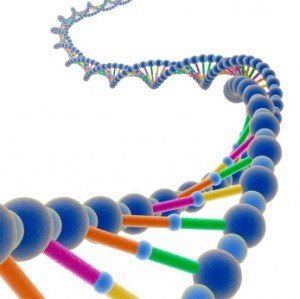
Which of the following best describes a DNA molecule?
a)
double helix
b)
contains ribose
c)
made of amino acids
d)
contains Uracil
74.
Which of the following units are repeatedly joined together to form a strand of DNA?
a)
amino acids
b)
nucleotides
c)
fatty acids
d)
polysaccharides
75.

In a molecule of double-stranded DNA, the amount of Adenine present is always equal to the amount of
a)
cytosine
b)
guanine
c)
thymine
d)
uracil
76.
Guanine bonds with ______________.
a)
Adenine
b)
Guanine
c)
Cytosine
d)
Thymine
77.
Why is DNA important?
a)
it is very small and very complicated
b)
it's in everything
c)
it serves as the blueprint for traits of all living things
d)
because we eat it every day for energy
78.
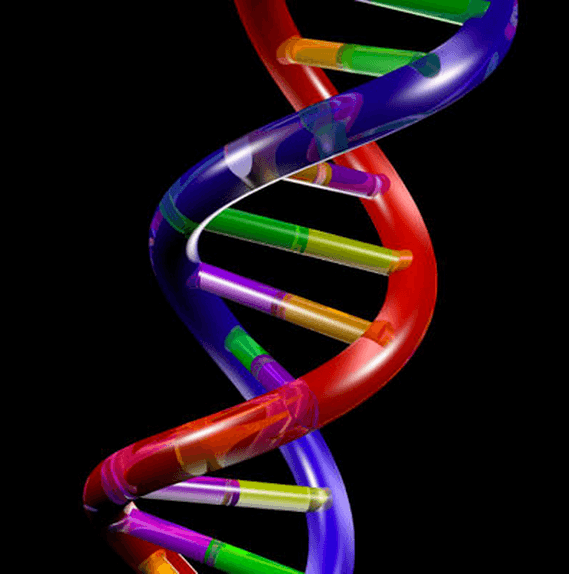
What determines the code, or information, of a DNA molecule?
a)
the shape (structure) of the nitrogen bases
b)
the order (sequence) of the nitrogen bases
c)
the color of the nitrogen bases
d)
the frequency (number) of nitrogen bases
79.
Which 2 molecules form the sides (backbone) of the DNA ladder?
a)
deoxyribose sugar and adenine
b)
deoxyribose sugar and a hydrogen bond
c)
deoxyribose sugar and the nucleus
d)
deoxyribose sugar and phosphate
80.

Replicate the following strand of DNA:
AATCATGGA
AATCATGGA
a)
AATCATGGA
b)
TTAGTACCT
c)
UUAGUACCU
d)
GGATAUCUA
81.
The enzyme that unzips the DNA to prepare for replication
a)
helicase
b)
replicase
c)
polymerase
d)
synthase
82.
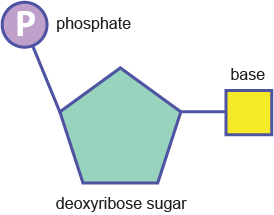
Nucleotides are made up of a sugar, phosphate, and..?
a)
nitrogenous base
b)
nucleic acid
c)
cholesterol
d)
fatty acid
83.

The purpose of transcription is to ____________.
a)
Stop mutations
b)
Make a new strand of DNA
c)
Create a chain of amino acids (protein)
d)
Make a strand of mRNA
84.

The purpose of translation is to ____________.
a)
Stop mutations
b)
Make a new strand of DNA
c)
Create a chain of amino acids (protein)
d)
Make a strand of mRNA
85.

This diagram can be used to -
a)
translate codon into protein.
b)
transcribe DNA into RNA.
86.
The process of making RNA (i.e. mRNA) from DNA is called
a)
Replication
b)
Transcription
c)
Translation
d)
Protein synthesis
87.
Transcription takes place in the
a)
cytoplasm
b)
chloroplast
c)
nucleus
d)
mitochondria
88.
Which is the mRNA molecule that would be transcribed from this DNA template:
TGGCAA
TGGCAA
a)
ACCGTT
b)
UGGCAA
c)
UCCGUU
d)
ACCGUU
89.
Which is the mRNA molecule that would be transcribed from this DNA template:
TGGCAA
TGGCAA
a)
ACCGTT
b)
UGGCAA
c)
UCCGUU
d)
ACCGUU
90.
What is the job of tRNA in protein synthesis?
a)
It is the blueprint of the genetic code
b)
it reads the mRNA
c)
it brings Amino Acids to the ribosome
d)
it is not involved in protein synthesis
91.

mRNA is important, because it __________.
a)
Carries info from genes to ribosomes
b)
Carries amino acids to ribosomes
c)
Helps with RNA splicing
d)
Makes up ribosomes
92.

What is the term for a three nucleotide sequence that codes for an amino acid? For example: AUG
a)
Nitrogen base
b)
Codon
c)
Amine
d)
Phosphate group
93.
What is one major difference between DNA and RNA?
a)
DNA is single stranded
b)
RNA contains the sugar deoxyribose
c)
DNA contain the nitrogen base Thymine
d)
RNA is double stranded
94.
During which phase of the cell cycle is DNA replicated?
a)
G1 Phase
b)
S Phase
c)
M Phase
d)
G2 Phase
95.

What is the correct amino acid sequence for the mRNA code AUG CCA GUA UGA
a)
Met-Pro-Ala-Val
b)
Met-Pro-Val-Stop
c)
Tyr-Gly-His-Stop
d)
Tyr-Gly-Arg-His
96.
What causes mutations?
a)
Mistakes in replication or environmental substances
b)
The amino acids
c)
Passed down by genetics
d)
It's how your born
97.
Which of the following would result in a frameshift mutation?
a)
Insertions only
b)
Substitution only
c)
Deletion only
d)
Insertions and Deletions
98.
Are all mutations bad?
a)
Yes
b)
No
99.
Mutations:
a)
are permanent changes in the DNA sequence or structure
b)
produce allelic variation
c)
are more likely to be harmful than beneficial
d)
all of the above
100.
Gene: ABCDEF
Mutation: ACEFCD
What mutation occurred?
Mutation: ACEFCD
What mutation occurred?
a)
deletion
b)
substitution
c)
inversion
d)
insertion
101.
DNA molecule segment is : TTACGCAAG
The mutated DNA segment is TTCGCAAG. This is an example of ___ mutation.
The mutated DNA segment is TTCGCAAG. This is an example of ___ mutation.
a)
Substitution
b)
Deletion
c)
Insertion
d)
Inversion
102.
Chromosomes are
a)
Tightly wound strands of DNA
b)
Tightly wound proteins
c)
Found in the mitochondria
d)
Not important for cell division
103.
Which of the following is a fossil?
a)
a plant that has recently died
b)
a group of organisms that can reproduce
c)
a structure or organ that no longer functions
d)
a trace of an organisms that existed in the past
104.
Over time, adaptions can lead populations to experience
a)
environmental changes
b)
genetic changes
c)
geological changes
d)
extinction
105.

what did Charles Darwin observe in finch populations of the Galapagos Islands off the coast of South America?
a)
different species on different islands
b)
all species on one of the islands
c)
identical species on all the islands
d)
the same species as North America
106.

which of the following is an example of a vestigial structure?
a)
the wings of a red-tailed hawk
b)
the hind limbs of a house cat
c)
the fins of sharks
d)
the wings of an ostrich
107.

Some organisms that share a common ancestor have features that have different functions, but similar structures. These are known as
a)
vestigial structures
b)
analogous structures
c)
homologous structures
d)
fossil structures
108.

a measure of how commonly a particular allele occurs in a population is known as the
a)
gene pool
b)
allele frequency
c)
mutation rate
d)
phenotype
109.

An earthquake causes an ocean channel to open and separate an island into two. The species on each section are now in
a)
geographic isolation
b)
behavioral isolation
c)
disruptive selection
d)
temporal isolation
110.

What kid of isolation occurs when two populations of birds have different courtship dances?
a)
geographic
b)
sexual
c)
temporal
d)
reproductive
111.
asexual reproduction produces offspring with
a)
half of a single parent's genes
b)
the same genes as the parent
c)
a mix of genes from two parents
d)
lots of genetic variation
112.

the hind leg bones in a whale are examples of
a)
homologous structures
b)
analogous structures
c)
fossils
d)
vestigial structures
113.
What is the term for a feature that allows an organism to survive better in its environment?
a)
variation
b)
adaptation
c)
homologous structure
d)
vestigial structure
114.
What is the process in which humans breed organisms for certain traits?
a)
natural selection
b)
adaptation
c)
artificial selection
d)
descent withOUT modification
115.
A pine tree is a member of the kingdom
a)
Animalia
b)
Protista
c)
Fungi
d)
Plantae
116.
The eight levels of classification, from general to specific, are
a)
domain, kingdom, class, order, phylum, family, genus, species
b)
somain, kingdom, phylum, class, family, order, genus, species
c)
domain, kingdom, phylum, class, order, family, genus, species
d)
domain, kingdom, class, phylum, order, family, genus, species
117.
The science of describing, classifying, and naming organisms is
a)
taxonomy
b)
life science
c)
organization
d)
classification
118.
The division of organisms into groups or classes based on characteristics is
a)
taxonomy
b)
classification
c)
life science
d)
biology
119.
What can you find out by working through a dichotomous key in order?
a)
how many birds migrate north to south
b)
the identity of an organism
c)
how long slime mold can live
d)
when a species first appeared on Earth
120.
Euglena is a member of the kingdom
a)
Protista
b)
Animalia
c)
Plantae
d)
Fungi
121.
Animalia, Protista, Fungi, and Archaea are the
a)
scientists who organized taxonomy
b)
names of kingdoms
c)
levels of classification
d)
scientific names of different organisms
122.
This kingdom includes complex, multicellular organisms that are usually green, have cell walls, and make sugar by photosynthesis
a)
fungi
b)
bacteria
c)
plantae
d)
archaea
123.
This kingdom includes mostly single-celled or simple multicellular organisms.
a)
Protista
b)
Eubacteria
c)
Archaebacteria
d)
Fungi
124.
What are the 3 domains?
a)
Archaea, Bacteria, and Eubacteria
b)
Archaea, Protists, and Eubacteria
c)
Archaea, Bacteria, and Eukarya
d)
Archaea, Fungi, Animalia
125.
This kingdom includes non-green, non-moving eukaryotic organisms that break down substances outside their bodies and absorb the nutrients.
a)
Archaea
b)
Plantae
c)
Bacteria
d)
Fungi
126.
This kingdom includes unicellular organisms, they reproduce quickly by binary fission (asexual), have a flagella, and are make up most of the common bacteria.
a)
Archaebacteria
b)
Fungi
c)
Eubacteria
d)
Protists
127.
In this kingdom, you can find all the organisms are prokaryotes, unicellular, some may have a cell wall, their methanogens, halophiles, thermaphiles, and they are found in extreme environments.
a)
Eubacteria
b)
Archaebacteria
c)
Protists
d)
Fungi
128.
In these kingdoms, they are eukaroytes, mostly multicellular, and mostly reproduce sexually.
a)
Archaebacteria, Eubacteria, and Protists
b)
Protists, Fungi, and Plants
c)
Fungi, Animals, and Plants
d)
Animals, Plants and Protists
129.
Which of the following organisms are LEAST closely related?
a)
organisms that share a domain
b)
organisms that share a family
c)
organisms that share a genus
d)
organisms that share a species
130.
The scientific name for an organism is made from the
a)
class and family name
b)
genus and species name
c)
domain and kingdom name
d)
kingdom and phylum name
131.
Who first proposed binomial nomenclature as a way of classifying organisms?
a)
Carl Linnaeus
b)
Carl's Jr.
c)
Charles Darwin
d)
Henry Groseclose
132.
Cells that do not have a true nucleus are called....
a)
eukaryote
b)
prokaryote
c)
unicellular
d)
multicellular
133.

An illustration and a dichotomous key are given. What is the correct classification for this organism?
a)
Class Insecta
b)
Order Amblygygi
c)
Order Araneae
d)
Order Scorpiones
134.

A dichotomous key for trees is provided. Hikers found a tree that has large brown cones and single sharp needles. What species of tree have the hikers found?
a)
Juniper
b)
Pine
c)
Spruce
d)
Fir
135.

Which best describes fossils?
a)
They are the preserved remains or evidence of ancient living things
b)
They are the preserved remains or evidence of ancient living and nonliving things
c)
They are the preserved bones of ancient animals
d)
They are impressions of plant leaves in ancient rocks
136.

What is this a picture of?
a)
Pedigree
b)
Cladogram
c)
Family Tree
d)
Oak Tree
137.
Cladograms are constructed by grouping organisms together based on their____________ characteristics.
a)
shared
b)
different
c)
similar
d)
opposite
138.

According to this cladogram, sharks are MOST closely related to which organism?
a)
Amphibians
b)
Ray finned fish
c)
Crocodiles
d)
Birds
139.

According to this cladogram, birds are LEAST related to:
a)
Amphibians
b)
Sharks
c)
Ray Finned Fish
d)
Crocodiles
140.

Name this bacteria shape
a)
coccus
b)
spirillum
c)
bacillus
141.

Name this bacteria shape
a)
bacillus
b)
coccus
c)
spirillum
142.

Name this bacteria shape
a)
coccus
b)
bacillus
c)
spirillum
143.
All bacteria are
a)
unicellular
b)
multicellular
c)
eukaryotic
144.
A disease causing organism
a)
pathogen
b)
poison
c)
vaccine
145.
A(n) _____ is a virus that enters a bacterial cell.
a)
endospore
b)
decomposer
c)
plasmid
d)
bacteriophage
146.
cell in which a virus reproduces
a)
endospore
b)
host cell
c)
bacteriophage
d)
plasmid
147.
nonliving particle that can reproduce within a living cell
a)
endospore
b)
virus
c)
vacuole
d)
nucleus
148.
Bacteria reproduce by
a)
mitosis
b)
meiosis
c)
binary fission
d)
photosynthesis
149.
Where is Eubacteria found?
a)
In hot places
b)
In salty places
c)
In the U.S.A only
d)
Everywhere
150.

which of the following is true about antibiotics?
a)
Antibiotics are ineffective against bacteria, but are effective about against viruses.
b)
antibiotics are effective against both bacteria and viruses.
c)
antibiotics are effective against bacteria, but not viruses.
d)
effective against neither bacteria or viruses.
151.
Which agent causes athletes foot?
a)
Bacteria
b)
Fungi
c)
Parisite
d)
Virus
152.
Which of the following is a substance usually prepared from killed or weaken pathogens?
a)
White blood Cells
b)
Antibodies
c)
Lymph
d)
Vaccines
153.
What is one way a pathogen can enter the body?
a)
Nose
b)
Mouth
c)
Broken Skin
d)
All of the Aove
154.
A syndrome caused by HIV. It is when a person's immune system is too weak to fight off many infections
a)
AIDS
b)
SARS
c)
Ebola
d)
Zika
155.
Is a life threatening blood disease caused by parasites transmitted to human through the bite of the Anopheles mosquito.
a)
Helicobacter pylori
b)
Malaria
c)
Botox
d)
Legionnaires disease
156.

What is this a picture of?
a)
Nitrogen cycle
b)
carbon cycle
c)
water cycle
d)
plant cycle
157.
These gases, such as carbon dioxide, trap heat in the Earth's atmosphere causing global warming
a)
Global warming gases
b)
Hot House gases
c)
Green House gases
d)
Thermal pollution
158.
Organisms use nitrogen to form
a)
carbohydrates and lipids
b)
proteins and lipids
c)
lipids and nucleic acids
d)
proteins and nucleic acids
159.
When nitrogen gas is turned in to a form that plants and animals can use is called
a)
Combustion
b)
Photosynthesis
c)
Decomposition
d)
Nitrogen Fixation
160.
Carbon dioxide is added to the atmosphere by
a)
Burning fossil fuels
b)
Cellular respiration
c)
Decomposing organic matter
d)
All answers are correct
161.
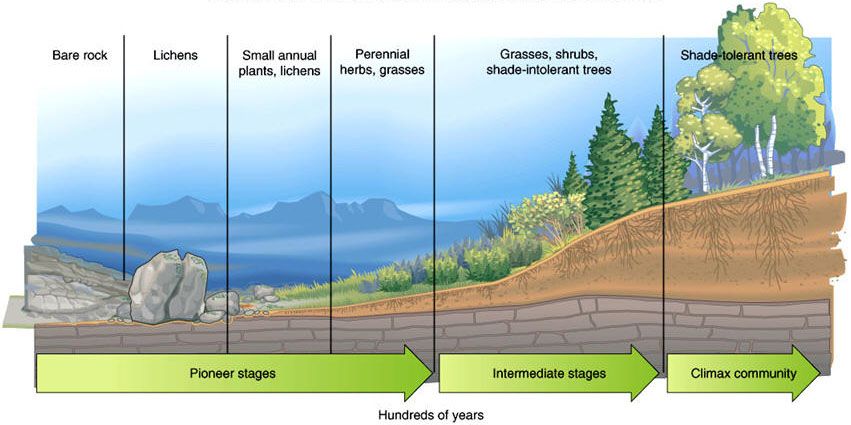
The picture shows what type of succession?
a)
primary
b)
secondary
c)
tertiary
d)
quadanary
162.
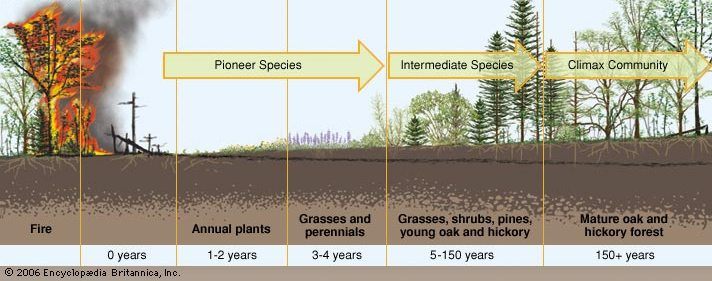
The picture shows what type of succession?
a)
primary
b)
secondary
c)
tertiary
d)
quadanary
163.
The picture shows what type of succession?
a)
primary
b)
secondary
c)
tertiary
d)
quadanary
164.
What is a GMO?
a)
An organism with foreign DNA
b)
An organism missing genes
c)
Epigenetics
d)
A genetically identical organism
165.
What is recombinant DNA?
a)
DNA containing genes foreign to that organism
b)
DNA which has been impacted by epigenetics
c)
DNA that has restriction enzymes
d)
DNA that has been sequenced
166.
Restriction enzymes....
a)
Cut DNA at a specific site
b)
Can be used to isolate a gene of interest
c)
Can be used to cut vector DNA
d)
Do all of these things
167.
______% of the trophic energy is passed on.
a)
90
b)
10
c)
25
d)
50
168.
Humans have ________ pairs of chromosomes.
a)
21
b)
23
c)
46
d)
None of the above
169.
A human cell has 46 chromosomes before mitotic division. How many chromosomes will the daughter cells after mitosis.
a)
12
b)
23
c)
46
d)
92
170.
As a cell increases in size, the surface area to volume ratio _________________.
a)
increases
b)
decreases
c)
stays the same
171.
Put the following in order: G2, G1, S, mitosis, cytokinesis.
a)
G1, G2, S, Mitosis, cytokinesis
b)
G1, S, G2, Mitosis, cytokinesis
c)
G1, G2, S, cytokinesis, mitosis
d)
G1, S, G2, cytokinesis, mitosis
172.
Put the following stages of mitosis in order: anaphase, prophase, metaphase, and telophase.
a)
prophase, metaphase, telophase, anaphase
b)
prophase, anaphase, metaphase, telophase
c)
prophase, metaphase, anaphase, telophase
d)
prophase, telophase, metaphase, anaphase
173.

Cattle egrets forage (feed) in fields among cattle. The egret gets easy access to flying insects stirred up by the cattle, and the cattle don't care if they are there or not.
a)
mutualism
b)
commensalism
c)
competition
d)
parasitism
174.

What type of symbiosis? Hummingbirds feed on nectar from flowers. The flowers are pollinated by hummingbirds as they move from flower to flower.
a)
commensalism
b)
mutualism
c)
parasitism
d)
predation
175.

A PLANT is a
a)
Producer
b)
Consumer
c)
Decomposer
176.

What is it called when plants give off water vapor as a waste product?
a)
condensation
b)
evaporation
c)
sublimation
d)
transpiration
177.

This graph shows the population growth curve for a sparrows in Forsyth County. What is the carrying capacity?
a)
50
b)
200
c)
280
d)
300
178.
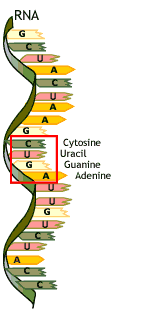
In RNA, Uracil pairs with ______.
a)
cytosine
b)
adenine
c)
guanine
d)
thymine
179.
The process to go from DNA to mRNA is _______
a)
translation
b)
transcription
c)
replication
180.
The process to go from mRNA to a protein is called ____
a)
transcription
b)
rRNA
c)
replication
d)
translation
181.
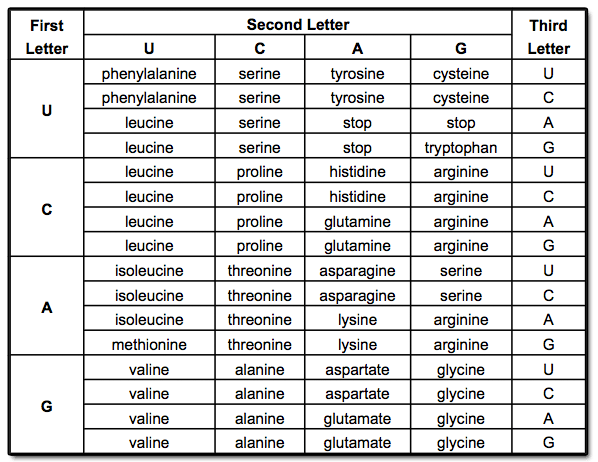
What is the correct amino acid sequence for the mRNA code AUGCCAGUAUGA
a)
Met-Pro-Ala-Val
b)
Met-Pro-Val
c)
Tyr-Gly-His
d)
Tyr-Gly-Arg-His
182.

Transcription is a process that in eukaryotic cells takes place in the:
a)
Nucleus
b)
Cytoplasm
c)
Golgi Apparatus
d)
Rough E.R.
100 %

