
Font size
 Worksheets
Intro Cells: theory and life quiz
Total questions: 49
Worksheet time: 40mins
What did Robert Hooke describe cells as?
Large boxes
Tiny boxes or a honeycomb
Small spheres
Flat plates
Who used a handmade microscope to observe pond scum and discovered single-celled organisms?
Matthias Schleiden
Theodor Schwann
Anton van Leeuwenhoek
Louis Pasteur
What was the widely accepted belief that caused a 150-200 year gap in cell theory advancements?
Evolution
Spontaneous Generation
Cell Division
Natural Selection
Who conclusively disproved the theory of Spontaneous Generation?
Robert Hooke
Anton van Leeuwenhoek
Louis Pasteur
Matthias Schleiden
Who stated that all animal tissues are composed of cells in 1839?
Robert Hooke
Theodor Schwann
Anton van Leeuwenhoek
Louis Pasteur
Who concluded that cells must arise from preexisting cells?
Matthias Schleiden
Theodor Schwann
Rudolf Virchow
Robert Hooke
Which of the following is NOT one of the basic components of the Cell Theory?
All organisms are composed of one or more cells.
Cells can spontaneously generate.
The cell is the basic unit of life in all living things.
All cells are produced by the division of preexisting cells.
What is a theory?
A random guess about natural phenomena
A set of statements or principles devised to explain a group of facts or phenomena
An untested hypothesis
A fictional story
Which of the following is an additional statement in the Modern Cell Theory?
All cells are produced by the division of preexisting cells.
The cell is the basic unit of life in all living things.
The cell passes information from cell to cell during cell division using DNA.
All organisms are composed of one or more cells.
How has the Cell Theory been used in medical research?
It has no application in medicine.
It is used to develop new languages.
It is the basis for understanding diseases and developing cures.
It is used to create new art forms.
Which of the following is a characteristic of cells?
Cells do not contain DNA.
Cells are dependent units of life.
Cells have a cell membrane, ribosomes, and cytoplasm.
Cells are found only in plants.
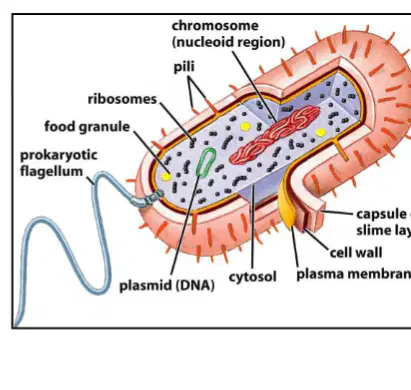
What is a key characteristic of prokaryotic cells?
They have a nucleus.
They are multicellular.
They have a cell wall.
They have mitochondria.
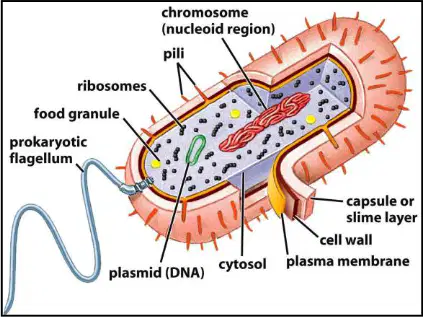
Which of the following is NOT a component of prokaryotic cells?
Ribosomes
Nucleoid region
Mitochondria
Flagellum
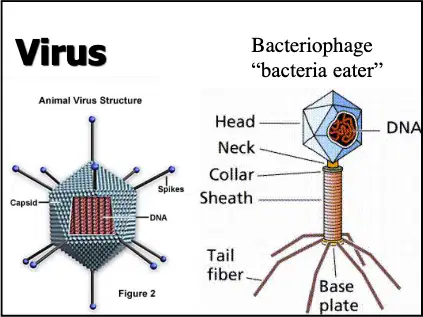
What is a characteristic of viruses?
They are made of cells.
They can reproduce on their own.
They need a host cell to reproduce.
They are larger than prokaryotic cells.
What is the function of ribosomes in prokaryotic cells?
To store genetic material
To produce proteins
To provide energy
To protect the cell
Which of the following is a characteristic of eukaryotic cells?
Lack of nucleus
Always unicellular
Have many organelles
No cytoskeleton
What do both animal and plant cells have?
Chloroplasts
Cell wall
Nucleus
Large vacuole
Which component is NOT found in animal cells?
Lysosomes
Chloroplasts
Mitochondria
Golgi bodies
What is a function of mitochondria in animal cells?
Photosynthesis
Protein synthesis
Energy release
DNA replication
Which of the following is true about prokaryotic cells compared to eukaryotic cells?
Larger in size
Have a nucleus
Always multicellular
No membrane-bound organelles
What is the nickname of the nucleus in a eukaryotic cell?
The Powerhouse
The Control Center
The Energy Source
The Transport Hub
What is the function of the nucleus in a eukaryotic cell?
Synthesizes proteins
Holds the DNA
Transports nutrients
Produces energy
Which part of the nucleus helps make ribosomes?
Chromatin
Nuclear envelope
Nucleolus
Cytoplasm
What is the nuclear envelope?
A single membrane structure
A double membrane structure containing pores
A protein synthesis site
A DNA replication site
What is the nickname for mitochondria?
The Powerhouse
The Brain
The Builder
The Transporter
What is the primary function of mitochondria?
Protein synthesis
Energy formation
Lipid storage
DNA replication
What are ribosomes responsible for?
Making proteins
Storing energy
Breaking down food
Transporting nutrients
Where are ribosomes found?
Only in prokaryotic cells
Only in eukaryotic cells
In all cells, prokaryotic and eukaryotic
Only in plant cells
What is the liquid portion of the cytoplasm called?
Cytosol
Matrix
Cristae
Membrane
What is the primary function of the cytoskeleton in a cell?
Energy production
Support and structure
Protein synthesis
DNA replication
Which cellular extension increases the surface area for absorption?
Cilia
Flagella
Microvilli
Centrioles
What is the nickname for the Endoplasmic Reticulum (ER)?
Powerhouse
Roads
Control center
Storage unit
What is the function of the Rough Endoplasmic Reticulum?
Makes fats or lipids
Helps make proteins
Stores genetic material
Breaks down waste
What is the primary function of the endoplasmic reticulum (ER)?
Photosynthesis
Synthesis of proteins, carbohydrates, and lipids
DNA replication
Cell division
Which type of ER is studded with ribosomes?
Smooth ER
Rough ER
Golgi Apparatus
Lysosome
What is the nickname for the Golgi apparatus?
The builders
The shippers
The cleaners
The protectors
What is the appearance of the Golgi apparatus often compared to?
A stack of pancakes
A string of pearls
A bundle of sticks
A cluster of grapes
What is the primary function of lysosomes in a cell?
Store water
Break down food into particles
Carry out photosynthesis
Convert sugar to energy
Which of the following is a characteristic of plant cells?
Lack of cell wall
Presence of chloroplasts
Absence of mitochondria
Circular shape
What is the function of vacuoles in plant cells?
Store water
Digest old cells
Convert sugar to energy
Neutralize free radicals
What is the nickname given to lysosomes?
Powerhouse of the cell
Clean-up Crews
Energy converters
Photosynthesis centers
What is the primary function of chloroplasts in plant cells?
Store water
Produce energy from sunlight
Protect the cell
Transport nutrients
Why are chloroplasts green in color?
They contain chlorophyll
They are filled with water
They have a thick cell wall
They reflect sunlight
What is the main function of the cell wall in plant cells?
Store nutrients
Provide support and protection
Conduct photosynthesis
Regulate temperature
Where is the cell wall located in plant cells?
Inside the chloroplast
Outside the cell membrane
Inside the nucleus
Surrounding the mitochondria
Cell existence was unknown until the invention of what?
bacteria
telescope
microscope
Why has knowledge about the cell theory changed over the last few hundred years?
Improvements in technology and new observations have lead to changes in the Cell Theory.
Scientists are better at making inferences because they are smarter.
Theories have been shown to be educated guesses.
New cellular organelles have evolved to replace old organelles.
What does the cell theory say?
all cells come from pre-existing cells - DNA is passed from cell to cell
Cells are the smallest basic unit of life. anything less than a cell is not alive.
all living things are made up of at least one cell - though there many types of cells that may have unique functions.
cell and living things can arise from non-living materials via ammonia and lightening creating cells and life.
What is the definition of life in Biology and Cellular Biology?
must be multicellular and be able to circulate material throughout the body
must be organized, made of cells and use energy.
must be able to reproduce with DNA and grow over time.
must respond to external environment and maintain homeostasis

