
NEW
Font size
 Worksheets
Chapter 20
Total questions: 48
Worksheet time: 24mins
What are the four chemical reactions that take place during permanent waving?
Oxidation, reduction, neutralization, and polymerization
Hydrolysis, condensation, combustion, and fermentation
Sublimation, deposition, freezing, and melting
Photosynthesis, respiration, digestion, and excretion
What is the difference between an alkaline wave and a true acid wave?
Alkaline waves require heat, while true acid waves do not
Alkaline waves are stronger and faster than true acid waves
True acid waves are used for color-treated hair, while alkaline waves are not
True acid waves are more damaging than alkaline waves
What is the purpose of neutralization in permanent waving?
To soften the hair
To harden the hair
To stop the waving process and rebuild the hair structure
To add shine to the hair
What is an important aspect of demonstrating safe and effective perm techniques?
Using excessive heat
Skipping the neutralization step
Following manufacturer's instructions
Applying perm solution to dry hair
What is the primary function of thio relaxers in hair treatment?
To add volume to the hair
To straighten the hair
To color the hair
To curl the hair
How do hydroxide relaxers affect the hair?
They make the hair curly
They straighten the hair
They add shine to the hair
They thicken the hair
What is an important aspect of using hydroxide relaxers?
Demonstrating safe and effective techniques
Ensuring the hair is dry
Applying heat
Using a comb
What does curl re-forming do to the hair?
It colors the hair
It restructures the hair
It cuts the hair
It adds extensions
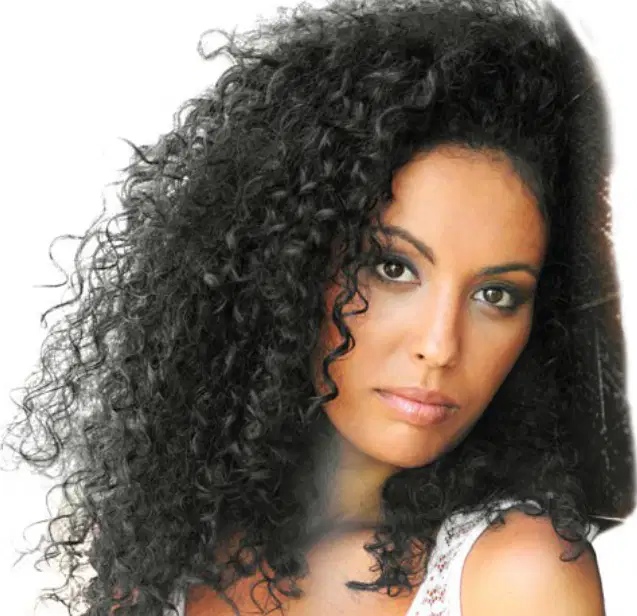
Which of the following is a process used to change the natural curl pattern of hair?
Permanent waving
Hair coloring
Hair cutting
Blow drying
What is the term for a chemical process that straightens curly hair?
Relaxing
Curling
Braiding
Highlighting
What is the process called that involves re-forming curls in hair?
Curl re-forming
Hair dyeing
Hair trimming
Hair washing
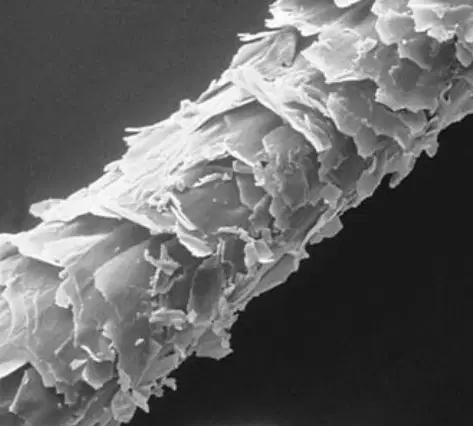
What is the function of the cuticle in hair?
It provides color to the hair.
It surrounds the inner layers and protects hair from damage.
It is responsible for hair growth.
It gives hair its texture.
What is the role of the cortex in the structure of hair?
It is the outermost layer of hair.
It is responsible for hair strength and elasticity.
It does not play a role in restructuring.
It is missing in some types of hair.
Which layer of hair is often called the pith or core?
Cortex
Cuticle
Medulla
Follicle
What is true about the medulla in the structure of hair?
It is the middle layer of hair.
It is responsible for hair color.
It does not play a role in restructuring.
It is always present in all types of hair.
What does pH stand for in the context of texture services?
Potential hydrogen
Potential helium
Potential heat
Potential hardness
What is the pH range of hair?
4.5 to 5.5
6.5 to 7.5
3.5 to 4.5
5.5 to 6.5
On the pH scale, what number is considered neutral?
7
5
9
3
What does a pH below 7 indicate?
Acid
Alkaline
Neutral
Basic

What are amino acids made of?
Carbon, oxygen, hydrogen, nitrogen, and sulfur
Carbon, oxygen, hydrogen, and phosphorus
Carbon, nitrogen, phosphorus, and sulfur
Oxygen, hydrogen, nitrogen, and phosphorus
What do peptide (end) bonds do?
Join amino acids together end-to-end in long chains
Break down amino acids into smaller units
Convert amino acids into proteins
Store energy in amino acids

What are polypeptide chains formed by?
Peptide bonds linked together
Hydrogen bonds linked together
Salt bonds linked together
Disulfide bonds linked together
What percentage of hair's structure is made up of keratin proteins?
97 percent
50 percent
75 percent
100 percent
Which of the following is NOT a type of side bond in hair?
Disulfide bond
Salt bond
Hydrogen bond
Ionic bond
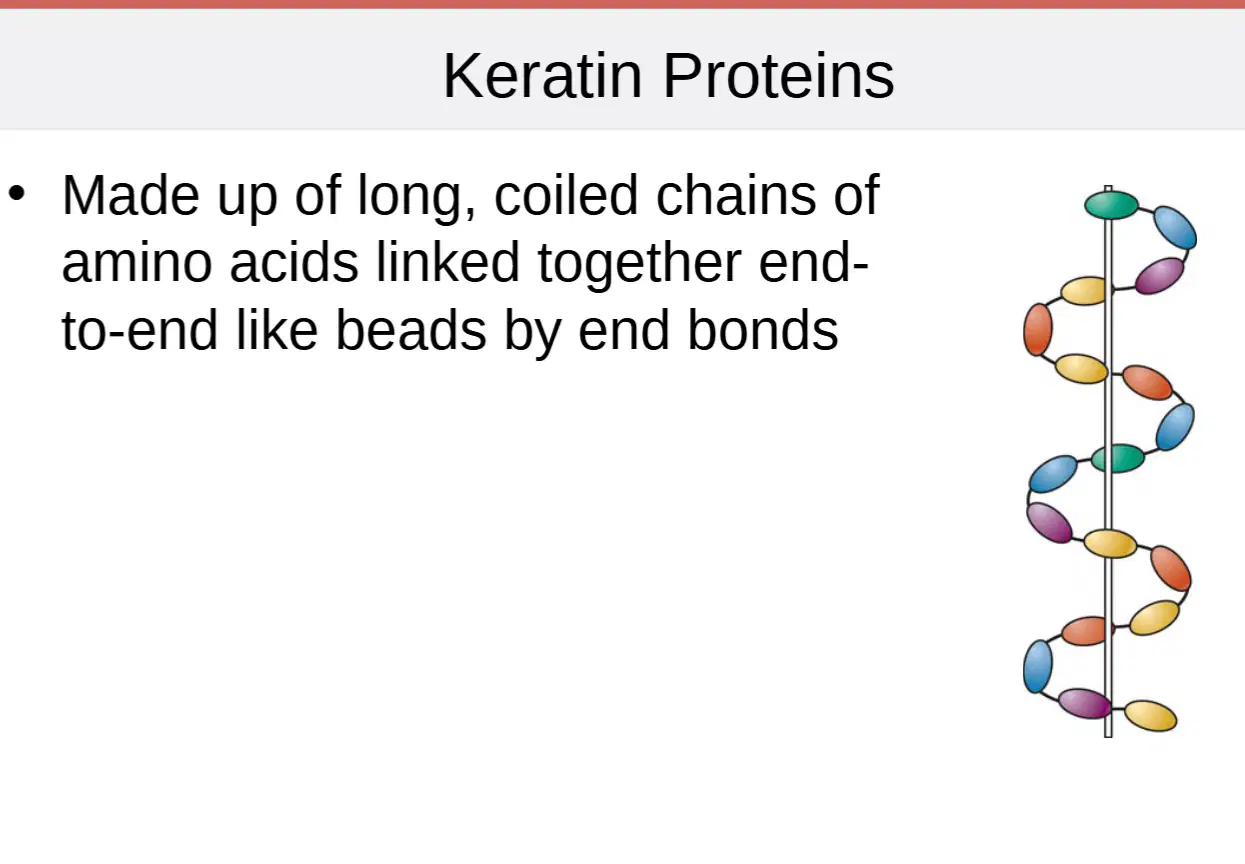
What are keratin proteins made up of?
Long, coiled chains of amino acids linked end-to-end like beads by end bonds
Short, straight chains of carbohydrates linked by hydrogen bonds
Long, coiled chains of lipids linked by peptide bonds
Short, straight chains of nucleotides linked by covalent bonds
What are disulfide bonds?
Bonds formed when sulfur atoms in two adjacent protein chains are joined
Bonds formed by hydrogen atoms in water molecules
Bonds that are easily broken by heat
Bonds that account for all of hair's strength
How can disulfide bonds be broken?
By applying heat
By using chemicals
By stretching the hair
By washing with water
What fraction of hair's strength is accounted for by disulfide bonds?
1/4
1/2
1/3
3/4
What type of side bond is relatively weak and results from an attraction between negative and positive electrical charges?
Covalent bond
Salt bond
Ionic bond
Peptide bond
Which type of bond accounts for about 1/3 of hair's strength and can be easily broken by water?
Disulfide bond
Peptide bond
Hydrogen bond
Covalent bond
What causes the physical change in permanent waving?
Processing of waving solution and neutralizer
Wrapping the hair on tools
Applying heat
Using a hair dryer
What causes the chemical change in permanent waving?
Wrapping the hair on tools
Applying heat
Processing of waving solution and neutralizer
Using a hair dryer

What effect do alkaline solutions have on hair during permanent waving?
They soften and swell the hair, opening the cuticle.
They harden the hair and close the cuticle.
They have no effect on the hair.
They make the hair dry and brittle.
How do acid solutions affect the hair compared to alkaline solutions?
They result in far less swelling of the hair.
They cause more swelling than alkaline solutions.
They have the same effect as alkaline solutions.
They make the hair more brittle.
What is the chemical reaction called that breaks disulfide bonds in the cortex during the waving process?
Oxidation
Reduction
Hydrolysis
Polymerization
What does the reduction reaction involve?
Addition of oxygen or removal of hydrogen
Addition of hydrogen or removal of oxygen
Addition of nitrogen or removal of carbon
Addition of carbon or removal of nitrogen
What is the most common reducing agent in permanent wave solutions?
Ammonium thioglycolate
Hydrogen peroxide
Thioglycolic acid
Sodium hydroxide
What is produced by adding ammonia to thioglycolic acid?
Sodium thioglycolate
Ammonium thioglycolate
Calcium thioglycolate
Potassium thioglycolate
Which of the following is an active ingredient in alkaline permanents?
Thioglycolic acid
Ammonium thioglycolate
Sodium chloride
Acetic acid

What is the pH range of a true acid wave?
4.5-7.0
6.5-7.0
7.8-8.2
9.0-9.6

Which type of wave has a pH range of 9.0-9.6?
Acid-balanced wave
Low-pH wave
Alkaline/cold wave
True acid wave

What is the pH range of an acid-balanced wave?
4.5-7.0
7.8-8.2
9.0-9.6
6.5-7.0
Which of the following is another name for alkaline waves?
Cold waves
Acid waves
True acid waves
Exothermic waves
Which type of permanent wave is specifically mentioned to have components?
Alkaline waves
Acid waves
True acid waves
Exothermic waves
Which of the following is a type of permanent wave?
Endothermic waves
Exothermic waves
Neutral waves
Acidic waves
What type of permanent wave does not contain ammonia?
Thio-free waves
Ammonia-free waves
Low-pH waves
Endothermic waves
Which type of permanent wave is designed to work without thioglycolate?
Low-pH waves
Ammonia-free waves
Thio-free waves
Endothermic waves
Which type of permanent wave is characterized by having a low pH?
Endothermic waves
Ammonia-free waves
Thio-free waves
Low-pH waves

