
 Worksheets
2025 Integrated Science - Chapter 8 Test
Total questions: 60
Worksheet time: 30mins
Name
Class
Date
1.
Mount St. Helen volcano was located in which state?
a)
Oregon
b)
Hawaii
c)
Washington
2.
What country had the most deadly earthquake recorded?
a)
Chile
b)
China
c)
Argentina
3.
What is the name of the fault that comes into Southern Illinois?
a)
Old Madrid
b)
New Madrid
c)
Southern Illinois Plate
4.
What year was the Earthquake in California that destroyed the freeway in Okland, CA?
a)
1980
b)
1989
c)
1909
5.
What causes most of the fires when an earthquake hits an area?
a)
buildings fall down
b)
gas lines are broken and ignite
c)
lightning hits the buildings
6.
Which city in Mexico had one of the largest earthquakes in history?
a)
El Paso
b)
Mexico City
c)
Juarez
7.
Which kind of plate boundary caused the earthquake in Mexico?
a)
Subduction zone
b)
Strik-slip fault
c)
Transform Boundary
8.
What is happening under Reel Foot Lake?
a)
constant small earthquakes
b)
a huge subduction zone
c)
a volcano
9.
Mount St. Helen volcano eruption happened in which year?
a)
1980
b)
2080
c)
1890
10.
The youngest rocks on the ocean floor are located?
a)
Near Asia
b)
Far from mid-ocean ridges
c)
At mid-ocean ridges
11.
The crust and upper mantle make up Earths ____
a)
asthenospere
b)
continents
c)
lithosphere
12.
Scientist have observed that the plates move at rates raging from 1cm to 12cm per____
a)
decade
b)
year
c)
century
13.
Plates of lithosphere float on the _____
a)
Asthenosphere
b)
Atmosphere
c)
core
14.
The result of plate movement can be seen at___
a)
Plate centers
b)
boundaries
c)
ocean margins
15.
The ____ are mountains by the collision of the Indo-Australia Plate and the Eurasian Plate
a)
Alps
b)
Appalachians
c)
Himalaya
16.
The pressure of the same___ on several continents supports the hypothesis of continental drift
a)
Rocks
b)
Fossils
c)
Both A and B
17.
The hypothesis that continents have slowly moved to their current locations is called ____
a)
Magnetic reversal
b)
Continental drift
c)
Convection
18.
Plates move apart at ____ boundaries
a)
Transform
b)
Stable
c)
Divergent
19.
The alignment of iron minerals in rocks when they are formed reflects the fact that Earths ____ has reversed itself several times in the pas
a)
core
b)
magnetic field
c)
asthenosphere
20.
The lack of explanation for continental drift prevented many scientist from accepting that a single supercontinent called _____ once existed
a)
Pangaea
b)
Glossopteris
c)
Glomar
21.
The Glomar challenger provided support fir the theory of plate tectonics by providing____
a)
Samples of plant life from mid-ocean ridges
b)
High-altitude photos of existing continents
c)
Samples of older rick found far from mid ocean ridges
22.
Plates slide past one another at___
a)
Subduction zones
b)
convection currents
c)
transform bounderies
23.
The boundary between two plates moving together is called a _____ boundary
a)
convergent
b)
divergent
c)
Transform
24.
seafloor spreading occurs because?
a)
Earthquakes break apart the ocean floor
b)
Sediments accumulate at the area of spreading
c)
molten material beneath Earths crust rises to the surface
25.
Wegener believed that the continents originally broke apart about ____ years ago
a)
200 million
b)
500 million
c)
400 million
26.
The fossil plant that helps support the theory of continental drift is____
a)
Mesorsaurus
b)
Glomar
c)
Glossopteris
27.
bands of rocks on the seafloor showing alternating magnetic orientation indicate Earths magnetic field has
a)
remained the same
b)
become stronger
c)
reversed itself in the past
28.
A ____ is a sensitive device used to detect magnetic fields on the seafloor
a)
glomar
b)
compass
c)
magnetometer
29.
_____ currents inside Earth might drive plate motion
a)
Convection
b)
Horizontal
c)
Verticle
30.
The differences in ____ cause hot, plastic like rock in the asthenosphere to rise toward Earths surface
a)
magnetism
b)
density
c)
weight
31.
In order to complete a convection current, the rising material must eventually
a)
warm
b)
stop inside
c)
sink back into
32.
The Great Rift Valley in Africa is a _____ boundary
a)
convergent
b)
Mid-ocean ridge
c)
divergent
33.
The Andes mountain range of South America was formed at?
a)
divergent boundary
b)
hot spot
c)
convergent boundary
34.
Active volcanos are most likely to form at?
a)
divergent
b)
convergent oceanic-continental
c)
transform
35.
_____ are formed when two continental plates collide
a)
Mountain ranges
b)
volcanos
c)
Strike-slip faults
36.
Earthquake waves are called
a)
Convergent
b)
seismic
c)
divergent
37.
Molten rock beneath Earth's surface is called
a)
pyroclasts
b)
lave
c)
magma
38.
The ____ is (are) an example of a transform boundary
a)
Appalachian mountains
b)
San Andreas Fault
c)
Mid- atlantic ridge
39.
Strike-slip faults are caused by ___ forces
a)
right angles
b)
compression
c)
shear
40.
A ___________ forms where two oceanic plates collide.
a)
subduction zone
b)
rift valley
c)
hot spot
41.
After the 1995 eruption of Soufriere Hills volcano, more than half of Montserrat was converted to _____ and many inhabitants evacuated
a)
Farmland
b)
wasteland
c)
research centers
42.
The modified Mercalli scale measures the ____ of an earthquake
a)
energy
b)
intensity
c)
magnitude
43.
The Ritcher scale is based on measurement of the ____ of a seismic wave
a)
frequency
b)
intensity
c)
amplitude
44.
A shield volcano ____
a)
Has a steep-sloping cone made up of the rocks and lave
b)
throws rocks and cinders into the air
c)
erupts with this basaltic lave
45.
Sticky, thicker lavas ____
a)
Are rich in silica
b)
are rich in iron and megnesium
c)
flow very easily
46.
Which statement is true of P-waves
a)
They travel the fastest through rocks
b)
the vibrate at 90 degrees to the wave motion
c)
they are last to reach the epicenter
47.
Tsunamis are caused by
a)
hot soits
b)
earthquake motion on the ocean floor
c)
pyroclastic flows
48.
When a volcano erupts, the molten material that flows onto the Earths surface is called____
a)
rifts
b)
magma
c)
lava
49.
Thinner, easy-flowing laves are rich in _____
a)
silica
b)
water vapor
c)
iron and magnesium
50.
A composite volcano
a)
is steep-sided
b)
is made of layers of lave and tephra
c)
all of the above
51.
Alfred Wegener believed that the _____ were once joined.
a)
Pangaea
b)
continents
c)
lithosphere
52.
The name ___________ comes from two words meaning "all land".
a)
seafloor
b)
Pangaea
c)
continents
53.
The Glomar Challenger gathered information about rocks on the ______________.
a)
seafloor
b)
Pangaea
c)
continents
54.
The crust and upper mantle make up the ____________.
a)
Pangaea
b)
continents
c)
lithosphere
55.
Earths thick, plastic like layer is ______
a)
mid-ocean ridge
b)
asthenosphere
c)
subduction zone
56.
One plate is forced under another in a ______________.
a)
mid-ocean ridge
b)
asthenosphere
c)
subduction zone
57.
A _______is an underwater mountain chain.
a)
mid-ocean ridge
b)
asthenosphere
c)
subduction zone
58.
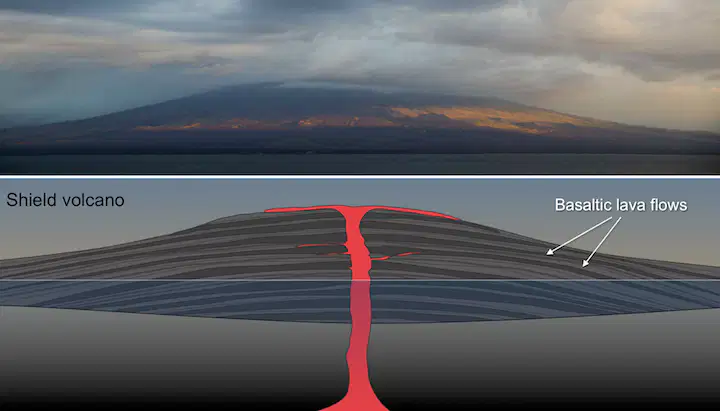
This is a picture of which type of volcano?
a)
shield
b)
cinder-cone
c)
fissure
59.
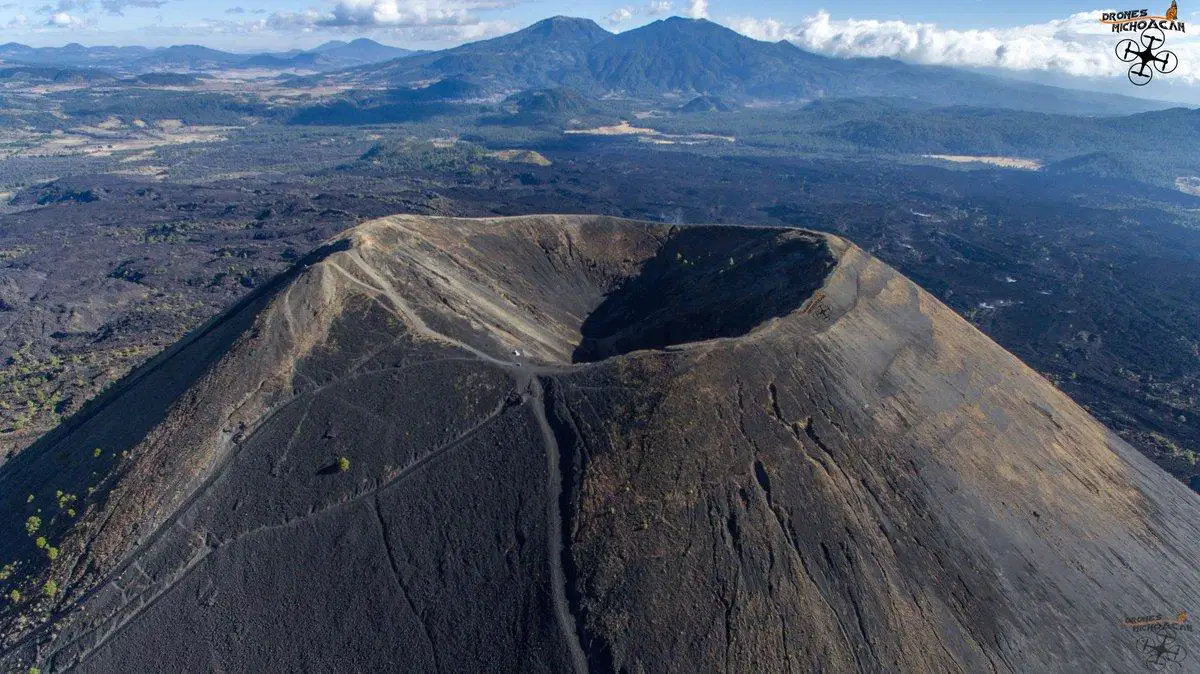
This is a picture of which type of volcano?
a)
shield
b)
cinder-cone
c)
fissure
60.

This is a picture of which type of volcano?
a)
shield
b)
cinder-cone
c)
fissure
100 %

