wayground logo

Free Printable Worksheets

NEW

Font size

S
M
L
XL
Worksheets

Unit 6: Chemical Reactions Review

Total questions: 60

Worksheet time: 1hrs 1mins

Name
Class
Date
1.

What is the left part of a chemical equation called?

2H2 + O2 ---> 2H2O

a)

Reactants

b)

Yields

c)

Products

d)

Chemical equation

2.

What is the right part of a chemical equation called?

2H2 + O2 ---> 2H2O

a)

Reactants

b)

Yields

c)

Products

d)

Chemical Equation

3.

What is the total number of atoms present in 5Na3PO4?

a)

5

b)

55

c)

40

d)

8

4.

How many Mn atoms are found in the following compound?

2MnO4

a)

1

b)

2

c)

4

d)

8

5.

What is the little number after an element in a chemical equation called?

Example: H2

a)

Coefficient

b)

Atom

c)

Subscript

d)

Equation

6.

Is the following equation balanced?

Al + O2 ---> 2Al2O3

a)

YES

b)

NO

7.

Is the following equation balanced?

2C2H2 + 5O2 ---> 4CO2 + 2H2O

a)

YES

b)

NO

8.

Is the following equation balanced?

NaHCO3 ---> Na2CO3 + H2O + CO2

a)

YES

b)

NO

9.

Which of the following equations are correctly balanced?

a)

12CO2 + H2O ---> C6H12O6 + O2

b)

CO2 + H2O ---> 3C6H12O6 + O2

c)

CO2 + 9H2O ---> C6H12O6 + O2

d)

6CO2 + 6H2O ---> C6H12O6 + 6O2

10.

Balance this equation:

H2 + Cl2 ---> HCl

a)

It is balanced.

b)

H2 + Cl2 ---> 2HCl

c)

3H2 + Cl2 ---> 6HCl

d)

H2 + 3Cl2 ---> 6HCl

11.

Balance this equation:

HgO ---> 2Hg + O2

a)

It is balanced.

b)

2HgO ---> 2Hg + O2

c)

2HgO ---> Hg + O2

d)

HgO ---> Hg + 2O2

12.
What is the Law of Conservation of Mass?
a)
It states that no matter can be created or destroyed.
b)
It states that no energy can be created or destroyed.
c)
It states that matter can be created or destroyed.
d)
It states that no sound can be created or destroyed.
13.
What is a coefficient?
a)
The small number on the right of the chemical symbol.
b)
The large number in front of a chemical formula.
c)
The number in between the chemical symbols.
d)
The number behind a chemical formula.
14.
What coefficient should be used to make the following equation balanced?
N2+O2--> _NO 
a)
1
b)
2
c)
3
d)
4
15.
How many elements are in C6H12O6?
a)
1
b)
2
c)
3
d)
4
16.
__Na + __Cl2 --> __NaCl
a)
1,1,2
b)
2,1,2
c)
2,1,1
d)
already balanced
17.
__H2O2 --> __H2O + __O2
a)
already balanced
b)
2,1,1
c)
2,2,1
d)
2,1,2
18.
__NaClO--> __NaCl + __O2
a)
2,2,2
b)
2,2,3
c)
3,2,2
d)
1,2,3
19.
__BF3 + __Li2SO3 --> __B2(SO3)3 + __LiF
a)
2,3,1,3
b)
2,3,1,6
c)
4,4,2,12
d)
3,3,1,9
20.
__C6H12O6 + __O2 --> __H2O + __CO2
a)
1,6,6,6
b)
already balanced
c)
1,6,1,6
d)
2,12,12,12
21.
_AgNO3 + _Cu _Cu(NO3)2 + _Ag
a)
2 AgNO3 + 2 Cu → 3 Cu(NO3)2 + 1 Ag
b)
2 AgNO3 + 1 Cu → 1 Cu(NO3)2 + 2 Ag
c)
1 AgNO3 + 2 Cu → 2 Cu(NO3)2 + 1 Ag
d)
3 AgNO3 + 2 Cu → 3 Cu(NO3)2 + 2 Ag
22.
Balance this equation:
MgCl2 --> Mg4+ Cl2
a)
It's already balanced.
b)
4MgCl2 --> Mg4+ 4Cl2
c)
4MgCl2 --> Mg4+ 5Cl2
23.

For the following chemical reaction, which substance is a reactant?

2HBr + Mg(OH)2  MgBr2 +2H2O2HBr\ +\ Mg\left(OH\right)_2\ →\ MgBr_2\ +2H_2O  

a)

MgBr2MgBr_2  

b)

BrBr  

c)

Mg

d)

HBr

24.

Is the following reaction balanced?

Ca+CuF2CaF2+CuCa+CuF_2\rightarrow CaF_2+Cu  

a)

Yes

b)

No

25.

How many Oxygen atoms do I have in the following compound?

2(NH4)3PO42\left(NH_4\right)_3PO_4  

a)

4

b)

6

c)

8

d)

24

26.

How many Hydrogen atoms do I have in the following compound?

2(NH4)3PO42\left(NH_4\right)_3PO_4  

a)

4

b)

12

c)

9

d)

24

27.

What number will balance the following chemical reaction?

S8+8O2S_8+8O_2\rightarrow  _ SO2SO_2  

a)

1

b)

4

c)

8

d)

16

28.

How many Carbon atoms are there in the following compound?

C4OH10C_4OH_{10}  

a)

1

b)

4

c)

10

d)

14

29.

This is when heat is absorbed, it is an

a)

Exothermic reaction

b)

endothermic reaction

c)

both

d)

none

30.

When heat is released it is an

a)

exothermic reaction

b)

endothermic reaction

c)

both

d)

none

31.

The temperature increases outside of this reaction

a)

exothermic

b)

endothermic

c)

both

d)

none

32.

The temperature decreases outside of this reaction

a)

exothermic

b)

endothermic

c)

both

d)

none

33.

Fire is an example of

a)

exothermic reaction

b)

endothermic reaction

c)

none

d)

both

34.

Your hands get cold outside from not wearing gloves

a)

exothermic

b)

endothermic

c)

both

d)

none

35.

Fireworks are an example of

a)

exothermic

b)

endothermic

c)

both

d)

none

36.

An ice pack in an example of

a)

exothermic

b)

endothermic

c)

both

d)

none

37.

photosynthesis is an example of

a)

Exothermic reaction

b)

Endothermic reaction

c)

both

d)

none

38.

Frying an egg is an example of

a)

exothermic reaction

b)

endothermic reaction

c)

both

d)

none

39.
During an endothermic reaction in a beaker if we are part of the surroundings and touched the beaker, it would feel _______. 
a)
Warm
b)
Cold
40.
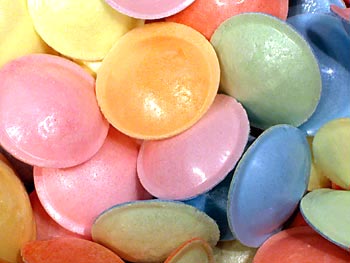
Have you ever eaten sherbet sweets candy? They fizz in your mouth and your tongue feels cold. Why do you think that is?
a)
It is an exothermic reaction
b)
It is an endothermic reaction
c)
It is made of ice
d)
It is dissolving your mouth
41.

6CO2 + 6H20 + Energy ---------------> C6 H12 06 + 6O2

a)

endothermic reaction

b)

exothermic reaction

42.

Heat + Ice --> Liquid water

a)

Endothermic

b)

Exothermic

c)

Both Exo and Endo

d)

Neither Exo or Endo

43.
Is this reaction endothermic or exothermic?
a)
Endothermic
b)
Exothermic
c)
Exoendo
d)
Endoexo
44.
Is this reaction endothermic or exothermic?
a)
Exoendo
b)
Caroussothermic
c)
Endothermic
d)
Exothermic
45.
Is this reaction endothermic or exothermmic?
a)
Exothermic
b)
Endothermic
c)
Exoendo
d)
Thermos
46.

A student mixed two chemicals to allow them to react. The temperature before the reaction was 25 ° C. The temperature after the reaction was 18° C. Which of the following is true?

a)

It is an exothermic reaction

b)

It is an endothermic reaction

47.

What instrument would you use to detect an endothermic or exothermic reaction?

a)

triple beam balance

b)

ruler

c)

thermometer

48.
What kind of reaction is this?
a)
Endothermic
b)
Exothermic
c)
Cannot be determined
49.

When barium hydroxide and ammonium chloride react, the temperature of the mixture decreases. What kind of reaction is this?

a)

Endothermic

b)

Decomposition

c)

Exothermic

d)

Indothermic

50.

When calcium reacts with water, the temperature changes from 18°C to 39°C. Which statement is correct?

a)

The solution at the end is acidic

b)

The reaction is reversible

c)

The reaction is exothermic

d)

The reaction is endothermic

51.
One of the signs of a chemical reaction taking place is:
a)
Bubbles are produced 
b)
Reactants are not combining
c)
Products are not forming
d)
Color is not changing
52.
Which of the following describes a precipitate?
a)
a liquid forms when a block of metal is heated
b)
a solid forms when one liquid is poured into another
c)
a gas forms when a solid is placed in a liquid
d)
bubbles form when an acid is poured on a rock
53.
Which is NOT an indication of a chemical change?
a)
temperature change
b)
formation of a precipitate
c)
shape change
d)
production of light
54.
You know you a chemical reaction has occurred if 
a)
there is a precipitate.
b)
there is a color change.
c)
there is a temperature change.
d)
All of these answers are evidence.
55.
A clear liquid from a flask is poured into another clear liquid in a beaker. Which of the following results of this procedure would indicate a new substance was formed?
a)
The level of the substance in the beaker is higher after the other liquid is added.
b)
A yellow solid forms and then settles to the bottom of the beaker.
c)
Small white crystals are left behind in the flask that held the first liquid.
d)
The mass of the combined liquids is greater than either original liquid.
56.
Which of the following is an example that includes evidence of a chemical reaction?
a)
A sample of zinc is placed in water and it settles to the bottom
b)
A solid block of ice is heated and it completely melts into a liquid. 
c)
Sugar that is burned gives off an odor and turns brown and then black.
d)
A tomato is placed into a blender and chopped up into smaller pieces.
57.
Four students performed four different investigations by combining different substances. Which of the observations is most indicative of a chemical reaction?
a)
investigation 1
b)
investigation 2
c)
investigation 3
d)
investigation 4
58.
A student places a piece of a potato into a container of hydrogen peroxide. One observation the student makes is that bubbles form around the potato. The presence of bubbles might indicate the formation of a new substance because bubbles - 
a)
could show that a gas is forming.
b)
always rise to the top of a liquid. 
c)
are almost always perfectly spherical.
d)
usually burst after a few minutes.
59.
In a container, a solid consisting of clear crystals is combined with a blue liquid and the following observations are obtained: How many of the listed observations indicate a new substance was formed?
a)
1
b)
2
c)
3
d)
4
60.

Is this a physical or chemical change?


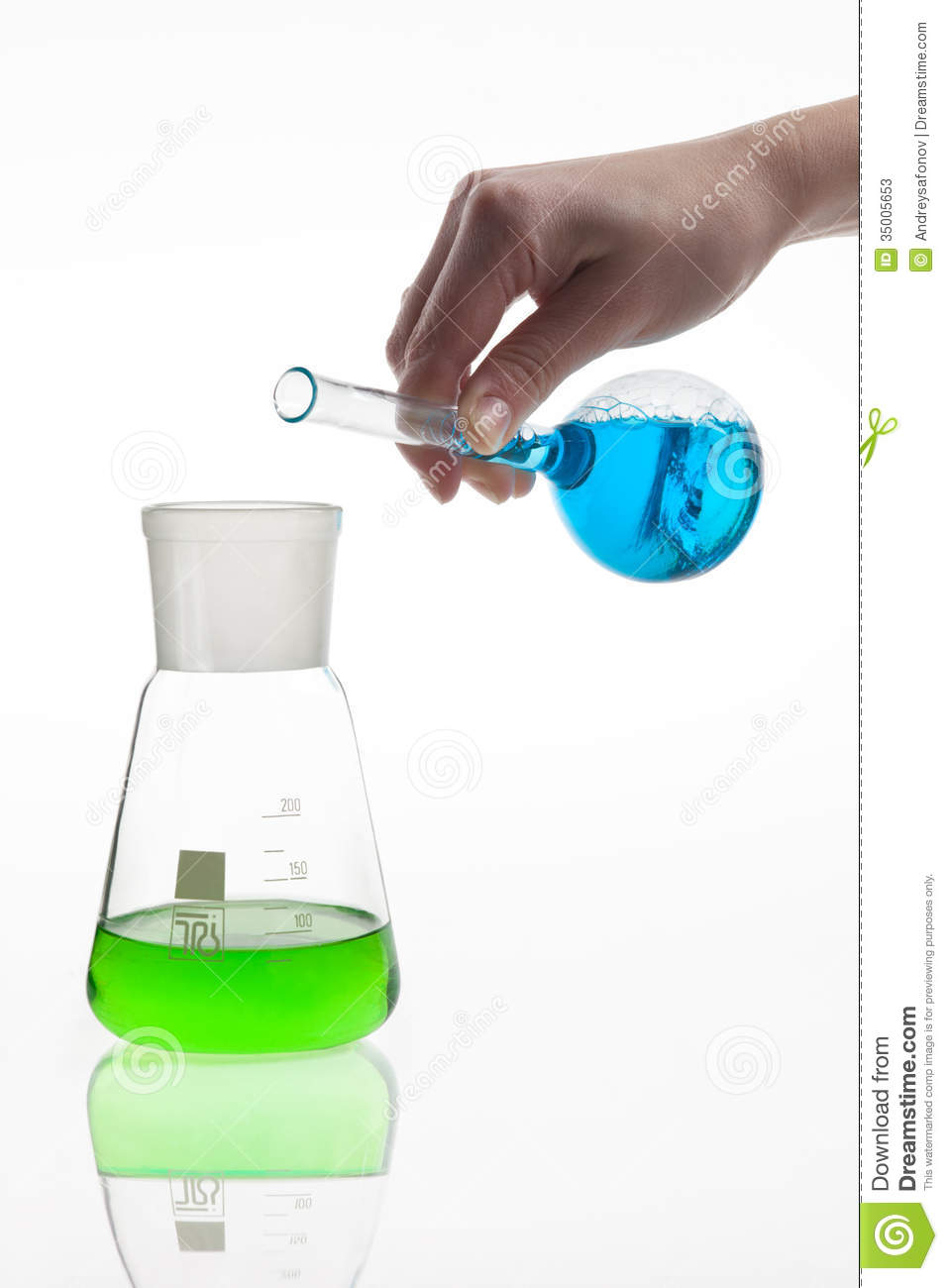
A blue solution and clear solution were mixed and turned green

a)

physical change

b)

chemical change