
 Worksheets
Test 1 (History, Properties of Water, Currents and Tides)
Total questions: 49
Worksheet time: 25mins
Name
Class
Date
1.
The deep ocean has a constant temperature of around
a)
0°C
b)
2°C
c)
10°C
2.
The thermocline is
a)
an ocean layer where rapid change in temperature occurs
b)
an ocean layer where rapid change in salinity occurs
c)
an ocean layer where rapid change in density occurs
3.

The water of the Amazon River has a
a)
low turbidity
b)
high turbidity
4.
A water molecule is held together by
a)
1 hydrogen bond
b)
2 hydrogen bonds
c)
1 covalent bond
d)
2 covalent bonds
5.
Why does ice float?
a)
As water freezes, it expands and its density decreases.
b)
As water freezes, it takes up more hydrogen from the atmosphere, causing it to have a greater buoyancy.
c)
As water freezes, air becomes trapped between the hydrogen bonds of water molecules.
d)
As water freezes, it takes up more oxygen from the atmosphere, causing it to have a greater buoyancy.
6.
Which of the following would INCREASE salinity in a location?
a)
runoff from land
b)
ice melting
c)
heavy rainfall
d)
evaporation
7.
Water is the only substance that naturally exists in all three phases on Earth: gas, liquid, and solid.
a)
True
b)
False
8.
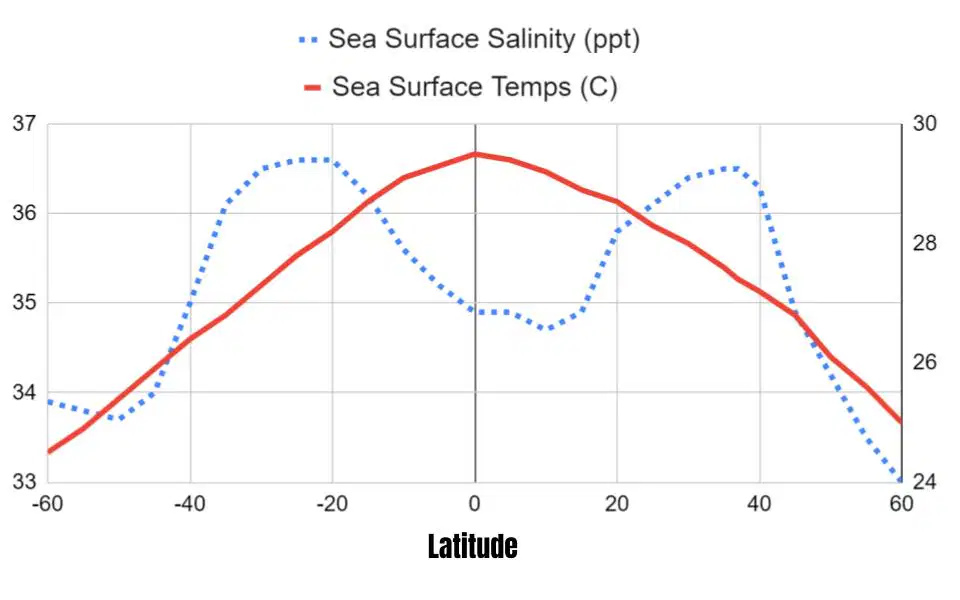
Where do the highest salinities occur?
a)
around 25°S and 35°N
b)
at the equator
9.
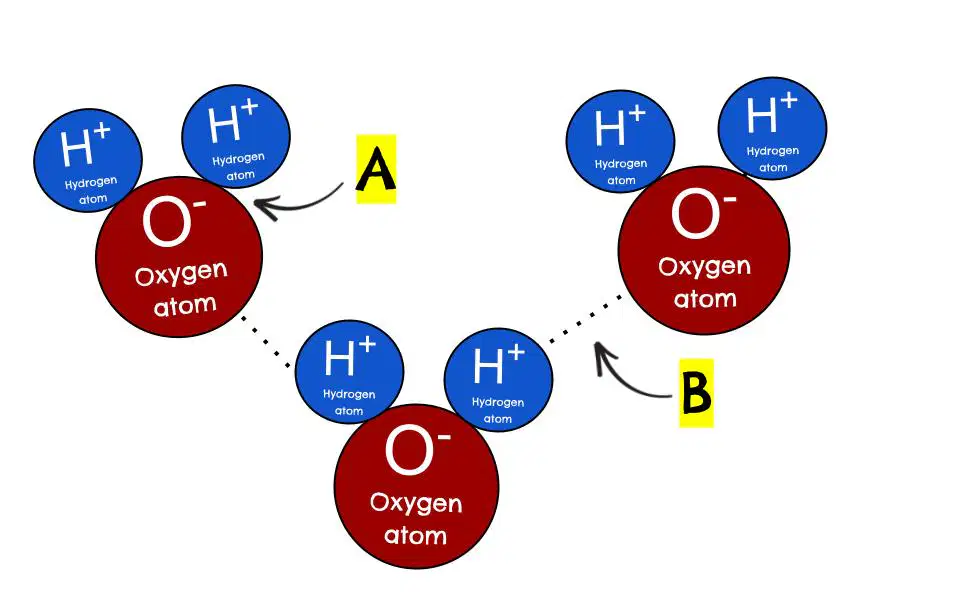
Which is the hydrogen bond?
a)
Bond A
b)
Bond B
10.
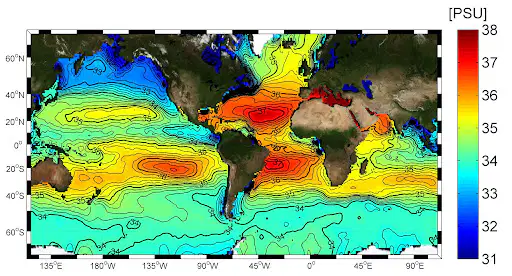
Which location has a higher salinity?
a)
The Atlantic Ocean near the equator
b)
The Atlantic Ocean at 20°S
c)
The Atlantic Ocean at 60°S
11.
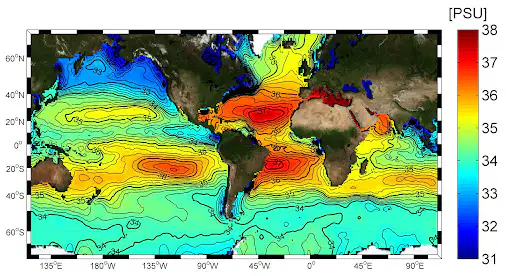
Why are salinities lower right along the equator, even though they are 37-38 in many other parts of the tropics?
a)
because there is less evaporation at the equator due to cooling winds
b)
because there is so much evaporation that it creates large amounts of precipitation, which lower the salinity
c)
because of the melting ice
d)
because there is so much more biodiversity here than any other region, and the animals take up salt from the water at a faster rate
12.
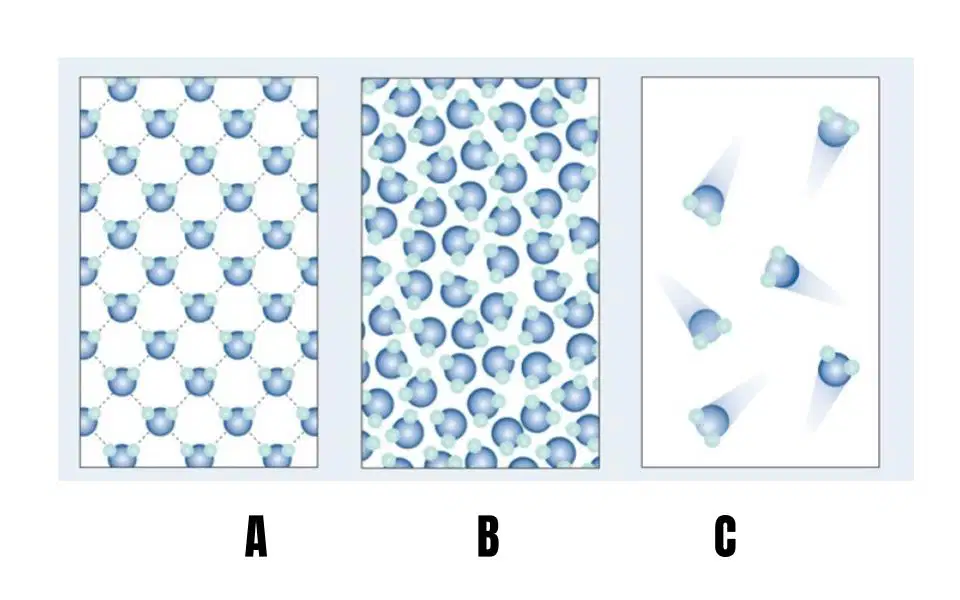
In which phase do water molecules move the fastest?
a)
phase A
b)
phase B
c)
phase C
13.

Which of these illustrates the phase of water in which the molecules would be expected to evaporate, changing to a gas?
a)
phase A
b)
phase B
c)
phase C
14.
Which is more dense?
a)
cold water
b)
warm water
15.
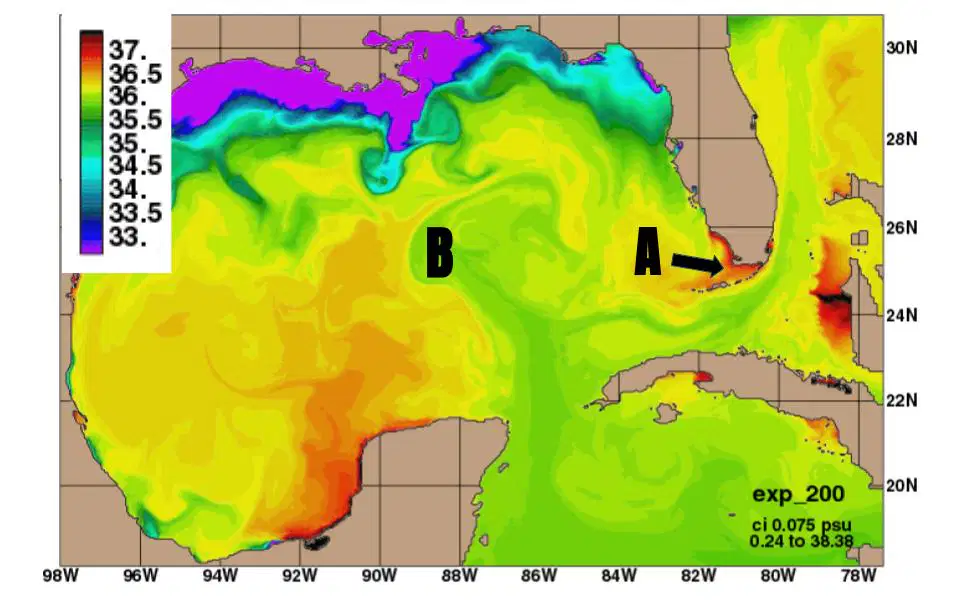
Location A is Florida Bay. Which of the following is the best explanation on why there are increased salinities in Florida Bay, in comparison to the surrounding waters of South Florida?
a)
There are large amounts of freshwater from the flow of the Everglades flowing into Florida Bay.
b)
Florida Bay is a very shallow and warm body of water, with high rates of evaporation.
16.
Developed the Theory of Evolution.
a)
Charles Darwin
b)
James Cook
c)
Jacques Cousteau
17.
_______ is the only underwater laboratory.
a)
Challenger
b)
Beagle
c)
Aquarius
d)
Atlantis
18.
Exploration of the ocean increased because of which of the following?
a)
Trade
b)
Discover new lands
c)
Food
d)
All the above
19.
The _____ used mathematics principles to develop maps for seafaring.
a)
Greeks
b)
Romans
c)
Egyptians
d)
Chinese
20.
New technologies in marine science allow for scientists to do all the following except
a)
Track biological activity.
b)
Measure currents.
c)
Explore the entire ocean.
d)
Test water chemistry.
21.
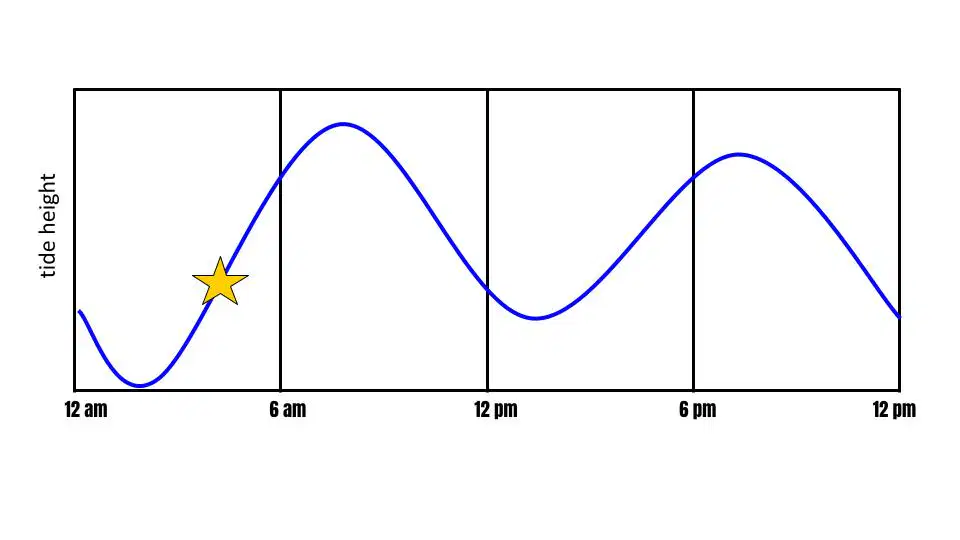
What type of tide is occurring where the yellow star is located?
a)
Flood tide
b)
Ebb tide
c)
Slack tide
22.
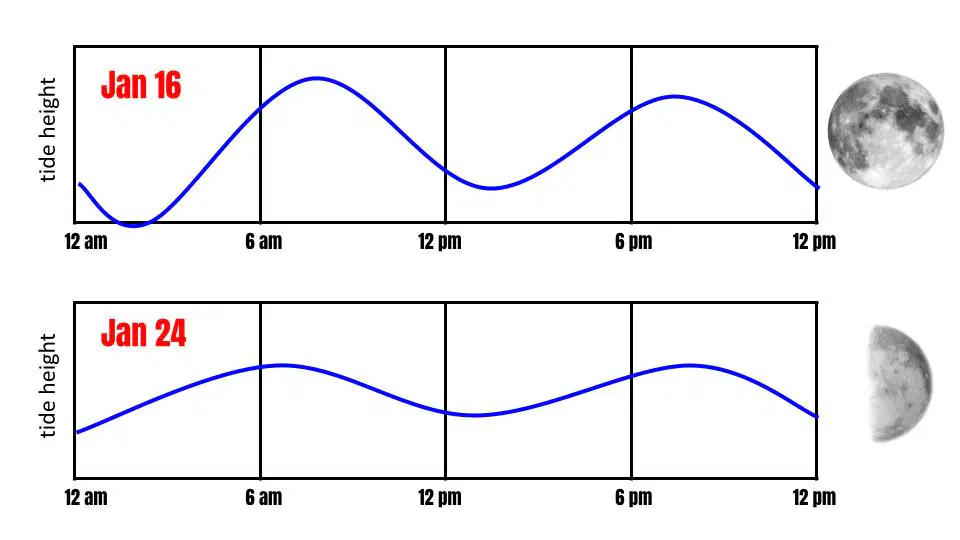
On which day is a spring tide occurring?
a)
Jan 16
b)
Jan 24
23.
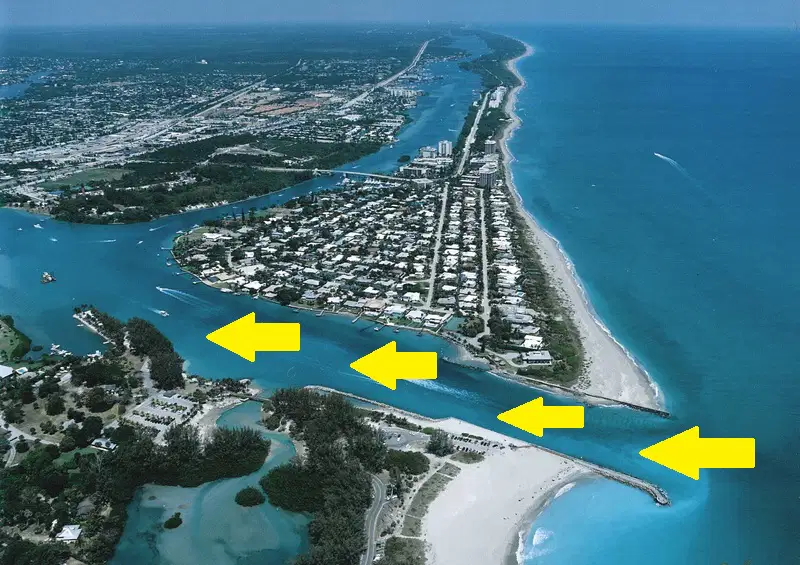
This is Jupiter Inlet, on the east coast of Florida. If the yellow arrows indicate the direction that the tide is moving, then an ebb tide is occurring.
a)
True
b)
False
24.
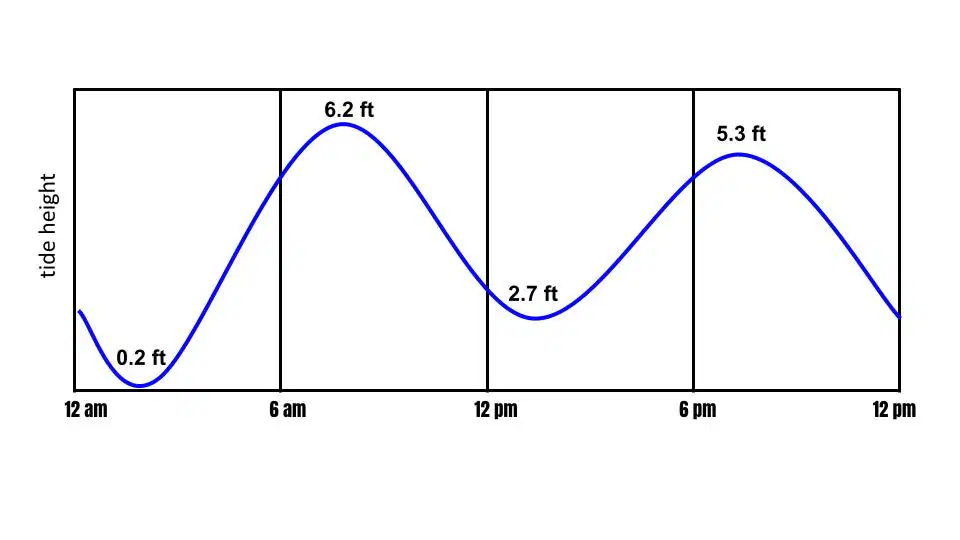
What is the tidal range on this day?
a)
6 ft
b)
6.2 ft
c)
0.9 ft
d)
2.5 ft
25.

When the sun, moon, and earth are aligned as shown below, what type of tides will occur?
a)
spring tide
b)
neap tide
26.
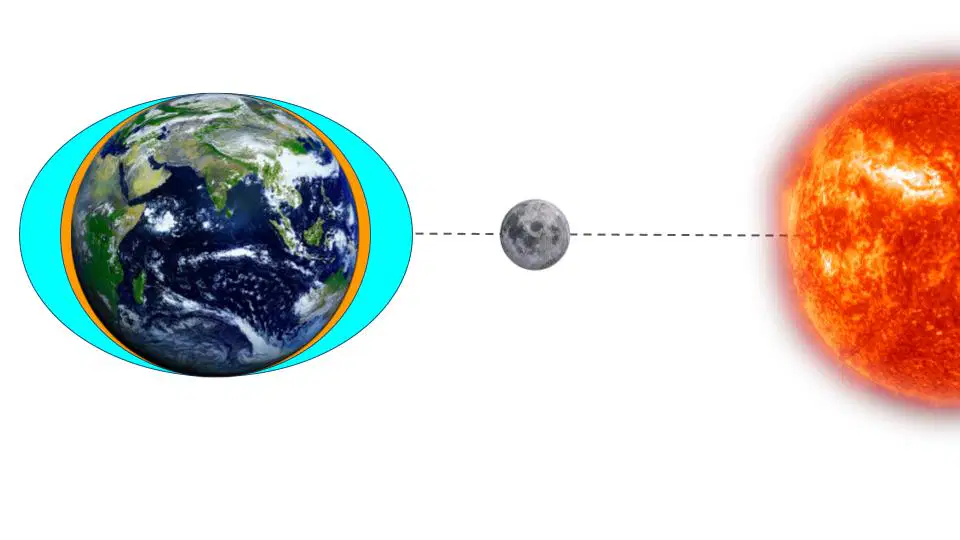
In the diagram below, the blue bulge indicates
a)
the bulge created by the pull of the moon
b)
the budge created by the pull of the sun
27.
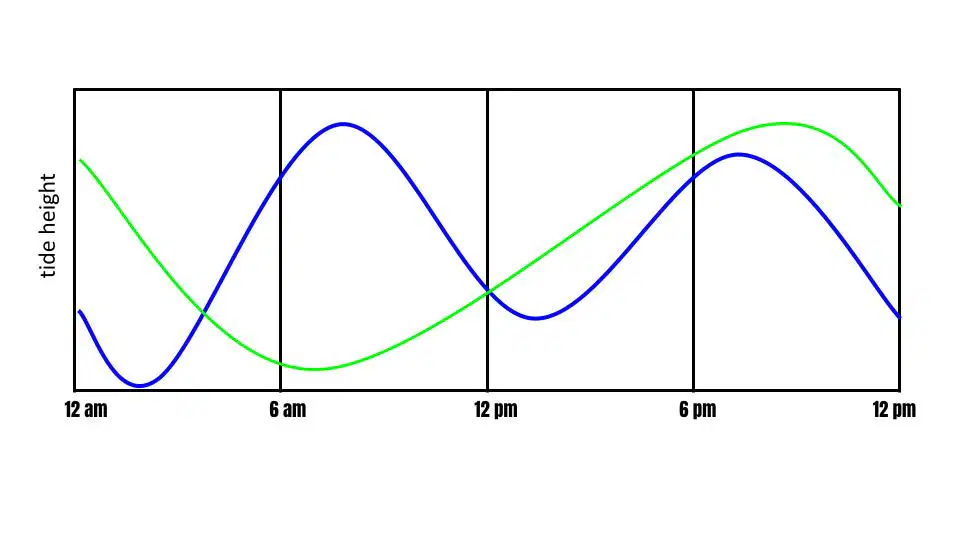
Which statement best describes what is shown on the diagram?
a)
the green line represents a diurnal tide and the blue line represents a semidiurnal tide
b)
the green line represents a semidiurnal tide and the blue line represents a diurnal tide
28.
About how much time passes between one spring tide and the next spring tide?
a)
about a week
b)
about 2 weeks
c)
about a month
d)
about 2 months
29.
The gravitational pull of the earth, the moon, and the sun all influence the oceans. Which one has the slightest (least) impact?
a)
Earth's gravitational pull
b)
Sun's gravitational pull
c)
Moon's gravitational pull
30.
During a full moon, the high tide will be
a)
one of the highest high tides of the month
b)
one of the lowest high tides of the month
31.
Upwelling currents bring water to the surface that is ..... (You must choose the TWO correct answers)
a)
warm
b)
cold
c)
rich in nutrients
d)
rich in oxygen
32.
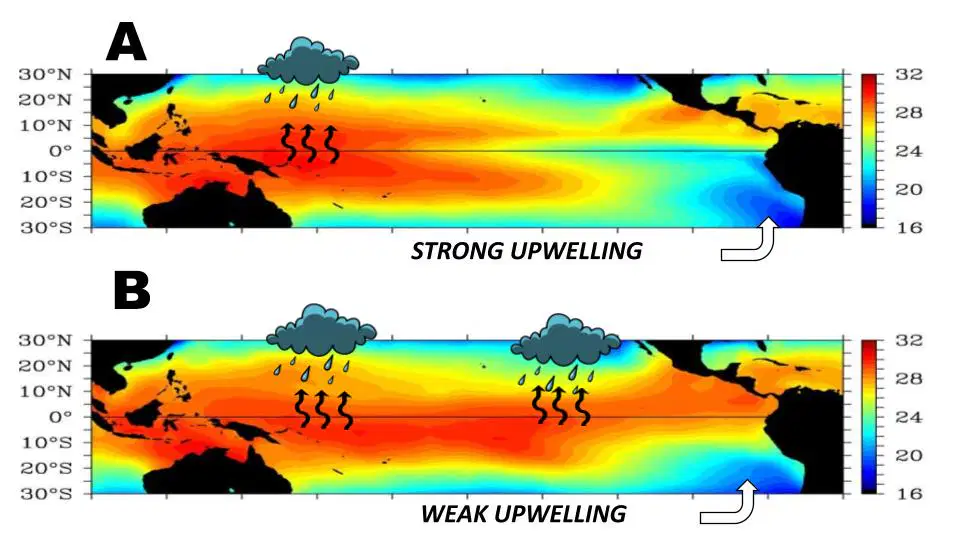
Which shows a normal year in the Pacific Ocean?
a)
Map A
b)
Map B
33.
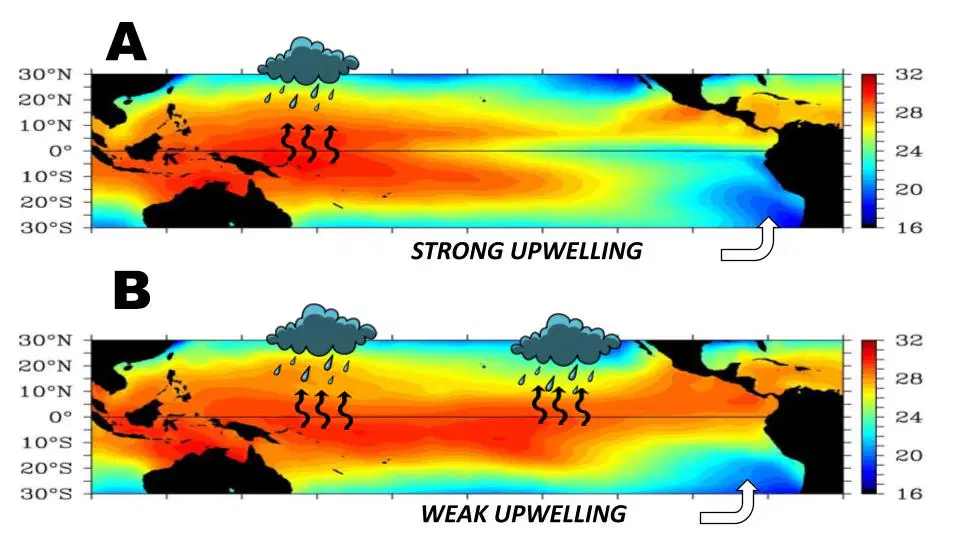
Which shows a year that California and Mexico might experience a little relief from their typical drought like conditions?
a)
Map A
b)
Map B
34.
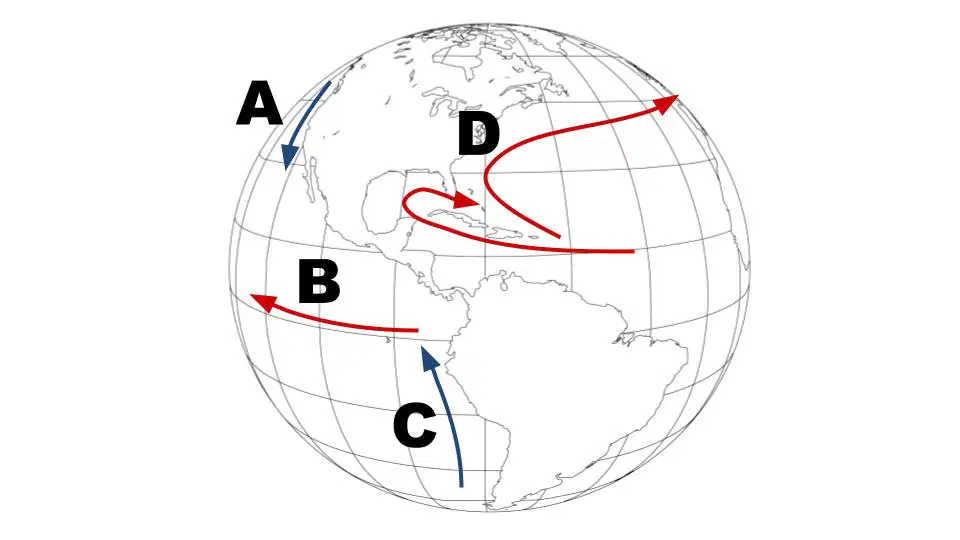
Which current shown on the globe is the Gulf Stream?
a)
Current A
b)
Current B
c)
Current C
d)
Current D
35.
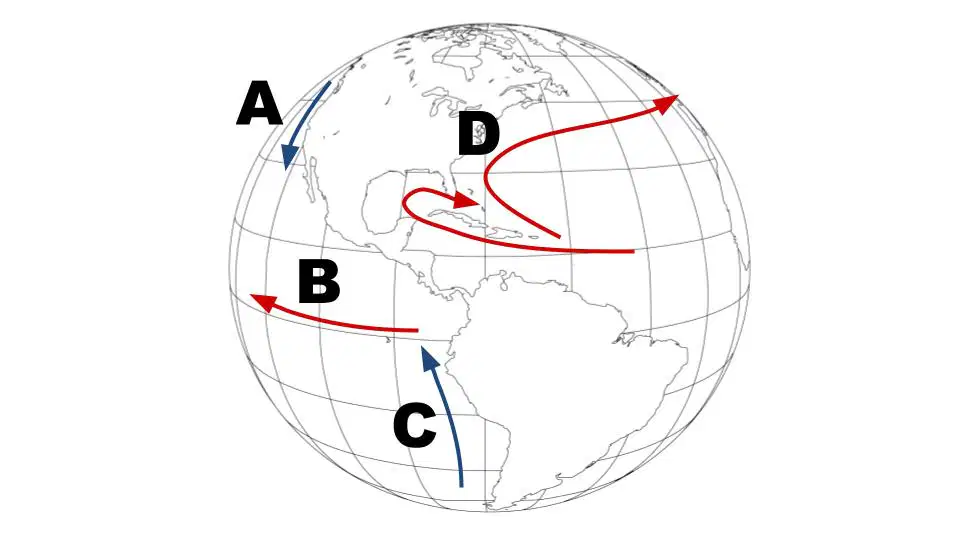
Which of these is considered an equatorial current, driven by tradewinds?
a)
Current A
b)
Current B
c)
Current C
d)
Current D
36.
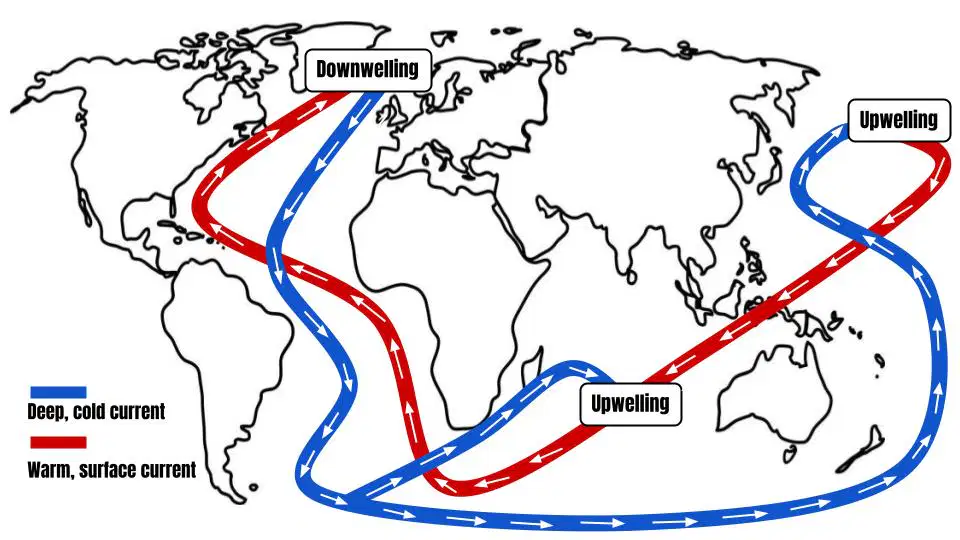
What causes the downwelling in the Northern Atlantic Ocean?
a)
strong winds from the Arctic Ocean
b)
salty water becoming very cold and dense in the Northern Atlantic
c)
extra strong tradewinds
d)
the delivery of warm water by the Gulf Stream
37.
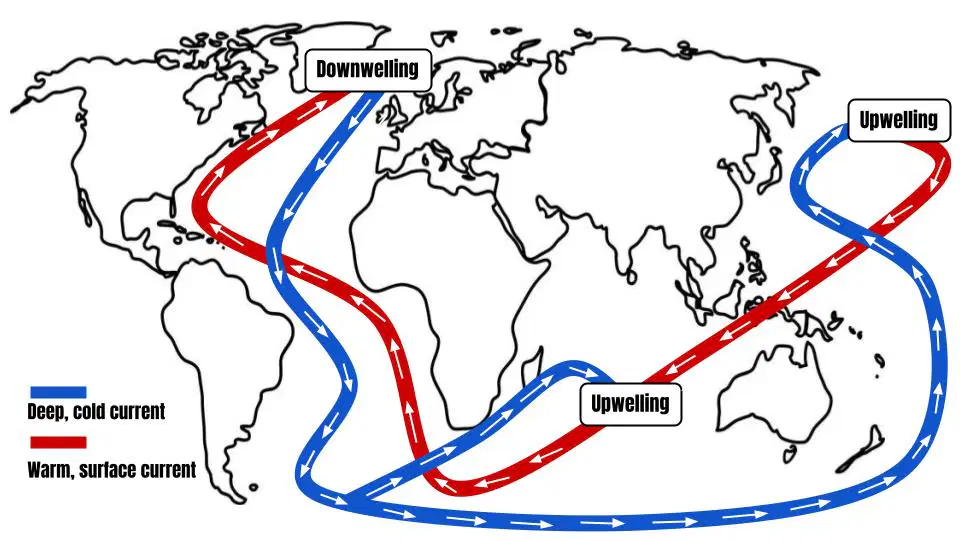
The Ocean Conveyor Belt is also called thermohaline circulation because it is driven by
a)
winds
b)
Coriolis Effect
c)
differences in temperature and density
38.
During an El Nino year, the tradewinds
a)
are weaker
b)
are stronger
c)
don't change
39.
When would you expect seabirds along the coast of Ecuador/Peru/Galapagos to have mass die-offs due to a lack of food (fish)?
a)
during a normal year
b)
during an El Nino year
c)
during a La Nina year
40.
Downwelling delivers water from the surface to the deep that is rich in
a)
fish
b)
nutrients
c)
oxygen
41.
There is more cloud formation and rainfall over
a)
cold water
b)
warm water
42.
Which of the following is true?
a)
Currents traveling from the equator carry a lot of heat energy towards the poles.
b)
Currents traveling from the equator carry a lot of nutrients towards the poles.
c)
Currents traveling from the equator carry a lot of oxygen towards the poles.
43.
The equatorial currents can be found
a)
in only the northern hemisphere
b)
in only the southern hemisphere
c)
in both hemispheres
44.
Strong upwellings occur along coastline with strong winds (such as Peru), but where else in the ocean can cause upwellings?
a)
seamounts
b)
deep sea trenches
c)
earthquakes
d)
high salinities
45.
Coriolis Effect affects surface currents by
a)
making them warmer
b)
deflecting them left or right
c)
forcing them downwards
d)
making them faster
46.
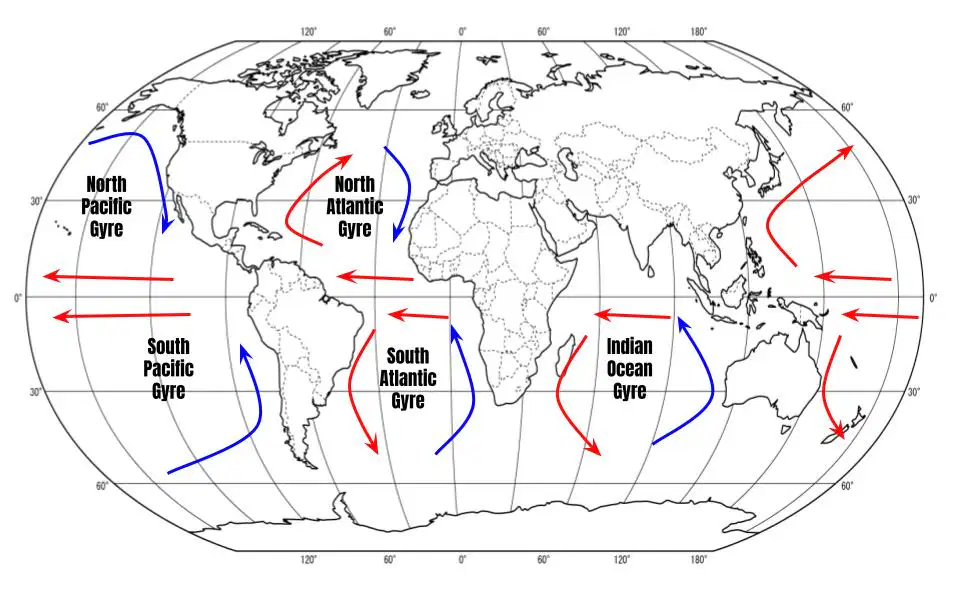
If coral reefs need warm water, on which coast of Australia would you expect to find the Great Barrier Reef, based on this map of ocean gyres?
a)
the east coast
b)
the west coast
47.
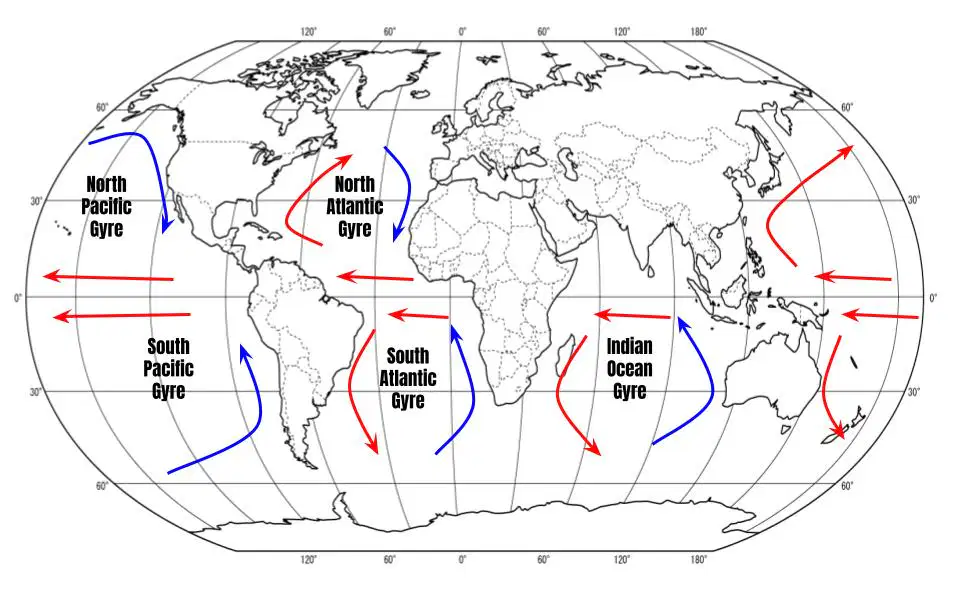
True or False: The westward directions of the tradewinds at above and below the equator switch directions seasonally.
a)
False
b)
True
48.
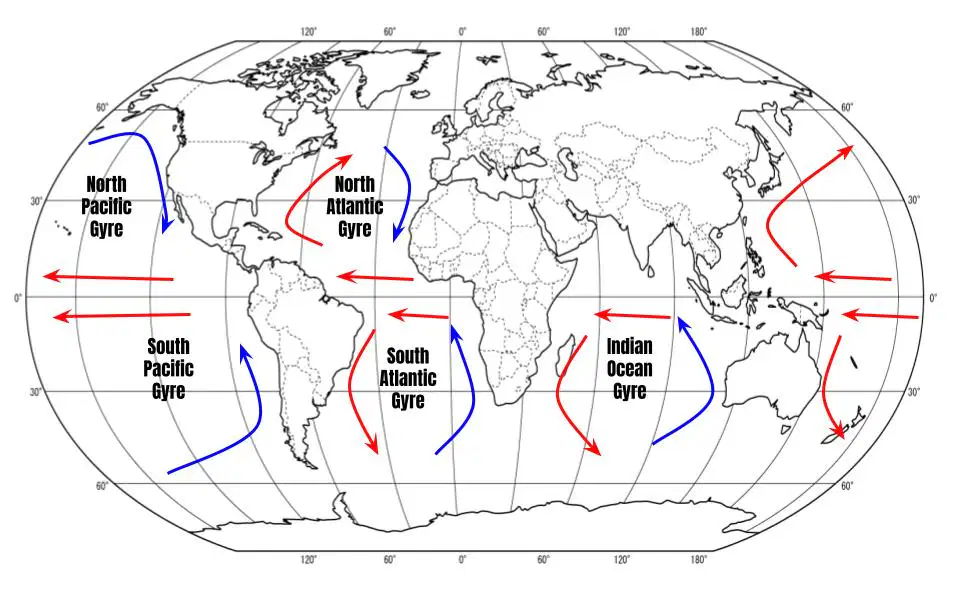
Along which coast would you expect a drier climate?
a)
The east coast of South America
b)
The west coast of South America
49.
Which of the following is NOT a major factor affecting ocean currents?
a)
Coriolis Effect
b)
Winds
c)
Temperature and Density
d)
Gravitational pull of the moon
100 %

