
 Worksheets
Unit 7 Test Review - Climate and Weather
Total questions: 83
Worksheet time: 1hrs 8mins
What is the difference between Weather and Climate
Mrs.Kaylor
Weather is the area surrounding you
Climate is when the temperature and weather is average but Weather is rain,storms, average temperature that changes
When the weather stays the same year around is weather
What is Climate Change
When the Climate changes temperature Weather and its surroundings
When the Climate Changes
When there is a storm and more rain
When a drought happens to acure one day
What are the first effects of climate change
Droughts,floods, more wind
More wind and clouds and rain
Rain,Increase or decrease of temperature,less rain more droughts more floods ect.
All of the above
Is Climate change natural
Yes and no
No people cause all of it
Yes it is known as a Natural Phenomenon
People dont harm the world at all so it cant be non-natural
How do hurricanes form?
The wind spins up and makes rings that build up causing a hurricane
When cold air rises over the warm air
when warm moist air over water begins to rise. The rising air is replaced by cooler air. This process continues to grow large clouds and thunderstorms
The rain causes a cloud build up and makes a hurricane
What are the 4 main weather conditions
Clouds,rain,sun, light
temperature, wind, precipitation, and sunlight and clouds
Temperature, Condensation, wind, sun
sun,hot,cold,rain
How many season are there
2
4
6
5
What protects us from the sun rays burning us up
The crust
The strosphere
The ozone layer
The equator
Which of these activities adds CO2 (Carbon Dioxide) to our atmosphere (SELECT 3)
Burning fossil fuels
Volcanic eruptions
Forest fires
Photosynthesis
Which of the following could cause the climate of a planet to change?
Volcanic ash from a huge eruption could block sunlight and cool the planet
An increase in Greenhouse Gasses
Both of these are correct
What are greenhouse gasses?
Gasses that help plants grow
Gasses we burn to produce energy
Certain gases in the atmosphere block heat from escaping
What is the greenhouse effect?
The trapping of warmth in the atmosphere due to greenhouse gasses
The average weather over a long period of time
The current conditions in the atmosphere
An instagram filter that makes everything look green
What is the difference between weather and climate? (CHOOSE 2 ANSWERS)
Weather is the temperature outside now
Climate is total snowfall
Climate is the average weather over a long period of time
Weather is more accurate
Why is the greenhouse effect important to us?
Without it we would all be a frozen ball of ice
It traps enough heat in the atmosphere to keep us warm
A small amount of greenhouse gas is necessary for life to exist
All of these

All of the carbon in existence is continually recycled in the carbon cycle.

Weather is NOT
short term temperature and precipitation
small area
can quickly change
long term weather patterns in a large geographic pattern

What is the main energy source of weather and climate?
(which one of these causes the other 3?)
the sun
wind
air pressure
precipitation

Which process forms clouds?
precipitation
condensation
transpiration
evaporation

Which layer of the atmosphere does weather occur in?
thermosphere
stratosphere
mesosphere
troposphere

which type of air mass is cold and dry?
continental polar
continental tropical
maritime polar
maritime tropical

Which type of front brings steady rain?
warm front
cold front

differences in air pressure cause:
rain
wind
clouds

a maritime tropical air mass is
dry and cold
dry and wet
warm and wet
cold and wet

The temperature at which clouds form is:
dew point
relative humidity
precipitation
cold front
The short-term state of the atmosphere, including temperature, humidity, precipitation, wind, and visibility.
Weather
Climate
Water Cycle
Latitude
The continuous movement of water between the atmosphere, the land, the oceans, and living things.
Weather
Geosphere
Precipitation
Water Cycle
Any form of water that falls to Earth’s surface from the clouds
Water Cycle
Evaporation
Precipitation
Hydrosphere
The distance north or south of the equator; expressed in degrees
longitude
latitude
geosphere
hydrosphere
The portion of Earth that is water
Hydrosphere
Geosphere
Weather
Water Cycle
The change in state from a liquid to a gas that usually occurs at the surface of a liquid over a wide range of temperatures.
Water Cycle
Precipitation
Hydrosphere
Evaporation
The change of state from a gas to a liquid
Weather
Geosphere
Condensation
Precipitation
The weather conditions in an area over a long period of time
Atmosphere
Climate
Condensation
Weather
A mixture of gases that surrounds a planet or moon
Atmosphere
Climate
Weather
Precipitation
What are the causes climate?
Sun
Latitude
Wind
Ocean Currents
What is El Nino?
A type of storm.
A climate pattern that describes the unusual warming of surface waters in the eastern Pacific Ocean.
A type of wind.
A type of cloud.
What is La Nina?
A type of storm.
A climate pattern that describes the cooling of surface waters in the eastern Pacific Ocean.
A type of wind.
A type of cloud.
Which of the following is a characteristic of weather?
It changes over decades.
It is consistent over long periods.
Unpredictable changes in the air that take place over a short period of time
It is the same everywhere on Earth.
What imaginary line’s latitude can be found at 23.5 degrees south?
Tropic of Aquarius
Tropic of Cancer
Tropic of Taurus
Tropic of Capricorn
What imaginary line’s latitude can be found at 23.5 degrees North?
Tropic of Aquarius
Tropic of Cancer
Tropic of Taurus
Tropic of Capricorn
Which cause of climate helps explain the differences in climate between Western Europe and Canada?
Latitude
People
Landforms
Ocean Currents
Deforestation’s contribution to climate change is an example of what theme of geography?
Region
Movement
Human-Environment Interaction
Location
Climatologists are concerned about how the effects of climate change on what part(s) of the Earth?
Oceans
Polar Regions
More Intense Storms/Natural Disasters
Coastal Regions

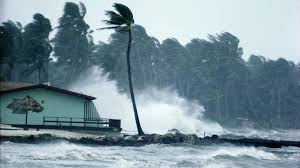


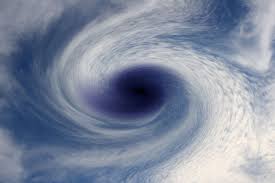
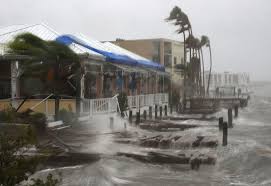

The name of the system that causes the winds to spin in a hurricane
The Coriolis Effect
The Corleone Affect
The Circular Wind Phenomenon
The East-West Effect

How are thunderstorms different from rainstorms?
The temperature of thunderstorms is higher than rainstorms.
Thunderstorms have thunder, lightning, and high wind.
Thunderstorms are very rare.
Nothing, they are the same.

How can a thunderstorm be classified as "severe"?
Has hail 1in. or greater in diameter.
Has winds gusting over 57.5 mph.
Creates a tornado.
All of the above.
When are thunderstorms more likely to occur?
In the afternoon or evening during Spring and Summer.
In the morning during Fall and Winter.
In the morning during Spring and Summer.
In the afternoon or evening during Fall and Winter
True or False: Thunderstorms ONLY happen during the Spring and Summer.
True
False

What are some of the dangers that result from thunderstorms? Select all that apply.
Flash flooding
Lightning strikes
Hail
Strong Winds

True or False: A tornado can happen anytime, anywhere, any season.
True
False
When do most tornadoes typically occur?
Spring and Summer
Fall and Winter
Winter and Spring
Summer and Fall

What are some of the dangers associated with tornadoes?
Extremely high winds
Flying debris
Hail
Lightning
True or False: A tornado is not called a tornado until it reaches the ground.
True
False
Which 4 states make up tornado alley?
Nebraska, Kansas, Oklahoma, Texas
Nebraska, Missouri, Oklahoma, Florida
Missouri, Kansas, Arkansas, Oklahoma
Iowa, Nebraska, Kansas, Oklahoma
Which state has the most tornados each year?
Texas
Kansas
Nebraska
Oklahoma
What is the strongest tornado
EF1
EF2
EF5
EF10
A thunderstorm with high probability of producing severe weather
anvil cloud
mesocyclone
supercell
thunderhead
Floods are caused by ______ rains
hard
heavy
harm
cloudy
This is an overflow of water onto land.
Flood
Drought
Both
This is a long period of time without rain.
Flood
Drought
Both
This natural disaster can destroy crops.
Flood
Drought
Both

This image shows a...
Flood
Drought
Both
What causes droughts?
People using too much water
Precipitation levels being substantially low
High precipitation levels
What is a drought?
The measure of how dry an area of land is
When the conditions are drier than normal
when the temperature is higher than normal
when the precipitation levels are higher than normal
How do droughts cause hunger?
Crops cannot grow
Droughts do not cause hunger
Grocery stores are shut down
The plants drown

Which type of precipitation is this picture showing?
Hail
Rain
Snow
Sleet

