
NEW
Font size
 Worksheets
Humidity, Dew Point, Clouds, Pressure
Total questions: 60
Worksheet time: 57mins
Most clouds form in the atmosphere when moist air
rises, expands, and warms to the dewpoint
rises, expands, and cools to the dewpoint
sinks, compresses, and cools to the dewpoint
sinks, compresses, and warms to the dewpoint
What is the relative humidity of the air when the dry-bulb temperature is 4°C and the dewpoint is –4°C?
42%
46%
51%
56%
What is the dewpoint when the dry bulb temperature is 20°C and the relative humidity is 17%?
−5°C
−2°C
11°C
15°C
Clouds most likely form as a result of
moist air rising, compressing, and warming
moist air rising, expanding, and cooling
dry air rising, compressing, and warming
dry air rising, expanding, and cooling
What is the relative humidity if the dry-bulb temperature is 16°C and the wet-bulb temperature is 10°C?
4%
37%
45%
16%
A psychrometer is used to determine which weather variables?
air pressure and air temperature
wind speed and wind direction
percentage of cloud cover and cloud height
relative humidity and dewpoint
Which weather variable generally decreases when wind speed is increasing, clouds are thickening, and visibility drops?
relative humidity
dewpoint
air pressure
precipitation

The diagram below shows dry-bulb and wet-bulb temperature readings for a parcel of air. What is the dewpoint of the air?
27°C
10°C
3°C
-5°C

The incomplete flowchart below shows some of the changes that occur in warm air as it rises to form a cloud. Which statement should be placed in the empty box to accurately complete the flowchart?
The air warms as it expands.
The air enters the thermosphere.
The air cools until it reaches the dewpoint
The air’s relative humidity decreases to zero.

Data from two weather instruments has been recorded on the graph below. Line A on the graph represents air-temperature data. Line B was plotted using the scale for variable B. Line B on the graph represents data from which weather instrument?
thermometer
barometer
psychrometer
anemometer


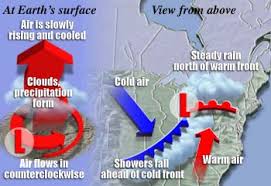
Which layer of the atmosphere contains 99% of the Earth’s water vapor and is where all clouds form?
Exosphere
Thermosphere
Mesosphere
Troposphere
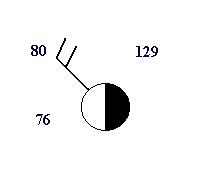
What is the temperature for the following station model?
4 ºF
76 ºF
80 ºF
129 ºF
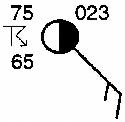
What is the dewpoint for the following station model?
10 ºF
23 ºF
65 ºF
75 ºF
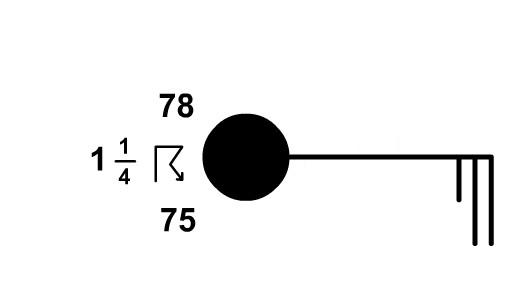
What is the present weather for the following station model?
rain
thunderstorms
drizzle
fog
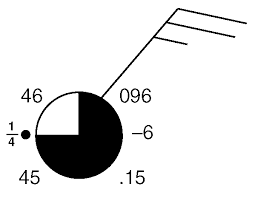
What is the amount of precipitation for the following station model?
.15 in
1/4 in
6 in
46 in
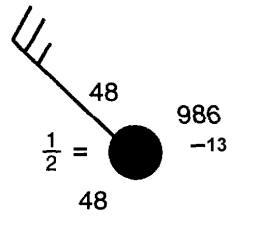
What is the wind direction for the following station model?
north
east
northwest
northeast
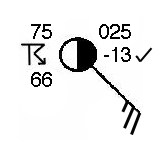
What is the wind speed for the following station model?
10 knots
15 knots
20 knots
25 knots
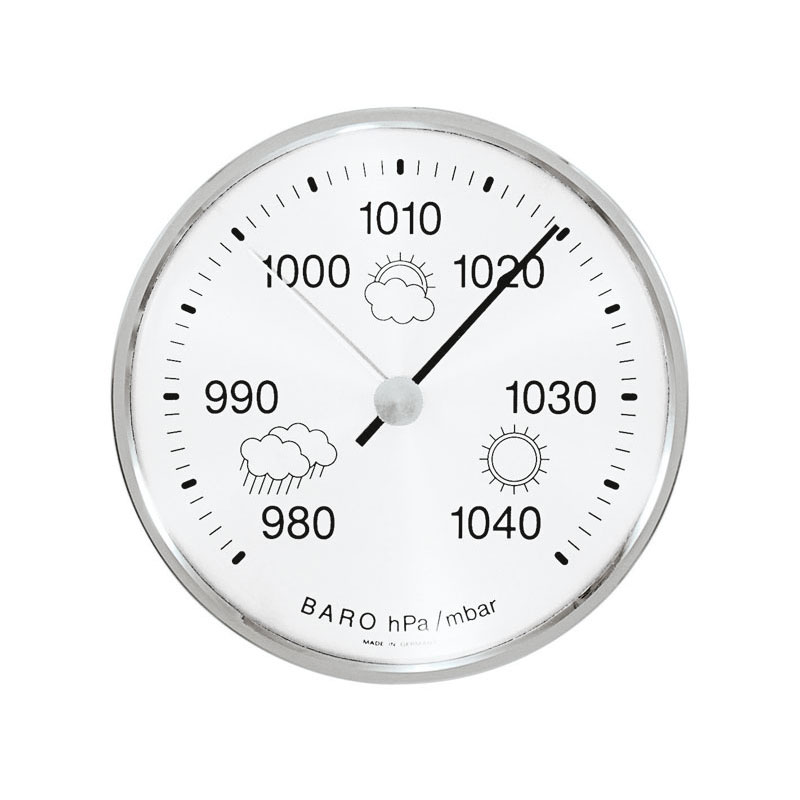
What is the station model code for a barometric pressure of 1019.5 mb?
101
195
019
119
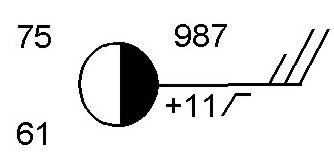
What is the barometric pressure for the following station model?
987 mb
998.7 mb
1098.7 mb
1098 mb
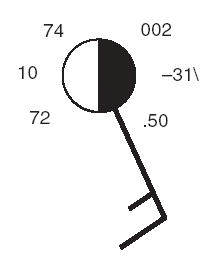
What is the barometric trend for the following station model?
steady 31 mb drop
steady 31 mb rise
steady 3.1 mb drop
steady 3.1 mb rise
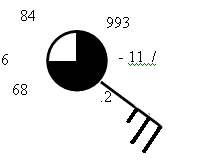
What is the amount of cloud cover for the following station model?
25%
50%
75%
100%
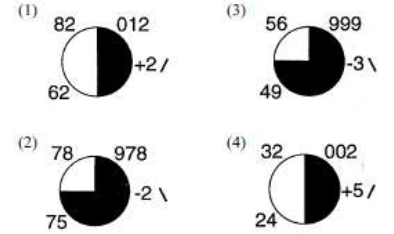
Which weather station shows the highest relative humidity?
1
2
3
4

The fall of water, ice, or snow deposited on the surface of the Earth from the atmosphere. __________
Condensation
Evaporation
Precipitation
Transpiration


How is transpiration important to the water cycle?
It is the evaporation of water from the leaves of plants back into the atmosphere allowing the cycle to continue.
It results in the deposition of water vapor directly as ice, so water changes states causing the cycle to move to the next phase.
It allows plants to absorb water through their roots which is then precipitated back into the atmosphere.
It permits the diffusion of water from the surface to water tables deep underground which restores groundwater supplies.
In which area would the rate of evaporation be the lowest?
Over the ocean
Over the mountains
Over the rainforest
Over the desert
How do transpiration and evaporation compare?
During both processes, liquid water changes to water vapor.
During both processes, water vapor changes to liquid water.
During transpiration, liquid water changes to water vapor, and during evaporation, water vapor changes to liquid water.
During transpiration, water vapor changes to liquid water, and during evaporation, liquid water changes to water vapor.
Put in order the steps in cloud formation:
I. warm air rises and cools
II. water vapor condenses
III. Sun heats the Earth's surface
IV. millions of water droplets collect to form a cloud
V. humidity of the air increases
I, II, III, IV, V
V, IV, III, II, I
III, I, V, II, IV
III, I, II, V, IV
The temperature at which the air become completely saturated with water vapor is called
humidity
dew point
air density
air pressure
Humidity is the
air density from cold air masses
amount of air pressure in the air.
amount of water vapor present in the air.
concentration of water vapor that form clouds in the air.

Is the city of Madison in a high or a low pressure system currently?
High Pressure System
Low Pressure System
Neither

Is Boise in a high or a low pressure system currently?
High Pressure System
Low Pressure System
Neither
Which process of the water cycle occurs when water absorbs 2260 Joules of heat energy per gram?
melting of ice
condensation of water
evaporating of water
freezing of water

This diagram shows four phases of the water cycle. Which phase of the water cycle is affected most directly by heat from the sun?
phase L
phase M
phase N
phase O

Analyze the diagram of the water cycle with processes J, K, L, M, X, and Y labeled. What is significant about the process labeled L?
Condensation is the conversion of water vapor into water droplets.
Precipitation is the release of liquid or frozen forms of water from the atmosphere.
Evaporation is the conversation of surface water into water vapor to return to the atmosphere.
Transpiration is the release of water vapor from plants back into the water cycle.

The flow chart represents the water cycle. What is the next phase in the water cycle as indicated by the question mark?
Condensation
Evaporation
Precipitaion
Run-off

The change in temperature between station 1 and station 9 is most likely due to modification of temperature by
What is the relative humidity of the air when the dry-bulb temperature is 4°C and the dewpoint is -7°C?
42%
4 %
0 %
4 degrees
What is the dewpoint temperature when the dry bulb is 20 degrees Celsius and the relative humidity is 91%?
19 degrees Celsius
91 degrees Celsius
2 degree Celsius
17 degrees Celsius

