
 Worksheets
Wave Speed and Behaviour
Total questions: 67
Worksheet time: 50mins

The more energy a wave has, the greater its ____
speed
amplitude
wavelength


What type of interference is represented in this diagram?
Constructive
Destructive

What type of interference is represented in the diagram?
Constructive
Destructive

What's happening at A?
Two crests are combining to create constructive interference.
A crest and a trough are combining to create destructive interference.
Two crests are combining to create destructive interference.
A crest and trough are combining to create constructive interference.

What is happening at B?
Two crests are combining to create constructive interference.
A crest and a trough are combining to create destructive interference.
Two crests are combining to create destructive interference.
A crest and a trough are combining to create constructive interference.

What type of interference do noise cancelling headphones use?
Constructive Interference
Destructive Interference

Sound waves in musical instruments or tubes create standing waves that use which type of interference to make louder sounds?
Constructive
Destructive

When a compression interferes with another compression, what occurs?
They counteract and the wave stops.
They combine to create a larger compression.
They combine to create a rarefaction.
None of the above.
When 2 waves temporarily interfere with each other then resume their course of movement, which of the following is true?
They take on and keep a new amplitude based on the result of the interference until the end of the movement.
They are not affected by the interference and maintain their original amplitude throughout the movement.
Both waves are always counteracted and cease to exist.
They temporarily take on a new amplitude due to the interference but resume their original amplitude until the end of the movement.
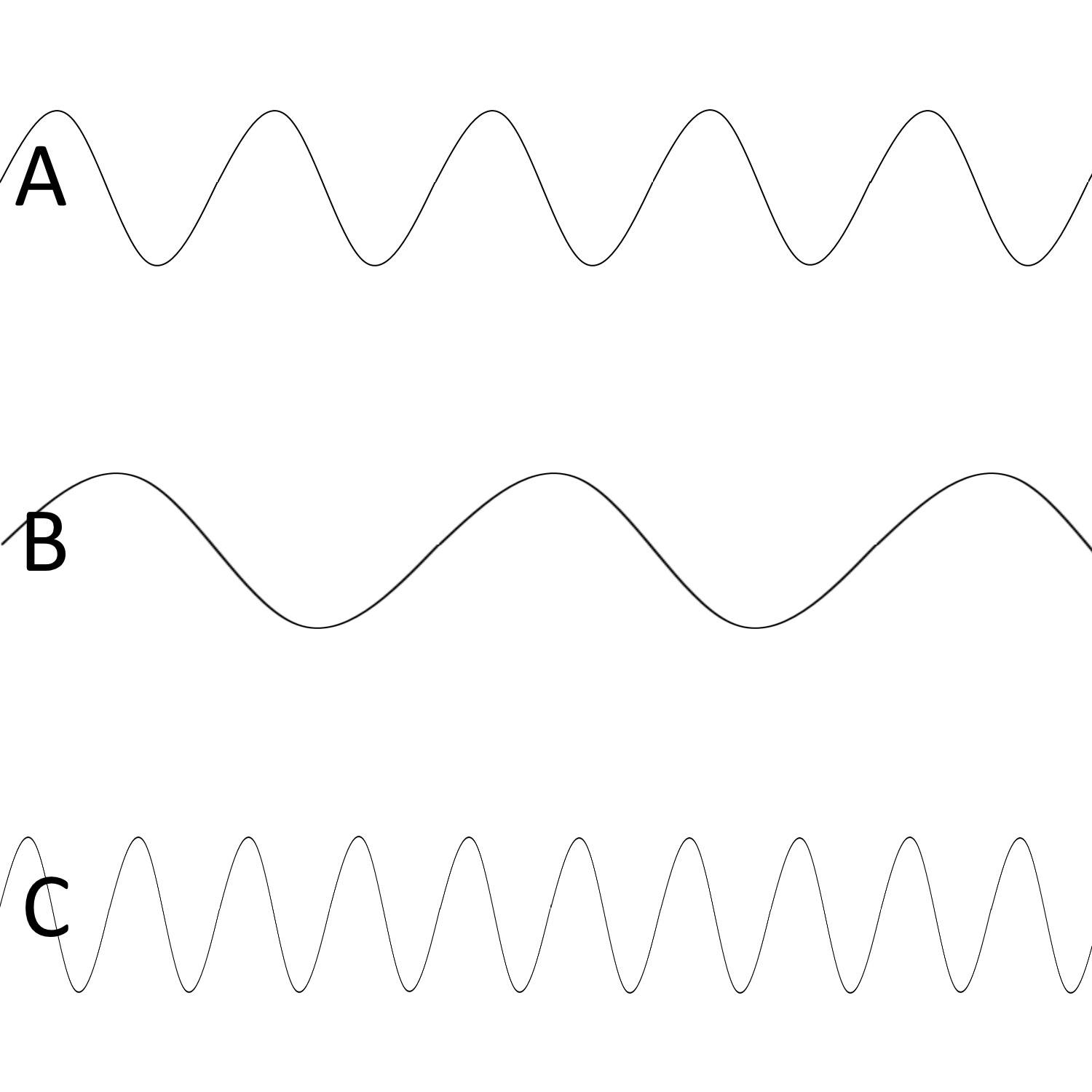


Standing waves are created by
Two identical waves reflecting off each other
Two identical waves being diffracted together
Two identical waves move through each other in opposite directions
Two identical waves are diffracted from two identical sources
In the diagram which letters represent the nodes
A B C
A C E
B D
B D E
A C D

How many antinodes does this standing wave have?
5
6
7
8


What does a wave carry from place to place?
energy
matter
people
The highest point on a transverse wave is the
compression
crest
rest position
trough
The lowest point on a transverse wave is the
compression
crest
rest position
trough
If the wavelength of a wave increased, what would happen to the frequency?
decrease
increase
stay the same
As a longitudinal wave moves forward, the particles move:
perpendicular to the wave's motion
parallel to the wave's motion
stand in one place
move completely down the spring


what part of the wave does "a" represent?
compression
wavelength
longitudinal wave
rarefaction
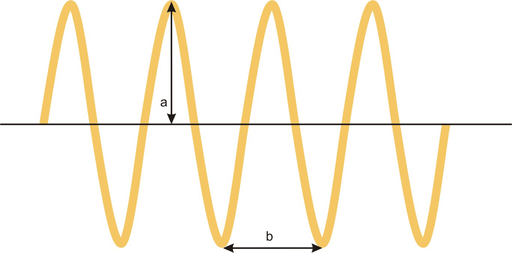
5 Hz
300 Hz
Frieda the fly flaps its wings back and forth 121 times each second. The period of the wing flapping is
0.008 Hz
0.008 s
121 Hz
121 s
Waves are a method of transferring:
matter
particles
liquids
energy
A pulse is known as a:
single disturbance
continuous disturbance
longitudinal wave
For particles to be "in phase" with each other, they need to have which 2 things?
same displacement
same direction
opposite displacement
opposite direction

The speed of the transmitted pulse will be:
faster
slower
same

The reflected pulse will be:
upright
inverted

The speed of the reflected pulse will be:
faster
slower
same

The speed of the transmitted pulse will be:
faster
slower
same

The wavelength of the transmitted pulse will be:
smaller
larger
same

The reflected pulse will be:
upright
inverted

If this is a FREE end, how will the pulse reflect?
upright
inverted

If this is a FIXED end, how will the pulse reflect?
upright
inverted

The red arrow is:
incident wave direction
reflected wave direction
normal
barrier

The dashed line is:
incident wave
reflected wave
normal
barrier

What is the angle of incidence?
100
800
900

A wavefront would be drawn as lines:
900 to the incident direction
parallel to the incident direction
900 to the normal

The angle of incidence is ___ equal to the angle of reflection.
always
never
sometimes

The thick lines are:
crests
troughs
constructive interference
destructive interference

The thin lines are:
crests
troughs
constructive interference
destructive interference

The red dots are:
crests
troughs
constructive interference
destructive interference

The blue dots are:
crests
troughs
constructive interference
destructive interference

This type of wave is created from two ____ waves interfering with each other.
transverse
circular
longitudinal
standing
A tennis coach paces back and forth along the sideline 10 times in 2 s. The period of her pacing is
5 Hz
5 s
0.2 Hz
0.2 s

Which letter represents 1 wavelength?
A
B
C
D
E

If "L" is 6 cm what is the length of one node?
2 cm
4 cm
6 cm
12 cm

