
 Worksheets
Alkenes
Total questions: 60
Worksheet time: 37mins
Which of the following is a general formula of alkenes?
CnH2n+2
CnH2
CnH2n-2
CnH2n-1
Which of the following shows the structure of ethene?


A compound consists of carbon and hydrogen elements only. It also contains a carbon-carbon double bond. This compound is known as
saturated organic compound
unsaturated organic compound
saturated hydrocarbon
unsaturated hydrocarbon
Ethane reacts with bromine under suitable condition.
Which of the following is a product of this reaction?
bromomethane
dibromoemethane
bromoethane
tribromopropane
Which of the following is not a chemical properties of alkenes?
combustion
substitution
addition reaction
polymerisation
Ethene reacts with acidified potassium manganate (VII) solution to form a product.
What is the name of this reaction ?
halogenation
hydrogenation
hydration
oxidation
What is the condition for hydration of butene ?
phosphoric acid, 60 atm, 300 0C
Nickel or platinum, 180 oC
1000atm, 200 oC
room temperature
Ethene reacts with acidified potassium manganate (VII) solution for form W.
What is W?
ethanol
ethane
ethan-1,2-diol
ethane-1,2-diol

What is the structure of 2-methyl pent-2-ene ?
a
b
c
d
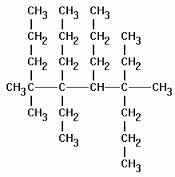
Which reagent is needed to change CH3CH=CH2 to CH3CHClCH3
Cl2 (aq)
SOCl2
PCl3
HCl
Which of the following would be named cycloheptane?


Is the last step in naming alkenes and alkyne.
Writing the name of the main chain.
Writing the location of the double/triple bond and the name of the main chain.
Writing the location of the branches and the name of the main chain.

Is the name of the representation showed in the image.
Line Diagram/Skeletal Formula
Condensed Formula
Structural Formula
Molecular Formula
Possible products of INCOMPLETE combustion
Carbon (C)
Carbon Monoxide (CO)
Carbon Dioxide (CO2)
Water (H2O)
If an alkene has 20 carbon atoms, how many hydrogen atoms will it have?
20
22
40
42
When HBr reacts with propene, what is the name of the major product?
1-bromopropene
2-bromopropene
1-bromopropane
2-bromopropane
But-1-ene reacts with steam in the presence of a concentrated acid catalyst. What is the major product formed?
Butan-1-ol
Butan-2-ol
Butanone
Butanal
Each member of a homologous series differs from the next by molecular mass of
12
14
16
44
Which of the following can be used to distinguish between alkanes and alkenes?
add a few drops of aqueous bromine
add a few drops of Universal indicator
add a piece of blue litmus paper
add a piece of red litmus paper
Which of the following statement is correct?
Alkenes can turn aqueous bromine from reddish-brown to colourless.
Alkenes can turn aqueous bromine from colourless to reddish-brown.
Alkanes can turn aqueous bromine from reddish-brown to colourless.
Alkanes can turn aqueous bromine from colourless to reddish-brown.
Which are the following are all alkenes?
methane, ethane, propane
methane, ethene, propene
methene, ethene, propene
ethene, propene, butene
If H2 is added to C4H8, the product will be C4H12
True
False
Which of the following statements concerning propene is/are correct?
(1) It dissolves in water to form propan-1-ol.
(2) It can undergo addition polymerization.
(3) It can be prepared by the catalytic cracking of a saturated hydrocarbon.
(1) only
(2) only
(1) and (3) only
(2) and (3) only
Which of the following products may be formed from the cracking of heavy oil fraction?
(1) CO
(2) C2H4
(3) C8H18
(1) and (2) only
(1) and (3) only
(2) and (3) only
(1), (2) and (3)
Propene reacts with acidified potassium permanganate solution to form
CH3CH2CH2OH.
CH3CH(OH)CH3.
CH3CH(OH)CH2OH.
CH2OHCH(OH)CH2OH.
C10H22 -----> C6H14 + 2 X
Which of the following concerning the above process and X is correct?
fractional distillation and an alkane
fractional distillation and an alkene
cracking and an alkane
cracking and an alkene
Which of the following statements concerning the reaction of methane with bromine is/are correct?
(1) It is an addition reaction.
(2) It is a substitution reaction.
(3) A similar reaction will occur if propane is used instead of methane.
(1) only
(2) only
(1) and (3) only
(2) and (3) only
Which of the following statements concerning the compounds C2H4, C3H6 and C4H10 is correct?
They belong to the same homologous series.
They are unsaturated hydrocarbons.
They are gases at room temperature and pressure.
They have the same physical properties.

A compound has the structure as shown:
Which of the following statements about this compound are correct?
(1) It can decolorize bromine water.
(2) It can be polymerized.
(3) It can burn in air.
(1) & (2) only
(1) & (3) only
(2) & (3) only
(1), (2) & (3)
When testing for alkenes (unsaturation) bromine water turns from...
orange --> blue/black
colourless --> pink
orange --> colourless
orange --> clear

What is the correct structure for 2 - butene?


The functional group in an alkene is...
(a)
When testing to alkanes the positive test is...
stays orange
orange --> clear
orange --> colourless
stays colourless
Which of the following reagents and condition is suitable to be used to prepare propan-1,2-diol from propene.
Acidified potassium manganate(VII) at room temperature
Acidified potassium dichromate in the presence of heat.
Hydrogen gas in the presence of heat and pressure.
Water in the presence of concentrated sulphuric acid.
When but-1-ene was heated with acidified potassium manganate(VII), two compounds were formed. Identify the correct compounds.
Propanoic acid and carbon dioxide
Propanal and methane
Butanal and water
Propan-2-one and ethanal
Which of the following compounds is organic?
CaCO3
CO2
CH4
H2CO3
Which is the correct structure for the name: 5,6,6-trimethylhept-2-ene ?


What are the first 3 alkenes in increasing carbon chain length?
Methene, ethene, propene
Ethene, propene, pentene
Ethene, propene, butene
Butene, ethene, propene
Methene, ethene, propane
What conditions are necessary in the reaction of alkenes with hydrogen?
300°C, Iron catalyst
60°C, Nickel catalyst
600°C, High pressure
Low temperature, Nickel catalyst
600°C, High temperature
Check the reactions which are undergone by alkenes.
oxidation
addition
substitution
polymerization
neutralization
Alkenes reacted with hydrogen in the presence of ......... catalysts:
Ni
Pd
Pt
Pb
In alkenes as number of C atoms (a) , m.p., b.p. and density also increases
Which of the following is not an addition reaction?
CH2Cl2 + Cl2 → CHCl3 + HCl
C2H4 + Br2 → C2H4Br2
nC2H4 → -(-CH2 – CH2 -)-n
C3H6 + H2O → C3H7OH

Which substances will decolourise aqueous bromine?
1 and 2
2 and 3
2 and 4
1 and 4
Which of the following are NOT the physical properties of Alkenes?
Cannot conduct electricity
Low density
Soluble in water
Neutral compounds
Alkenes burn with more …… flame compared with alkanes of the same number of carbon atoms because the percentage of carbon by mass in alkenes is ……
blue, higher
sooty, higher
sooty, lower
blue, lower

