
 Worksheets
Chemistry Finals Review Part I
Total questions: 56
Worksheet time: 3hrs 0mins
Name
Class
Date
1.
Which of the following is NOT a part of Dalton’s atomic theory?
a)
All elements are composed of atoms.
b)
Atoms of the same element are alike.
c)
Atoms are always in motion.
d)
Atoms that combine do so in simple whole-number ratios.
2.
Robert A. Millikan contributed to the current atomic theory by discovering which of the following? I. electron charge II. the electron III. the mass of an electron
a)
I and II
b)
II and III
c)
I and III
d)
I, II, and III
3.
Bohr’s contribution to the development of atomic structure
a)
was referred to as the “plum pudding model.”
b)
was the discovery that electrons surround a dense nucleus.
c)
proposed that electrons travel in circular orbits around the nucleus.
d)
is the quantum mechanical model.
4.
What is the total number of subatomic particles (protons, electrons, and neutrons) in an atom of vanadium-51?
a)
51
b)
74
c)
102
d)
125
5.
Which of these statements is false?
a)
Electrons have a negative charge.
b)
Electrons have a mass of 1 amu.
c)
The nucleus of an atom is positively charged.
d)
Neutrons are found in the nucleus of an atom.
6.
What is the atomic number and the mass number of an atom with 11 protons and 12 neutrons?
a)
atomic number = 11 and mass number = 12
b)
atomic number = 12 and mass number = 11
c)
atomic number = 11 and mass number = 23
d)
atomic number = 23 and mass number = 12
7.
Name the elements that form the compound NaSO4.
a)
nitrogen, sulfur, oxygen
b)
sodium, sulfur, oxygen
c)
neon, silver, oxygen
d)
sodium, silver, oxygen
8.
The configuration for the outermost energy level in Ca is
a)
3s2.
b)
4s2
c)
2s1.
d)
4s1.
9.
Which of the following examples in nature represents a chemical change?
a)
water freezing
b)
a tree branch breaking
c)
autumn leaves changing colors
d)
steam rising from hot pavement
10.
A lab student places some sodium hydroxide solution into a test tube and adds a drop of phenolphthalein solution to it. Both sodium hydroxide and phenolphthalein are colorless, yet when mixed together, the solution turns pink. What has occurred?
a)
heterogeneous mixture
b)
a chemical change
c)
the formation of a solid
d)
a physical change
11.
For an experiment, you mix baking soda, calcium chloride, and phenol red solution in a sealed container. You notice the container getting warmer, the color turning yellow and bubbles being produced. You learn that calcium chloride and baking soda react together when dissolved in a liquid, and energy is released as heat when the chemical bonds are broken. Since an acid is produced in the reaction, as well as carbon dioxide, this accounts for phenol red turning yellow and gas bubbles being produced. From this description, which of the following is one of the indicators that a chemical change has occurred?
a)
dissolving of the baking soda
b)
color change
c)
breaking a bond
d)
constant temperature
12.
Which of the following statements about the atoms and molecules in all three states of matter is NOT true?
a)
Particles of matter are in constant motion.
b)
Space exists between the particles.
c)
Adding heat increases the size of the particles.
d)
The particles of matter are too small to be seen with the unaided eye.
13.
Which of the following is a pure substance?
a)
tea
b)
brass
c)
ocean water
d)
carbon dioxide
14.
Which property would be MOST useful for determining whether a piece of metal is iron or lead?
a)
ability to conduct electric current
b)
solubility in water
c)
size of the piece of metal
d)
attraction to a magnet
15.
To make a softball bat, a block of wood is carefully crafted into a shape that will allow a batter to best apply force on a softball. All of the following describe physical changes that may be used in the process of making a softball bat, EXCEPT
a)
sanding the wood.
b)
carving the wood.
c)
burning the wood.
d)
painting the wood.
16.
Dalton theorized that atoms are indivisible and that all atoms of an element are identical. Scientists now know that
a)
Dalton’s theories are completely correct.
b)
atoms of an element can have different numbers of protons.
c)
atoms are all divisible.
d)
all atoms of an element are not identical but they all have the same mass.
17.
Which of the following statements about the atoms and molecules in all three states of matter is NOT true?
a)
Particles of matter are in constant motion.
b)
Space exists between the particles.
c)
Adding heat increases the size of the particles.
d)
The particles of matter are too small to be seen with the unaided eye.
18.
A student measures the volume and mass of a piece of plastic foam. The volume was 0.3 cubic meters and the mass was 8.4 kilograms. What is the density of the foam in g/cm3?
a)
0.028 g/cm3
b)
0.28 g/cm3
c)
2.8 g/cm3
d)
280 g/cm3
19.
Which state(s) of matter are practically incompressible?
a)
liquid state
b)
both solid and liquid states
c)
gaseous state
d)
solid state
20.
Gases are easier to compress than liquids because particles in gases are
a)
less brittle.
b)
free to flow from one location to another.
c)
farther apart.
d)
smaller.
21.
Where in an atom is MOST of its mass found?
a)
in electron clouds
b)
in the f orbital
c)
in the nucleus
d)
in the 1s and 2s orbitals
22.
Which scientist is credited with the discovery of the atomic nucleus, radioactive particles, and the decay of radioactive substances?
a)
Bohr
b)
Rutherford
c)
Dalton
d)
Thomson
23.
Why did theories about the structure of the atom have to be revised after the publication of Rutherford’s gold foil experiment results?
a)
Rutherford identified incorrect experimental data used to develop previous theories.
b)
Rutherford proved that the older model was wrong by showing that protons and neutrons existed.
c)
Rutherford’s results provided new evidence that the nucleus was small and massive.
d)
Rutherford showed that Thomson had interpreted the cathode ray experiment incorrectly.
24.
In the periodic table, there is a periodic pattern in the physical and chemical properties of elements when they are arranged in order of
a)
increasing atomic mass.
b)
increasing electronegativity
c)
increasing atomic radius.
d)
increasing atomic number.
25.
The addition of magnesium to molten cast iron, to produce nodular iron is common practice. What is the electron configuration for Mg?
a)
1s2 2s2 2p8
b)
1s2 2p6 3s2
c)
1s2 2s2 2p6 3s2
d)
1s2 2s2 2p6 3s1
26.
Although neon is commonly used in the advertisement industry, it is also used to make television tubes, high-voltage indicators, lightning arrestors, and gas lasers. What is the electron configuration for Ne?
a)
1s22s22p6
b)
1s22s22p6 3s1
c)
1s22s22p5
d)
1s22p63s1
27.
How many orbitals are in the 4f sublevel?
a)
1
b)
3
c)
5
d)
7
28.
The element sodium is one of the elements that compose the Earth’s crust. What is the electron configuration for sodium, Na?
a)
1s22s22p63s24s
b)
1s22s22p6 3s2
c)
1s22s22p6 3s1
d)
1s22p63s13p1
29.
If the composition of a material is fixed the material
a)
is incapable of boiling.
b)
is a substance.
c)
is a mixture.
d)
cannot undergo physical change.
30.
Which element is present in the greatest proportion by number of particles in the chemical formula C2H10O5, otherwise known as corn starch?
a)
oxygen
b)
water
c)
carbon
d)
hydrogen
31.
Which list contains only elements?
a)
Au, I, KO, Pb
b)
Pb, Hg, Cd, Rb
c)
SO2, NO2, CO2, LiH
d)
Pt, SiC, Cs, Zn
32.
Which BEST completes this sentence? Bohr proposed that an electron is found only in _______ around the nucleus of an atom.
a)
A the charged areas
b)
the magnetic field
c)
circular patterns
d)
random areas
33.
The number 80 in the name bromine-80 represents:
a)
the atomic number
b)
the mass number
c)
the sum of protons and electrons
d)
none of these
34.
The sum of the protons and neutrons in an atom equals the:
a)
atomic number
b)
number of electrons
c)
atomic mass
d)
mass number
35.
A set of data are all close to each other, but they are not close to the actual value. This set of data can be described as...
a)
accurate
b)
precise
c)
both precise and accurate
36.
A set of data are all close to each other, and they are close to the actual value. This set of data can be described as...
a)
accurate
b)
precise
c)
both precise and accurate
37.
A set of data are not close to each other, but the average of the data is very close to the actual value. This set of data can be described as...
a)
accurate
b)
precise
c)
both precise and accurate
38.
The tool used to measure the mass of a substance or object is a ______________.
a)
balance
b)
graduated cylinder
c)
ruler
d)
thermometer
39.
Jack has a rock. The rock has a mass of 14g and a volume of 2cm3. What is the density of the rock?
a)
7 mL
b)
7 g/cm3
c)
28 g/cm3
d)
1/7 g/cm3
40.
Which units of measurement are used for volume?
a)
grams
b)
centimeters
c)
grams/milliliter
d)
milliliter
41.
Which lab tool might you use to measure the volume of a liquid?
a)
electric scale
b)
bunsen burner
c)
test tube
d)
graduated cylinder
42.

What is the volume of Object X?
a)
10.0 cm3
b)
15.0 cm3
c)
20.0 cm3
d)
25.0 cm3
43.
What is the formula for density?
a)
density = mass x volume
b)
density = mass / volume
c)
density = mass + volume
d)
density = mass - volume
44.
Frank has an eraser. It has a mass of 4g, and a volume of 2cm3. What is its density?
a)
8 g/cm3
b)
2 g/cm3
c)
1/2 g/cm3
d)
24 g/cm3
45.
Frank has a paper clip. It has a mass of 9g and a volume of 3cm3. What is its density?
a)
3 g/cm3
b)
1/3 g/cm3
c)
27 g/cm3
d)
39 g/cm3
46.
How would you write 0.0005 in scientific notation?
a)
50 x 105
b)
5 x 10⁴
c)
5 x 10³
d)
.5 x 103
47.
How do you write 1001 in scientific notation?
a)
1.0001 x 10⁴
b)
1.01 x 10⁵
c)
1.001 x 10³
d)
10.1 x 10³
48.
Which of the following is correct scientific notation?
a)
20.35 x 10⁴
b)
.2035 x 104
c)
2035 4
d)
2.035 x10⁴
49.
Express the following in scientific notation:
.000457
.000457
a)
457 x 106
b)
457 x 10-6
c)
4.57 x10⁴
d)
4.57 x 10⁻⁴
50.
Express the following in scientific notation:
10,030,400,000
10,030,400,000
a)
1.00304 x 10⁹
b)
1.00304 x 10¹⁰
c)
1.00403 x 10¹⁰
d)
1.00304 x10⁻¹⁰
51.
What is scientific notation?
a)
A long way to write really short numbers
b)
A short way to write really long numbers
c)
I don't know...
d)
None of the above
52.
Atomic number=
a)
number of neutrons
b)
atomic mass
c)
protons
d)
electrons+protons
53.
Mass Number is--
a)
the number of protons + neutrons
b)
the number of protons
c)
the number of electrons +protons +electrons
d)
the same as atomic number
54.

How many protons does He have?
a)
4
b)
2
c)
6
d)
0
55.
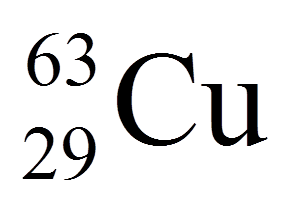
The top number in this isotope notation is
a)
the mass number
b)
the atomic number
c)
the atomic mass
d)
the neutron number
56.
The bottom number in this isotope notation is
a)
the mass number
b)
the atomic number
c)
the atomic mass
d)
the neutron number
100 %

