
 Worksheets
Strong vs Weak Acids and Bases
Total questions: 20
Worksheet time: 10mins
Which of the following values would represent the pH of a strong base?
1
8
7
13
Complete the definition below:
Acids are....
hydrogen donors.
hydrogen acceptors.
proton donors.
proton acceptors.
Acids which dissociate almost completely in aqueous solutions are known as:
Dilute acids
Strong acids
Weak acids
Concentrated acids
Acids react with active metals to liberate:
Oxygen
Carbon dioxide
Nitrogen
Hydrogen
If a solution is basic which ion will be more present?
H+
K+
OH-
H-
This ion is responsible for the properties of acids
Sodium ion
Hydrogen ion
Hydroxide ion
Oxide ion
Predict the products for the following reaction: LiOH + H2SO4 -->
(Hint: it is a neutralization reaction)
LiSO4 + H2O
Li2SO4 + H2O
--sulfuric acid--
--nitric acid--
do not dissociate into ions (non-electrolyte)
partially dissociate into ions (weak electrolyte)
completely dissociate into ions (non-electrolyte)
completely dissociate into ions (strong electrolyte)
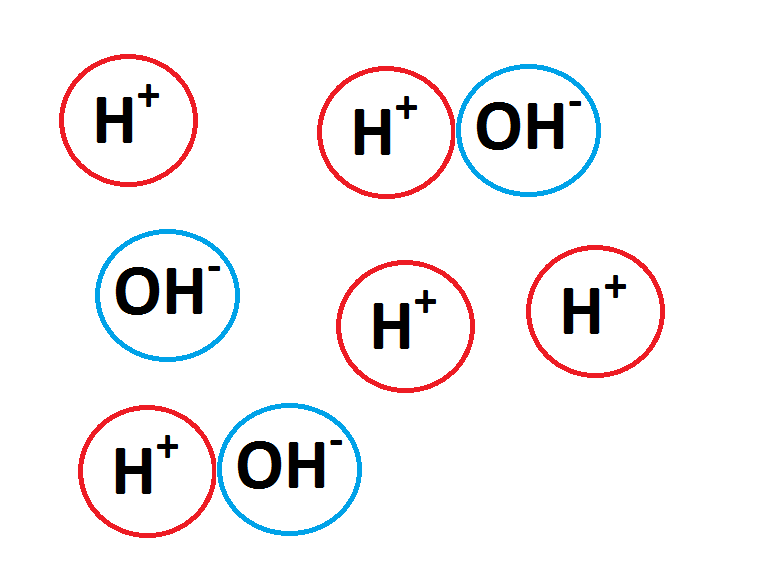
A substance that does not dissociate completely. Ranges from 4-7 on the pH scale.
Hydrochloric (HCl) is a
Weak Acid
Weak Base
Strong Acid
Strong base
Sodium hydroxide (NaOH) is a
Weak Acid
Weak Base
Strong Acid
Strong base
Methanoic (HCOOH) is a
Weak Acid
Weak Base
Strong Acid
Strong base
Ammonia (NH3) is a
Weak Acid
Weak Base
Strong Acid
Strong base
When a metal carbonate reacts with an acid, what will the products always be?
A salt, water and oxygen
A salt, water and carbon dioxide
Water and hydrogen
A salt and water
When comparing a strong and weak acid of the same concentration, the strong acid will have...(choose 2 answers)
A higher conductivity
A lower conductivity
A faster rate of reaction
A slower rate of reaction
When comparing a strong and weak acid of the same concentration, the strong acid will have...(choose 2 answers)
A higher pH
A lower pH
a smaller temperature change on neutralisation with a strong base
a bigger temperature change on neutralisation with a strong base
A ___________ is a solution that is resistant to large changes in pH.
pH
pOH
buffer
electrolyte

