
 Worksheets
Karyotypes
Total questions: 15
Worksheet time: 15mins
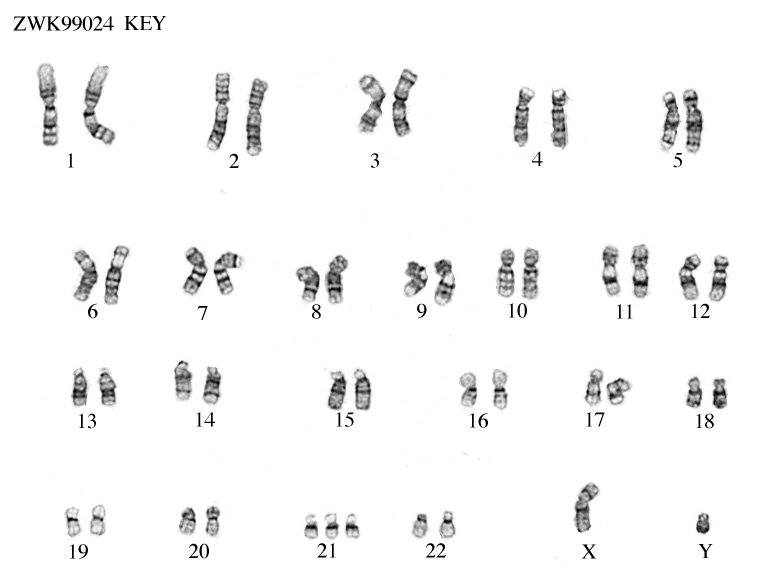
What is the mutation in this persons chromosomes?
There is only one X
7 is shaped like a hockey stick
There's an extra 21
1 is too curved
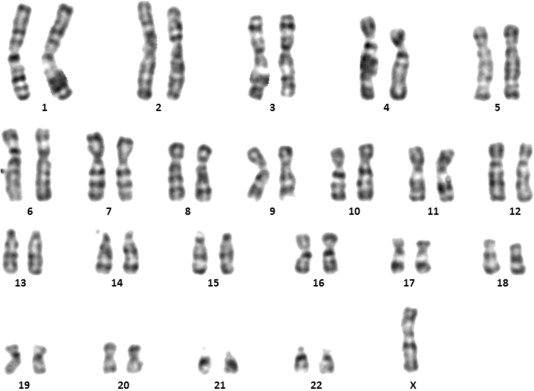
This is called Turners syndrome, can you notice the mutation in the chromosomes?
Both chromosomes 1 are bent
There are too many chromosomes
There are too many of chromosome 3
There is no Y chromosome
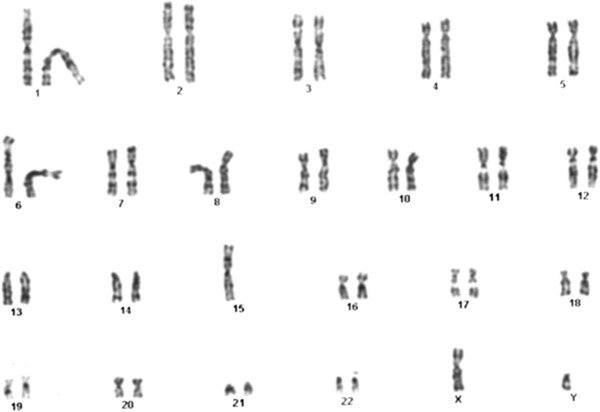
This person has Angel Mans syndrome. What is different about their chromosomes?
Chromosome 1 is misshapen
Chromosomes 21 is too small
They are missing one of chromosome 15
Chromosomes 7 and 8 look weird
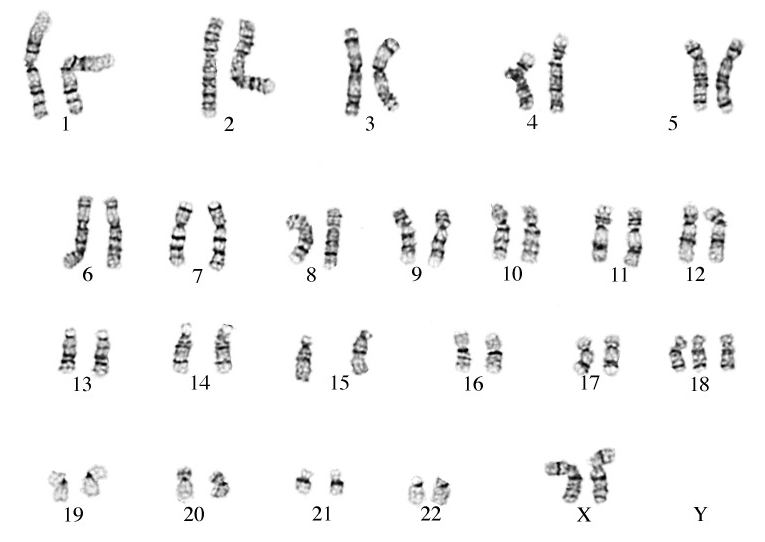
This is known as Edwards Syndrome, can you identify the chromosomal mutation?
Chromosomes 1 and 2 are bent
There is no Y chromosome
This persons chromosomes are normal
There are 3 of chromosomes 18

Pick the best description.
Normal
Monosomy
Trisomy

Pick the best description.
Normal
Monosomy
Trisomy
Deletion

Pick the best description.
Normal
Monosomy
Trisomy
Quadsomy

Pick the best description.
Normal
Monosomy
Trisomy
Mutation

Is this person male or female?
Male
Female
What is a karyotype?
A visual representation of an individual's chromosomes
A type of genetic mutation
A method of DNA sequencing
A process of cell division
Which of the following can be determined from a karyotype?
The sequence of DNA bases
The number of chromosomes
The presence of specific genes
The function of proteins
In humans, how many chromosomes are typically displayed in a normal karyotype?
23
46
22
44
What is the primary use of karyotyping in medicine?
To identify genetic disorders
To measure enzyme activity
To sequence the genome
To determine blood type
Which of the following chromosomal abnormalities can be detected using a karyotype?
Point mutations
Trisomy 21
Single nucleotide polymorphisms
Epigenetic changes
How is a karyotype prepared in a laboratory setting?
By staining and photographing chromosomes during metaphase
By sequencing the entire genome
By isolating proteins from the cell
By measuring the length of DNA strands

