
NEW
Font size
S
M
L
XL
 Worksheets
Unit 4 Review Muscular System
Total questions: 43
Worksheet time: 22mins
Name
Class
Date
1.
The ongoing low-level contraction of some fibers in otherwise resting skeletal muscle is known as
a)
muscle tone.
b)
shivering.
c)
relaxation.
d)
thermoregulatory processes.
2.
is when a muscle becomes inactive and lengthens.
a)
Contracting
b)
Relaxing
c)
Shivering
d)
Muscle tone
3.
Muscle contributes to homeostasis by
a)
generating heat to balance the loss of heat from the body surface.
b)
synthesizing vitamin D.
c)
producing blood cells.
d)
storing minerals.
4.
Contracting and relaxing a skeletal muscle moves the _______________ it’s attached to.
a)
bone
b)
body
c)
arm
d)
hand
5.
Which of the following muscle tissue is usually attached to bone?
a)
skeletal muscle
b)
smooth muscle
c)
cardiac muscle
6.
Which of the following muscle tissue is usually found in the wall of hollow organs like your intestines?
a)
skeletal muscle
b)
smooth muscle
c)
cardiac muscle
7.
Which of the following muscle tissue is usually found in the wall of the heart?
a)
skeletal muscle
b)
smooth muscle
c)
cardiac muscle
8.
Which of the following muscle tissue is multinucleated?
a)
skeletal muscle
b)
smooth muscle
c)
cardiac muscle
9.
Which of the following muscle tissue is not striated?
a)
skeletal muscle
b)
smooth muscle
c)
cardiac muscle
10.
Which of the following muscle tissue is voluntary?
a)
skeletal muscle
b)
smooth muscle
c)
cardiac muscle
11.
What two types of muscle tissues move within your body without your conscious control (you cannot control it with your thoughts)?
a)
smooth and cardiac.
b)
smooth and skeletal.
c)
skeletal and cardiac.
12.
A skeletal muscle cell is also known as a
a)
muscle fiber
b)
thick filament
c)
thin filament
d)
sarcolemma
13.
The ___________ of muscle contraction includes all of the actin-myosin interactions and is named for how the sarcomeres shorten.
a)
cross-bridge
b)
contraction
c)
sliding filament model
d)
sarcomere
14.
Which muscle is anterior to the lower leg and lifts the toes up? (Dorsiflexion of the foot)
a)
gastrocnemius
b)
extensor digitorum
c)
tibialis anterior
d)
flexor digitorum superficialis
15.
The bone that a muscle is connected to that DOESN'T move.
a)
origin
b)
insertion
c)
prime mover
d)
synergist
16.
The bone that a muscle is attached to that DOES move.
a)
origin
b)
insertion
c)
prime mover
d)
antagonist
17.
True or False: When a muscle contracts, its insertion is pulled away from its origin.
a)
True
b)
False
18.
Groups of skeletal muscles that contract simultaneously to move a body part are said to be __________
a)
synergistic.
b)
antagonists.
c)
prime movers.
d)
agonists.
19.
A prime mover is also known as a(n)
a)
agonist.
b)
antagonist.
c)
synergist.
20.
What is the Antagonist of the erector spinae muscle?
a)
rectus abdominis
b)
trapezius
c)
deltoid
d)
biceps brachii
e)
latissimus dorsi
21.
What is the Antagonist of the gastrocnemius muscle?
a)
rectus abdominis
b)
trapezius
c)
tibialis anterior
d)
biceps brachii
e)
flexor digitorum superficialis
22.
What is the Antagonist of the serratus anterior muscle?
a)
rectus abdominis
b)
trapezius
c)
tibialis anterior
d)
biceps brachii
e)
flexor digitorum superficialis
23.
Antagonist for flexor digitorum superficialis?
a)
rectus abdominis
b)
trapezius
c)
deltoid
d)
extensor digitorum
e)
latissimus dorsi
24.
Antagonist for the quadriceps femoris (quads)?
a)
psoas major
b)
trapezius
c)
hamstrings
d)
extensor digitorum
e)
latissimus dorsi
25.
Antagonist for the pterygoid?
a)
deltoid
b)
gluteus maximus
c)
masseter
d)
extensor digitorum
e)
latissimus dorsi
26.
Antagonist for the triceps brachii?
a)
deltoid
b)
gluteus maximus
c)
biceps brachii
d)
extensor digitorum
e)
latissimus dorsi
27.
Muscles cannot push.
a)
True
b)
False
28.
What muscle closes the mouth?
a)
serratus anterior
b)
trapezius
c)
masseter
d)
pterygoid
29.
Which muscle flexes the hip and does the opposite work of the gluteus maximus?
a)
hamstring
b)
trapezius
c)
deltoid
d)
psoas major
e)
pterygoid
30.
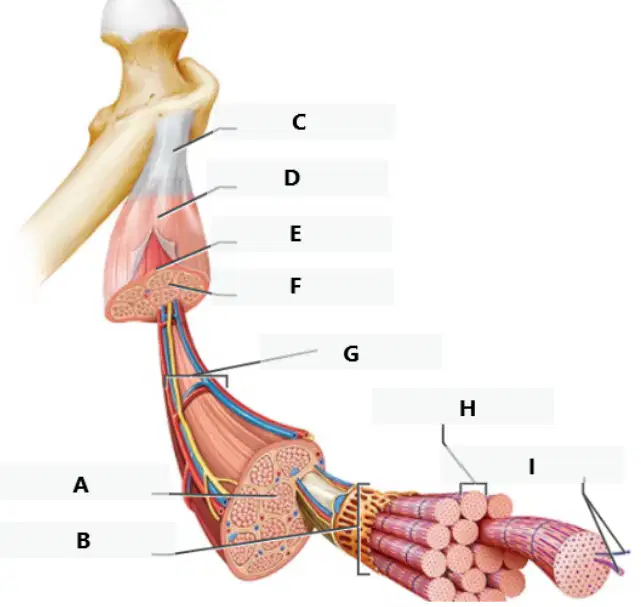
A & B =
a)
Muscle fiber
b)
Tendon
c)
Fascia
d)
Epimysium
e)
Perimysium
31.
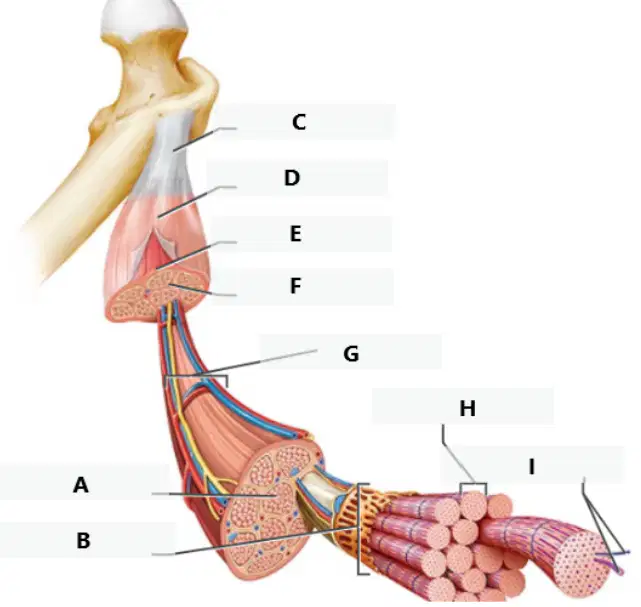
C = Fibrous connective tissue that attaches muscle to bone.
a)
Tendon
b)
Muscle tone
c)
Striation
d)
Muscle fiber
e)
Myofibril
32.
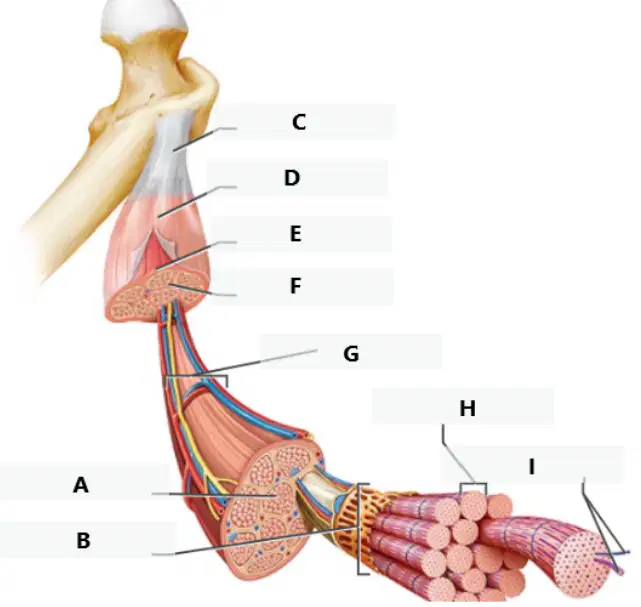
I =
a)
Filaments (Actin & Myosin)
b)
Muscle fiber
c)
Tendon
d)
Fascia
e)
Epimysium
33.
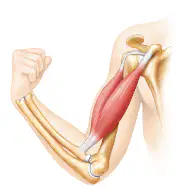
During an elbow flexion, the muscle that causes the action is called the ( ).
a)
prime mover
b)
antagonist
c)
synergists
d)
latissimus dorsi
e)
deltoid
34.
The muscle(s) that works against a particular action is called the ( ).
a)
prime mover
b)
antagonist
c)
synergists
d)
latissimus dorsi
e)
deltoid
35.
Often there are additional muscles that assist the agonist. These muscles are called ( ).
a)
prime mover
b)
antagonist
c)
synergists
d)
biceps brachii
e)
triceps brachii
36.

In the example of elbow flexion, the agonist would be the ( ).
a)
prime mover
b)
antagonist
c)
synergists
d)
biceps brachii
e)
triceps brachii
37.
The antagonist to the biceps brachii would be the ( ).
a)
prime mover
b)
antagonist
c)
synergists
d)
biceps brachii
e)
triceps brachii
38.
Which of the following is an image highlighting the DELTOID muscle?
a)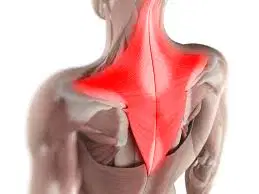
Option 1
b)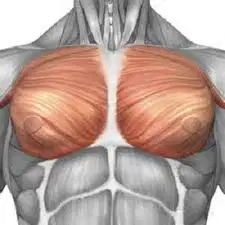
Option 2
c)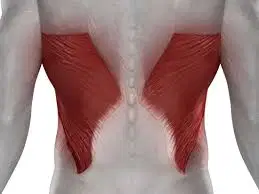
Option 3
d)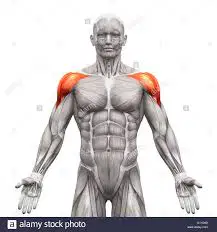
Option 4
39.
Which of the following is an image highlighting the TRAPEZIUS muscle?
a)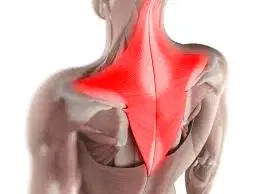
Option 1
b)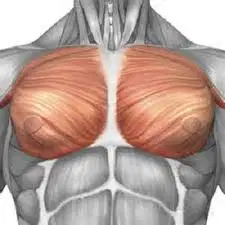
Option 2
c)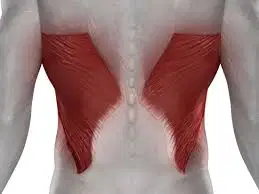
Option 3
d)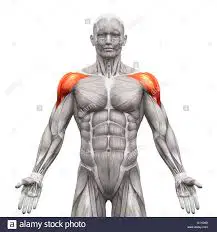
Option 4
40.
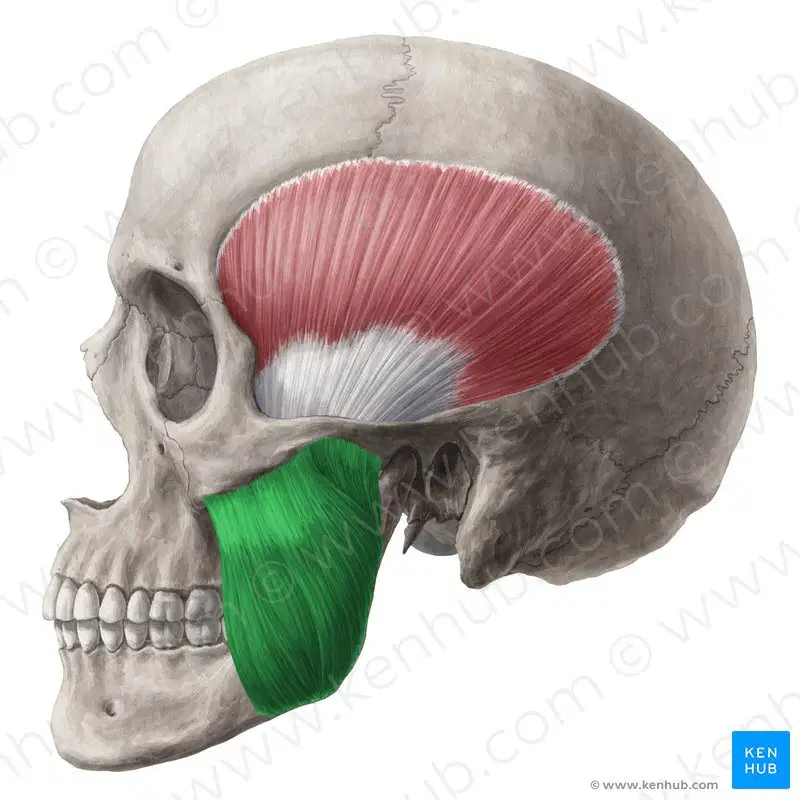
Identify the muscle (hint: closes the mouth).
a)
pterygoid
b)
trapezius
c)
masseter
d)
serratus anterior
41.
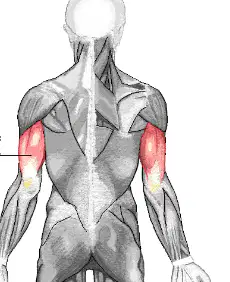
Identify the muscle (hint: extends the elbow).
a)
deltoid
b)
trapezius
c)
biceps brachii
d)
triceps brachii
42.
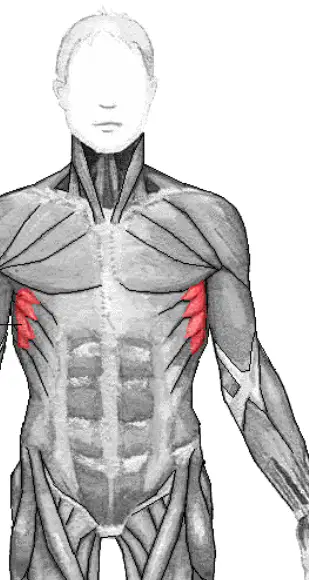
Identify the muscle (hint: protracts scapula forward/arms forward).
a)
serratus anterior
b)
trapezius
c)
rectus abdominis
d)
deltoid
43.
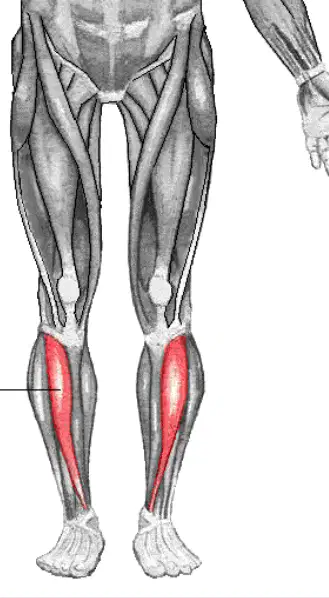
Identify the muscle (hint: points toes up, muscle in front of your shins).
a)
gastrocnemius
b)
hamstrings
c)
quadriceps femoris
d)
tibialis anterior
Reset

