
 Worksheets
09_SCX 010_WED 1:30PM
Total questions: 51
Worksheet time: 53mins
How does secondary succession differ from primary succession in terms of species diversity?
Secondary succession typically has higher species diversity from the beginning.
Primary succession reaches higher species diversity more quickly.
Both reach the same level of species diversity at the same rate.
Primary succession typically has more initial species diversity.
In a scenario where both primary and secondary succession occur simultaneously, which of the following would
you most likely observe first in the secondary succession?
Soil formation
Appearance of mosses and lichens
Growth of grasses and small shrubs
Development of climax community
What is likely a consequence of a disturbance that destroys the existing plant community but leaves the soil intact?
The area will undergo primary succession
The area will revert to a climax community immediately.
The area will experience secondary succession.
The area will become a barren wasteland.
Which of the following is most likely to be a pioneer species during primary succession?
Oak trees
mammals
moss
Shrubs
In the process of ecological succession, what role do decomposers play?
They fix nitrogen in the soil.
They break down dead organic matter, enriching the soil.
They provide energy for primary producers.
They prevent the growth of pioneer species.
Which type of forest is typically found on tidal flats and serves as a buffer against typhoons and waves?
Dipterocarp
Mangrove
Molave
Mossy
What is deforestation?
Planting trees in a barren land
The large-scale removal of forests
Increasing the size of forest reserves
Reforesting cleared land
What is one of the natural causes of deforestation in the Philippines?
Commercial logging
Mining operations
Volcanic eruption
Agricultural expansion
Which of the following is a common effect of deforestation?
Increased Forest area
Stabilized ecosystems
Heavy soil erosion
Reduced greenhouse gases
Which of the following is an example of a physical defense mechanism in animals?

A

B

C

D
Identify the type of forest known for its tall trees with branchless trunks and being a major source of timber in the Philippines.
Write answers in ALL CAPITAL LETTERS
(a)
It is known as feeding levels.
(ANSWERS SHOULD BE WRITTEN IN ALL CAPITAL LETTERS)
(a)

Which among the following organisms receives only 1% of the energy in an ecosystem?
ANSWERS SHOULD BE WRITTEN IN ALL CAPITAL LETTERS
(a)

Identify the biome illustrated here.
ANSWERS SHOULD BE WRITTEN IN ALL CAPITAL LETTERS
Hint: 1 WORD
(a)

IDENTIFICATION: LOTIC FRESHWATER or LENTIC FRESHWATER
What description best fits this picture about Freshwater Ecosystem?
(a)
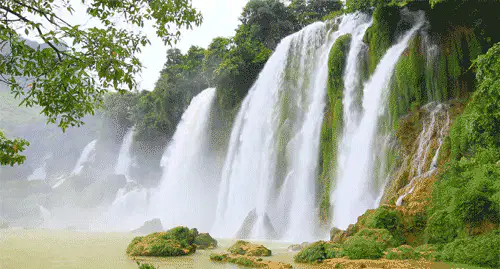
IDENTIFICATION: LOTIC FRESHWATER or LENTIC FRESHWATER
What description best fits this picture about Freshwater Ecosystem?
(a)

IDENTIFICATION: LOTIC FRESHWATER or LENTIC FRESHWATER
What description best fits this picture about Freshwater Ecosystem?
(a)

IDENTIFICATION: LOTIC FRESHWATER or LENTIC FRESHWATER
What description best fits this picture about Freshwater Ecosystem?
(a)

IDENTIFICATION: PELAGIC ZONE OR BENTHIC ZONE
Where do marine organisms spend most of their lives thriving under the sea?
(a)
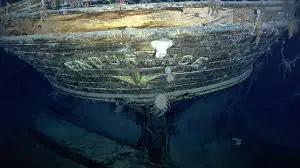
IDENTIFICATION: PELAGIC ZONE OR BENTHIC ZONE
Research has found that the sunken ship Titanic is now on (a) .
Which among the following will exhibits a camouflage?
Draw and color yellow flower - If it is an Iguana
Draw and color RED Heart - If it is a Monkey
Draw happy face - If it is a dog
Draw Hexagon - If it is a turtle

What are the examples of tertiary consumer?
Fox, coyotes, eagles
Algae, plants, flower
grasshopper, worm, butterfly
frog, rat, rabbit
Which of the following is NOT a basic component of an ecosystem?
Producers
Consumers
Abiotic Matter
Climate
What is the importance of plants as source of energy in ecological communities?
It provides foods for human and animals that convert energy
It converts carbon dioxide to organic compounds
It is living entities
All of the above
It is a linear network of links in a food web.
Trophic level
Food chain
Food web
Bioenergetics
What is the ecological importance of mangrove forests?
They are major sources of timber
They act as a nursery ground for marine life
They are located in high-altitude areas
They contain the largest trees in the Philippines
What type of biome has a luxuriant forest found in wet tropical uplands and lowlands around the equator?
Deserts
Tundra
Tropical Rainforest
Temperate Deciduous Forest
When we look into a pond, a fish feeds on small plants and animals called _________?
Planktons
Algae
Small marine organism
None of the above
On the Arctic tundra, only the topmost layer of earth thaws; the ______ beneath this layer is always frozen.
Permafrost
Subsoil
Vegetation
Aquifer
Which term describes the gradual replacement of one community by another over time?
Climax Community
Primary Succession
Ecological Succession
Pioneer Species
These are foreign materials/substances that alter the quality of our substrate.
Pollution
Polluted materials
toxic chemicals
None of the above
What is the difference between Grazing food chain and Detrital Food Chain?
Grazing food chain start with autotrophs while detrital starts with decomposer
Grazing food chain start with autotrophs while detrital ends with decomposer
Grazing food chain start with decomposer while detrital start with autotrophs
Grazing food chain ends with decomposer while detrital start with autotrophs
What is the establish relationship of food chain and the stability of an ecosystem?
The longer the food chain, the ecosystem is stable
The shorter the food chain, the ecosystem stable
The longer the food chain, the ecosystem in unstable
The shorter the food chain, the ecosystem is unstable
Which type of forest is often found along coastal areas and is known for its sandy soil?
Beach forest
Pine Forest
Molave forest
Dipterocarp Forest
What term is used to describe the cutting of all trees in an area at one time?
Selective logging
Clear-cutting
Seed tree cutting
Shelter wood cutting
The acronym “ATP” or the energy used by living organisms in order to move or sustain life, stands for ____________.
Adenosine Tri pentose
Adenosine Triphosphate
Adenosine Triphosphatase
Adenosine Tetraphosphate
What type of biome experiences the four seasons – winter, spring, summer, and fall?
Temperate Deciduous Forest
Tropical Rainforest
Taiga
Tundra
What are the main factors of AIR Pollution?
Leakage from gasoline storage tanks.
Discharge pipes at a wastewater treatment plant. A drainage ditch on a feedlot that seeps into groundwater
Both A & B
None of the above

Identification: Identify the type of pollution being described here.
Answers should be written in all capital letters
HINT: 2 WORDS
(a)

Identification: Identify the type of pollution being described here.
Answers should be written in all capital letters
HINT: 2 WORDS
(a)
The following statements are true about freshwater ecosystem, EXCEPT one.
Having a low salt- concentration of less than 1%
River is an example of freshwater ecosystem
Ocean is an example of a freshwater system
It is a flowing water ecosystem
Hairy Frog purposefully breaks its own leg to signal its body to dispense cat-like claws that pierce through the frogs toe pads once feeling threatened. __________
Warning coloration
Mimicry
Chemical defense
Predator satiation
This way of avoiding predators is showing conspicuous markings that would make it easily recognizable and warn predators that they are poisonous, has foul testing, or dangerous species.
Cryptic Coloration
Warning Coloration
Camouflage
Predator Satiation
If A represents ‘insects’,
B represents ‘hawks’,
C represents ‘snakes’ and
D represents ‘frogs’,
then which of the following food chain is in the correct order?
A<D<C<B
C<D<B<A
D<C<A<B
B<A<C<D
What possible means of defense mechanism where frog exhibits noticeable markings to predators?
Hiding itself from the environment by blending its physical attributes.
Releasing toxic repellents as a means of threat to predators
This way of escaping is showing warning coloration
The organism mentioned is doing mimicry
Mimic beetle has adopted the red and black coloration of the aposematic ladybug, allowing it to benefit from the ladybug’s toxins and unpalatability to predators. ________?
1st way
2nd Way
3rd Way
Predator satiation
Periodical cicadas emerge in tremendous numbers which makes the predators overwhelmed, that they fill themselves to the point of disgust and exhaustion. This gives the remaining cicadas a chance to escape the predators. __________
Warning coloration
Mimicry
Chemical defense
Predator satiation
An organism that creates its own food is called _______
A scavenger
A consumer
A producer
An omnivore
Ecosystem is a ________.
place where water and land meet.
body of water having low salt concentration
region that has similar plants, soil, and climate regardless where it occurs
none of these is correct
Why does the number of trophic levels in the grazing food chain is restricted?
transfer of energy follows 10 percent law
So that food chain remains short
As there are few species the community
So that transfer of energy could be more efficient
A biome that has little precipitation and not suitable for agriculture due to its short growing season and poor mineral in the soil
Grassland
Desert
Taiga
Temperate Deciduous Forest

