Wayground logo

Free Printable Worksheets

Font size

S
M
L
XL
Worksheets

Unit 1 Review

Total questions: 42

Worksheet time: 2hrs 46mins

Name
Class
Date
1.
The variable that is measured throughout the experiment is the ________________
Hint: It may change as a result of your testing.
a)
Controlled Variable
b)
Responsive Variable
c)
Dependent Variable
d)
Independent Variable
2.
The independent variable is the ONE thing you _____ to test your hypothesis.
a)
change
b)
keep the same
c)
experiment with
d)
investigate
3.
What would the INDEPENDENT variable be in an experiment testing which  paper airplane design goes furthest?
a)
the paper used
b)
the paper airplane design
c)
the distance of each plane's flight
d)
how hard the plane is thrown
4.
Students took a test after they had studied either in silence or with the television turned on. What is the dependent variable?
a)
silence
b)
television turned on
c)
score on test
d)
subject 
5.
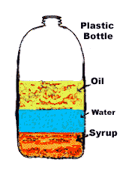
Which liquid is the least dense?
a)
oil
b)
water
c)
syrup 
d)
plastic bottle
6.
What is this tool to get mass?
a)
triple beam balance
b)
ruler
c)
thermometer
d)
graduate cylinder
7.
What is the formula for density?
a)
density = mass x volume
b)
density = mass / volume
c)
density = mass + volume
d)
density = mass - volume
8.
Jack has a rock. The rock has a mass of 14 g and a volume of 2 cm3. What is the density of the rock?
a)
7 mL
b)
7 g/cm3
c)
28 g/cm3
d)
1/7 g/cm3
9.
Helium balloons rise on earth because
a)
helium is less dense than air
b)
helium is more dense than air
c)
helium is cooler than air
d)
helium is warmer than air
10.

The ability to rust is a

a)

Physical property

b)

Chemical property

11.

The element sulfur smells like rotten eggs. This is an example of a

a)

Physical property

b)

Chemical property

12.

The element iron is very magnetic. This is an example of a

a)

Physical property

b)

chemical property

13.

The mass of the box is 20 pounds. This is an example of a

a)

Physical property

b)

Chemical property

14.

The silver bracelet my Grandma gave me tarnishes very easily. This is an example of a

a)

Physical property

b)

Chemical property

15.

The melting point of a substance such as ice cream is an example of a

a)

Physical property

b)

Chemical property

16.

Ba

a)

Compound

b)

Element

c)

Mixture

17.

KCl2

a)

Compound

b)

Element

c)

Mixture

18.

H3O

a)

Compound

b)

Element

c)

Mixture

19.

Lucky Charms Cereal

a)

Compound

b)

Element

c)

Mixture

20.

Koolaid

a)

Compound

b)

Element

c)

Mixture

21.

Fe2

a)

Compound

b)

Element

c)

Mixture

22.

Salt (NaCl)

a)

Compound

b)

Element

c)

Mixture

23.

What type of matter is this?

a)

compound

b)

element

c)

mixture

24.

What type of matter is this?

a)

compound

b)

element

c)

mixture

25.

What type of matter is this?

a)

compound

b)

element

c)

mixture

26.

A ________ has no shape and no size.

a)

gas

b)

liquid

c)

solid

27.

A solid

a)

has particles that are far apart

b)

has a size and shape of its own

c)

takes the shape of its container

28.
Which of these will flow and fill up any shape of container?
a)
solid
b)
liquid
c)
gas
d)
cats
29.

These are ______ particles that move around freely.

a)

solid

b)

liquid

c)

gas

30.

These are ______ particles because they are a little further apart and can slide and glide around.

a)

solid

b)

liquid

c)

gas

31.

These are ______ particles because they are tightly packed together.

a)

solid

b)

liquid

c)

gas

32.

Phase change going from Liquid to Solid...

a)

Melting

b)

Freezing

c)

Condensation

d)

Sublimation

33.

Phase change going from a Solid to a Liquid...

a)

Freezing

b)

Condensation

c)

Melting

d)

Sublimation

34.
The phase change from water vapor to liquid water is known as...
a)
evaporation
b)
precipitation
c)
condensation
d)
sublimation
35.
What happens to particles when they are heated?
a)
They speed up and spread out
b)
They slow down and compress
c)
They stop moving
d)
They move closer together and speed up
36.
How are solids different from liquids?
a)
particles in solids are moving freely around each other.
b)
particles in solids have no motion.
c)
particles in solids are vibrating in place.
d)
particles in solids have more motion than in liquids
37.
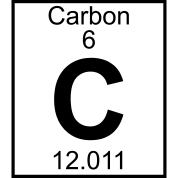
What does the 6 represent?
a)
atomic mass
b)
atomic number
c)
element name
d)
chemical symbol 
38.
What does 12.011 represent?
a)
atomic mass
b)
atomic number
c)
element name
d)
chemical symbol 
39.

the positively charged subatomic particle contained in the nucleus of an atom

a)

proton

b)

neutron

c)

electron

d)

matter

40.

a subatomic particle, contained in the nucleus of an atom, having the same mass as a proton but no electrical charge

a)

proton

b)

neutron

c)

electron

d)

matter

41.

a negatively charged subatomic particle that orbits the nucleus of an atom

a)

proton

b)

neutron

c)

electron

d)

matter

42.
Which is an electron?
a)
A
b)
B
c)
C