
Font size
 Worksheets
Weather Unit Test
Total questions: 50
Worksheet time: 43mins
Which Earth's surface heats quicker, sand or water?
sand
water
In a sea breeze, what heat transfer is responsible for warm air over the land moving toward cooler air over water?
radiation
convection
conduction
condensation
Where would the air be less dense, causing the air to rise?
Where would the air be more dense, resulting in sinking air?
Where would the air be more dense, resulting in sinking air?
Where would the air be less dense, causing the air to rise?

Air moves from _______ pressure to ________ pressure.
high to low
low to high
high to high
low to low

Sea and land breezes happen because
the land heats and cools more quickly than the water
the land heats and cools more slowly than the water
air moves more easily over water than land
air moves more easily over land than water

Air moves from areas of ____ pressure to areas of _____ pressure.
H ; H
L ; H
L ; L
H ; L

Where do you feel the wind hitting you if you are standing on the sand at the beach at night looking toward the water?
on your forehead
on the back of your neck
on your face
there is no wind

Sea breezes take place during the day because warmer land temperature results in a warmer air mass above the land compared to the cooler air mass over the surface of water.
true
false

Cold air sinks because
warm air is less dense than cold air
cold air is more dense than warm air

*Hint-eliminate one picture at a time that can't make sense.

What kind of heat transfer is shown in this picture?
conduction
convection
radiation


As you travel higher up in the atmosphere the...
altitude decreases and the temperature increases (gets warmer)
altitude increases and the temperature decreases (gets colder)
Which boy is experiencing warmer temperatures?
the boy standing on top of the mountain
the boy standing at the bottom of the mountain

Clouds form when water vapor _______, or changes from a gas to a liquid.
evaporates
condenses
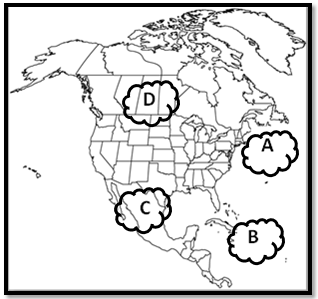
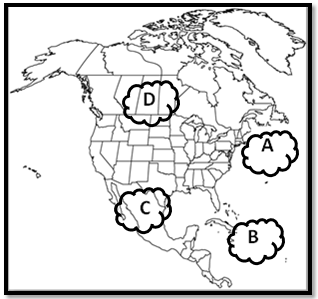
Which type of air would you find at air mass C?
mT
mP
cT
cP

What type of weather is the area marked with
an H MOST LIKELY having?
sunny and warm
rainy and warm
Sunny and cold
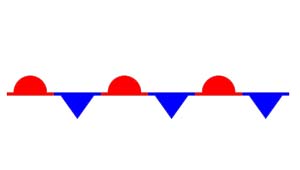
Which is the correct symbol for a stationary front?


Which is the correct symbol for a warm front?


Which is the correct symbol for a cold front?





Based on the information in the table, in which city will it most likely rain?
City W
City X
City Y
City Z


Which city has the highest temperature?
Dallas
Chicago
Los Angeles
Miami


After the cold front passes, what kind of weather will the east coast have?
fair(clear)and cooler
fair and warmer
hot and humid
cold and rainy
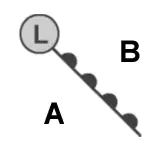
Which of the following statements best describes the weather conditions at positions A and B shown below?
It is raining at position A and clear at position B
It is cloudy at position A and clear at position B.
It is cooler at position A than at position B.
It is warmer at position A than at position B.
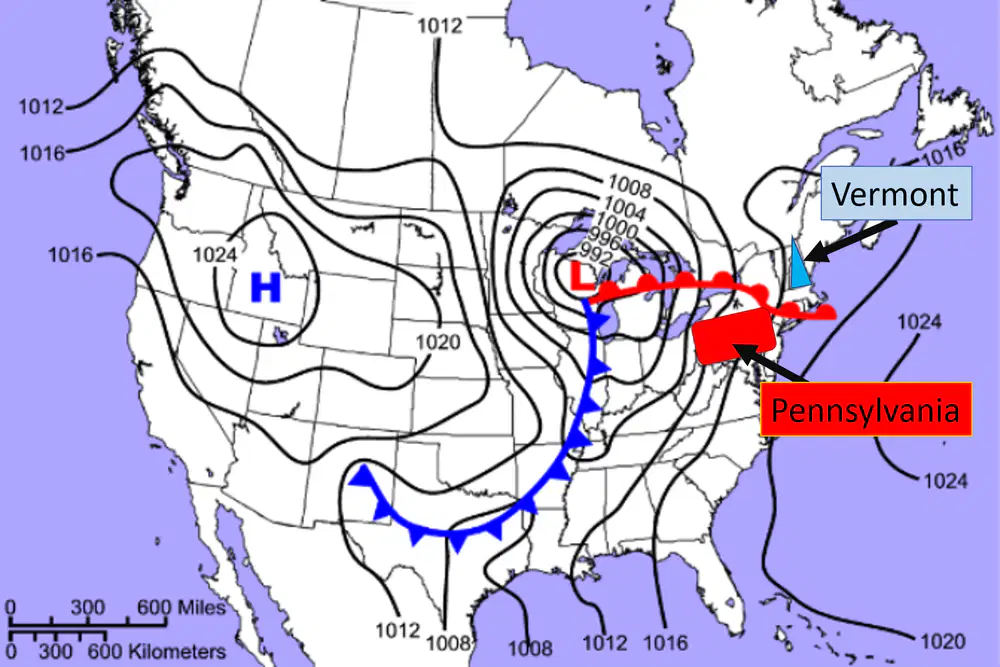
Based on the map, where would you expect the weather to be warmer?
Pennsylvania
Vermont
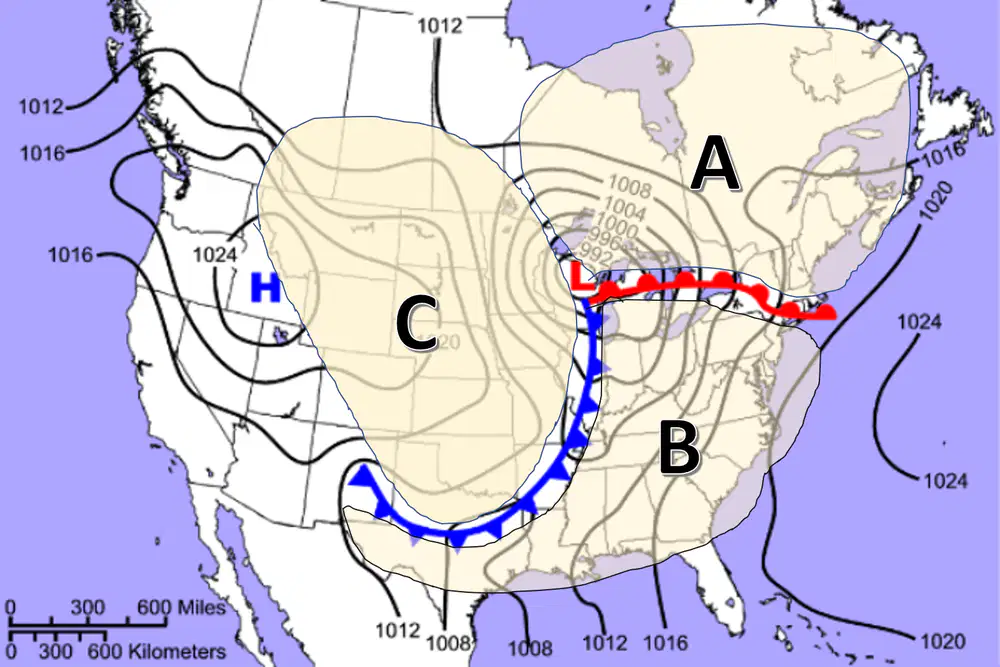
Which of these air masses are the warmest?
A
B
C
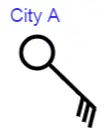
What does the symbol shown below tell you about the weather at City A?
cloudy skies, with strong winds from the northwest
cloudy skies, with strong winds from the southeast
clear skies, with strong winds from the northwest
clear skies, with strong winds from the southeast
A weather station is located 300 miles directly east of a second station. Winds at the eastern station are blowing from the south. Winds at the western station are blowing from the north. What is true about the weather system near these two locations?(HInt: High and Low Pressure systems rotate in different directions; we use counterclockwise and clockwise to describe their movements)
A high-pressure system is located between the two stations.
A low-pressure system is located between the two stations.
A high-pressure system is located to the north of the western station.
A low-pressure system is located to the south of the eastern station.
At 3:15 one afternoon, the temperature over the land reaches its highest value for the day — about 89°F. The temperature over the adjacent water is about 72°F. What would the expected weather conditions be at this time?
Cloudy skies and a sea breeze
Clear skies and a sea breeze
Clear skies and a land breeze
Cloudy skies and a land breeze

The table below gives air temperature data over land and over the sea for six successive hours labeled A through F. What weather event is occurring around time D?
Clouds are forming over land.
Clouds are dissipating over the ocean.
The breeze is switching from a land breeze to a sea breeze.
The breeze is switching from a sea breeze to a land breeze.

