Wayground logo

Free Printable Worksheets

Font size

S
M
L
XL
Worksheets

Interaction of matter

Total questions: 133

Worksheet time: 5hrs 10mins

Name
Class
Date
1.
When a liquid reaches the temperatures of its ___, it can become a gas.
a)
melting point
b)
freezing point
c)
boiling point
d)
density
2.

Melting Point of ice is

a)

100 degrees Celsius

b)

0 degrees Celsius

c)

0 degrees Fahrenheit

3.
The temperature when a solid changes to a liquid - 
a)
melting point
b)
freezing point
c)
boiling point
4.
What is the boiling point of water
a)
0 C
b)
100 F
c)
50 C
d)
100 C
5.

A substance has a melting point of 25 oC and a boiling point of 235 oC. What state is it at 5oC?

a)

Solid

b)

Liquid

c)

Gas

6.

If you boil water in a pot, some of the water becomes...

a)

water vapor

b)

precipitation

c)

evaporation

7.

All substances have the same melting and boiling points

a)

false

b)

true

8.

Human body normal temperature is around...

a)

27 0 C

b)

370 C

c)

400 C

9.

What is the boiling point of water

a)

0 C

b)

100 C

c)

273 C

d)

50 C

10.

What is happening at the boiling point?

a)

liquid to gas

b)

solid to liquid

c)

gas to liquid

d)

liquid to solid

11.

What is water's freezing point?

a)

100 C

b)

0 C

c)

32 C

d)

5 C

12.

What is happening at freezing point?

a)

gas to liquid

b)

liquid to solid

c)

solid to liquid

d)

liquid to gas

13.

What is happening at water melting point?

a)

liquid to gas

b)

gas to liquid

c)

solid to liquid

d)

liquid to soild

14.

Do all matter have the same boiling, melting, and freezing points?

a)

Yes

b)

No

15.

Which of this can water be turned into

a)

liquid

b)

solid

c)

gas

d)

all of the above

16.

What causes ice to melt?

a)

evaporation

b)

vapour

c)

heat

d)

transpiration

17.

The teacher heats a pot of water. Once the water reaches 100°C, which point has the water reached?

a)

Freezing

b)

Boiling

c)

Melting

d)

Evaporation

18.

At what temperature would water on a stove gain enough energy to change to vapor?

a)

32 degrees Celsius

b)

0 degrees Celsius

c)

100 degrees Celsius

d)

212 degrees Celsius

19.

At what temperature in degrees Celsius does water freeze?

a)

150

b)

0

c)

200

d)

32

20.

Freezing point

a)

The classification of matter as a solid, a liquid, or a gas

b)

Physical change in matter from a gas to a liquid

c)

The temperature at which a substance changes states from a solid to a liquid

d)

The temperature at which a substance changes from a liquid to a solid

21.

What scientific tool can be a student use to measure the freezing point of water?

a)

Stopwatch

b)

Celsius thermometer

c)

Pan balance

d)

Hot plate

22.

Physical change in matter from a gas to a liquid

a)

Condensation

b)

Freezing point

c)

Melting point

d)

Evaporation

23.

A student observed a liquid that boiled at 100°C. What type of liquid was boiling?

a)

Salt water

b)

Sugar water

c)

Pure water

d)

Lemon water

24.

A student is trying to determine if a clear substance is water. The student should measure the substance's -

a)

Volume

b)

Solubility

c)

Mass

d)

Boiling Point

25.

The temperature at which a substance changes states from a solid to a liquid

a)

Freezing point

b)

Melting point

c)

Evaporation

d)

Condensation

26.

Two students were studying properties of water. One student placed 100 mL of water into a beaker on a burner to boil. Another student placed 200 mL of water in an identical beaker on another burner to boil. Which of the following will be the same for both beakers of water?

a)

The volume of the boiling water

b)

The time it takes the water to boil

c)

The mass of the boiling water

d)

The temperature at which the water boils

27.

If water is left to boil, what statement is not true?

a)

All the water will eventually evaporate.

b)

The temperature of the water will eventually reach 200°C.

c)

The temperature of the water will remain at 100°C until it evaporates.

d)

The beaker with only 100 mL of water will boil away faster than the beaker with 200 mL of water.

28.
To determine the freezing and melting points use a 
a)
thermometer
b)
scale
c)
balance
29.
In Alaska, water boils at 100 degrees Celsius; in Florida, water boils at 
a)
100 degrees Celsius
b)
25 degrees Celsius
c)
0 degrees Celsius
30.
What is the temperature on this thermometer?
a)
 85° Fahrenheit       
b)
 80° Fahrenheit       
c)
 90° Fahrenheit       
d)
 95° Fahrenheit       
31.
Which thermometers temperature is about  25° Celcius?
a)
Blue
b)
Green
c)
Blue
d)
Blue and Green
32.
What is the temperature on the thermometer?
a)
 28° Celsius    
b)
 20° Fahrenheit       
c)
 18° Celsius      
d)
 20° Celsius      
33.

solute + solvent =

a)

solution

b)

equation

34.

Solutes dissolve quicker if you stir them.

a)

true

b)

false

35.

Identify the solvent in salt solution

a)

Water

b)

Salt

c)

Sugar

36.

Sugar dissolve faster in__

a)

Ice cold water

b)

Warm water

c)

Normal water

37.

What is able to dissolve other substances?

a)

Solute

b)

Solution

c)

Salt

d)

Solvent

38.

If a solute dissolves in water than it is (a)   .

39.

If a solute does NOT dissolve in water it is (a)   .

40.

If you put Iced Tea mix in water, the Iced Tea mix is the______.

a)

Solute

b)

Solvent

c)

Solution

41.

2. If you are going to mix hot water and coffee powder what will happen?

a)

a. The coffee powder will not dissolve in water.

b)

b. The coffee powder will dissolve in water thoroughly.

c)

c. The coffee powder will dissolve in water partially.

d)

d. None of the above

42.
__________ are made up of solutes and solvents.
a)
Solutions
b)
Suspension
c)
Colloid
43.
You can make a solution more concentrated by adding __________.
a)
solute
b)
solvent
c)
water
44.

The ___ is the thing being dissolved.

a)

solute

b)

solvent

c)

mixture

d)

solution

45.
Solutions are composed of __________ .
a)
salts and solutes
b)
solvents and salts
c)
solutes and alloys
d)
solutes and solvents
46.

If I dissolve salt in water, what is the solvent?

a)

salt

b)

water

c)

salt & water

d)

none of the above

47.

If I dissolve sugar in water, what is the solution?

a)

water

b)

sugar

c)

sugary water

d)

none of the above

48.

Define the term soluble.

a)

Can dissolve in water

b)

Cannot dissolve in water

c)

Partially dissolves in water

49.

Define the term insoluble.

a)

Can dissolve in water.

b)

Cannot dissolve in water.

c)

Partially dissolves in water.

50.
__________ are made up of solutes and solvents.
a)
Solutions
b)
Suspension
c)
Colloid
d)
mixtures
51.

What is the best method of separation for removing sand from water?

a)

Sifting

b)

Sorting

c)

Evaporation

d)

Magnetic attraction

e)

Filtration

52.

What tool is needed to remove sugar that has been dissolved in water?

a)

Heat source

b)

Magnet

c)

Sieve or strainer

d)

Tweezers

53.
Which of these changes would cause the molecules in a substances to spread farther apart?
a)
Putting the substance in a smaller container
b)
Adding thermal (heat) energy
c)
Changing the phase from liquid to solid
d)
Decreasing the overall kinetic energy of a liquid
54.
A student drew the atoms in a solid.  Her picture shows the closely packed atoms vibrating in place.  How would she have to change this picture to show the same substance as a liquid?
a)
She should show the atoms moving more and make a little more space between them.
b)
She should draw the atoms bigger.
c)
She should draw the atoms REALLY far apart.
d)
She should draw the atoms in a different shape.
55.
What happens when you add thermal energy to a substance?
a)
Spacing between particles decreases
b)
Vibration of particles increases
c)
Temperature decreases
d)
Pressure increases
56.
Which of these describes how temperature and kinetic energy are related?
a)
When kinetic energy decreases, temperature doesn't change.
b)
When kinetic energy increases, temperature decreases.
c)
When kinetic energy decreases, temperature increases.
d)
When kinetic energy increases, temperature increases.
57.
When a solid changes to a liquid, what happens?
a)
It melts.
b)
The particles move faster and spread apart.
c)
The kinetic energy of particles increases.
d)
All of these!
58.
In a solid, how are the molecules packed?
a)
They are very close together.
b)
They are spread far apart.
c)
Molecules?  What molecules?
d)
They are kinda close together.
59.
In a solid, how do the molecules move?
a)
They don't.
b)
They vibrate and slide past each other.
c)
They vibrate, but don't move from place to place.
d)
They vibrate and move freely.
60.
In a liquid, how do the molecules move?
a)
They don't.
b)
They vibrate and slide past each other.
c)
They vibrate, but don't move from place to place.
d)
They vibrate and move freely.
61.
In a gas, how do the molecules move?
a)
They don't.
b)
They vibrate and slide past each other.
c)
They vibrate, but don't move from place to place.
d)
They vibrate and move freely.
62.
What is happening between R and S on this graph (the straight, horizontal line)?
a)
The substance is changing phase.
b)
The substance is freezing.
c)
The substance is heating up.
d)
Nothing
63.
What is happening between Q and R on this graph (the diagonal line)?
a)
The substance is changing phase.
b)
The substance is freezing.
c)
The substance is heating up.
d)
Nothing
64.
Which of the following is NOT true about different states of matter?
a)
The particles move at different speeds.
b)
The particles have more or less space between them.
c)
Each state is a different substance.
65.
These particles are spread far apart.  They are also compressible and move around freely at high speeds.
a)
solid
b)
liquid
c)
gas
d)
plasma
66.
Which of these has a fixed shape?
a)
solid
b)
liquid
c)
gas
d)
plasma
67.
Which of these has a fixed volume?
a)
solid
b)
liquid
c)
gas
d)
plasma
68.
Which of these takes on the shape of its container?  Choose the best answer.
a)
solid
b)
liquid
c)
gas
d)
liquid AND gas
69.
What happens when a gas becomes a liquid?
a)
The particles slow down.
b)
The particles get closer together.
c)
Kinetic energy decreases.
d)
All of these!
70.
What state of matter has the greatest attractions between molecules?
a)
solid
b)
liquid
c)
gas
d)
plasma
71.
Which of these is a chemical property of matter?
a)
color
b)
melting point
c)
density
d)
flammability
72.
Which of these is a chemical property of matter?
a)
Magnetism
b)
Melting Point
c)
Reactivity
d)
Texture
73.
A car rusting:  physical or chemical change?
a)
physical
b)
chemical
74.
Fireworks exploding:  physical or chemical change?
a)
physical
b)
chemical
75.
Ice melting:  physical or chemical change?
a)
physical
b)
chemical
76.
Slicing fruit:  physical or chemical change?
a)
physical
b)
chemical
77.
Water evaporating:  physical or chemical change?
a)
physical
b)
chemical
78.
Silver tarnishing (turning black):  physical or chemical change?
a)
physical
b)
chemical
79.
Roasting marshmallows:  physical or chemical change?
a)
physical
b)
chemical
80.
Carving pumpkins:  physical or chemical change?
a)
physical
b)
chemical
81.
What happens when a gas changes to a liquid?
a)
The particles slow down.
b)
The particles get closer together.
c)
The attractions between molecules increase.
d)
All of these are true.
82.
What does temperature measure?
a)
The average potential energy of the molecules of a substance
b)
The average kinetic energy of the molecules of a substance
c)
How close together the molecules of a substance are
83.

What is the process by which water changes from a liquid to a gas?

a)

Sublimation

b)

Evaporation

c)

Freezing

d)

Condensation

84.

What is the process by which water vapor in the air turns into liquid water?

a)

Freezing

b)

Sublimation

c)

Condensation

d)

Evaporation

85.

What is the term for water falling from the sky in the form of rain, snow, sleet, or hail?

a)

condensation

b)

evaporation

c)

sublimation

d)

precipitation

86.

What is the process by which water is given off through the leaves of plants?

a)

Evaporation

b)

Respiration

c)

Transpiration

d)

Photosynthesis

87.

What is the continuous process by which water is circulated throughout the Earth and its atmosphere?

a)

The nitrogen cycle

b)

The water cycle

c)

The carbon cycle

d)

The rock cycle

88.

Which process involves the sun heating up water in rivers, lakes, and oceans causing it to change into water vapor?

a)

Precipitation

b)

Condensation

c)

Evaporation

d)

Sublimation

89.

What is the term for the process by which water is absorbed by the roots of plants and released into the atmosphere?

a)

Precipitation

b)

Evaporation

c)

Condensation

d)

Transpiration

90.

What is the term for the process by which water returns to the Earth's surface in the form of rain, snow, sleet, or hail?

a)

condensation

b)

evaporation

c)

precipitation

d)

sublimation

91.

What is the term for the process by which water changes from a gas to a liquid?

a)

Sublimation

b)

Evaporation

c)

Condensation

d)

Freezing

92.

What is the term for the process by which water changes from a solid to a liquid?

a)

Sublimation

b)

Evaporation

c)

Condensation

d)

Melting

93.
What are the states of matter?
a)
solid, liquid, and juice
b)
solid and liquid
c)
solid and gas
d)
solid, liquid, and gas
94.
Matter that has its own shape and takes up space.
a)
solid
b)
liquid
c)
gas
95.
Matter that always fills the shape in a container, such as air.
a)
solid
b)
liquid
c)
gas
96.
Milk takes the shape of its container because it is a:
a)
solid
b)
liquid
c)
gas
97.
Molecules are closest together in a 
a)
Solid
b)
Liquid
c)
Gas
d)
plasma
98.
What term describes a liquid changing to a solid?
a)
Deposition
b)
Sublimation
c)
Evaporation
d)
Freezing
99.
At higher temperatures
a)
particles in an object have less energy
b)
particles in an object move faster
c)
a gas contracts
100.
A gas
a)
has a definite shape but no definite volume
b)
has a definite volume but no definite shape
c)
has fast-moving particles
101.
Which state of matter has tightly packed molecules?
a)
solid
b)
liquid
c)
gas
102.

when water changes from a liquid to a gas - caused by heat

a)

evaporation

b)

condensation

c)

freezing

d)

melting

103.
Everything is made of...
a)
solid
b)
liquid
c)
gas
d)
matter
104.

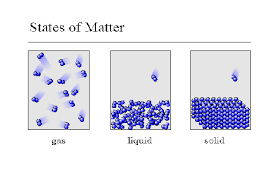
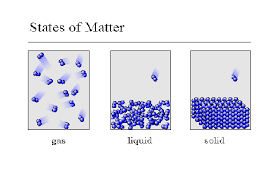
Which state of matter is represented by the particles in this image?

a)

Solid

b)

Liquid

c)

Gas

105.

What would be a quantitative observation?

a)

There were 5 pumpkins.

b)

The pumpkins were orange.

c)

The pumpkins were shiny.

d)

The pumpkins smelled sweet.

106.

What would be a qualitative observation?

a)

There were 5 pumpkins.

b)

The pumpkins were orange.

c)

There was 1 pumpkin in oil.

d)

There was 1 pumpkin in milk.

107.

The slug was slimy.

a)

Qualitative

b)

Quantitative

108.

She has 3 sisters.

a)

Qualitative

b)

Quantitative

109.

What are observations made using our five senses called?

a)

qualitative data

b)

quantitative data

110.

What are observations that are measured or counted called?

a)

qualitative data

b)

quantitative data

111.

I use rulers, scales and calculators to make these observations.

a)

qualitative data

b)

quantitative data

112.

The flower is 8 cm tall.

a)

qualitative data

b)

quantitative data

113.

The center of the flower is yellow and fuzzy.

a)

qualitative data

b)

quantitative data

114.

The petals are smooth and silky.

a)

qualitative data

b)

quantitative data

115.

The rose has three leaves.

a)

qualitative data

b)

quantitative data

116.
Jane took a 1 ounce slice of bread and cut it into 2 pieces. On one side, she put 2 ounces of peanut butter. On the other side she put 1 ounce of jelly. Which will most likely be the weight of the finished sandwich? 
a)
7 ounces
b)
3 ounces
c)
6 ounces
d)
4 ounces
117.
Jennifer left her bike outside, buried in snow. In the spring, when the snow melted, she found her bike covered in rust. Which best describes the change to the bike? 
a)
It was a chemical change, because the bike was a different color. 
b)
It was a chemical change, because the rubber tires were deflated. 
c)
It was a chemical change, because rust can be removed from the metal. 
d)
It was a chemical change, because rust is a new substance on the metal. 
118.
A piece of wood is sawed into several small pieces. This is an example of what kind of change? 
a)
physical
b)
chemical
c)
electrical
d)
mechanical
119.
The mass of a grape drink mixture is 150 grams. Kathy boils the mixture and notices that 50 grams of water has evaporated. Which will most likely be the result? 
a)
The mass of the grape juice mixture will be 50 grams. 
b)
The mass of the grape juice mixture will be 100 grams.
c)
The mass of the grape juice mixture will be 200 grams.
d)
The mass of the grape juice mixture will remain 150 grams. 
120.
When Maria went for a walk early in the morning, she noticed the ground was wet. It had not rained overnight, but there were water droplets on the grass.
What best explains why the water droplets formed on the grass?
a)
Clouds formed.
b)
The Sun went down.
c)
Winds became stronger.
d)
The air temperature became cooler.
121.
Which would most likely cause more runoff?
a)
decrease in transpiration
b)
increase in precipitation
c)
decrease in precipitation
122.
In which way are evaporation and condensation similar?
a)
Both are caused by changes in heat energy.
b)
Both are caused by the warming of the atmosphere.
c)
Both cause increases in air temperature.
d)
Both cause decreases in air temperature.
123.
A family goes camping and creates a fire to roast marshmallows. The next morning, the kids notice that the logs are no longer there, and all that remains are ashes. Which best explains why the ashes from a log are evidence of a chemical change?
a)
The color of the wood changed from brown to gray. 
b)
The wood breaks down into smaller matter when burned.
c)
The ashes cannot be put back together to create a log again.
d)
Something was added to the log, and it cannot be removed. 
124.
Over time, iron becomes rust when it combines with water and oxygen. Which type of change must occur for rust to form?
a)
chemical
b)
mechanical
c)
nuclear
d)
physical
125.
Tonya observes a mixture of two clear liquids in a container to see if a chemical change occurs. Which observation demonstrates the mixture is undergoing a chemical change?
a)
The mixture remains at a constant temperature.
b)
A gas forms after the liquids are mixed.
c)
One liquid floats on top of the other.
d)
The mixture does not change color.
126.
What follows evaporation during the water cycle? How does this occur?
a)
Water evaporates into water vapor
b)
Water vapor condenses and forms a  cloud
c)
Water precipitates to the ground
d)
Water runs down into the hydrosphere
127.
Why is the sun important to the water cycle?
a)
The sun provides electricity for the water to flow to earth. 
b)
The sun provides Earth with light and heat energy to make the cycle work. 
c)
The plays no role in the water cycle. 
d)
The sun creates runoff for the water cycle to begin. 
128.
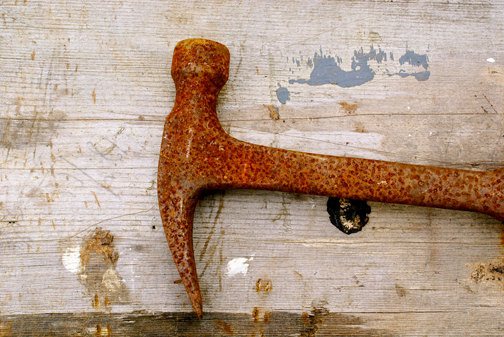
Kim lost her hammer outside. When she found it a few months later, some parts of the metal were covered with flaky, brown rust. Which type of change occurred when rust formed on the hammer?
a)
chemical
b)
electrical
c)
thermal
d)
physical
129.
Which best explains why burning leaves is a chemical change?
a)
The leaves emit light during the change. 
b)
The temperature of the leaves increases.
c)
The shape of the leaves changes.
d)
The leaves turn to ashes.
130.
Which is a chemical change?
a)
frying an egg
b)
boiling water
c)
breaking a glass cup
d)
crushing a piece of bread
131.
Tonya observes a mixture of two clear liquids in a container to see if a chemical change occurs. Which observation demonstrates the mixture is undergoing a chemical change?
a)
The mixture remains at a constant temperature.
b)
A gas forms after the liquids are mixed.
c)
One liquid floats on top of the other.
d)
The mixture does not change color.
132.
Which example best describes a physical change?
a)
baking a pie
b)
burning a candle
c)
making a paper airplane
d)
lighting a match
133.

Which of these is an example of a new substance being formed?

a)

a nail rusting

b)

a wall being painted

c)

water changing to steam

d)

paper being folded