wayground logo

Free Printable Worksheets

Font size

S
M
L
XL
Worksheets

Ecology EOC Review

Total questions: 63

Worksheet time: 45mins

Name
Class
Date
1.

What do you call organisms that eat ONLY producers?

a)

Carnivores

b)

Herbivores

c)

Omnivores

2.

What do you call organisms that eat ONLY other consumers?

a)

Carnivores

b)

Herbivores

c)

Omnivores

3.

What is the MAIN source of energy supply for a food chain?

(HINT: Where did all the energy come from?)

a)

Sunlight (absorbed by producers)

b)

Producers

c)

Other animals

d)

Decomposers

4.

What is the MAIN way most energy is lost in a food chain?

a)

Heat

b)

Respiration

c)

Waste

d)

Growth

5.

On average, how much energy is passed from one level of a food chain to another?

a)

10%

b)

90%

c)

100%

d)

50%

6.

Based on the Food Web, which of these statements is true?

a)

The shark is a producer

b)

The octopus is a primary consumer

c)

The limpet is a secondary consumer

d)

The zooplankton is a primary consumer

7.

Based on the Food Web, which animal would have the Largest Population?

a)

The octopus

b)

The seagull

c)

The fish

d)

The phytoplankton

8.

Animal cells, which need sugar to produce energy, would be considered a consumer. Which sequence best describes the flow of energy to an animal cell?

a)

Sun --> Plant --> Sugar --> Animal Cell

b)

Sun --> Sugar --> Animal Cell --> Plant

c)

Sun --> Animal Cell --> Plant --> Sugar

d)

Sun --> Plant --> Animal Cell --> Sugar

9.

Based on the Food Chain, how would your describe the frog?

a)

Producer

b)

Apex Predator

c)

Primary Consumer (Herbivore)

d)

Secondary Consumer (Carnivore)

10.

Based on the Food Chain, how would your describe the grass?

a)

Producer

b)

Apex Predator

c)

Primary Consumer (Herbivore)

d)

Secondary Consumer (Carnivore)

11.
An organism that lives by breaking apart dead organic matter into simpler parts is...
a)
consumer
b)
decomposer
c)
carnivore
12.
In a food web, arrows point at:
a)
who gets energy.
b)
who gets eaten.
13.
A pearlfish spends the day inside the alimentary tract, or intestines, of a sea cucumber. The fish emerges from the sea cucumber at night to feed on small crustaceans. The pearlfish gets a safe place to live. The sea cucumber does not gain anything from the relationship, nor is it harmed. 
a)
Mutualism
b)
Commensalism
c)
Parasitism
14.
A boxer crab carries a pair of small anemones in its chelipeds, or claws. When approached by a predator, the crab waves the stinging tentacles of the anemones to deter the predator. The anemones benefit from the small particles of food dropped by the crab during feeding. 
a)
Commensalism
b)
Mutualism
c)
Parasitism
15.
Some species of barnacles attach themselves to sea turtles or whales. As the whales or sea turtles travel, the barnacles gain access to food in nutrient-rich waters. Their host neither benefits nor is harmed by its riders.
a)
Mutualism
b)
Parasitism
c)
Commensalism
16.
A tapeworm needs to eat food that is already digested, so it lives in the intestines of a dogfish shark and derives nourishment from the shark. As a result of the tape worm infestation, the shark is weakened and more vulnerable to disease and predation. 
a)
Parasitism
b)
Commensalism
c)
Mutualism
17.
What are the raw materials of photosynthesis?
a)
oxygen and carbon dioxide
b)
oxygen and glucose
c)
carbon dioxide and water
d)
water and glucose
18.
What are the products of photosynthesis?
a)
oxygen and carbon dioxide
b)
oxygen and glucose
c)
carbon dioxide and water
d)
water and glucose
19.
What is the chemical formula for glucose?
a)
C6H12O6
b)
C6H6O12
c)
C12H6O12
d)
C6O2H6
20.
What is the chemical formula for carbon dioxide?
a)
H2O
b)
CO2
c)
CHO2
d)
CO2H
21.
What is the chemical formula for water?
a)
H2O
b)
HO2
c)
CHO2
d)
CO2H
22.
After photosynthesis, plants store their energy as _________ .
a)
chlorophyll
b)
pigment
c)
glucose (sugar)
d)
Oxygen
23.
Which of the following is the correct equation for PHOTOSYNTHESIS?
a)
CO+ light + H2O --> O+ Sugar
b)
CO+ sugar + H2O --> O+ light
c)
O2 + light + H2O --> CO+ Sugar
d)
CO+ O2 + H2O --> Light+ Sugar
24.

Which organism go through cellular respiration?

a)

animals

b)

plants

c)

both animals and plants

d)

none

25.

Which of the following is a reactant Cellular Respiration?

a)

Oxygen

b)

Carbon Dioxide

c)

Water

d)

Sunlight

26.

Which of the following is a reactant Cellular Respiration?

a)

Sunlight

b)

CO2

c)

H20

d)

C6 H12 O6

27.

What type of organism makes it's own food?

a)

Autotroph

b)

Heterotroph

c)

Consumer

d)

Omnivore

28.

What type of organism has to consume energy?

a)

Producers

b)

Plant

c)

Autotroph

d)

Heterotroph

29.

What is the best definition for cellular respiration?

a)

A process in which glucose is broken down to be used for energy.

b)

A process in which Carbon Dioxide is used to break down Glucose.

c)

The process in which animals make their own energy.

30.

Click on the two products of Cellular Respiration?

a)

H2O

b)

O2

c)

CO2

d)

C6 H12 O6

31.

The system that contains all living things on Earth.

a)

Biosphere

b)

Atmoshpere

c)

Hydrosphere

d)

Geosphere

32.

When the sun warms plants, it causes water to evaporate out of the leaves through the small openings. This process is called

a)

collection

b)

transpiration

c)

absorption

d)

run off

33.
The atmosphere includes
a)
rocks
b)
air
c)
plants
d)
atoms
34.
The geosphere includes all but
a)
rocks
b)
mountains
c)
lava
d)
plants
35.
The hydrosphere includes
a)
water
b)
ice
c)
dogs
d)
lava
36.
The biosphere includes
a)
living things
b)
rocks
c)
ice
d)
boiling water
37.
Fire would most affect the
a)
geosphere
b)
atmosphere
c)
cryosphere
d)
hydroshpere
38.

Biodiversity, aka biological diversity, usually refers to

a)

the same species in a general location

b)

the number of different species in a given area

c)

the number of animal species in a given area

d)

the number of plant species in a given area

39.

A species that is likely to become extinct if protective measures are not taken immediately is known as

a)

threatened species

b)

endemic species

c)

keystone species

d)

endangered species

40.

Which applies to this environmental problem:


Invasive carp are fast-growing, aggressive, and adaptable fish that are outcompeting native fish species for food and habitat in much of the mid-section of the United States.

a)

Habitat Loss

b)

Invasive Species

c)

Pollution

d)

Population Growth

e)

Over-exploitation

41.

The excessive use of species that have economic value is known as

a)

pollution

b)

habitat destruction

c)

over - exploitation

d)

climate change

42.
Humans are causing extiction in which ways?
a)
By over hunting animals for food or products.
b)
By destroying the natural habitat of species.
c)
By polluting the environments of the world.
d)
All of the above.
43.
When humans burn fossil fuels, most of the carbon quickly enters the                       as carbon dioxide.
a)
Water
b)
Atmosphere
c)
Sun
d)
Air
44.
Which one of these does not add CO2 to the atmosphere?
a)
cooking with gas
b)
planting trees
c)
burning wood
d)
riding in a bus
45.
What does not produce carbon dioxide?
a)
Photosynthesis
b)
Burning Fossil Fuels
c)
Animal respiration
d)
Plants decaying
46.
Which of the following removes carbon from the atmosphere?
a)
Combustion
b)
Respiration
c)
Photosynthesis
d)
Death
47.
Organisms that do not decompose can be buried and become what?
a)
water
b)
nutrients
c)
air
d)
fossil fuels
48.

If there is a fire in a forest, there will be more _ in the environment?

a)

nitrogen

b)

oxygen

c)

carbon dioxide

49.

How is the burning of fossil fuels related to global warming?

a)

Magic

b)

Fuels are hot

c)

Greenhouse effect

d)

Photosynthesis

50.

The circulation of the element Carbon among Earth's atmosphere, land, oceans, and organisms is called _____________.

a)

the Carbon Cycle

b)

the Oxygen Cycle

c)

the Carbon dioxide Cycle

d)

the Water Cycle

51.
Which of the following is the best conclusion that can be made from this graph?
a)
atmospheric carbon dioxide levels have been decreasing since 1960
b)
Hawaii has a lot of carbon dioxide
c)
humans have been working hard to decrease carbon dioxide levels
d)
atmospheric carbon dioxide levels have increased steadily since 1960
52.

What is a carbon sink?

a)

anything that absorbs more carbon from the atmosphere than it releases.

b)

Carbon that is released in the air.

c)

sinks form an important part of the natural carbon cycle.

d)

organic molecules in living and dead organisms found in the biosphere
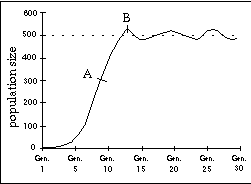
53.

What is the carrying capacity of the graph?

a)

around 500

b)

more than 800

c)

less than 300

d)

around 700

54.
What is the term used to describe all living things in an ecosystem?
a)
Biotic Factors
b)
Abiotic Factors
c)
Environmental Factors
d)
Population
55.
What is the term used to describe all non-living things in an ecosystem?
a)
Biotic Factors
b)
Abiotic Factors
c)
Environmental Factors
d)
Population
56.
What type of growth is represented behind?
a)
exponential
b)
logistics
c)
a good kind
d)
representative
57.
 What is the name for this leveling off shown in the graph?
a)
logistic line
b)
carrying capacity
c)
climax point
d)
mediocre
58.

What kind of growth is shown here, and what is the vocabulary term for the dotted line?

a)

Logistic growth, accelerating line

b)

Exponential growth, carrying capacity

c)

Logistic growth, carrying capacity

d)

Exponential growth, accelerating line

59.

What do limiting factors do?

a)

Separate biotic factors from abiotic factors.

b)

Determine which is the predator and which is the prey.

c)

Regulate how many organisms live in an ecosystem.

d)

Determine which natural disasters will hit an area.

60.
When a specific population grows past the ecosystem's carrying capacity, what happens to the population?
a)
Density Independent limiting factors start to occur resulting in the population going farther above carrying capacity.
b)
Density Dependent limiting factors start to occur resulting in the population going back below carrying capacity.
c)
The population will go extinct due to lack of resources
d)
The population grows then finds a new carrying capacity
61.
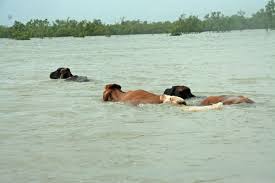
Excessive amounts of rain caused a flood in the southwest United States that resulted in substantial amounts of deaths in the rabbit population? This situation is an example of a density _____________ limiting factor.
a)
density-independent
b)
density-dependent
c)
density- too high
d)
density- too low
62.
Limiting factors which impact the size of a population no matter how large that population is.
a)
Density Independent Limiting Factors
b)
Density Dependent Limiting Factors
c)
Carrying Capacity
d)
Exponential Growth
63.

A lion and a cheetah attempt to occupy the same niche. The more aggressive lion survives; the cheetah does not.

a)

Density-Dependent: Competition

b)

Density-Independent: Competition

c)

Density-Dependent: Predator-Prey

d)

Density-Independent: Predator-Prey