wayground logo

Free Printable Worksheets

NEW

Font size

S
M
L
XL
Worksheets

Respiratory System

Total questions: 60

Worksheet time: 34mins

Name
Class
Date
1.
Bony ridges on the lateral walls of the nasal cavity that increase surface area are known as...
a)
paranasal sinuses
b)
nasal septa
c)
conchae
d)
nostrils
2.
Given the following structures:
1. larynx
2. nasal cavity
3. pharynx
4. trachea
Which of the following is the correct order that air would flow during inhalation. 
a)
1,2,3,4
b)
2,3,1,4
c)
2,1,3,4
d)
4,2,3,1 
3.
The trachea...
a)
extends from the nasal cavity to the bronchi
b)
is lined with cilia
c)
lies posterior to the esophagus
d)
is the passageway for food into the stomach
4.
Given the following structures:
1. alveoli
2. bronchi
3. bronchioles
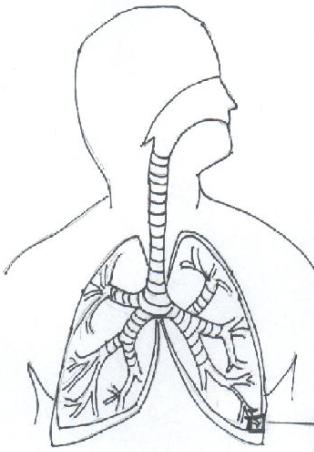
Which of the following is the correct order in which air would flow after inhalation? 
a)
1,2,3
b)
2,1,3
c)
2,3,1
d)
3,2,1
5.
The actual gas exchange with the blood occurs in the 
a)
bronchi
b)
bronchioles
c)
alveoli
d)
ventricles
6.
Surfactant...
a)
decreases the surface tension of fluid in the alveoli
b)
increases the energy required to keep the lungs inflated
c)
makes the lungs tend to collapse
d)
traps foreign particles that enter the lungs
7.
Which of the following is not a characteristic of human lungs?
a)
Both right and left lungs are composed of three lobes. 
b)
Bronchi divide to form bronchioles.
c)
Capillary supply is abundant to facilitate gas exchange with the blood.
d)
The alveoli are tiny air sacs arranged in clusters.  
8.
Which body function is made possible by the fibrous bands stretched across the larynx?
a)
swallowing
b)
breathing
c)
diffusion
d)
speech
9.
The use of oxygen by the cells to release enery from food is called...
a)
photosynthesis
b)
cellular respiration
c)
diffusion
d)
osmosis
10.
The release of energy in the cells for repair, mitosis and maintainance requires...
a)
oxygen and glucose
b)
carbon dioxide and water
c)
oxygen and carbon dioxide
d)
oxygen and water
11.
The energy used to make ATP comes from...
a)
oxygen
b)
carbon dioxide
c)
glucose
d)
water
12.
The movement of oxygen from the alveoli to the blood and from the blood to the tissues is due to the process of... 
a)
osmosis
b)
diffusion
c)
cytokinesis
d)
phagocytosis
13.
Each lung is contained within the thoracic cavity, but is also surrounded by the pluera. 
a)
True
b)
False
14.
When the diaphragm contracts...
a)
the volume of the thoracic cavity increases and the pressure decreases, causing air to rush into the lungs.
b)
the volume of the thoracic cavity decreases and the pressure increases causing air to rush out of the lungs. 
15.
The role of the mucus and and cilia in the respiratory system is to....
a)
warm the air. 
b)
clean the air.
c)
humidify the air. 
d)
All of the choices are true. 
16.
When the diaphragm relaxes...
a)
the volume of the thoracic cavity increases and the pressure decreases, causing air to rush into the lungs.
b)
the volume of the thoracic cavity decreases and the pressure increases causing air to rush out of the lungs. 
17.
Gases move from a lower pressure to a higher pressure. 
a)
True
b)
False
18.
Dissolved particles move across a membrane from a higher concentration to a lower concentration. 
a)
True
b)
False
19.
What is the function of the bronchi?
a)
Transport air from nose to lungs
b)
Transport air from trachea to lungs
c)
Transport air from lungs to alveoli
d)
Transport air from alveoli to blood
20.

These are the two two main branches from the trachea (one to each lung)

a)

bronchi

b)

alveoli

c)

capillaries

d)

bronchioles

21.
The air sacs that are covered with capillaries where gas exchange takes place
a)
bronchi
b)
lungs
c)
oxygen
d)
alveoli
22.

Flap of tissue that covers the opening to the windpipe during swallowing

a)

Pharynx

b)

Trachea

c)

Epiglottis

23.
A disorder of the lungs called ____ causes the bronchi to become restricted (get smaller) so air can't get to the lungs.
a)
asthma 
b)
cold
c)
influenza 
d)
bronchitis 
24.
The passageway that is shared by both the digestive and respiratory system is the....
a)
larynx
b)
pharynx
c)
trachea
d)
nose
25.
What does the Larynx hold ?
a)
The larynx holds the whole respitory system. 
b)
The larynx holds the trachea. 
c)
The larynx holds the vocal chords. 
d)
The larynx hold the wind pipe. 
26.
Letter B is pointing to which organ of the Respiratory System?
a)
Nose
b)
Trachea
c)
Lungs
d)
Diaphragm
27.
What does a spasm of the diaphragm cause?
a)
cough
b)
sneeze
c)
hiccup
d)
yawn
28.
Tiny tubes that branch off of bronchi
a)
capillaries
b)
alveoli
c)
bronchioles
d)
pluera
29.
Emphysema
a)
specific area that is drained by a stream
b)
negatively charged electrons 
c)
Lung disease in which the avioli enlarge 
d)
chemical reaction in which heat energy is absorbed 
30.

a condition where the alveoli is infected

a)

cystic fibrosis

b)

pneumonia

c)

asthma

d)

emphysema

31.
Identify #9.
a)
Pharynx
b)
Trachea
c)
Bronchi
d)
Alveoli
32.
Which disorder is a type of COPD and causes the lungs to be paralyzed where you cannot completely exhale.
a)
Apnea
b)
chronic bronchitis
c)
emphysema
d)
hypoxia
33.
What happens during inspiration?
a)
The diaphragm contracts and pulls down to cause air to rush into the thoracic cavity.
b)
The diaphragm relaxes and causes a pressure change and air rushes out.
c)
The diaphram relaxes and causes the thoracic cavity to get smaller.
34.

Which part of the brain controls breathing?

a)

cerebellum

b)

medulla oblongata

c)

pons

d)

pons and medulla oblongata

35.
This condition occurs when you have a lack of oxygen and the skin and nail beds turn blue.
a)
cystic fibrosis
b)
Hypoxia
c)
COPD
d)
bronchitis
36.
This condition results from smoking most often.  The lungs fill up with mucous and phlegm. 
a)
Emphysema
b)
Chronic bronchitis
37.
The membrane that surrounds the lungs is called:
a)
Singular Membrane
b)
Pleural Membrane
c)
Cellular Membrane
38.
When oxygen enters the body,lungs and capillaries and then CO2 leaves the body-this is known as:
a)
Cellular Respiration
b)
Internal Respiration
c)
External Respiration
39.
When oxygen goes in the body, to the muscles then carbon dioxide leaves muscles by blood to lungs- known as:
a)
External Respiration
b)
Internal Respiration
c)
Cellular Respiration
40.
This is a tube about 12cm long with c-shaped rings of cartilage to keep it open
a)
Nasal cavity
b)
Trachea
c)
Mouth Cavity
d)
Pharynx
41.
Part of the throat that contains the tonsils
a)
Trachea
b)
Pharynx
c)
Larynx
d)
Bronchi
42.

What is the fatty secretion that helps trap gases and moisten the lung surfaces to help them inflate and deflate?

a)

pleura

b)

surfactant

c)

bronchus

d)

glottis

43.
What muscles are used in breathing in and breathing out?
a)
diaphragm and intercostals
b)
diaphragm and lungs
c)
lungs and ribs
d)
lungs and diaphragm
44.
What equipment is used to measure air being inspired and expired?
a)
spirometre
b)
spirometer
c)
inspirometer
d)
expirometer
45.
What is the volume that remains in the lungs even after a forceful exhale
a)
expiratory reserve
b)
residual volume
c)
inspiratory reserve
d)
total lung capacity
46.
Which factor affects lung volume?
a)
Age
b)
Gender
c)
Body Size
d)
All of These
47.
What is the volume of one breath called?
a)
minute ventilation
b)
inspiratory capacity
c)
tidal volume
d)
vital capacity
48.
The amount of air you can force out after a normal breath out
a)
Expiratory Reserve
b)
Functional Residual Capacity
c)
Vital Capacity
d)
Inspiratory Capacity
49.
The amount of air you can still inhale after a normal breath in
a)
Vital Capacity
b)
Inspiratory Reserve
c)
Functional Residual Capacity
d)
Inspiratory Capacity
50.
The maximum air you can get in and out of your lungs
a)
Vital Capacity
b)
Total Lung Capacity
c)
Residual Volume
d)
Inspiratory Reserve Volume
51.

An 18 year old will breathe around how many breathes per minute

a)

20

b)

5

c)

12

d)

19

52.

How much air inspired will actually be utilised by the alveoli

a)

One Third

b)

Two Thirds

c)

A quarter

d)

Half

53.

What is total lung volume?

a)

Total Lung Capacity after inhaling as deeply as you can

b)

Total Lung Capacity after exhaling deeply

c)

Amount of blood ejected from the heart in one beat

d)

Amount of air breathed out in one breathe

54.

What causes a lung to collapse?

a)

Pressure is the same on both sides of the pleura.

b)

Pressure is greater inside than outsides pleura.

c)

Pressure is lower inside than outside the pleura.

55.

What part of the respiratory system is the Adam’s Apple?

a)

Thyroid cartilage

b)

Cricoid cartilage

c)

Epiglottis

d)

Pharynx

56.

What is pneumothorax?

a)

air in the lungs

b)

air in the pleura cavity

c)

air in the thoracic cavity

d)

all of the options

57.

What causes the gasses to be exchanged in external respiration?

a)

O2 greater in the alveoli.

b)

O2 greater in the capillaries.

c)

CO2 greater in the alveoli.

d)

all options

58.

What is a Eupnea?

a)

not breathing

b)

fast breathing

c)

slow breathing

d)

normal breathing

59.

What is the most important stimuli leading to increased rate and depth of breathing?

a)

Physical factors

b)

Decrease in oxygen

c)

Increase in carbon dioxide levels

d)

Stretch receptors

60.

When given a breathalyzer test, what volume are they trying to get that contain the alcohol gasses from the capillaries/alveoli?

a)

Dead Space Volume

b)

ERV

c)

IRV

d)

Vital Capacity