Wayground logo

Free Printable Worksheets

Font size

S
M
L
XL
Worksheets

Bio Unit 6 Pre-Quiz

Total questions: 62

Worksheet time: 2hrs 36mins

Name
Class
Date
1.
What did Mendel call the two kinds of traits exhibited by the pea plants (one coming from the father, one from the mother)?
a)
Genesis
b)
Elective traits
c)
Alleles
d)
Quadrants
2.
What do we call the result of the genotype (for example, the color of the peas)?
a)
Visible traits
b)
Physiotrait
c)
Genotype 2
d)
Phenotype
3.
If green is dominant over purple, then what is the genotype for this individual?
a)
Purple
b)
Green
c)
GG
d)
gg
4.
Another word for homozygous is...
a)
purebred
b)
hybrid
c)
heterozygous
d)
dominant
5.
Tt is-
a)
homozygous dominant
b)
homozygous recessive
c)
heterozygous
d)
none of these
6.
If a pea plant were homozygous recessive for height, how would its alleles be represented?
a)
TT
b)
Tt
c)
tt
d)
tT
7.
Gregor Mendel's "P" generation consisted of purple flower plants crossed with white flower plants. What were the results of this cross?
a)
All purple flower offspring
b)
All white flower offspring
c)
Some purple flowers and some white flowers
8.
A __________ is a segment of DNA that codes for a particular protein, which leads to a particular trait.
a)
Gene
b)
Allele
c)
Codon
d)
Nucleotide
9.
Which of the following best describes a GENOTYPE?
a)
The allele/genetic makeup of an organism.
b)
The physical expression of a trait.
10.
Which of the following is an example of a heterozygous genotype?
a)
RR
b)
Rr
c)
rr
11.
A carrier is represented by what symbol? 
a)
Clear 
b)
Shaded 
c)
Half Shaded
d)
1:4 ratio 
12.
If a trait SKIPS a generation, it is an indication that the trait is....
a)
dominant
b)
recessive
c)
incompletely dominant
d)
co-dominant
13.

Objective #13

This is a pedigree that follows blue eyes which is a recessive trait. What is the phenotype of the mother (circle) in generation 1?

a)

Brown

b)

Blue

c)

1 blue, 1 brown

14.

Objective #13

On a pedigree how do we know if they have the trait?

a)

Not shaded

b)

Shaded

15.
Which individual in the first generation is a carrier?
a)
The male
b)
The female
c)
individual 1
d)
None of the above
16.
What is this?
a)
Pedigree
b)
Karyotype
c)
Venn diagram
d)
Punnett Square
17.
How many females are in this pedigree?
a)
3
b)
4
c)
6
d)
7
18.
In the second generation-how many people are carriers of the trait?
a)
2
b)
3
c)
5
d)
6
19.
What does an open circle represent?
a)
Not Affected Male
b)
Not Affected Female
c)
Affected Male
d)
Affected Female
20.
What do half colored symbols represent?
a)
The individual is a carrier (heterozygous).
b)
The individual expresses the trait.
c)
The individual has both recessive alleles.
d)
The individual has both dominant alleles.
21.
The letters on the TOP AND SIDE of a punnett square represent ______________.
a)
The combination of alleles in offspring.
b)
The possible alleles given by the parents following meiosis.
c)
The genotype and phenotype of offspring.
d)
The results of genetic mutations in offspring.
22.

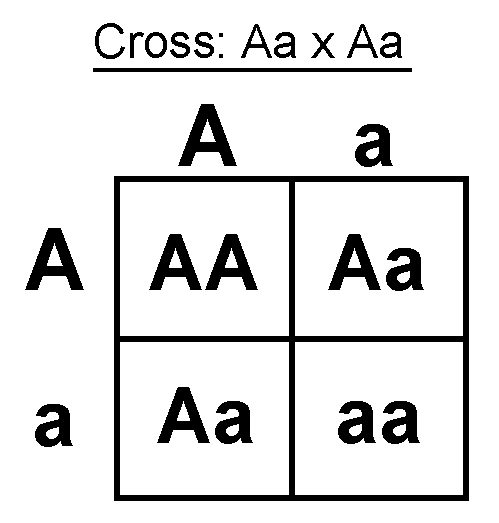
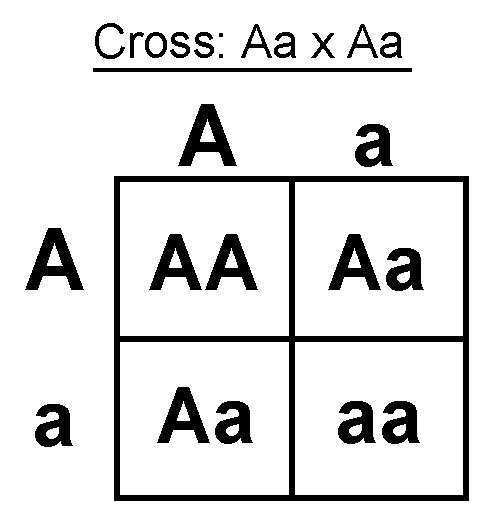
What is the predicted percentage of homozygous recessive offspring in this cross?

a)

0%

b)

25%

c)

50%

d)

75%

23.
This type of inheritance pattern shows BOTH traits in possible offspring
a)
complete dominance
b)
incomplete dominance
c)
co-dominance
d)
dominant pattern
24.
Why do we see only tall plants in the second generation?
a)
The gene for tall height is dominant
b)
The gene for short height is dominant
c)
The gene for tall height is recessive
d)
The parents did not have the tall gene
25.
The dominant trait in this punnett square is
a)
yellow pea seeds
b)
green pea seeds
c)
there is no dominant seed
26.
Two brown eyed parents (Bb) have a baby. What is the chance the baby is blue eyed?
a)
0 %
b)
25%
c)
50%
d)
75%
27.
How are Incomplete Dominance and Co Dominance different than a normal Mendelian cross?
a)
There is no difference
b)
The heterozygous genotype has a unique phenotype
c)
There is no heterozygous genotype
d)
There is only one phenotype regardless of genotype.
28.
this image is an example of
a)
codominance
b)
dominance
c)
incomplete dominance
29.
A breed of chicken shows codominance for feather color. One allele codes for black feathers, another codes for white feathers. The feathers of heterozygous chickens of this breed will be:
a)
all black
b)
all white
c)
all gray
d)
speckled black and white
30.
In some carnations, flower color exhibits codominance.  Identify the correct genotypes for red, white, and speckled carnations.
a)
Red = RR, white = rr, speckled = Rr
b)
Red = RR, white = WW, speckled = rw
c)
Red = RR, white = ww, Speckled = Rw
d)
Red = RR, white = WW, speckled = RW
31.
How many kids did the mother and father from the first generation have?
a)
2
b)
4
c)
5
d)
6
32.
How many generations are shown in this pedigree?
a)
1
b)
2
c)
3
d)
4
33.
What does a filled in square represent?
a)
Not affected Female
b)
Not affected Male
c)
Affected Male
d)
Affected Female
34.

What are the phenotype percentages of the offspring?

(A-Brown fur color; a-white fur color)

a)

50 % Brown fur and 50% White fur

b)

25 % Brown fur and 75% White fur

c)

75 % Brown fur and 25% White fur

d)

0% Brown fur and 100% White fur

35.

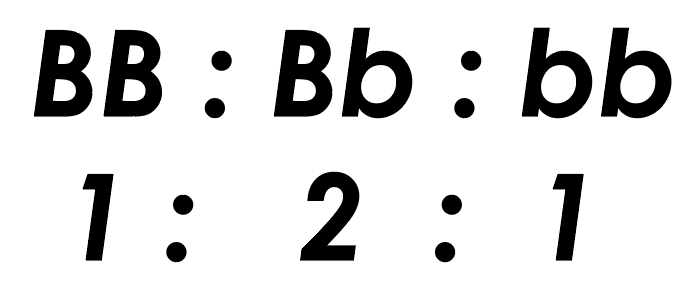
What is the genotypic ratio of the offspring?

a)

3:1

b)

1:3

c)

1:2:1

d)

2:2

36.
Which of the following genotypes is heterozygous?
a)
Bb
b)
BB
c)
bb
d)
B
37.

Which of the following genotypes are Purebred? Select 2 answers.

a)

aA

b)

Aa

c)

AA

d)

aa

38.

Which of the following would be a phenotype?

a)

Aa

b)

red hair

c)

heterozygous

d)

DNA

39.

The genotype Aa is called . . .

a)

Homozygous recessive

b)

Hybrid

c)

Purebred

d)

Homozygous dominant

40.

B = brown eyes

b = blue eyes

One brother has genotype BB and the other brother has genotype Bb.

Which statement is true about these two brothers?

a)

They have same phenotype and genotype

b)

They have different phenotypes and genotypes

c)

They have same phenotype, but different genotypes

d)

They have different phenotypes, but the same genotype

41.
In the Hardy-Weinberg Equation, q2 is the frequency of what?
a)
The recessive allele 
b)
the dominant allele
c)
the recessive genotype
d)
the dominant genotype
42.
Which Hardy-Weinberg equation represents the genotype frequencies in a population?
a)
p + q = 1
b)
p2 + 2pq + q2 = 1
c)
p2 + pq2 + q2 = 1
d)
p + 2pq + q3 = 1
43.
A population of 150 individuals has an allele frequency of 0.3 for the dominant allele (B) and a frequency of 0.7 for the recessive allele (b). Use the Hardy-Weinberg equation to determine the frequency of the genotype (bb).
a)
0.09
b)
0.42
c)
0.49
d)
0.21
44.
What does the Hardy-Weinberg equilibrium measure?
a)
changes in allele frequencies
b)
numbers of mutations
c)
goodness of fit
d)
genetic diversity
45.

Which Hardy-Weinberg factor represents the frequency of heterozygous individuals in a population?

a)

p2

b)

2pq

c)

q2

d)

p2 + 2pq

46.

The ratio of homozygous dominant to heterozygous

to homozygous recessive offspring

a)

Genotypic Ratio

b)

Phenotypic Ratio

c)

Monohybrid Cross

d)

Homologous Pair

47.

Second Filial Generation: the offspring of F1

a)

P1

b)

F1

c)

F2

d)

Homozygous Recessive

48.

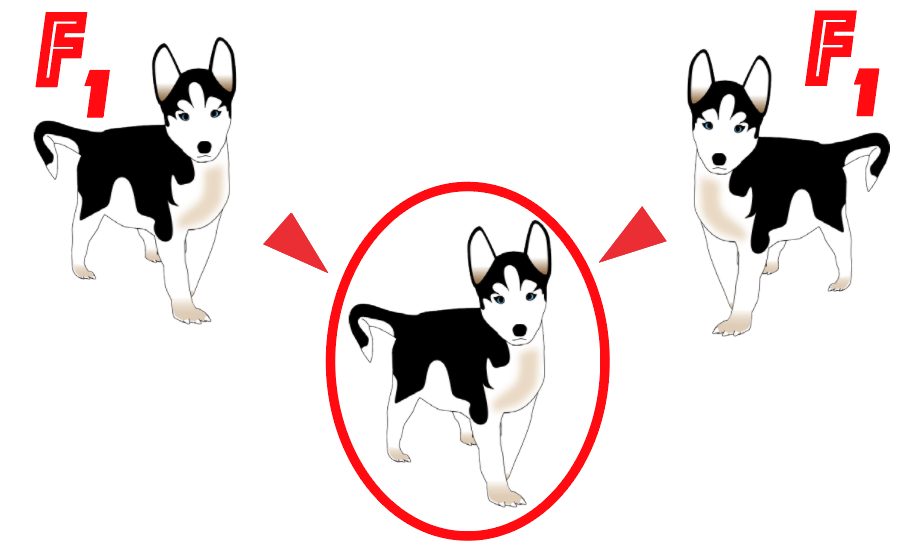
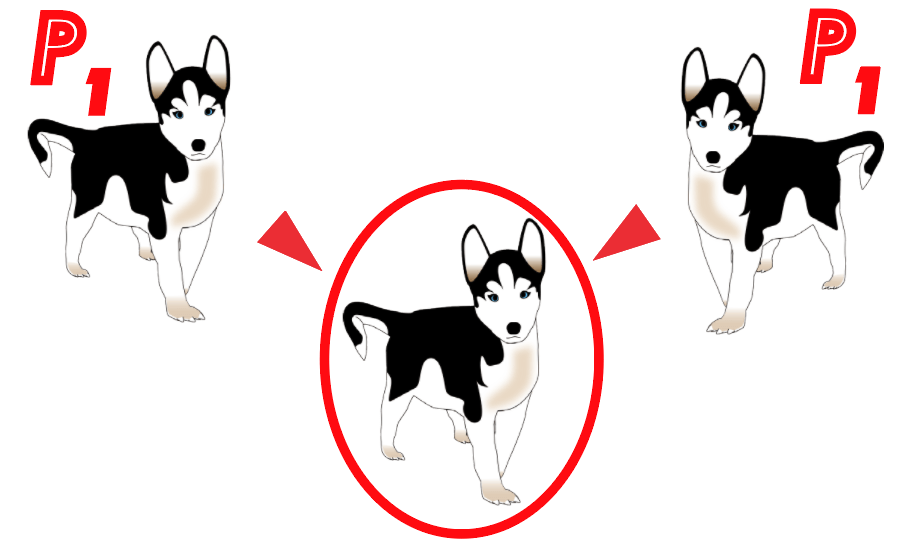
First Filial (child) Generation: the offspring of P1

a)

P1

b)

F2

c)

F1

d)

Heterozygous

49.

What is an allele?

a)

Different versions of the same gene

b)

A section of DNA with instructions for making a protein

c)

A matching pair of chromosomes

d)

A single set of chromosomes for each gamete

50.

When will a recessive trait be expressed?

a)

When the dominant allele is NOT present

b)

When the dominant allele is present

c)

In a heterozygous genotype

d)

In a homozygous dominant genotype

51.

The actual alleles (letters) inherited by an organism are the...

a)

Genotype

b)

Phenotype

c)

Chromosomes

d)

Genes

52.

What does the phenotype refer to?

a)

The physical traits of an organism

b)

The alleles an organism inherits

c)

The letters of an organism in a Punnett Square

d)

The chromosomes of an organism

53.

An organism with genotype AA is...

a)

Homozygous Dominant

b)

Heterozygous

c)

Homozygous Recessive

d)

Heterozygous Dominant

54.

Which of the following is a heterozygous genotype?

a)

Dd

b)

DD

c)

dd

d)

DDdd

55.

According to the Law of Independent Assortment...

a)

The alleles for one trait determine the inheritance of another trait

b)

Certain traits are inherited together

c)

The arrangement of chromosomes for one trait can affect the arrangement of chromosomes for another trait

d)

Traits are inherited independently of one another

56.
Genotype refers to the ...
a)
physical expression of the genes
b)
the possible combination of alleles in a gene
c)
whether an allele is dominant or recessive
d)
how an organism will appear
57.
An offspring will receive how many alleles from each parent to determine a specific trait?
a)
one
b)
two
c)
three
d)
five
58.
Tt is-
a)
homozygous dominant
b)
homozygous recessive
c)
heterozygous
d)
none of these
59.

In a population of humans, the frequency of no dimples is 0.36. If having no dimples is the recessive phenotype, which variable do you now have?

a)

p

b)

p2

c)

q

d)

q2

60.

If 49 out of 100 individuals in a population express the recessive phenotype, 49/100 or 0.49 would represent

a)

p

b)

p2

c)

q

d)

q2

61.
In the Hardy-Weinberg Equation, q2 is the frequency of what?
a)
The recessive allele 
b)
the dominant allele
c)
the recessive genotype
d)
the dominant genotype
62.
In rabbits, black fur (B) is dominant over brown fur (b). If a rabbit has brown fur, what can you conclude about its genotype?
a)
It is BB.
b)
It is Bb
c)
It is brown
d)
It is bb.