Worksheets
B24 1-6 Review
Total questions: 65
Worksheet time: 36mins
Which macromolecule is used as our main source of energy?
Lipids/Fats
Nucleic Acids
Proteins
Carbohydrates
Nucleic acids make up which of the two molecules listed below?
FDA
RNA
DNA
FDR
Which macromolecule stores energy?
Carbohydrates
Proteins
Lipids/Fats
Nucleic Acids
This macromolecule contains the instruction to make protein
Lipids/Fats
Nucleic Acids
Protein
Carbohydrates
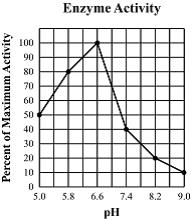
Which Graph shows that an enzyme works best at a pH of 4?


Which macromolecules has the instructions to make protein?
carbohydrates
protein
nucleic acid
lipid
Enzymes are an example of
Lipids
Carbohydrate
Protein
Nucleic Acid
this organelle makes ATP.
chloroplast
mitochondria
ribosome
nucleolus


A test was conducted to determine the content of a large molecule. The results showed the presence of simple sugars. What was the large molecule?
Glucose
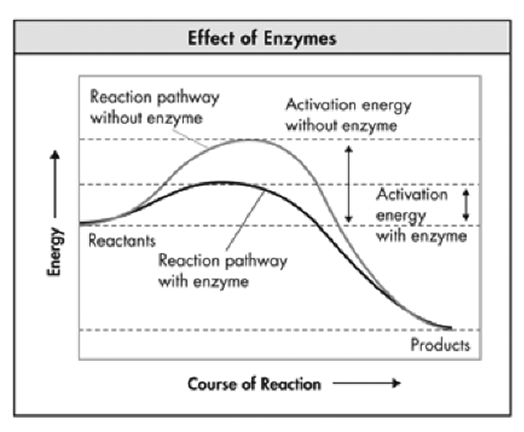
Meat tenderizer contains an enzyme that breaks down meat. If meat is coated with tenderizer and then placed in a refrigerator, how would the enzyme be affected?
It would break down the meat more slowly.
It would break down the meat more quickly.
It would change shape.
It would disintegrate.
A student conducts series of test to determine the identity of a molecule. The results show that the molecule can be broken down into amino acids. The molecule can be also be denatured if putting it a high temperature. What is the molecule?
DNA
RNA
Enzyme
Simple sugar
Golgi Apparatus
DNA in eukaryotic organisms can be found in _______
nucleus
nucleolus
ribosome
choloroplast
DNA in the prokaryotic organisms can be found in ________
cytoplasm
nucleus
ER
Vacoule
Rough ER are found in the cells which are actively synthesizing..
Lipids
Cholesterol
Proteins
Nucleic acids
Endoplasmic reticulum membrane which is associated with ribosomes is called_______
ER lumen
Smooth endoplasmic reticulum
Rough endoplasmic reticulum
Endosome

What organelle is seen at number 3?
nucleus
the rough ER
mitochondria
cell wall
Particle of movement from an area of lower concentration to an area of higher concentration.
Active transport
Passive transport
Particle of movement from an area of higher concentration to an area of lower concentration.
Active transport
Passive transport
Which type of passive transport focuses on the movement of water through the membrane?
Facilitated diffusion
Osmosis
Diffusion
Active transport needs a type membrane protein, so it can move big molecules against the concentration gradient.
protein pump
bulk transport
diffusion
osmosis

In the cell pictured, which way would water move?
Into the cell, causing the cell to swell
Out of the cell, causing the cell to shrink
In and out of the cell equally, keeping the shape the same

In the cell pictured, which way would water move?
Into the cell, causing the cell to swell
Out of the cell, causing the cell to shrink
In and out of the cell equally, keeping the shape the same

What will happen to the cell in this solution?
water will move out of the cell, so cell will shrink
water will move into of the cell, so cell will burst
water will move in and out of the cell

Active Transport
The overall reactions of photosynthesis are …
12 CO2 + 6 H2O → C6H12O6 + 12 O2 + 6 H2O.
C6H12O6 + 6 O2 + 6 H2O → 6 CO2 + 12 H2O.
6 CO2 + 6 H2O + sun energy → C6H12O6 + 6 O2
6 CO2 + 12 H2O → C6H12O6 + 12 O2.
Photosynthesis is ...
The process in which organisms convert/transfer energy from glucose to ATP.
The process in which organisms exchange carbon dioxide and oxygen in their lungs.
The process of taking a picture.
The process of plants converting/transferring solar energy to chemical energy to make their food.
The overall reactions of cell respiration are …
12 CO2 + 6 H2O → C6H12O6 + 12 O2 + 6 H2O.
C6H12O6 + 6 O2 → 6 CO2 + 6H2O + ATP.
6 CO2 + 6 H2O + sun energy → C6H12O6 + 6 O2
6 CO2 + 12 H2O → C6H12O6 + 12 O2.

Using the figure, between which parts of the molecule must the bonds be broken to form an ADP molecule?
All of the above
ADP is converted back to ATP when _______________________.
A student wants to conduct a photosynthesis experiment on four plants placed on a windowsill. Which of the following variables should be restricted to test the process of photosynthesis with the plants?
The amount of soil each plant receives
The amount of sunlight each plant recieves
The amount of fertilizer each plant receives
The amount of oxygen gas each plant recieves
There is a connection between photosynthesis and cellular respiration. The products from one provide the raw materials for the other. Which of the following products of photosynthesis are the starting material for cellular respiration?
glucose and oxygen
heat energy and ATP
Carbon dioxide and water
Light energy and chlorophyll

If conditions are anaerobic after glycolysis the pyruvic acid with undergo ______?
fermentation
Kreb's cycle
ETC
light reactions
This macromolecule provides chemical energy storage for quick use.
Example: A person eats it the night before running a marathon.


The elements that make up this macromolecule are Carbon, Hydrogen, Oxygen, and Nitrogen (C, H, O, N).
Carbohydrate
(monosaccharide)
Lipid
(fatty acid)
Protein
(amino acid)
Nucleic acid
(nucleotide)


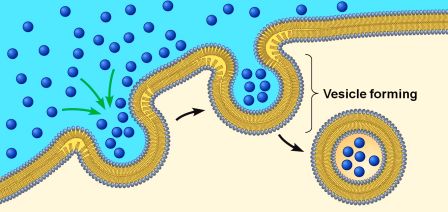
This image is an example of
diffusion
endocytosis
facilitated diffusion
osmosis

What is the relationship between the plant and the duck?
"A" represents oxygen produced by the duck and "B" represents carbon dioxide produced by the plant
"A" represents carbon dioxide produced by the plant and "B" represents oxygen produced by the duck
"A" represents oxygen produced by the plant and "B" represents carbon dioxide produced by the plant
"A" represents the sunlight received by the plant and "B" represents the oxygen produced by the duck

The shape of the active site ensuring that enzymes usually work with only one kind of substrate.
Enzyme Specificity
Products
Substrate
Enzymes
Cell membranes are described as selectively permeable.
Four students were asked to explain what this means. Which one is correct?
Student 1: Cell membranes prevent all materials from entering the cell.
Student 2: Cell membranes only provide structural support for the cell.
Student 3: Cell membranes regulate which substances can enter and exit the cell.
Student 4: Cell membranes allow water and water-soluble substances to enter the cell.

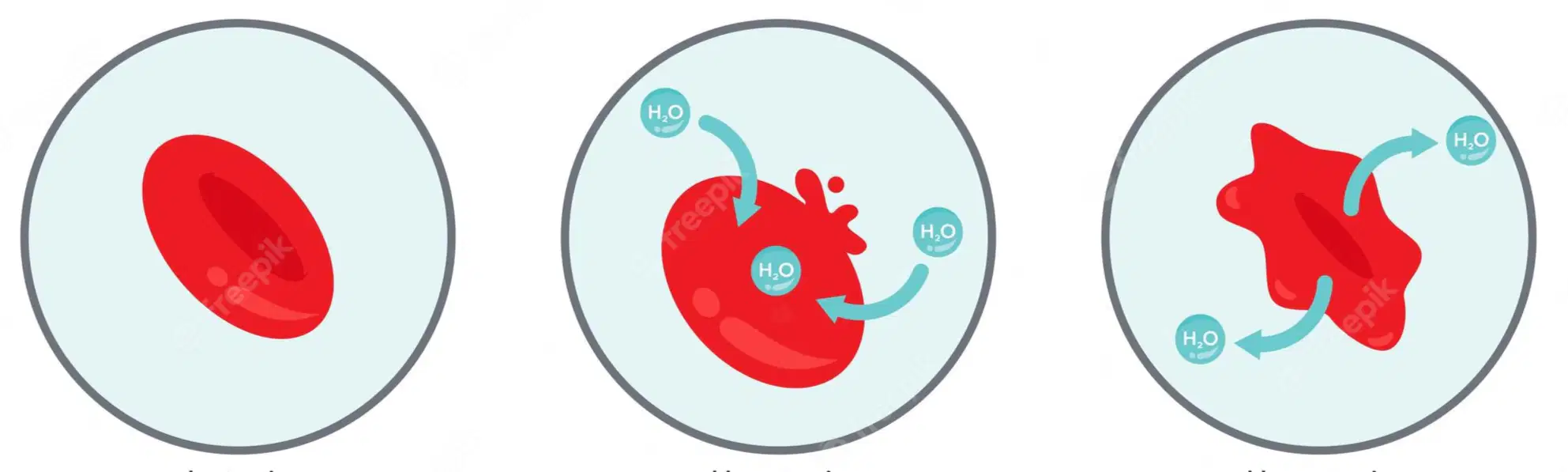
The water in red blood cells will ____ (Choose 3 correct answers)
be released if they are put in an hypertonic solution because of differences in solute concentrations
be released if they are put in an hypotonic solution because of the differences in solute concentrations
be absorbed if they are put in an isotonic solution because of the differences in solute concentration
be absorbed if they are put in an hypotonic solution because of the differences in solute concentrations.
be going into and out of the cells if they are put in an isotonic solution.
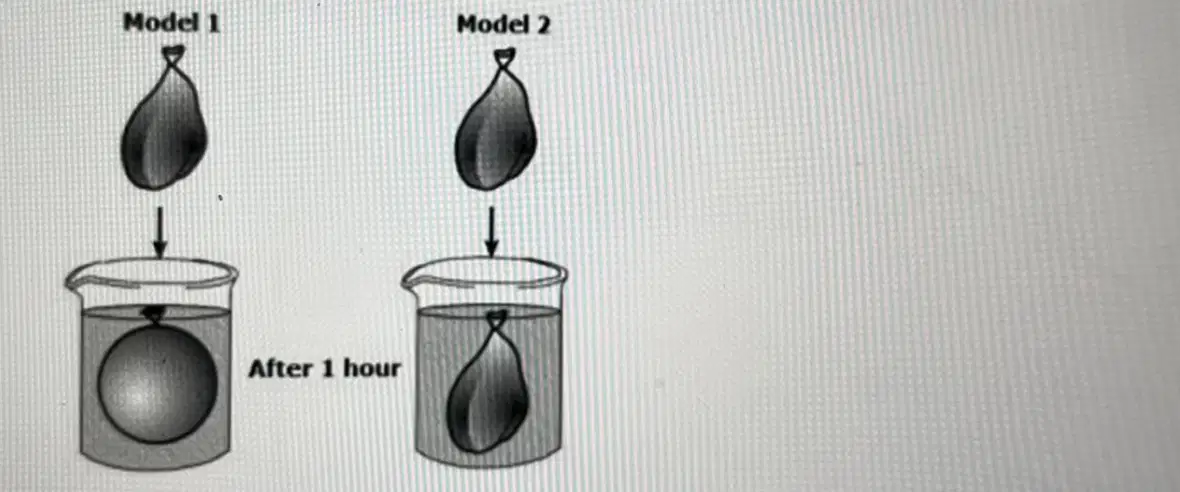
A student is given a dialysis bag filled with starch solution. Dialysis tubing is semipermeable just like a cell membrane. Water can travel across a semipermeable membrane but starch CANNOT. Which model BEST represents the results the student would expect to see if the dialysis bag filled with a starch solution is placed in distilled water for one hour?
Model 1 because the beaker solution is hypertonic, and water would move into
the dialysis bag.
Model 1 because the beaker solution is hypotonic, and water would move into of
the dialysis bag.
Model 2 because the beaker solution is hypertonic, and water would move out
the dialysis bag.
Model 2 because the beaker solution is isotonic, and water would move out of
the dialysis bag.
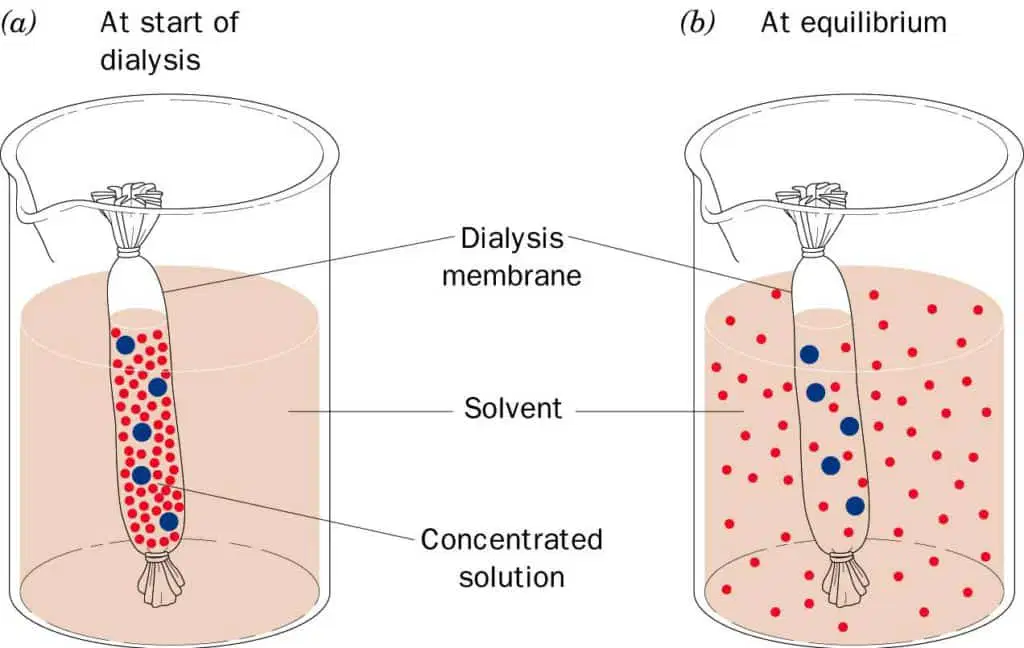
A student is trying to set up a cell transport lab.
The dialysis tube contains ONLY starch solution, and the water outside of the dialysis tube contains starch indicator (Iodine solution). Dialysis tube works like semi-permeable membrane.
After 20 minutes, the student observes that the inside of the dialysis tube turns black/dark purple. Which statement is correct based on the student's observation?
Water diffused into the dialysis tube because starch molecules were to big to diffuse out. This is an example of diffusion
Water diffused out of the dialysis tube because starch molecules were to big to diffuse in. This is an example of active transport
Water diffused out of the dialysis tube because starch molecules were to big to diffuse out. This is an example of active transport
Water diffused into of the dialysis tube because starch molecules were to big to diffuse out. This is an example active transport.
Which one of the macromolecules are instrumental in the cell membrane?
Carbohydrates
Lipids
Proteins
Nucleic acids
Which macromolecule has amino acids as monomers?
Carbohydrates
Lipids
Proteins
Nucleic acids
This macromolecules is responsible for providing our genetic material. Choose the macromolecule that best fits.
Carbohydrates
Lipids
Proteins
Nucleic acids
My monomers are glycerol and fatty acids. Which macromolecule am I?
Carbohydrates
Lipids
Proteins
Nucleic acids
My monomers are monosaccharides. Which macromolecule am I?
Carbohydrates
Lipids
Proteins
Nucleic acids
My monomers consist of a phosphate group, a sugar, and a nitrogenous base. Which macromolecule am I?
Carbohydrate
Lipids
Proteins
Nucleic Acids

Which macromolecule is structured this way?
Carbohydrates
Lipids
Proteins
Nucleic acids

Which macromolecule is structured in this way?
Carbohydrates
Lipids
Proteins
Nucleic acids