wayground logo

Free Printable Worksheets

NEW

Font size

S
M
L
XL
Worksheets

Biology 1 EOC Review

Total questions: 60

Worksheet time: 2hrs 37mins
Name
Class
Date
1.
The variable that is being measured or observed is called the _______________. Hint: this is the variable that is the result or effect 
a)
independent variable
b)
dependent variable
c)
control variable
2.
An experiment is performed on plants to see how different liquids affect plant growth. Each plant in the experiment is given a different liquid: water, apple juice, or milk. What variables should be kept constant/controlled? 
a)
type of plant, flower pot,  soil, and amount of sunlight
b)
water, apple juice, milk
c)
only the amount of sunlight
d)
type of plant only
3.
This variable in an experiment is the one being deliberately changed by the scientist. 
a)
dependent variable
b)
independent variable
c)
data
d)
control group
4.
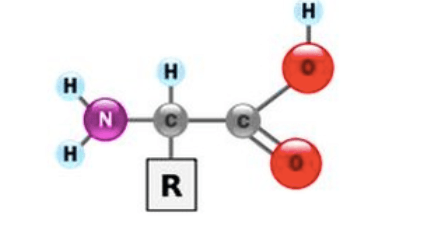
Which biomolecule is this a picture of?
a)
Protein
b)
Nucleic Acid
c)
Lipid
d)
Carbohydrate
5.
Which biomolecule is responsible for insulation and energy storage?
a)
Protein
b)
Nucleic Acid
c)
Lipid
d)
Carbohydrate
6.
Which biomolecule is your main source of energy?
a)
Nucleic Acid
b)
Protein
c)
Lipid
d)
Carbohydrate
7.

Which biomolecule turns iodine solution dark purple or black?

a)

complex carbohydrate (polysaccharide-starch)

b)

protein

c)

simple carbohydrate (monosaccharide)

d)

lipid

8.
Which biomolecule does Benedict's solution test for?
a)
simple carbohydrate (monosaccharides)
b)
complex carbohydrates (polysaccharides)
c)
proteins
d)
lipids
9.

Which reagent is used to test for lipids?

a)

Iodine (Lugol's) solution

b)

Benedict's solution

c)

Biuret solution

d)

Sudan III or IV solution

10.

Which reagent is used to test for proteins?

a)

Iodine (Lugol's) solution

b)

Benedict's solution

c)

Biuret solution

d)

Sudan III or IV solution

11.

Which of the following would be found in both eukaryotic AND prokaryotic cells?

a)

chloroplast

b)

ribosomes

c)

nucleus

d)

endoplasmic reticulum

12.
Eukaryotic cells and prokaryotic cells have some parts that are different.  Which of the following would you find only in a eukaryotic cell? 
a)
Membrane-bound organelles and a nucleus
b)
A nucleus and organelles without membranes
c)
 A cell membrane and organelles without membranes
d)
Membrane-bound organelles and DNA in cytoplasm 
13.
This organelle takes food and turns it into ENERGY for plant and animal cells.
a)
Chloroplast
b)
Mitochondria
c)
Lysosome
d)
Ribosome
14.
What organelle helps with cell digestion?
a)
Lysosomes
b)
Ribosomes
c)
Golgi Complex
d)
ER
15.
Which of the following statements best explains the overall purpose of MITOSIS?
a)
Asexual reproduction of somatic cells
b)
To produce gametes
16.
Process that produces four daughter cells.
a)
Mitosis
b)
Meiosis
c)
Both Mitosis and Meiosis
17.
Process that produces sex cells (gametes).
a)
Mitosis
b)
Meiosis
c)
Both Mitosis and Meiosis
18.
Produces genetically identical daughter cells.
a)
Mitosis
b)
Meiosis
c)
Both Mitosis and Meiosis
19.

What is produced during transcription (1st phase of protein synthesis) and carries DNA instructions to the ribosome?

a)

mRNA

b)

tRNA

c)

rRNA

d)

amino acids

20.

Which molecule "carries" amino acids during protein synthesis?

a)

DNA

b)

mRNA

c)

tRNA

21.

Which of these could be found in BOTH RNA & DNA?

a)

thymine + ribose + phosphate groups

b)

uracil + deoxyribose + phosphate groups

c)

guanine, cytosine + phosphate groups

22.

This is an example of ___________?

a)

Incomplete dominance

b)

Codominance

c)

Multiple Alleles

d)

Polygenic Inheritance

23.
What do you call the non-Mendelian inheritance pattern where both traits are dominant and both appear in the organism with heterozygous genotype?
a)
Codominance
b)
Incomplete dominance
c)
Polygenic traits
24.

What type of inheritance is shown in this pedigree?

a)

Autosomal Dominant

b)

Autosomal Recessive

c)

X-linked Dominant

d)

X-linked Recessive

25.

Which genetic abnormality is shown in this karyotype?

a)

Partial Addition

b)

Trisomy 18

c)

Trisomy 21 (Down Syndrome)

d)

Monosomy

26.
CO2 + H2O + Energy = C6H12O6 + O2  This is the equation for....
a)
Cellular Respiration
b)
Photosynthesis
27.
C6H12O6 + O2 = H2O + CO2 +Energy (ATP) is the equation for
a)
cellular respiration
b)
Photosynthesis
28.
The movement of MOLECULES from areas of high concentration to areas of low concentration.
a)
diffusion
b)
exocytosis
c)

endocytosis

d)
osmosis
29.
The movement of WATER MOLECULES from areas of high concentration to areas of low concentration.
a)
diffusion
b)
exocytosis
c)
endocytosis
d)
osmosis
30.
Aerobic respiration produces how many ATP molecules
a)
2
b)
26
c)
36
d)
50
31.

How many ATP are produced with anaerobic respiration?

a)

4

b)

36

c)

2

d)

32

32.
What is the original source of almost all energy in most ecosystems?
a)
carbohydrates
b)
sunlight
c)
water
d)
carbon
33.
The amount of energy that usually transfers from one trophic level to the next...
a)
10%
b)
20%
c)
80%
d)
50%
34.
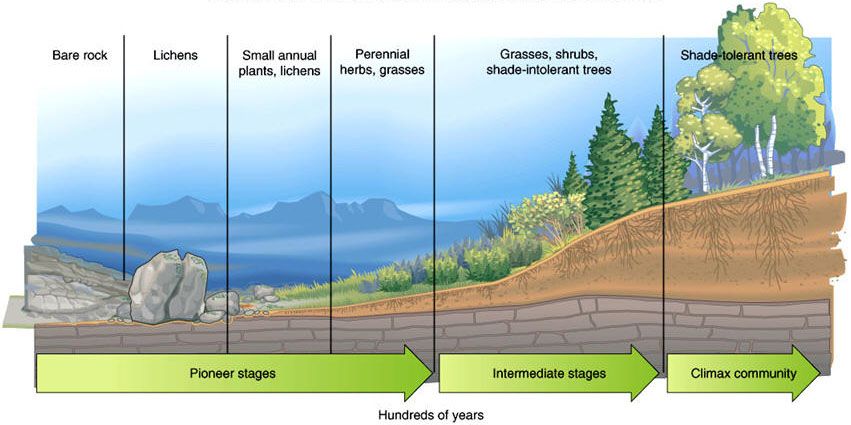
The picture shows what type of succession?
a)
primary
b)
secondary
c)
tertiary
d)
quadanary
35.
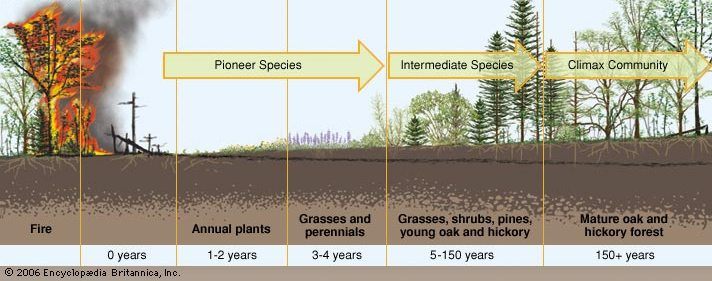
The picture shows what type of succession?
a)
primary
b)
secondary
c)
tertiary
d)
quadanary
36.
Which species’ DNA is most similar to the DNA of the toothed whale? 
a)
Hippopotamus 
b)
Baleen Whale
c)
Grazing Mammals
d)
Camels
37.

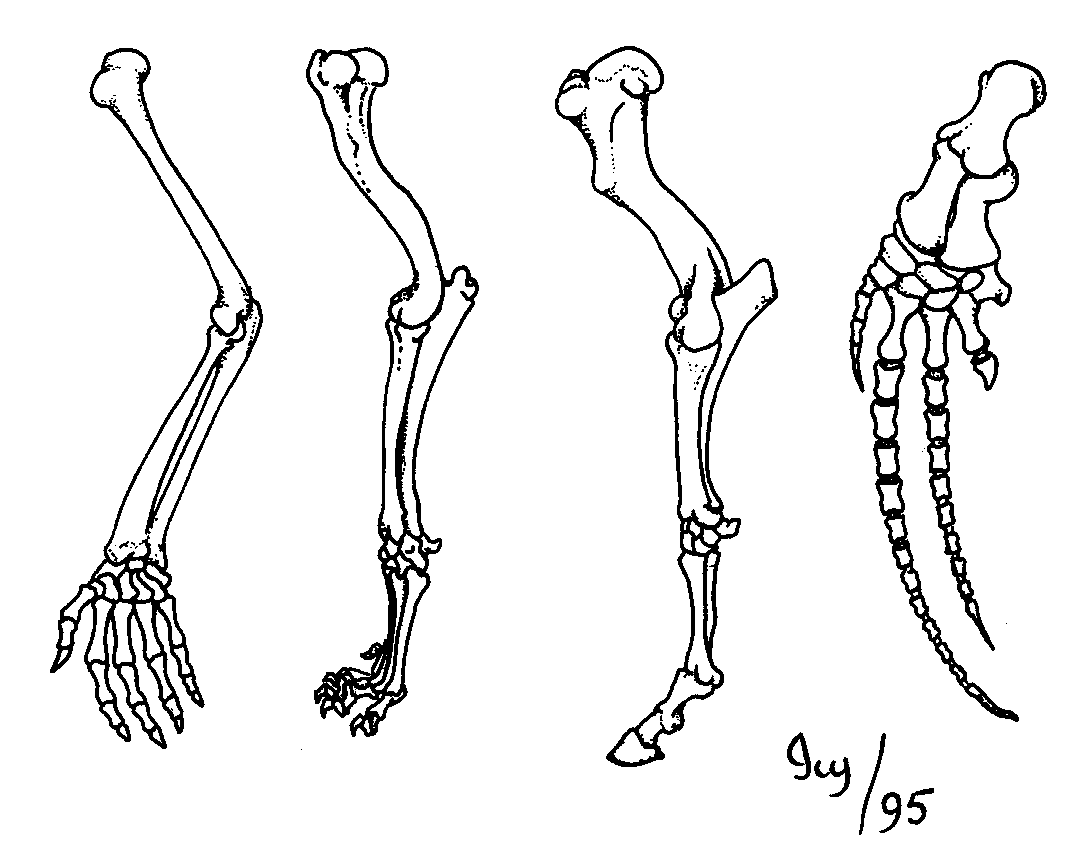
Structures with similar anatomy but have different functions; suggests that organisms share a common ancestry

a)

vestigial structures

b)

homologous structures

c)

analogous structures

d)

fossil

38.
An illustration and a dichotomous key are given. What is the correct classification for this organism?
a)
Class Insecta
b)
Order Amblygygi
c)
Order Araneae
d)
Order Scorpiones
39.

What type of inheritance is shown in this pedigree?

a)

Autosomal Dominant

b)

Autosomal Recessive

c)

X-linked Dominant

d)

X-linked Recessive

40.
What genotype is missing from this Punnett Square?
a)
RrYy
b)
RRYY
c)
rryy
d)
RrYY
41.
which of the following mutations results in the loss or addition of a single nucleotide, changing the DNA triplets
a)
missense
b)
nonsense
c)
frameshift
d)
silent
42.
What mutation has occurred here? 
T-G-A-C-C-A
T-G-A-G-C-A
a)
Substitution
b)
Deletion
c)
Insertion
d)
Frameshift 
43.
What type of chromosomal mutation is this?
a)
Inversion
b)
Translocation
c)
Deletion
d)
Duplication
44.
______________ produces the most ATP.
a)
photosnthesis
b)
aerobic respiration
c)
anaerobic respiration
d)
glycolysis
45.

How many ATP are produced in aerobic respiration?

a)

2

b)

28

c)

4

d)

36

46.
In which way are photosynthesis and cellular respiration different?
a)
Cellular respiration stores ATP, while photosynthesis releases ATP.
b)
Cellular respiration produces oxygen, while photosynthesis uses oxygen.
c)
Photosynthesis releases energy, while cellular respiration stores energy.
d)
Photosynthesis used carbon dioxide, while cellular respiration produces carbon dioxide.
47.
What is cellular respiration?
a)
the breakdown of glucose  to release ATP
b)
the breakdown of glucose to release NADH
c)
the breakdown of glucose to release FADH
d)
the breakdown of glucose to release carbon
48.
An animal cell placed in a hypertonic (salty) solution will
a)
Shrink
b)
Swell
c)
Stay the same
49.
Water will move INTO a cell in a(n) _______ solution
a)
Hypertonic
b)
Hypotonic
c)
Isotonic
d)
Gravy
50.
When both inside and outside of a cell have the same amount of water it is said that the cell has reached a state of ___________.
a)
osmosis
b)
equilibrium
c)
diffusion
51.
Which gas is removed from the atmosphere during photosynthesis?
a)
hydrogen
b)
oxygen
c)
nitrogen
d)
carbon dioxide
52.
What causes genetic variation in meiosis?
a)
chromosomes lining up
b)
crossing over of chromosomes
c)
separation of chromosomes
d)
chromosomes pulling apart
53.
Unlike mitosis, meiosis in male mammals results in the formation of
a)
one haploid gamete
b)
three diploid gametes
c)
four diploid gametes
d)
four haploid gametes
54.
If a somatic cell in a butterfly contains 24 chromosomes, a butterfly egg would contain
a)
3
b)
6
c)
12
d)
24
55.
For what reason does DNA copy itself?
a)
to replace worn out DNA
b)
so cells can divide
c)
to export DNA to other parts of the body
d)
more DNA is better
56.

In what phase of the cell cycle does DNA replication take place?

a)

Interphase (G1)

b)

Interphase (S)

c)

Interphase (G2)

d)

Mitosis

57.
DNA holds the code for
a)
lipids
b)
carbohydrates
c)
protein
d)
sugar
58.
Which macromolecule is shown?
 
a)
lipid
b)
protein
c)
nucleic acid
d)
carbohydrate
59.
Which macromolecule is shown?
a)
lipid
b)
protein
c)
nucleic acid
d)
carbohydrate
60.
Which macromolecule is this?
a)
carbohydrates
b)
lipids
c)
proteins
d)
nucleic acids