
Font size
 Worksheets
Nervous system divisions, glial cells and neuron conduction
Total questions: 97
Worksheet time: 2hrs 30mins
The two major parts of the nervous system are the
brain and spinal cord
central and somatic nervous systems
sympathetic and parasympathetic systems.
peripheral and central nervous systems
The speed of neural conduction between neurons will result in difficulties in speaking, vision, and balance if the ________________ insulating the axons is damaged or removed.
Axon
Myelin Sheath
Nucleus
Brain
Dr. Vazquez is examining a cell from the nervous system of an animal. He notices that at one end of the cell body is a long, fibrous strand of tissue. He immediately recognizes this as an axon that is responsible for
carrying signals away from the cell body
receiving signals from other cells and carrying them toward the cell body.
determining the speed at which an action potential will travel
determining whether the cell inhibits or excites neighboring neurons
Which of the following is regulated by the autonomic nervous system
Breathing
Kicking a soccer ball
Balancing on one foot
Raising your hand
Dopamine and Serotonin are examples of _______________
Axon
Neurotransmitters
Somatic Nerves
Autonomic Nerves
Neurotransmitters are ______________ that travel across the ______________ to another cell.
electrical signals; receptors
electrical signals; synapse
chemicals; receptors
chemicals; synapse
The branch like figures that receive impulses & conducts them to the cell body
Dendrite
Axon
Cell Body
Myelin Sheath
The two parts of the Peripheral Nervous System
Brain and Spinal Cord
Somatic and Autonomic
Systematic and Brain
Spinal cord and Autonomic
The ____________ is part of the peripheral nervous system and controls our senses.
Systemic
Autonomic
Somatic
Autonomous

What is number 3 pointing at on the neuron?
Dendrite
Axon
Myelin Sheath
Soma

What part of the neuron is number 4 pointing at?
Dendrite
Axon Terminal
Axon
Myelin Sheath

Which part of the Neuron is number 1 pointing at?
Dendrite
Cell body
Axon
Nucleus
What is the name of the electrical impulse that neurons send?
Voltage
Current
Action potential
Resistance
What is the resting membrane potential of a neuron?
-70 mV
-55 mV
+40 mV
+75 mV
What is the purpose of the sodium-potassium pump in a neuron?
To create a difference in charge between the inside and outside of the neuron
To open voltage-gated channels
To repolarize the neuron
To trigger action potentials
What happens when a neuron reaches its threshold potential?
The neuron returns to its resting state
The neuron undergoes hyperpolarization
Voltage-gated sodium channels open
Voltage-gated potassium channels open
What is the purpose of the refractory period in a neuron?
To prevent signals from traveling in both directions down the axon
To maintain the resting membrane potential
To trigger the sodium-potassium pump
To open ligand-gated channels
What is the term for a small, localized change in membrane potential?
Action potential
Graded potential
Hyperpolarization
Repolarization
What is the purpose of myelin sheath on an axon?
To increase the frequency of action potentials
To decrease the conduction velocity of action potentials
To prevent action potentials from occurring
To increase the conduction velocity of action potentials
What is the term for the propagation of an action potential from one gap in the myelin to the next?
Saltatory conduction
Voltage-gated conduction
Graded conduction
Mechanically-gated conduction
What happens during repolarization of a neuron?
Voltage-gated sodium channels open
Voltage-gated potassium channels open
The neuron undergoes hyperpolarization
The sodium-potassium pump is activated
What is the main force behind every action, thought, and feeling in the body?
Voltage
Current
Resistance
Action potentials
the end of a neuron that make synaptic connections with another nerve cell or with an effector cell (e.g. muscle cell or gland cell) through the use of neurotransmitter release
(a)
longer process that carries the information away from the cell in the form of a bioelectric signal (impulse)
(a)
chemical that an axon secretes, into a synaptic cleft, that stimulates or inhibits an effector or other neuron
(a)
The part of the neuron that picks up stimuli from surrounding cells.
axon
axon terminal
dendrite
neuron

At resting potential, the ion distribution inside and outside of a neuron is such that _______ ions are most abundant outside of the cell, while _______ ions are most abundant on the inside of the cell.
potassium, sodium
sodium, potassium
calcium, potassium
calcium, sodium
At resting potential, the ion distribution inside and outside of a neuron is such that _______ ions are most abundant outside of the cell, while _______ ions are most abundant on the inside of the cell.
potassium, sodium
sodium, potassium
calcium, potassium
calcium, sodium

In the figure above, what is occurring at step #4?
Neuron receives enough stimulation, threshold is reached
K+ (potassium) open and NA+ channels open, action potential begins
K+ (potassium) channels open allowing K+ to diffuse out, repolarizing the membrane
Na+ are being pumped out and the K+ are being pumped into the cell

What is the structure labeled C in the picture?
dendrite
axon
cell body
axon terminal

What is the structure labeled H in the picture?
Nucleus
Schwann cell
Node of Ranvier
myelin sheath

Which number on the graph represents the resting state?
1
2
3
4

When a neuron is depolarized, what are the first channels to open?
sodium gated channels
potassium gated channels
sodium and potassium gated channels open at the same time
both sodium and potassium gated channels are already open, as it is passive transport

When a neuron is resting, the inside of the axon has a ________ charge.
positive
negative
neutral

-70 mV is the measure of the ______.
threshold potential
action potential
resting state/potential
end point potential
An action potential going from positive to negative is called______.
hyperpolarization
depolarization
repolarization
polarization

What number on the graph represents the depolarization phase?
1
2
3
4
5

What number on the graph represents the hyperpolarization phase?
1
2
3
4
5

Saltatory conduction is faster than regular conduction.
true
False
What does the myelin sheath do during saltatory conduction?
allow Na+ channels to open more easily
prevents polarization
makes the action potential jump
nothing occurs; there is no change

What number on the graph represents the period where action potential is occurring?
1,2
2,3
3,4
4,5

What structure is needed for saltatory conduction?
A
E
C
F
Which of the following is not part of the peripheral nervous system?
Cranial nerves
Spinal nerves
The autonomic nervous system
Spinal cord
Schwann cells and oligodendrocytes share a common function.
True
False
Gray matter is gray because it does not have myelin.
True
False
The outer membrane of a Schwann cell is called the
neurilemma
myelin
node of Ranvier.
glia
Saltatory conduction
is called “saltatory” because it is caused by sodium chloride.
is much slower than nonsaltatory conduction.
occurs only in the dendrites.
occurs only in the axons.
Which type of glia cell produces myelin for cells in the brain?
microglia
Oligodendrocytes
astrocytes
neurolemma
Sensory neurons are also called
efferent neurons
afferent neurons
interneurons
glia cells
Axons:
A usually branched
Carry nerve impulses to the cell body
Carry nerve impulses away from the cell body
Have receptors for neurotransmitters

1. sodium ions diffuse inward; the membrane becomes depolarized
2. sodium channels open
3. potassium ions diffuse outward while sodium is actively transported out of the cell; the membrane becomes repolarized
4. potassium channels open
The three main activities performed by the nervous system to maintain homeostasis are sensory, motor and
secretion
visual
intergration
temperature control
The cells that support nervous tissue function and form about 90% of the substance of the brain are called
neuroglia
schwann cells
neurons
fibroblasts
White matter in nervous tissue receives its coloration from
neuroglia
myelin sheaths
neurilemma
dendtrites
A neuron that conducts an impulse away from the CNS is called a/an
unipolar neuron
motor neuron
sensory neuron
association neuron
The gap between two communicating neurons is termed:
synaptic cleft
cell body
effector
Schwann cell
node of Ranvier
The ability to respond to a stimulus is termed:
polarized
irritability
depolarized
conductivity
all-or-none response
When your sympathetic nervous system is very active, which of the following would happen?
heart rate decreases
sweat increases
immune system response increases
digestion increases
Which of the following is TRUE?
Parasympathetic nervous system is known as the “fight or flight” response.
Norepinephrine and adrenaline are neurotransmitters used by the parasympathetic nervous system to relax the body.
Digestion and immune response increase when the parasympathetic nervous system is active.
Sympathetic and parasympathetic branches of the nervous system are part of the somatic nervous system.
When your parasympathetic nervous system is very active, which of the following would happen?
heart rate decreases
sweat increases
immune system response decreases
digestion decreases
Which types of neurons make up the Peripheral Nervous System?
sensory and interneurons
motor and sensory neurons
interneurons and motor neurons
only interneurons
Which of the following is TRUE regarding the somatic nervous system?
it controls involuntary actions
it controls voluntary actions
it activates the “rest or digest” response
it actives the “fight or flight” response
Which action would activate the sympathetic nervous system the most?
throwing a ball
walking
being chased by a bear
eating breakfast
A decreased heart rate is a sign of which nervous system division?
parasympathetic
somatic
sensory
sympathetic
Why do people get sleepy after eating a big meal?
The sugar from food stimulates the sympathetic nervous system.
Digestion is increased by the parasympathetic nervous system, which also relaxes the body.
The body needs to maintain homeostasis of blood sugar concentration, so the body shuts down.
The body switches over to the parasympathetic system because the sympathetic system has been active for too long.
Which one coordinates the inner organs?
somatic nervous system
autonomic nervous system
Output travels along which pathway?
Efferent
Afferent
Effector
Affector
Messages about stimuli travel to the central nervous system along which pathway?
Efferent
Afferent
Effector
Affector
Which of these best describes glial cells?
The cells that send signals to the brain
Cells that support the neurons
Any cell in the nervous system
Cells that make muscles move
If we did not have this type of cell, bacteria could more easily infiltrate our brain tissue:
Satellite cells
Oligodendrocytes
Microglia
Schwann cells
Which type of cell is located between neurons and capillaries to control what enters the cells from the blood?
Astrocytes
Oligodendrocytes
Schwann cells
Satellite cells

Which type of cell is circled?
Schwann cells
Astrocytes
Microglia
Ependymal cells
Which type of glial cells form a protective barrier around the brain and spinal cord tissues?
Microglia
Oligodendrocytes
Schwann cells
Ependymal cells
Which two types of cells produce myelin coverings around the nerves?
Microglia and astrocytes
Schwann cells and satellite cells
Schwann cells and oligodendrocytes
Oligodendrocytes and astrocytes
Which type of cells provide protective cushioning around the neuron cell body?
Microglia
Satellite cells
Neural cells
Ependymal cells
Which type of glial cells are found in the Peripheral Nervous System (PNS)?
Astrocytes
Microglia
Schwann cells
Oligodendrocytes
Which type of cells are found in the Central Nervous System (CNS)?
Astrocytes
Microglia
Ependymal cells
All of these
Support cells for the neurons that hold them in place and provide nutrients to keep the neurons healthy
Axon
Cell Body
Dendrite
Glial cell
Microglial cell


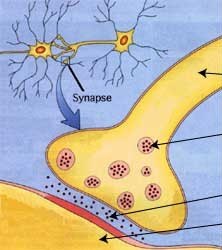
The location of neurotransmitters
axon terminals
dendrites
Schwann cells
cell body


If I step on a nail...what type of neuron take that signal TO the CENTRAL NERVOUS SYSTEM?
interneurons
motor
sensory
receptors

If I step on a nail...what type of neurons send the response from the brain to my muscles?
motor
interneurons
sensory
not neurons, muscle tissue sends the response
When multiple graded potentials meet at the axon hillock at the same time from a variety of locations in the receptive region.
hyperpolarization
Spatial summation
temporal summation
saltatory conduction
The sodium channels close and the potassium channels are open. The membrane potential drops from 30mV to -70mV
depolarization
hyperpolarization
repolarization
resting state

