Worksheets
23.24 Unit 2 Review
Total questions: 100
Worksheet time: 56mins
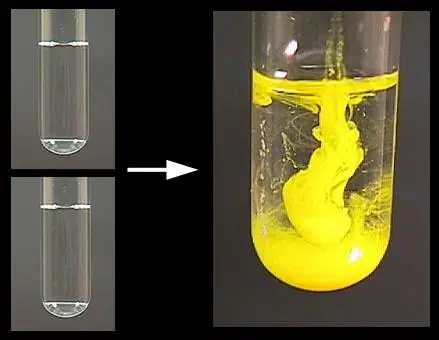
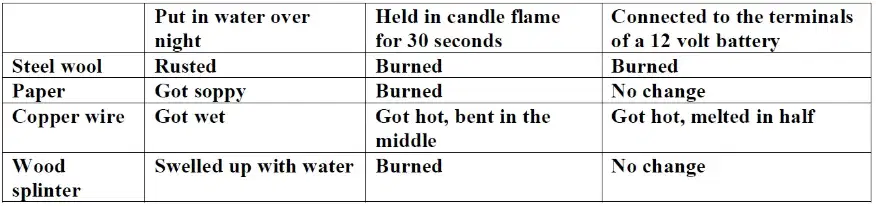

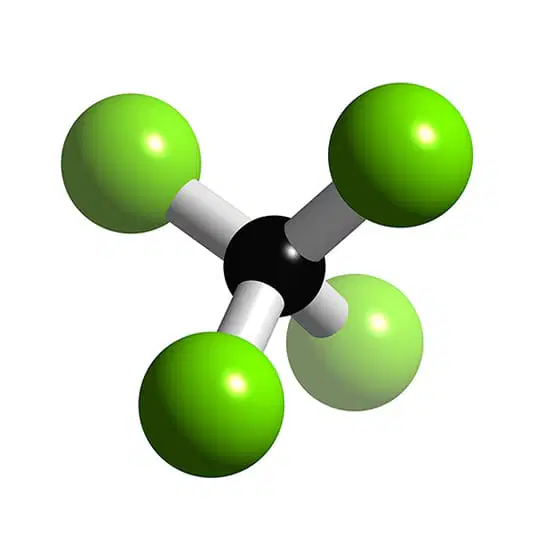
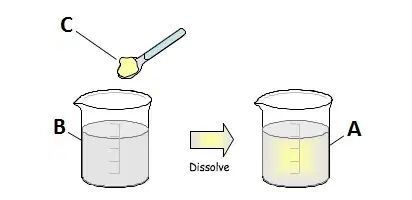
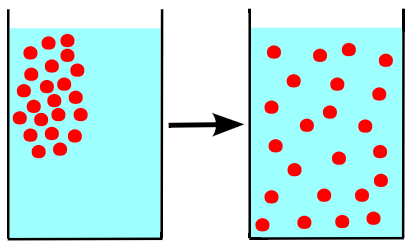
When sugar is dissolved in water, we create a solution. In a homogenous solution,the particles are ____________ .
Large
Medium
Small
None of the above
A student mixes yellow powder with water. Which observation would prove a CHEMICAL change occurred?
The powder DISSOLVED in the water
The water turned the COLOR yellow
The bag's TEMPERATURE changed
The STATE OF MATTER changed
Which of the following options provides evidence of a CHEMICAL change?
Wood is burned releasing ash and smoke
Rocks separate when soil is sifted
Water turns to ice when you put it in the freezer
Salt dissolves in water
Which of the following examples provides evidence of a PHYSICAL change?
Wood is burned and releases ash and smoke
Iron rusts over time
When mixed, baking soda and vinegar form gas bubbles
A piece of paper changes shape when you rip it up

A white tablet is dropped into water. The water becomes cloudy and bubbles are produced. What type of change has occurred?
Physical change
Chemical change
No change
Which observations prove a chemical change has occurred?
Dissolving and expected color change
Mixing and dissolving
State of matter change and boiling water bubbles
Unexpected color change and temperature change
When mixing milk and vinegar, a white, chunky, solid substance is formed. What has occurred?
Physical change: state of matter
Chemical change: production of a solid (precipitate)
Physical change: freezing
Chemical change: rust
When iron is exposed to air over a long period of time, it forms rust. This is an example of what?
A new substance forming
Color change: no new substance
Shape change: no new substance
Burning: a new substance
When iron is exposed to air over a long period of time, it forms rust. This is an example of what?
A new substance forming
Color change: no new substance
Shape change: no new substance
Burning: a new substance
A physical change...
Changes the physical properties of an object, but does not create a new substance.
Creates a new substance and cannot be undone.

Is this an example of a physical or chemical change?
Physical
Chemical

Is this an example of a physical or chemical change?
Physical
Chemical

Is this an example of a physical or chemical change?
Physical
Chemical

Is this an example of a physical or chemical change?
Physical
Chemical

Melting a chocolate bar is a...
Physical change
Chemical change
Which of the following is NOT an example of a physical change?
Crumpling paper
Sharpening a pencil
Clothes shrinking in the dryer
Milk turning sour
A change in which NEW substances are formed.
Chemical change
Physical change
Which of these processes is always exothermic?
A. evaporation
B. burning
C. insulation
D. melting

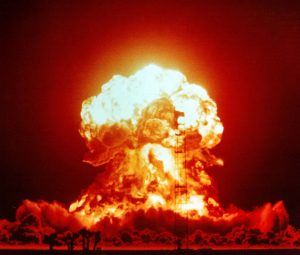
Can matter be created or destroyed during a chemical reaction?
Yes
No
Sometimes
I don't know
All the matter is made up of
Atoms
Mixtures
Compounds
Reactions
An element is formed by
Atoms of the same kind
Atoms of different kind
compounds and atoms
Compounds and mixtures
IS a substance formed by atoms of a different kind
Element
Compound
Mixtures
Atoms
A substance formed by different compounds and elements is a
Pure substance
Mixture
Element
Compound
An element is a pure substance
True
False

Which diagram represents an element?
Diagram (a)
Diagram (b)
Diagram (c)
None of the diagrams represent the parts of an element.

Which of the following represents a compound?
Diagram (a)
Diagram (b)
Diagram (c)
All of the diagrams represent the parts of a compound.

What type of material is pictured?
Element
Compound
Homogeneous mixture
Heterogeneous mixture

What type of matter is shown in this particle diagram?
Element
Compound
Mixture of Elements
Mixture of Compounds
Mixture of Elements and Compounds

What type of matter is shown in this particle diagram?
Element
Compound
Mixture of Elements
Mixture of Compounds
Mixture of Elements and Compounds

What type of matter is shown in this particle diagram?
Element
Compound
Mixture of Elements
Mixture of Compounds
Mixture of Elements and Compounds

What type of matter is shown in this particle diagram?
Diatomic Element
Compound
Mixture of Elements
Mixture of Compounds
Mixture of Elements and Compounds
What phenomenon occurs when dispersed particle scatter light?
Side effect
Tyndall Effect
Shaft Effect
No Effect
An example of suspension is ____ .
Sugar and water
Sand and water
Salt and water
Water
It is homogeneous mixture because the substance or the material is soluble or miscible when mixed with water.
Colloid
Suspension
Solution
Ingredients
A ______ is any material that can be dissolved by liquid.
solvent
element
mixture
A _______ is any substance that can dissolve a solute.
solvent
solute
solution
molecule
A ___________ mixture has only one phase that is uniformly distributed throughout the mixture
heterogeneous
compound
element
Is glass breaking a chemical or physical change?
What is a chemical change?
How two chemicals react with one another when combined
A property that we can measure or observe with our 5 senses or other tools
When two chemicals react with one another to form a new substance
When a change occurs but it does not result in the formation of a new substance
A student mixes yellow powder with water. Which observation would prove a CHEMICAL change occurred?
The powder DISSOLVED in the water
The water turned the COLOR yellow
The water's TEMPERATURE changed
The STATE OF MATTER changed
Which of the following examples provides evidence of a PHYSICAL change?
Wood is burned and releases ash and smoke
Iron rusts over time
When mixed, baking soda and vinegar form gas bubbles
Boiling water bubbles when heated
When mixing milk and vinegar, a white, chunky, solid substance is formed. What has occurred?
Physical change: state of matter
Chemical change: precipitate
Physical change: freezing
Chemical change: new gas
Reacts with acid: Chemical or Physical Property
Sour taste: Chemical or Physical Property
Which one of these is a chemical property?
Melting point
Boiling point
Color
Toxicity
Reacts with water: Chemical or Physical Property
Formation of a precipitate ... Physical or Chemical Change?
Physical
Chemical

How would an 18 karat gold ring be classified?
homogeneous mixture
pure substance
heterogeneous mixture
None of them
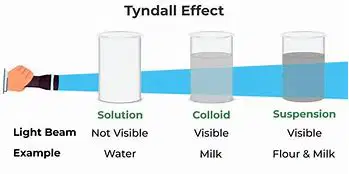
Which of the following shows the Tyndall effect?
Water
Milk
Honey
Oxygen gas
Between 1770 and 1789 a French chemist, Antoine Lavoisier carried out experiments and discovered
that in all experiments the mass of the materials will change when creating new substances that were not there before. This led him to create the Law of Conservation of Matter.
that all experiments experience chemical and physical changes which led him to create the Law of Conservation of Matter.
that all experiments performed in outer space orbit behaved differently than on Earth which led to chaos theory.
that in an experiment, particles are never created or destroyed which led to the Law of Conservation of Matter (aka: Law of Conservation of Mass).
True or False? Sugar (C12H22O11) and salt (NaCl) are both compounds.
True
False
Both
Neither
Dissolving table salt and sugar in water, water is considered to be the ____________ as water is the substance doing the dissolving.
Solvent
Solute
Suspension
Solution
Physical or Chemical property? Tearing a piece of paper
Physical
Chemical
Physical or Chemical change? The light given off when a candle burns
Physical
Chemical
What two types of matter are considered chemically pure substances?
elements and compounds
solutions and mixtures
solutions and compounds
elements and mixtures
Heterogeneous or Homogeneous? Salad Dressing
Heterogeneous
Homogeneous
Physical or Chemical change? Candle wax melting when a candle burns.
Physical
Chemical
Physical or Chemical change? Candle wax melting when a candle burns.
Physical
Chemical
When you dissolve sugar cubes in tea, the sugar cube is the __________.
solute
solvent
Which of the following can be dissolved?
salt
sand
black pepper powder
pebbles