Font size
 Worksheets
Metabolism
Total questions: 25
Worksheet time: 15mins
The hydrolysis of ATP is ________. Select all that apply!
Endergonic
Exergonic
Spontaneous
Non-spontaneous
Which of the following is true of an exergonic reaction? Select all that apply!
It has a positive Gibbs free energy value
Potential energy is higher in reactants
Energy is absorbed
It has a negative Gibbs free energy value
Which type of reaction is characterized by ΔG < 0?
A) Endergonic
B) Exergonic
C) Both
D) Neither
Fill in the blank: The process of powering a car involves breaking chemical bonds in gas, which yields high-quality energy and produces _______ energy to move the car.
Potential
Kinetic
Thermal
Electrical
What is the most common energy carrier molecule?
Glucose
Starch
ADP
ATP
In an endergonic reaction, energy is __________________
Released
Absorbed
Which type of reaction has high energy reactants and low energy products?
Endergonic
Exergonic
Both
Neither
REVIEW: what organelle creates ATP?
Chloroplast
Nucleus
Vesicle
Mitochondria
What is the transition state?
When old bonds are broken and new ones are formed
When the enzyme binds to the reactants
The energy required to break down the reactants
The energy required to form new products
The most stable state of the reaction
What type of reaction would this be?
A --> B + C
Anabolic
Catabolic
What type of reaction would this be?
A + B --> C
Anabolic
Catabolic
Net intake of energy
endergonic
exergonic
A + B --> AB + Energy
This is what type of reaction?
exergonic
endergonic

Which statement is true according to the image?
A: endergonic; B: exergonic
A: exothermic; B: endothermic
A: exergonic; B: endergonic
A: endothermic; B: exothermic

The process of ADP + P being turned back into ATP is
Anabolic and Endergonic
Anabolic and Exergonic
Catabolic and Endergonic
Catabolic and Exergonic

The process of breaking ATP to make ADP + P is
Anabolic and Endergonic
Anabolic and Exergonic
Catabolic and Endergonic
Catabolic and Exergonic
Diffusion is ____.
Endergonic
Exergonic
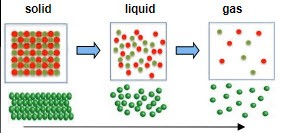
Given the change of phase:
CO2(g) —> CO2(s)
As CO2(g) changes to CO2(s), the entropy of the system
decreases
increases
remains the same