
 Worksheets
HPU6-CFA #1 Review
Total questions: 50
Worksheet time: 25mins
What will students be able to do according to the success criteria?
Name the major divisions of the nervous system and their functions
Identify the color of different nerves
List all brain diseases
Describe the history of the nervous system
What are students expected to compare and contrast in the autonomic nervous system?
The actions of the parasympathetic and sympathetic divisions
The size of different neurons
The speed of nerve impulses
The color of nerve cells
What is the primary function of the nervous system?
Circulate blood throughout the body
Detect impulses from the senses; control center
Break down food for energy
Protect the body from infections
Which of the following is a major organ of the nervous system?
Heart
Liver
Brain
Stomach
Which organ is NOT part of the nervous system?
Spinal cord
Nerves
Senses
Kidneys
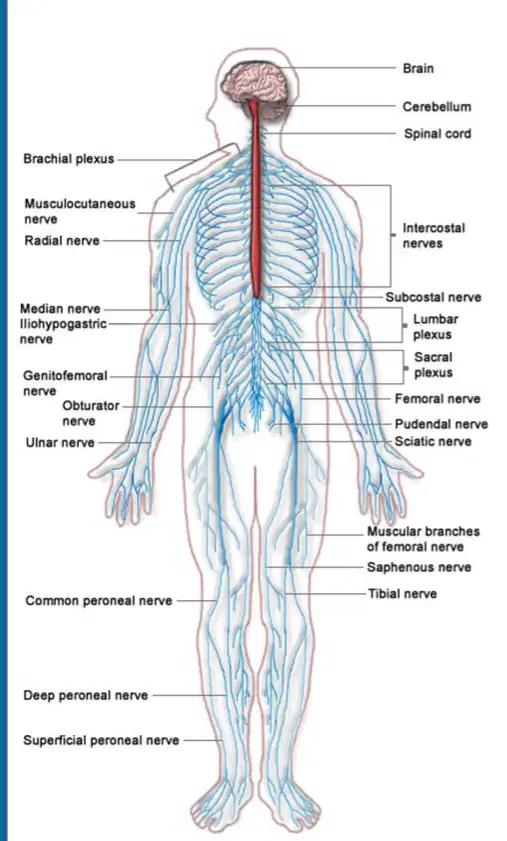
What are the two main divisions of the nervous system?
Central nervous system and autonomic nervous system
Central nervous system and peripheral nervous system
Peripheral nervous system and somatic nervous system
Autonomic nervous system and somatic nervous system
What does the central nervous system consist of?
Brain and spinal cord
Cranial nerves and spinal nerves
Brain and cranial nerves
Spinal cord and peripheral nerves
What is the Peripheral Nervous System (PNS) comprised of?
All nerves in the brain and spinal cord
All nerves not in the brain or spinal cord
Only sensory nerves
Only motor nerves
Which division of the Peripheral Nervous System sends impulses from the senses to the CNS?
Motor (Efferent) Division
Autonomic Nervous System
Sensory (Afferent) Division
Somatic Nervous System
What is the function of the Sympathetic Division?
Reduces sympathetic response
Used in emergency situations ("fight or flight")
Controls voluntary muscle movements
Sends impulses from the CNS to muscles
Which division of the Peripheral Nervous System is responsible for involuntary muscle control?
Somatic Nervous System
Sensory (Afferent) Division
Autonomic Nervous System
Motor (Efferent) Division
What is the primary role of the nervous system in the body?
It acts as the master control center.
It produces hormones.
It digests food.
It circulates blood.
What is the function of sensory input in the nervous system?
It processes and interprets information.
It activates muscles or glands.
It detects changes inside and outside the body.
It circulates nutrients.
What does the integration function of the nervous system involve?
Detecting changes in the environment
Processing and interpreting information
Activating muscles
Producing hormones
What is the response function of the nervous system responsible for?
Detecting stimuli
Processing information
Activation of muscles or glands
Producing energy
The nervous system controls the body by receiving sensory _______ from the _______ nervous system.
input, peripheral
output, central
input, autonomic
output, somatic
Integrating messages in the _______ nervous system, and responding through the _______ nervous system.
central, peripheral
peripheral, central
autonomic, somatic
somatic, autonomic
The PNS is divided into _______ (voluntary) and _______ (involuntary) sections.
somatic, autonomic
autonomic, somatic
central, peripheral
peripheral, central
What is the main learning intention for students regarding nervous tissue?
To memorize the names of all neurons
To learn about the structure and function of the two main types of nervous tissue
To understand the history of neuroscience
To study the anatomy of the human body
What is one of the success criteria for students learning about the nervous system?
To memorize the periodic table
To describe and diagram the structures of various types of neurons
To write an essay on brain development
To list all the bones in the human body
What are students expected to investigate according to the success criteria?
The history of the nervous system
The basic functions of neuroglial cells
The chemical composition of neurons
The evolution of the human brain
What percentage of nerve cells are neurons?
10%
50%
90%
100%
What is the primary function of neuroglia?
Conduct impulses
Support, insulate, and protect neurons
Transmit signals
Store information
Which type of nerve cell makes up 90% of nerve cells?
Neurons
Neuroglia
Axons
Dendrites
What is the main part of a neuron that contains the nucleus, cytoplasm, and organelles?
Axon
Cell body
Dendrites
Myelin sheath
What extends outward from the cell body of a neuron?
Nucleus
Organelles
Processes
Cytoplasm
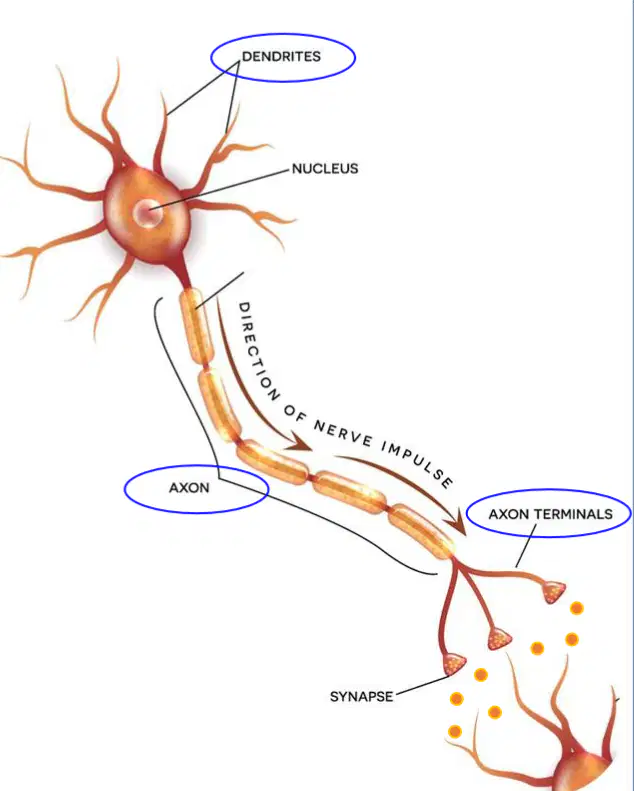
What is the function of dendrites in a neuron?
Send impulses away from the cell body
Bring impulses towards the cell body
Release neurotransmitters
Connect neurons to muscles
What do axon terminals release to pass impulses to the next neuron?
Hormones
Enzymes
Neurotransmitters
Proteins
Which part of the neuron sends impulses away from the cell body?
Dendrites
Axons
Synapse
Nucleus
Which type of neuron has only one process extending from the cell body?
Unipolar neurons
Bipolar neurons
Multipolar neurons
Interneurons
What is the function of afferent neurons?
Carry impulses toward the CNS
Carry impulses away from the CNS
Connect afferent and efferent neurons
Transmit signals between neurons
How many processes do bipolar neurons have?
One
Two
Three
Many
Which type of neuron connects afferent and efferent neurons?
Unipolar neurons
Bipolar neurons
Interneurons
Multipolar neurons
Neurons are essential cells for carrying _______ around the body.
nutrients
impulses
oxygen
hormones
Neurons can be classified by the number of __________ they have.
processes
functions
bodies
impulses
Neurons can also be classified by their __________.
size
color
function
location
What is the function of myelin in axons?
It acts as a waxy insulation.
It provides nutrients to the axon.
It helps in the production of neurotransmitters.
It forms the cell membrane.
Which type of cell wraps around the axon to form myelin?
Schwann cell
Neuron
Astrocyte
Oligodendrocyte
What is the outer layer of the Schwann cell called?
Neurilemma
Axolemma
Endoneurium
Perineurium
What is the function of myelin in the nervous system?
It slows down nerve impulses.
It helps nerve impulses to travel more quickly.
It blocks nerve impulses.
It generates nerve impulses.
What are the myelin wrappings collectively called?
Axon
Synapse
Myelin sheath
Dendrites
What forms the myelin sheath?
Axon terminals
Schwann cells
Dendrites
Synapses
What are the gaps in the myelin sheath called?
Synapses
Axon terminals
Nodes of Ranvier
Dendrites
What is the primary function of astrocytes in the central nervous system?
Provide immune response
Support and anchor neurons to surrounding capillaries
Secrete and circulate cerebrospinal fluid
Provide myelin insulation to neurons
Which type of neuroglial cell provides an immune response in the central nervous system?
Astrocytes
Microglia
Ependymal cells
Oligodendrocytes
What is the role of ependymal cells in the central nervous system?
Support neurons
Provide immune response
Secrete and circulate cerebrospinal fluid
Provide myelin insulation
Which neuroglial cell type provides myelin insulation to neurons in the central nervous system?
Astrocytes
Microglia
Ependymal cells
Oligodendrocytes
What is the function of satellite cells in the peripheral nervous system?
Provide myelin insulation to neurons
Support and anchor neurons
Transmit nerve impulses
Produce neurotransmitters
What role do Schwann cells play in the peripheral nervous system?
Support and anchor neurons
Transmit nerve impulses
Provide myelin insulation to neurons
Produce neurotransmitters
Neurons pass _________ to or from the CNS. The _________ is covered by a myelin _________, which is formed by _________ cells. Neuroglia help to produce this insulation or support & _________ neurons, provide _________ response or secrete cerebrospinal fluid.
impulses, axon, sheath, Schwann, anchor, immune
axon, impulses, Schwann, sheath, immune, anchor
Schwann, sheath, axon, impulses, immune, anchor
sheath, Schwann, impulses, axon, anchor, immune

