wayground logo

Free Printable Worksheets

Font size

S
M
L
XL
Worksheets

Cell Practice Test

Total questions: 54

Worksheet time: 28mins
Name
Class
Date
1.
A number of scientists made contributions to the cell theory. Which scientists was the first to identify cells in a slice of cork from a cork tree?
a)
Anton van Leeuwenhoek
b)
Matthias Schleiden
c)
Robert Hooke
d)
Theordor Schwann
2.
Which of the following statements is part of the cell theory?
a)
Cells are composed mostly of empty space.
b)
Cells are generally large enough to be seen with the unaided eye.
c)
All cells are produced from existing cells.
d)
Only animals are made up of cells.
3.
The cells of all organisms contain DNA. In cells of which of the following groups is the cellular DNA enclosed in a nucleus? (select all that apply)
a)
bacteria
b)
eukaryotes
c)
prokaryotes
4.
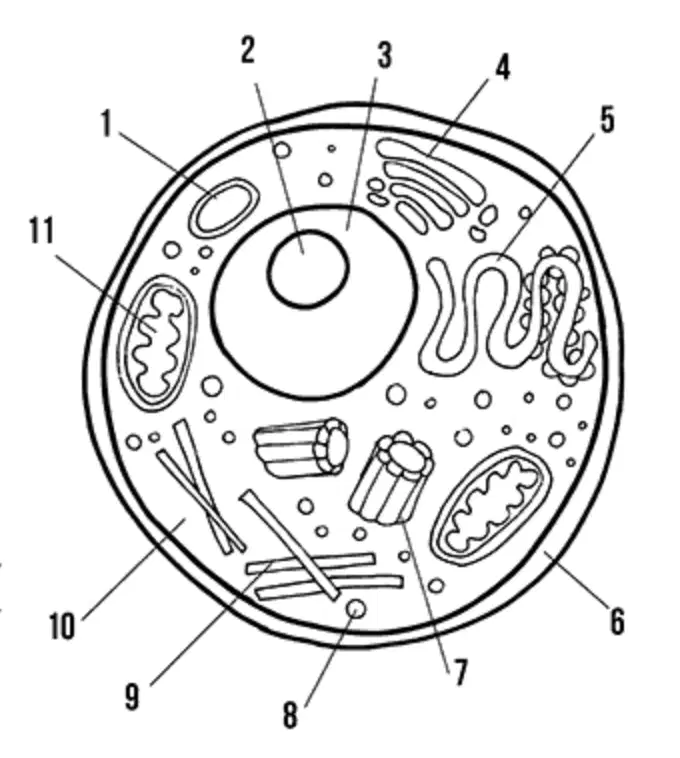
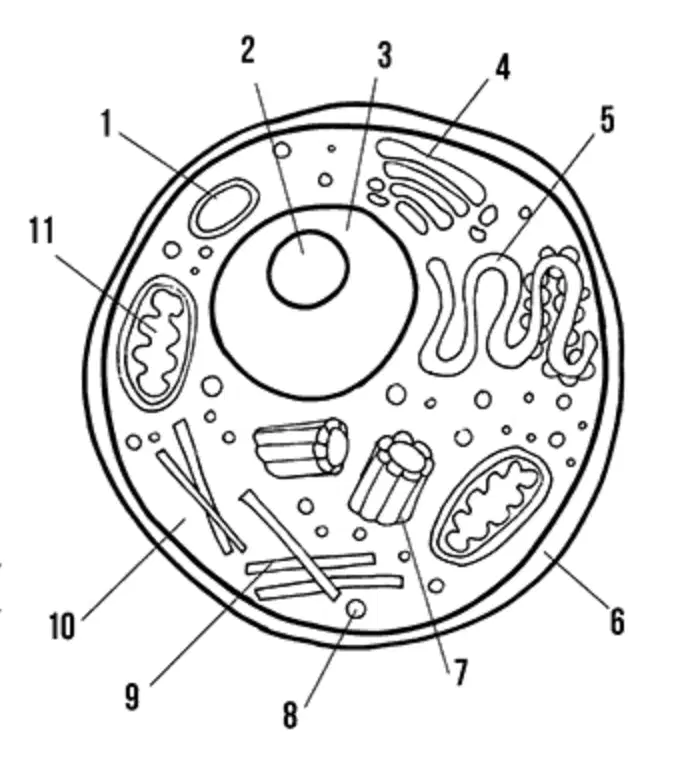
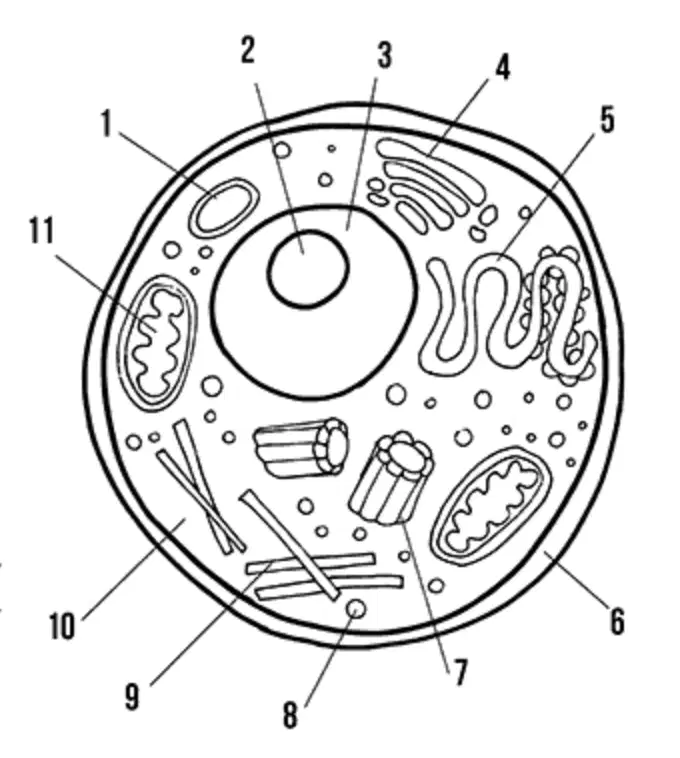
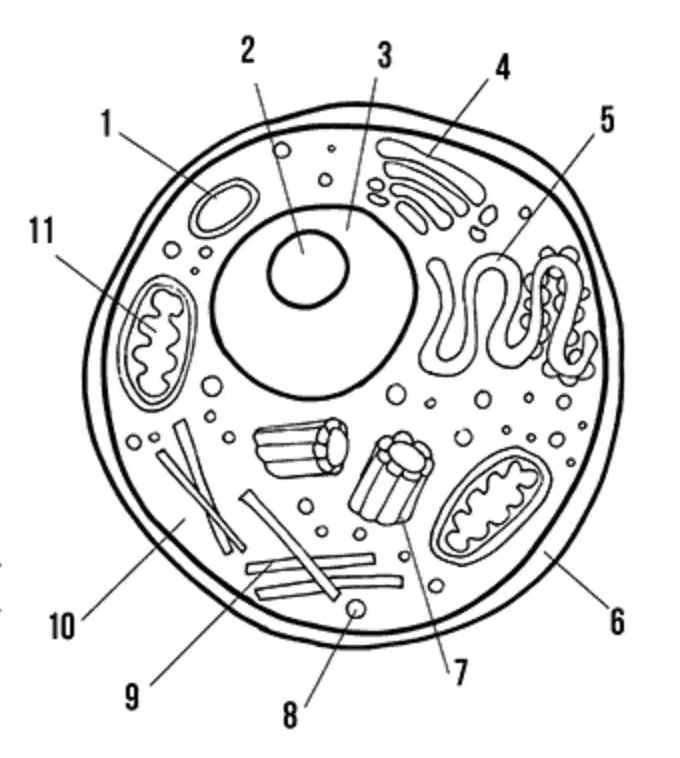
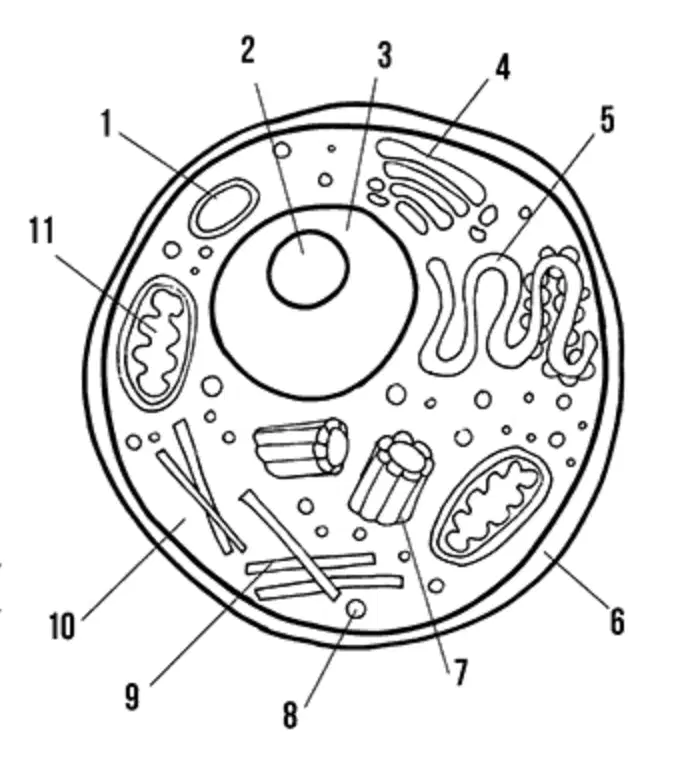
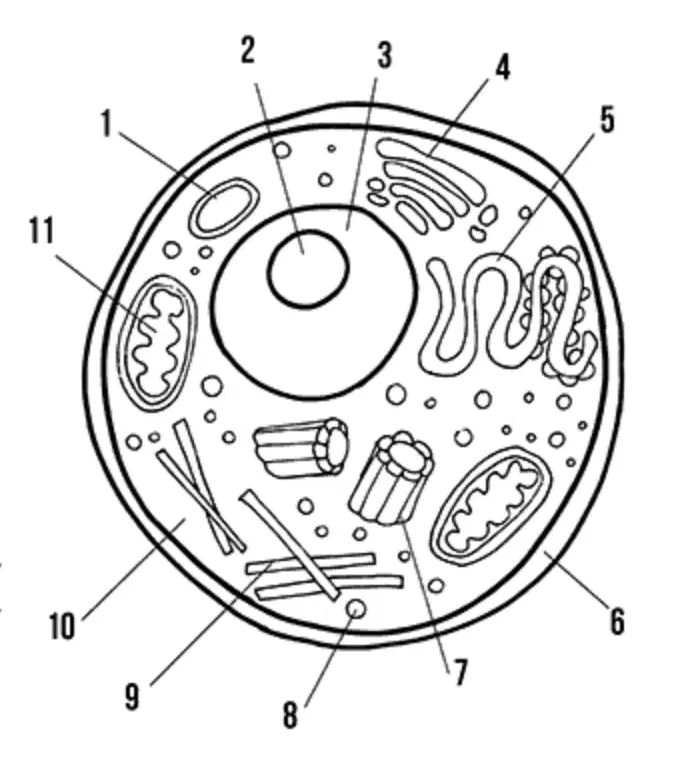
A model of a cell is shown. This cell is....
a)
prokarotic
b)
eukaryotic
5.
Lysosomes, the recycling centers of the cell, are organelles that contain enzymes. Which of the following is a function of lysosomes?
a)
They build lipids, carbohydrates and proteins
b)
They package lipids, carbohydrated and proteins
c)
They break down lipids, carbohydrates and proteins
6.
Which of the following structures are typically present in both plant and animal cells?
a)
cell walls
b)
centrioles
c)
chloroplasts
d)
mitochondria
7.
Which organelles allow plants to support heavy stuctures, such as leaves and flowers?
a)
the vacuoles, because they fill with fluid and provide rigidity
b)
the chloroplasts, because they convert sunlight into chemical energy
c)
the cell membranes, because they regulate what enters and leaves the cell
8.
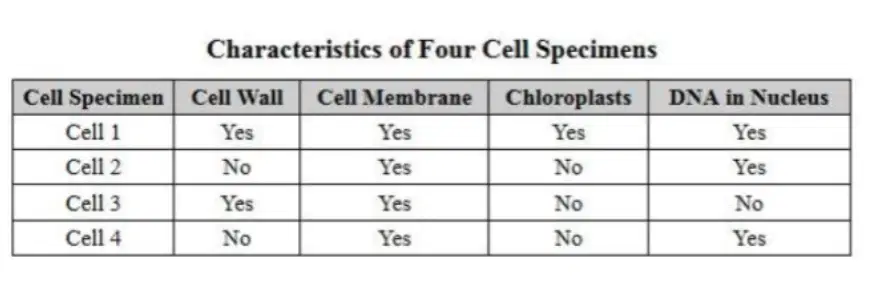
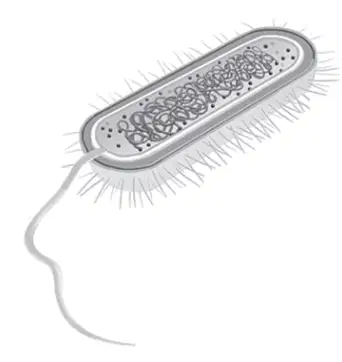
A group of students studied four different cell specimens under a microscope and recorded information about each in this table. Which cell is a prokaryote?
a)
Cell 1
b)
Cell 2
c)
Cell 3
d)
Cell 4
9.
Which pair of organelles works together to give structure and support to animal cells?
a)
cell wall and cytoplasm
b)
cell membrane and cytoskeleton
c)
cytoskeleton and golgi complex
10.
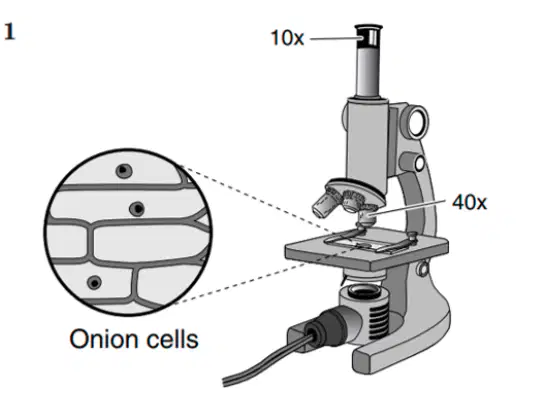
What is the total magnification used to view the onion cells in the microscope pictured?
a)
10
b)
40
c)
400
11.
Which characteristic of prokaryotic organisms makes them different from eukaryotes?
a)
Prokaryotic cells do not have membrane-bound organelles
b)
Prokaryotes have ribosomes.
c)
Prokaryotes have DNA.
12.
The rough ER is so names because it has an abundance of __________________ on it.
a)
mitochondria
b)
lysosomes
c)
ribosomes
d)
golgi bodies
13.
Because they have chloroplasts for energy production, plant cells lack mitochondria.
a)
True
b)
False
14.
Identify the three main components of a eukaryotic cell.
a)
cytoskeleton, cell membrane and organelles
b)
cytoplasm, cell membrane and organelles
c)
cytoplasm, plasma membrane and nucleus
15.
Which term describes how the plasma/cell membrane controls what enters and exits the cell?
a)
semi-permeable
b)
permeable
c)
semisaturated
16.
What is the form of genetic material in a non-dividing cell?
a)
chromosomes
b)
nucleolus
c)
chromatin
17.
Describe the structure of the nuclear envelope.
a)
It is double layered with pores.
b)
It is a single layered and solid.
c)
It is single layered with pores.
18.
What is the function of the nucleolus?
a)
It makes protein.
b)
It makes ribosomes.
c)
It is single layered with pores.
19.
Which organelle is the site of protein synthesis?
a)
vacuole
b)
mitochondria
c)
golgi body
d)
ribosomes
20.
Which organelle and function is correctly matched?
a)
Smooth ER--makes proteins
b)
Golgi Apparatus---Processing and Packaging material
c)
Ribosomes---movement
21.
Which of the following would NOT be found in the cyptoplasm?
a)
chromatin
b)
endoplasmic reticulum
c)
mitochondria
22.
Prokaryotic Cell contains..... (mark all that apply)
a)
Cell Membrane
b)
Cell Wall
c)
Ribosome
d)
Nucleus
e)
Chloroplasts
23.
Eukaryotic ANIMAL Cell contains..... (mark all that apply)
a)
Cell Membrane
b)
Nucleus
c)
Mitochondria
d)
Ribosome
e)
Centriole
24.
The cells of animals are prokaryotic.
a)
True
b)
False
25.
Plant Cells contain cilia and flagella to help with movement.
a)
True
b)
False
26.
The nucleus is the boss/brain of the cell.
a)
True
b)
False
27.
There is a cell membrane around all cells.
a)
True
b)
False
28.
Chromosomes are found in the nucleus.
a)
True
b)
False
29.

The molecule that provides energy for cellular processes is called ATP.

a)
True
b)
False
30.

The Cell Theory:

  1. 1. All living organisms are composed of one or more ​ (a)   . (Unicellular or Multicellular)

  2. 2. All cells arise from ​ (b)   cells. (Not from Spontaneous Generation)

  3. 3. Cells are the structural and functional unit of ​ (c)   . (Nothing living smaller than a Cell)
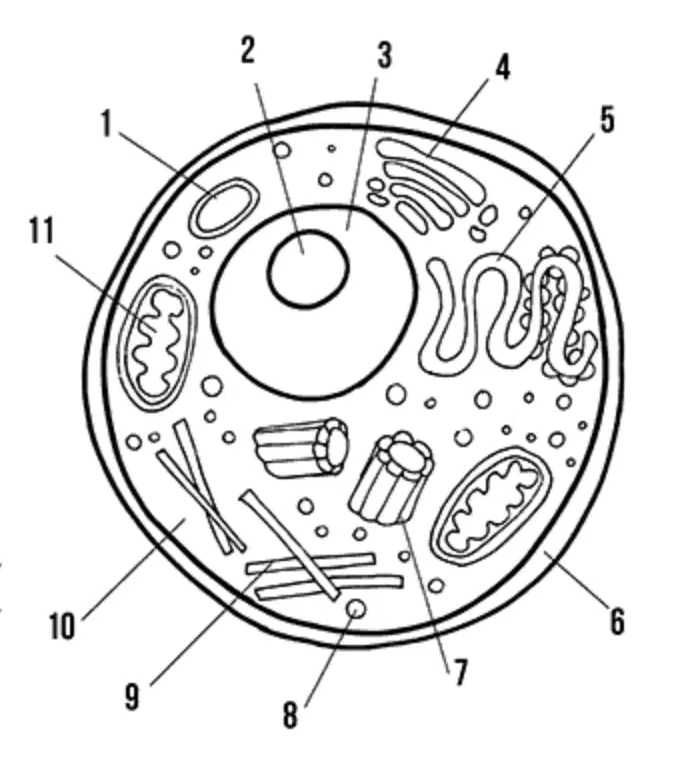
Choose from the below words
cells
preexisting
life
31.

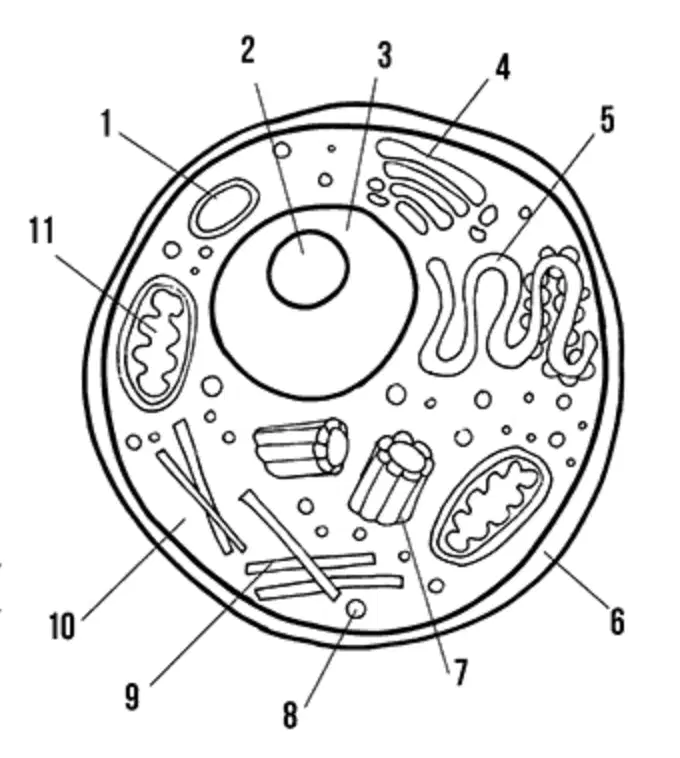
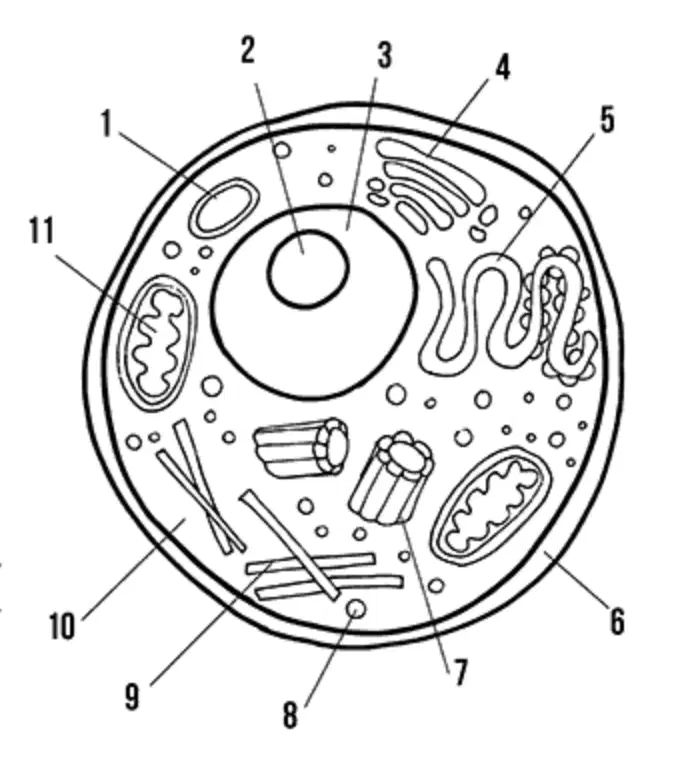
What is Number 1?

a)

Ribosomes

b)

Nucleolus

c)

Mitochondria

d)

Lysosomes

32.

What is number 3?

a)

Chloroplast

b)

Cytoplasm

c)

Nucleus

d)

Ribosomes

33.

What is number 4? (Packaging Center of Cell)

a)

Rough Endoplasmic Reticulum

b)

Golgi Apparatus

c)

Vacuole

d)

Lysosomes

34.

What surrounds the animal cell?

a)

Cell Wall

b)

Capsule

c)

Cell Membrane

d)

Nothing

35.

What is number 10?

a)

Ribosomes

b)

Nucleus

c)

Organelles

d)

Cytoplasm

36.

What is number 11?

a)

Chloroplasts

b)

Mitochondria

c)

Cytoplasm

d)

Ribosomes

37.

Which part converts energy stored in food(glucose) into a form the cell can use (ATP)?

a)

Mitochondria

b)

Nucleus

c)

Ribosomes

d)

Lysosomes

38.

Which part does not contain ribosomes? It makes fat-based molecules called lipids that are used to make membranes.

a)

Nucleus

b)

Golgi Apparatus

c)

Smooth Endoplasmic Reticulum

d)

Mitochondria

39.

Which part is located near the nucleus and contains ribosomes on its surface? (It is involved in making and processing proteins.)

a)

Golgi Apparatus

b)

Rough Endoplasmic Reticulum

c)

Mitochondria

d)

Lysosomes

40.

Check all that apply: The cell wall provides.....

a)

support

b)

protection

c)

water storage

d)

homeostasis

41.

Check all that apply: what is the function of the central vacuole

a)

Storage

b)

Turgor Pressure

c)

makes energy

d)

makes sugar

42.

Plant cells are...

a)

Eukaryotic and Multicellular

b)

Prokaryotic and Multicellular

c)

Eukaryotic and Unicellular

d)

Eukaryotic and Multicellular or Unicellular

43.

Identify structure E in the diagram

a)

Chloroplast

b)

Nucleus

c)

Mitochondrion

d)

Vacuole

44.

Contains chlorophyl and makes food from sunlight

a)

Chloroplast

b)

Cytoplasm

c)

Mitochondria

d)

Golgi Bodies

45.

Which of the following contains DNA surrounded by a nuclear envelope?

a)

Eukaryotic

b)

Prokaryotic

46.

Which of the following contains membrane-bound organelles?

a)

Eukaryotic

b)

Prokaryotic

47.

Archaebacteria and Eubacteria

a)

Eukaryotic

b)

Prokaryotic

48.

Animals, Plants, Fungi, and Protista

a)

Eukaryotic

b)

Prokaryotic

49.

Which of the following contains a circular piece of DNA floating in the cytoplasm?

a)

Eukaryotic

b)

Prokaryotic

50.

Which of the following contains ribosomes, a cell wall, and a cell membrane?

a)

Eukaryotic

b)

Prokaryotic

c)

Both

51.

Which of the following contains nucleic acid?

a)

Eukaryotic

b)

Prokaryotic

c)

Both

52.

Which of the following contains mitochondria, ER, and Golgi bodies?

a)

Eukaryotic

b)

Prokaryotic

53.

Which of the following are larger cells and are found composing multicellular organisms?

a)

Eukaryotic

b)

Prokaryotic

54.

Which of the following are always unicellular?

a)

Eukaryotic

b)

Prokaryotic