Wayground logo

Free Printable Worksheets

Font size

S
M
L
XL
Worksheets

Weather Patterns Review

Total questions: 75

Worksheet time: 2hrs 23mins

Name
Class
Date
1.

Warm air is ______ dense than cool air. Warm air rises and cool air sinks.

a)

less

b)

more

2.
rapidly moving cold air  mass runs into a warm air mass the cold air slides under the warm air. This is called a  .....
a)
cold front
b)
warm front
c)
stationary front
3.
When a warm air mass gently slides on top of a cold air mass, and you have drizzly rain and then warmer weather, what type of front is it?
a)
warm front
b)
cold front
c)
occluded front
d)
stationary front
4.
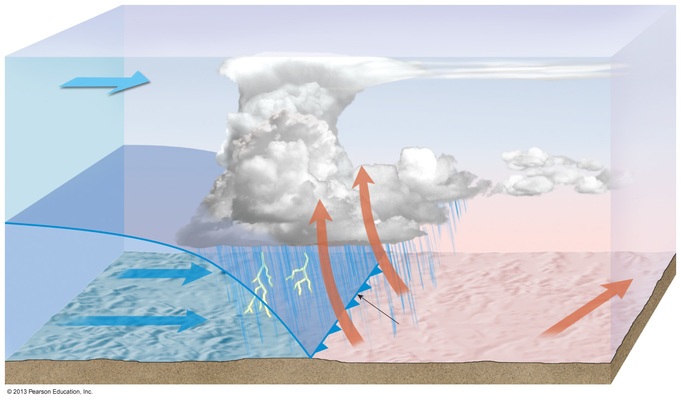
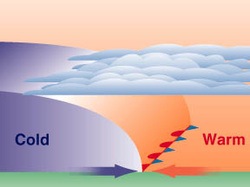
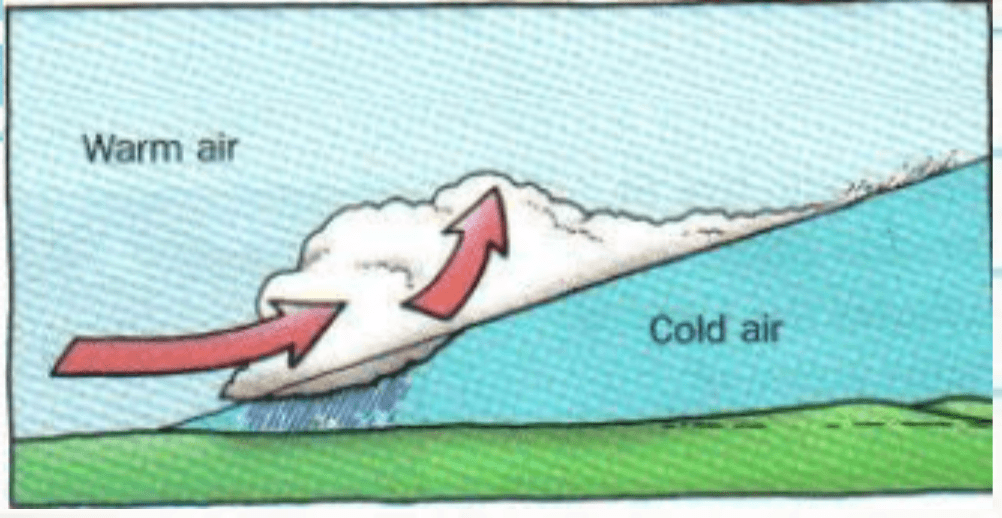
What type of storm front is this? 
a)
warm front
b)
cold front
c)
stationary front
d)
occluded front
5.
A front is
a)
where warm air is cooling at earth's surface
b)
a line where hot and cold air are separating
c)
a line where two different air masses meet
d)
where cold air is rising and forming rain clouds
6.
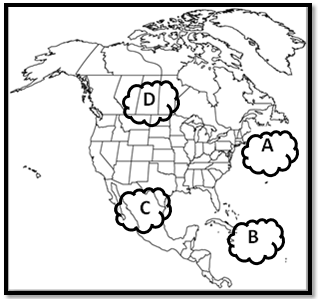
Which type of air would you find at air mass D?
a)
cold, dry
b)
warm, humid
c)
warm, dry
d)
cold, humid
7.
This is the symbol for a... 
a)
Cold Front
b)
Warm Front
c)
Stationary Front
d)
Occluded Front 
8.
This is the symbol for a... 
a)
Stationary Front
b)
Occluded Front
c)
Cold Front
d)
Warm Front
9.
This is the symbol for a... 
a)
Stationary Front
b)
Occluded Front
c)
Cold Front
d)
Warm Front 
10.
Identify the type of front that is shown in the image.
a)
Occluded Front
b)
Cold Front
c)
Stationary Front
d)
Warm Front
11.
A dry and cold air mass would be...
a)
Maritime polar
b)
Continental polar
c)
Maritime tropical
d)
Continental tropical
12.
A wet and hot air mass would be a...
a)
Maritime tropical
b)
Maritime polar
c)
Continental polar
d)
Continental tropical
13.

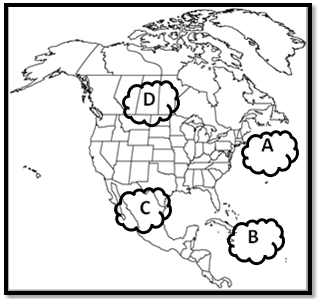
Which type of air would you find at air mass B?

a)

cold, dry

b)

warm, humid

c)

warm, dry

d)

cold, humid

14.

Should bring nice weather

a)

Low pressure

b)

Cold front

c)

Warm front

d)

High pressure

15.

Which of the following best describes the surface wind circulation around the center of a Low pressure system (as seen from above)?

a)

counterclockwise and spiraling outward

b)

counterclockwise and spiraling inward

c)

clockwise and spiraling outward

d)

clockwise and spiraling inward

16.

The density of the air ______ as you go up in the atmosphere.

a)

increases

b)

decreases

c)

stays the same

17.

What type of weather will you see along a cold front?

a)

Thunderstorms

b)

Sunny skies

c)

Gentle rain

d)

No weather

18.

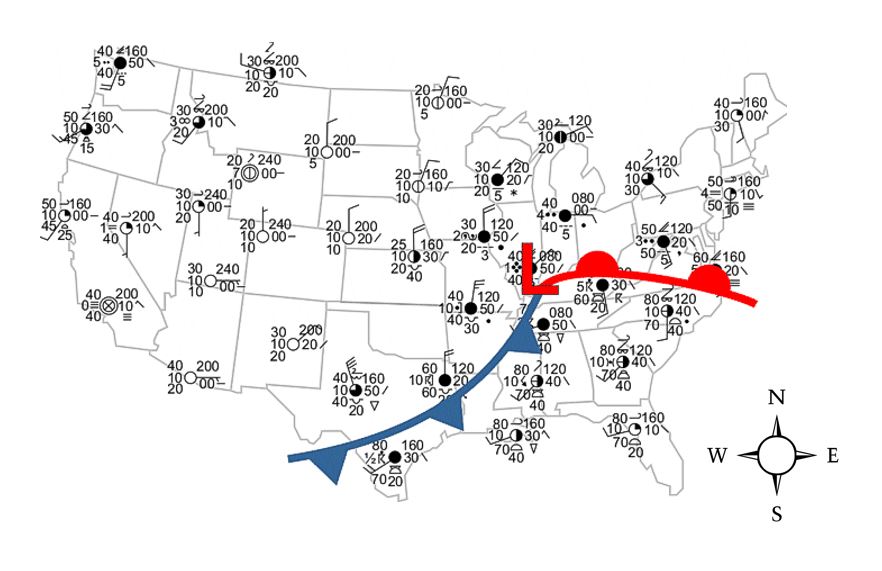
What city will experience decreasing temperatures in the next day?

a)

Denver

b)

El Paso

c)

Memphis

d)

Los Angeles

19.
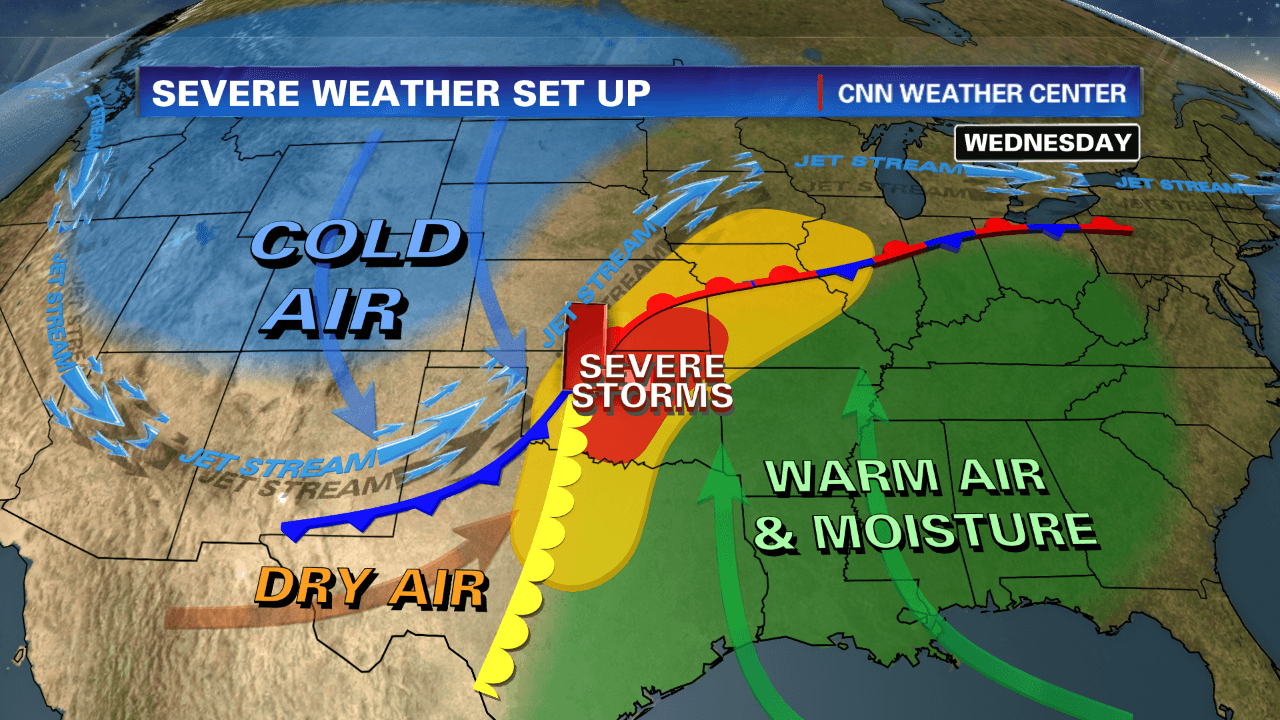
What direction is the cold front moving on the map? 
a)
Southwest
b)
Northwest
c)
Southeast
d)
Northeast
20.
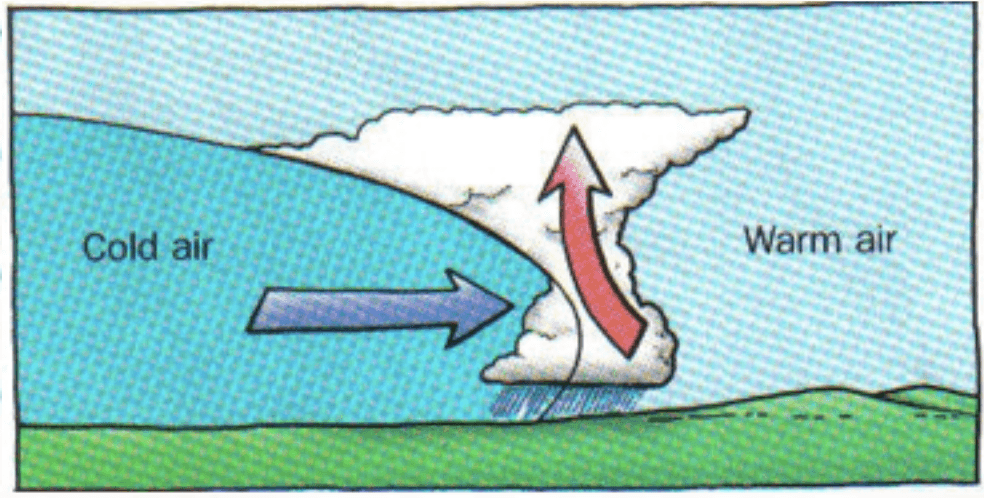
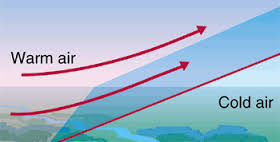
Which type of front is pictured?
a)
Cold front
b)
Warm front
c)
Occluded front
d)
Stationary front
21.
On a cold, cloudy day, the local weather forecaster predicts that a high pressure system will be moving into the area in the next 24 hours. Which weather conditions will this system most likely bring to the area?
a)
stormy
b)
sunny
c)
snowy
d)
hot
22.

What symbol is this?

a)

Warm front

b)

Occluded front

c)

Cold front

d)

Stationary front

23.

What symbol is this?

a)

Low Clouds

b)

Low Temperatures

c)

Light Wind

d)

Low Pressure

24.

What symbol is this?

a)

Occluded front

b)

Warm front

c)

Cold front

d)

Stationary front

25.

High Pressure is associated with this type of weather...

a)

Cloudy/Overcast Weather

b)

Stormy Weather

c)

Warm Weather

d)

Fair/Dry/Clear Weather

26.

A cold front moving into an area can bring this type of weather...

a)

Warmer Temperatures, Clear Skies

b)

Colder Temperatures, Clear Skies

c)

Warmer Temperatures, Clouds

d)

Colder Temperatures, Precipitation, Possible storms

27.
The amount of water vapor present in the air is called ________________.
a)
weather
b)
humidity
c)
air mass
d)
dew point
28.
Large body  of air with similar temperature, pressure, and humidity.
a)
Cold front
b)
Warm front
c)
High pressure system
d)
Air mass
29.

A boundary between a warm air mass and cold air mass where not much movement occurs.

a)

Stationary front

b)

Warm front

c)

Cold front

d)

Warm front

30.

What symbol is this?

a)

High Air Pressure

b)

High Temperatures

c)

Heavy Rain

d)

Hail

31.
What direction is the cold front moving?
a)
Northwest
b)
Southeast
c)
Northeast
d)
Southwest
32.

What symbol is this?

a)

Cold front

b)

Warm front

c)

Occluded front

d)

Stationary front

33.

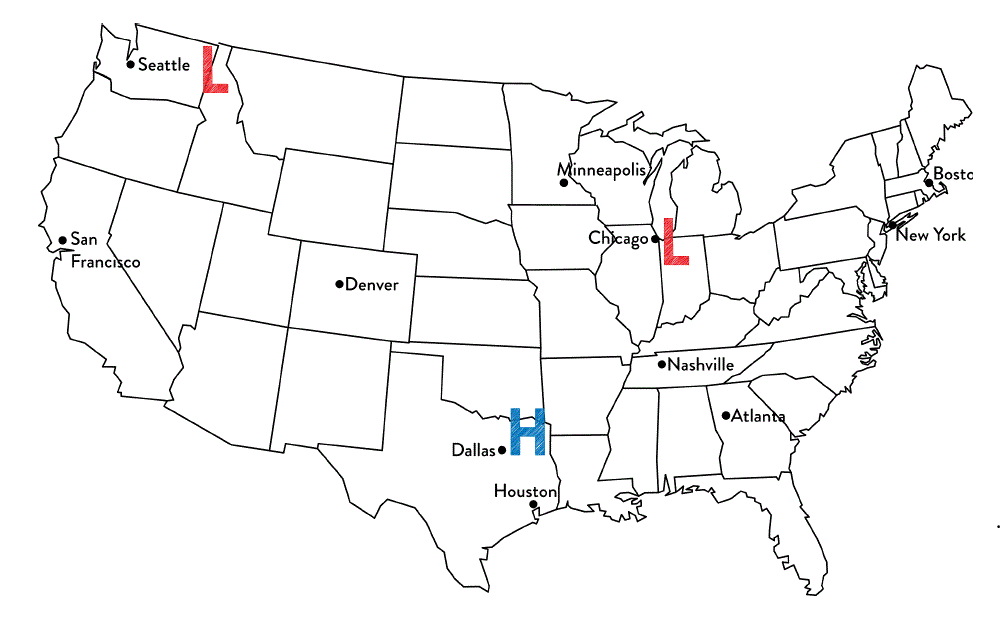
Which two cities are most likely to experience clear, dry weather?

a)

Seattle & San Francisco

b)

Chicago & Minneapolis

c)

Chicago & Nashville

d)

Dallas & Houston

34.

Tim said that Chicago is most likely to experience rainy weather. Jennifer thinks that Dallas is most likely to experience rainy weather.

Which student is correct?

a)

Tim because Chicago is the closest to a low pressure system and they produce precipitation.

b)

Jennifer because high pressure systems produce precipitation

c)

Both students are correct because all systems produce precipitation

d)

Neither of the students are correct because the cities are not close enough to the system.

35.

What type of weather is Minneapolis most likely going to experience?

a)

light rain, warm temperatures

b)

severe thunderstorms

c)

sunny skies

d)

Rain for days

36.

Why does city "B" have clear skies?

a)

It is in North America

b)

There is not a front moving through city "B"

c)

Clouds do not form in the West

d)

It is located near a high pressure system

37.

Which location is most likely experiencing warmer temperatures and higher humidity?

a)

Location A

b)

Location B

c)

Location C

d)

Location D

38.

Which type of air mass is associated with cool, moist atmospheric conditions?

a)

mT

b)

cP

c)

cT

d)

mP

39.
Which city is experiencing thunderstorms?
a)
Denver
b)
New York 
c)
Miami 
d)
Boise
40.
Which city is currently experiencing a snow storm?
a)
Seattle
b)
Los Angeles
c)
Chicago
d)
New York
41.
Which city has partly cloudy skies?
a)
Boise
b)
New York
c)
Atlanta 
d)
Dallas
42.
A cold front is approaching Minneapolis. What will happen to the air temperature?
a)
stay the same
b)
increase
c)
decrease
43.
Which city is closest to a high pressure system?
a)
New York
b)
Miami
c)
Minneapolis
d)
Boise
44.

What kind of precipitation falls during a cold front?

a)

thunderstorms or severe weather

b)

precipitation lasting several days

c)

strong wind and heavy precipitation

d)

steady rain

45.

Name that front.

a)

Cold Front

b)

Warm Front

c)

Stationary Front

d)

Occluded Front

46.

Name that front.

a)

Cold Front

b)

Warm Front

c)

Stationary Front

d)

Occluded Front

47.

Brings some clouds and gentle rains.

a)

Cold Front

b)

Warm Front

c)

Stationary Front

d)

Occluded Front

48.

Cold dense air slides underneath warm air. The warm air is forced up, cools, and condenses.

a)

Cold Front

b)

Warm Front

c)

Stationary Front

d)

Occluded Front

49.
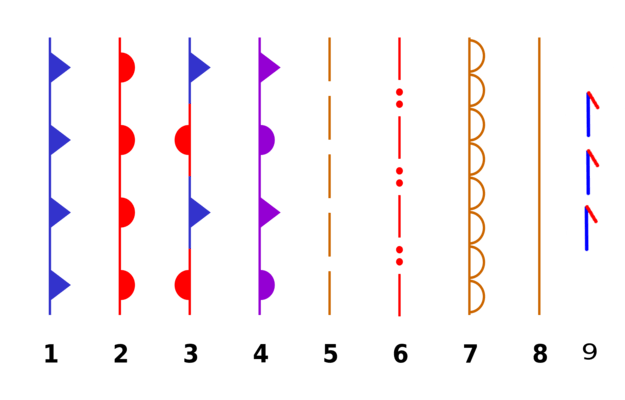
What does symbol # 3 mean?
a)
stationary front
b)
occluded front
c)
warm front
d)
cold front
50.
Which type of front is pictured?
a)
Cold front
b)
Warm front
c)
Occluded front
d)
Stationary front
51.
When a cold front overtakes a warm front, the temperature drops as the warm air mass is cut off from the ground and pushed upward.  It can bring strong winds and heavy precipitation. 
a)
Warm Front
b)
Cold Front
c)
Occluded Front
d)
Stationary Front 
52.
This type of front results in the same weather for several days
a)
warm
b)
cold
c)
stationary
d)
occluded
53.
How do we name air masses?
a)
Water and temperature
b)
Air pressure
c)
Humidity and temperature
d)
Cold and warm
54.
What types of air masses form over oceans?
a)
Maritime
b)
Continental
c)
Polar
d)
Tropical
55.
What's the humidity and temperature of a continental tropical air mass?
a)
Wet and cold
b)
Dry and warm
c)
Wet and warm
d)
Dry and cold
56.

What is a tornado?

a)

a violently rotating column of air

b)

a rotating tropical storm

c)

a winter storm characterized by high winds and snow

d)

a storm that occurs in cumulonimbus clouds

57.

How does the Fujita scale measure a tornado's intensity?

a)

by analyzing the damage the tornado has done & matching that to wind speeds

b)

by only looking at the wind speed

c)

by looking at the number of buildings the tornado destroys

d)

by analyzing the wind speeds and width of the tornado

58.

Which level on the Fujita scale corresponds to incredible damage and wind speeds of 261 mph?

a)

F5

b)

F1

c)

F3

d)

F2

59.

Do the center of hurricanes have high or low pressure?

a)

high

b)

low

60.

Where are a hurricanes most violent winds?

a)

Eye wall

b)

Feeder bands

c)

left side

d)

right side

61.

What are usually the most dangerous part of a hurricane?

a)

storm surge

b)

floods

c)

landslides

d)

wind

62.

What atmospheric conditions are necessary to form hurricanes?

a)

warm water, high humidity, and low pressure

b)

cool water, high humidity, and low pressure

c)

cool water, low humidity, and high pressure

d)

warm water, low humidity, and low pressure

63.

(Check all that apply) - The system for rating tornadoes

a)

uses a 1-3 rating system

b)

is called the Enhanced Fujita (EF) scale

c)

considers deaths and injuries caused by a tornado

d)

rates tornadoes on the severity of damage they cause

64.

Hail is produced by raindrops freezing in the highest clouds of a thunderstorm.

a)

True

b)

False

65.

Hurricanes form where?

a)

Mountains

b)

Over water

c)

desert

d)

tropical rainforest

66.

Thunder storms contain which of the following?

a)

Lightening

b)

rain

c)

wind

d)

all the above

67.

What is the strongest category of hurricane?

a)

1

b)

3

c)

5

d)

10

68.

What is this a picture of?

a)

Earthquake

b)

Hurricane

c)

Tsunami

d)

Tornado

69.

What levels does the Enhanced Fujita Scale contain

a)

EF 1 to EF 4

b)

EF 0 to EF 4

c)

EF 1 to EF 6

d)

EF 0 to EF 5

70.
During a _________ you should lay low in a ditch if you can't seek shelter inside.
a)
tornado
b)
hurricane
c)
thunderstorm
71.
During a ___________, lightning is common, which can cause fires!
a)
thunderstorm
b)
hurricane
c)
tornado
72.
What should you do if a hurricane is heading your way?
a)
pack up and prepare to leave if you live on the coast
b)
go to a room with windows
c)
lay low in a ditch if you are stuck outside
73.
Hurricanes form near areas close to the equator. Why? 
a)
Solar heating is greatest near the equator.
b)
The Moon's plane of orbit is close to the equator.
c)
Earth's volcanic activity is clustered around the equator.
d)
the rate of rotation of Earth's surface is less at the equator.
74.
How do the conditions for a tornado differ from the conditions for a hurricane?
a)
Tornadoes never form when there is rain, while hurricanes always form with rain.
b)
Tornadoes form under low pressure, while hurricanes form under high pressure
c)
Tornadoes form in a stable atmosphere, while hurricanes form in an unstable atmosphere 
d)
Tornadoes form over land, while hurricanes form over bodies of water
75.
What major and potentially catastrophic events can be predicted to occur in the Northern Hemisphere between the months of June and November?
a)
tsunamis
b)
hurricanes
c)
asteroid impacts
d)
volcanic eruptions