
 Worksheets
LCS Pipe Fabrication Tools Quiz
Total questions: 40
Worksheet time: 21mins

Which tool is commonly used for measuring and marking out in LCS pipe fabrication?
Tool D
Tool F
Tool G
Tool J

Which tool is used for cutting in LCS pipe fabrication?
Tool A
Tool B
Tool C
Tool E
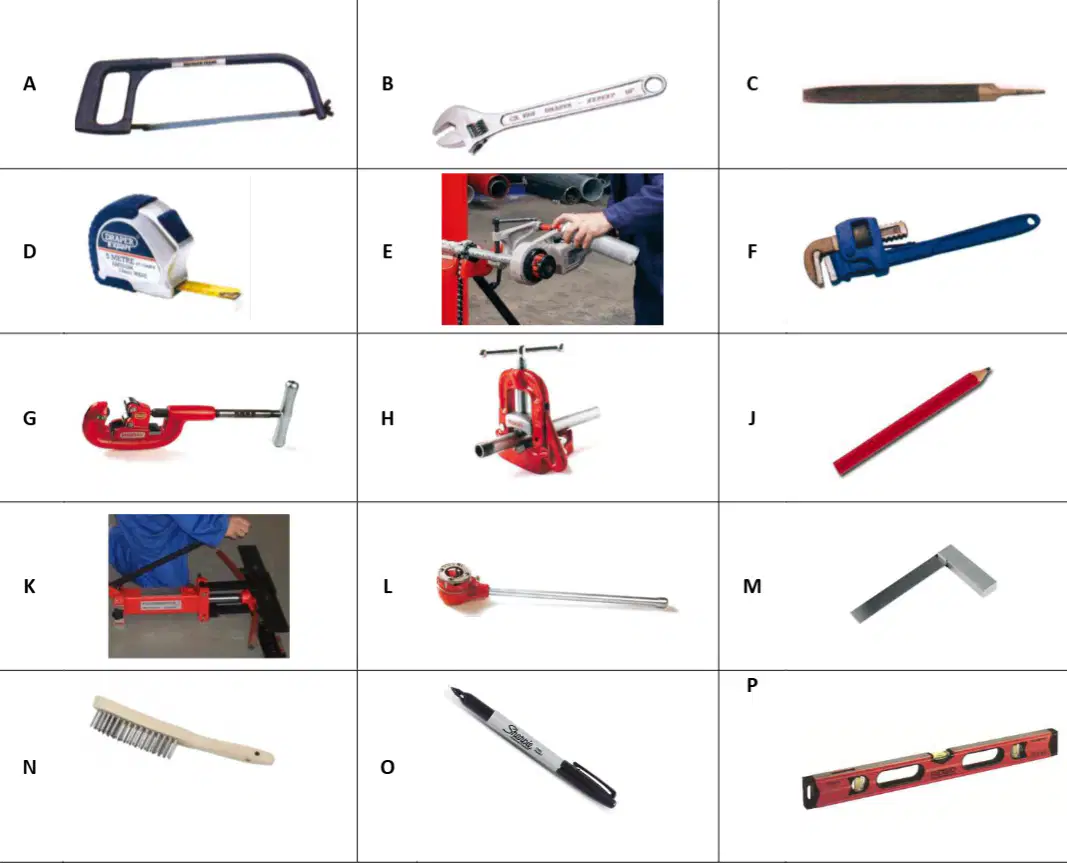
Which tool is used for de-burring in LCS pipe fabrication?
Tool C
Tool E
Tool F
Tool H
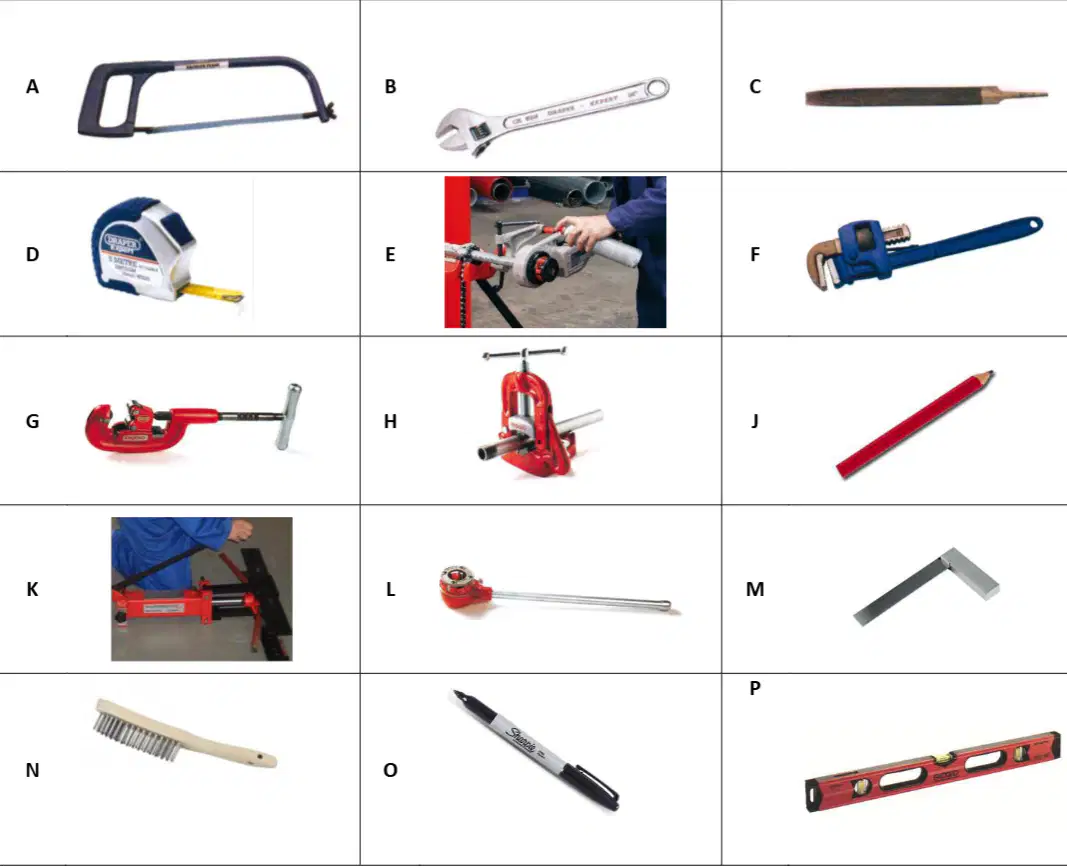
Which tool is used for hydraulic bending in LCS pipe fabrication?
Tool G
Tool H
Tool J
Tool k
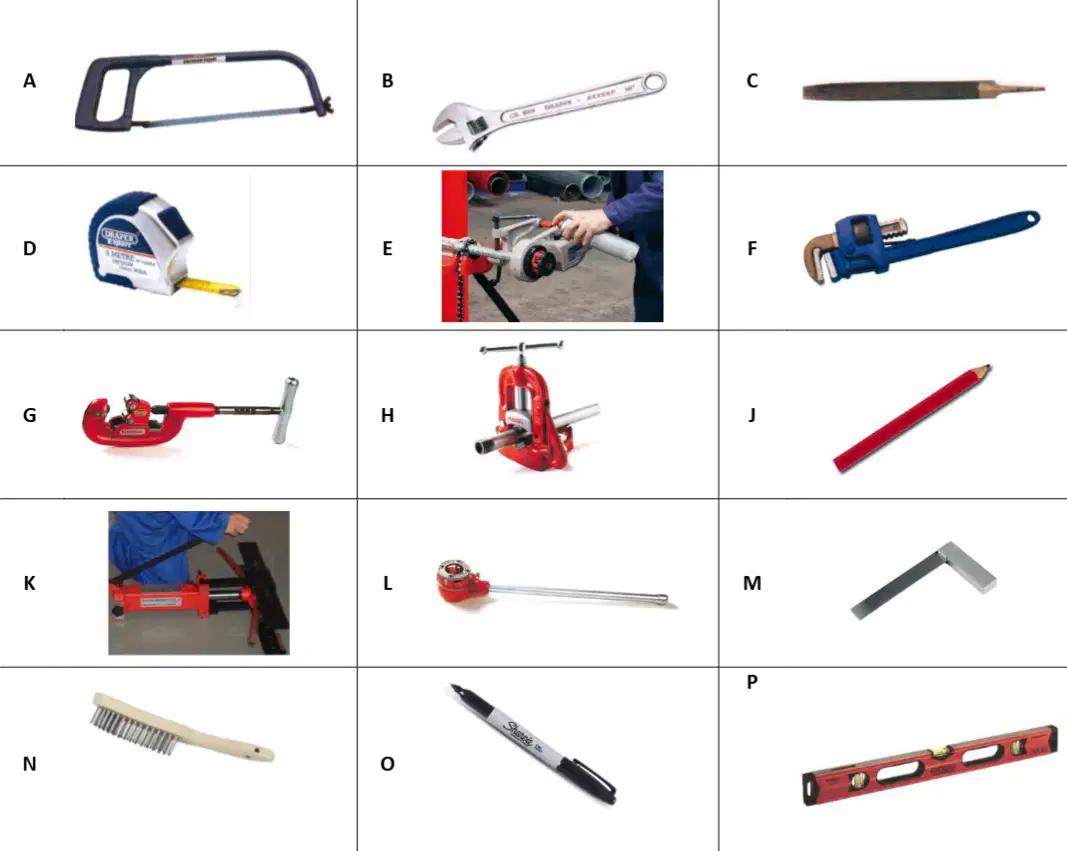
Which tool is used for jointing by mechanical means in LCS pipe fabrication?
Tool E
Tool F
Tool K
Tool M
Which of the following two pipe sizes are most commonly used on small scale low carbon steel installations?
1" (25mm)
½" (15mm)
¾" (20mm)
1¼" (32mm)
1½" (40mm)
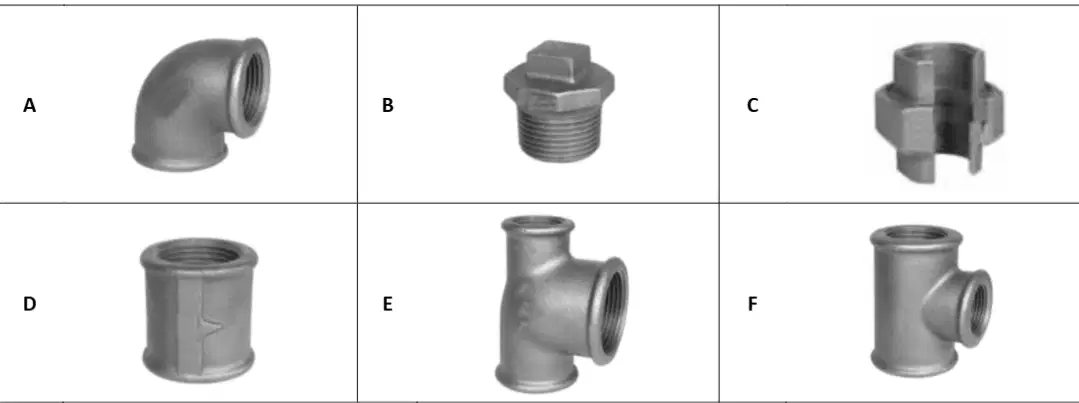
Which fitting is used to join three pipes of an equal diameter?
E
A
C
F

Which fitting is used to change the direction of the pipe by 90°?
A
B
C
D
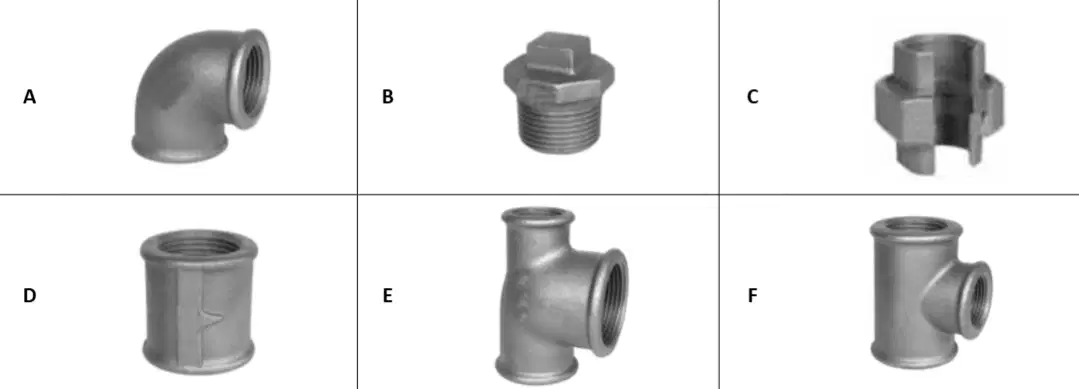
Which fitting is used to blank off or seal other pipework fittings?
B
E
F
D
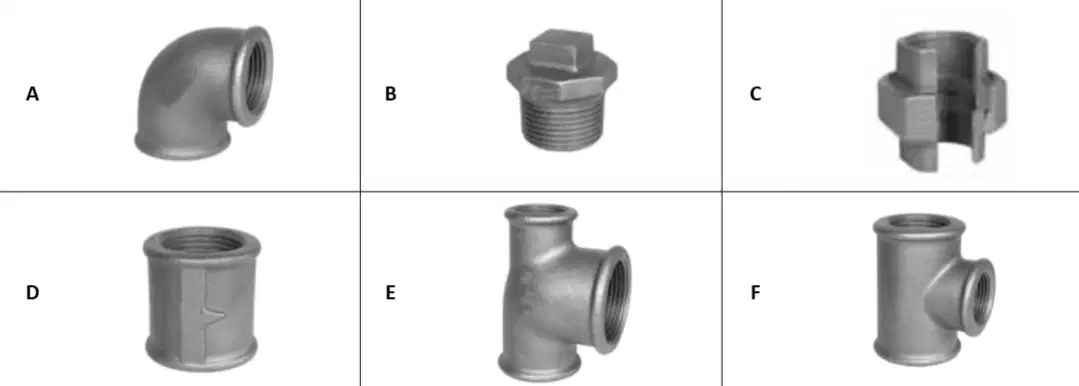
Which fitting is used to join three pipes with one pipe of a smaller diameter?
F
A
C
E
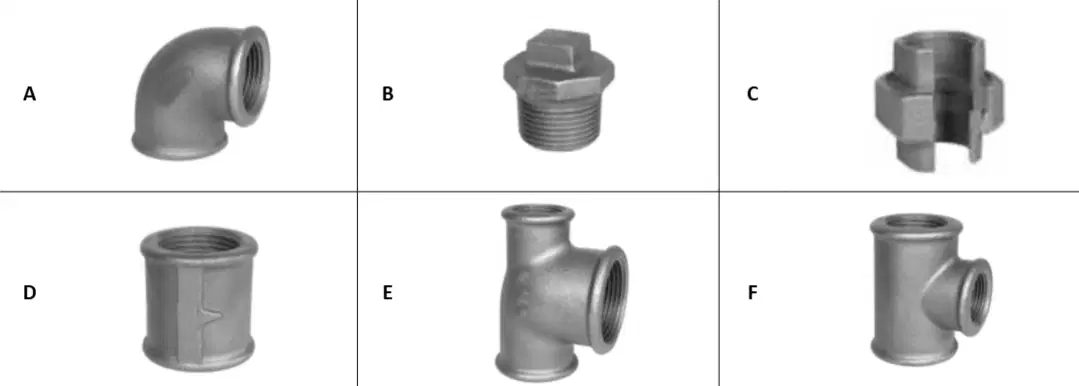
Which fitting is used to connect two pipes together in a straight line?
D
B
C
E

Which fitting is used to enable the pipe run to be split for easier assembly or dismantling?
C
A
B
F
Which of the following is a material or consumable required for cleaning and preparing low carbon steel pipe for mechanical joining?
LCS Pipe
Pipe cutter
Threading tape
(PTFE)
Welding torch
What equipment is listed for cleaning and preparing low carbon steel pipe for mechanical joining?
File
Pipe vice
Stocks and dies
Wire brush
The name of the document that is used to show the type of low carbon steel and the types of fittings that are to be used for a plumbing installation is a:
Site plan
Material schedule
Bill of quantities
Delivery note

What is the total number of 90° LCS elbows required for the pipework exercise?
1
2
3
4
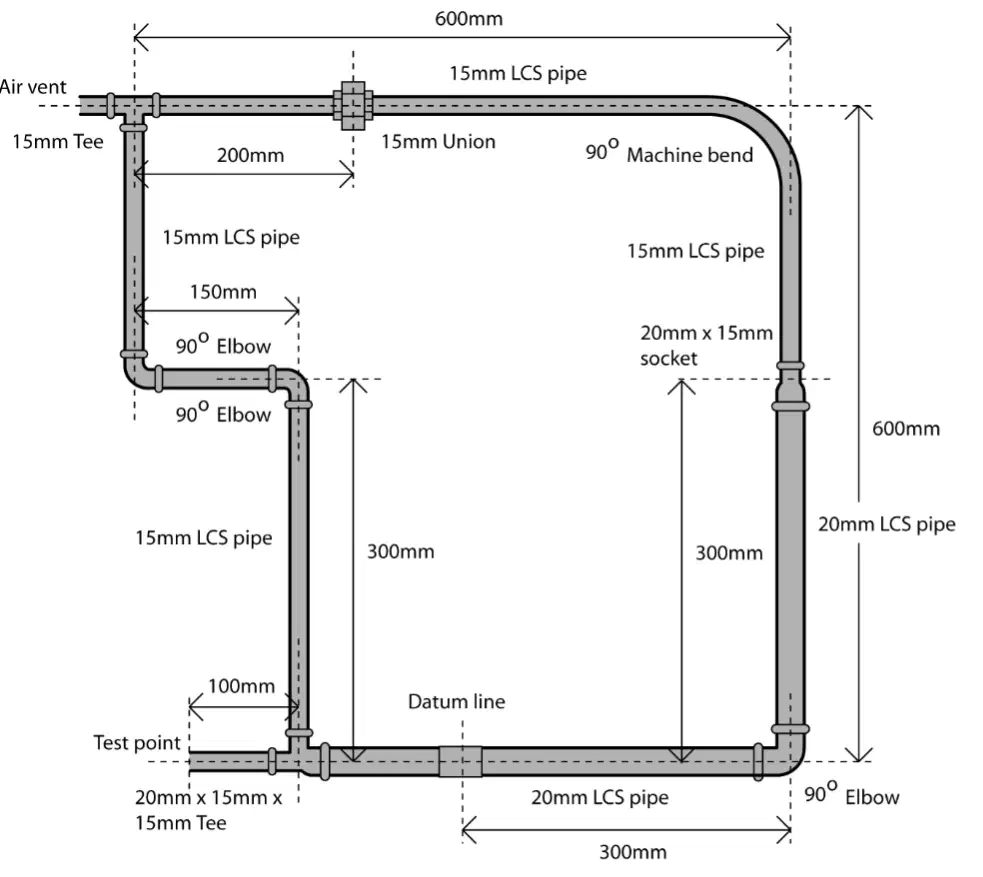
What is the size of the LCS Equal Union Connector Straight required?
15mm
20mm
20-15mm
20 x 15mm
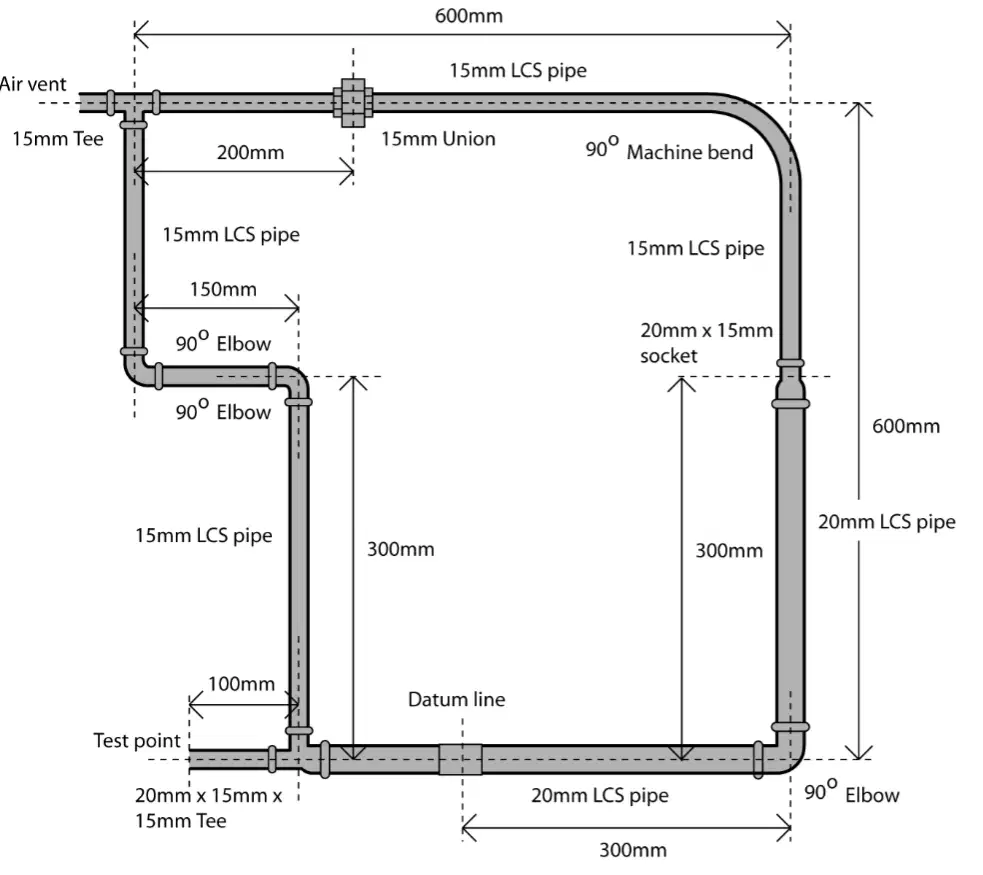
How many 15 x 15 x 15mm fittings are required?
1
2
3
4
Check that the pipe ends are free from what before cutting?
Tape measure
Damage
File
Teeth
Using what tool, mark a line at the desired length?
File
Tape measure
Cutting compound
Dies
Check that the hacksaw’s what are pointing towards the forward cut?
File
Teeth
Damage
Excess
Carefully cut the pipe ensuring that the end of the pipe is what?
Externally
Internally
Square
Chamfered
De-burr the pipe externally and ream out internally using a what?
File
Tape measure
Cutting compound
Dies
The end of the pipe that’s being threaded needs to be what to provide a leading edge for the threads to catch the pipe wall?
Chamfered
Square
Externally
Internally
Set up the what and dies?
Stocks
Tape measure
File
Cutting compound
What or cutting oil should be applied to the end of the pipe before commencing the pipe threading operation?
Tape measure
Cutting compound
Excess
Chamfered
The thread should be cut so that it is approximately how much longer than the length of the inside of the fitting?
1 to 2 threads
3 to 4 threads
5 to 6 threads
7 to 8 threads
Once completed, the what cutting compound is wiped off?
Excess
Tape measure
File
Dies
What is the first step in producing a 90° bend in low carbon steel pipe?
Mark a line on the pipe at a distance from the centre line.
Put the pipe in the bending machine.
Apply pressure and bend the pipe.
Make sure the correct size former is in the machine.
Why is there a gain in length of one pipe diameter when bends are made?
Because of the elasticity of the metal.
Due to the nominal bore of the pipe.
Because of the pressure applied.
Due to the gain in length of one pipe diameter.
What should be lined up with the centre of the bending machine?
The internal diameter.
The centre line.
The fixed point.
The pipe size.
What is the purpose of taking the bend to about another 5° over the 90°?
To ensure the correct size former is used.
To allow it to 'spring back'.
To apply more pressure.
To adjust the internal diameter.
What is the first step in the process for joining low carbon steel pipe using threaded and screwed joints?
Apply the appropriate jointing compound, hemp or PTFE tape to the pipe threads.
Select the appropriate size and type of fitting for the job.
Wipe clean the threads on the pipe with a cloth to remove any swarf or excess cutting oil/compound.
The pipe and fitting are screwed together, using the correct size stilsons or similar pipe wrench.
Which step involves cleaning the threads on the pipe?
Apply the appropriate jointing compound, hemp or PTFE tape to the pipe threads.
Identify appropriate pipe jointing compound that is relevant to the intended use of the pipework.
Wipe clean the threads on the pipe with a cloth to remove any swarf or excess cutting oil/compound.
The pipe and fitting are screwed together, using the correct size stilsons or similar pipe wrench.
What should be done after applying the jointing compound to the pipe threads?
The pipe and fitting are screwed together, using the correct size stilsons or similar pipe wrench.
Select the appropriate size and type of fitting for the job.
Wipe clean the threads on the pipe with a cloth to remove any swarf or excess cutting oil/compound.
Identify appropriate pipe jointing compound that is relevant to the intended use of the pipework.
What is the first step in securing a pipe clip to a block wall?
Select the correct screw size for the job
Measure and mark the position of the clip
Insert the wall plugs
Clean up afterwards
Which action should be completed last when securing a pipe clip to a plasterboard covered block wall?
Insert pipe and replace the top part of the bracket
Clean up afterwards
Screw the bracket to the wall using the correct size and type of screwdriver
Using the cordless drill and bit, drill the hole to the required depth
What should be done after selecting the correct screw size for the job?
Insert the wall plugs
Measure and mark the position of the clip
Using the cordless drill and bit, drill the hole to the required depth
Select the wall plug and masonry drill size relevant to the screw size
What action should be taken before the assembly is filled with water?
visual inspection
Paint the assembly
Install insulation
Remove all labels
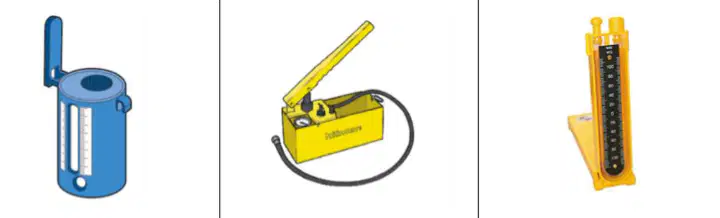
Which of the following items of equipment would be used to pressurise the LCS assembly?
Pressure gauge
Hydraulic pump
Flow meter
Thermometer

