
 Worksheets
2nd Semester Interim Study Guide - Gunpowder Empire
Total questions: 139
Worksheet time: 2hrs 31mins
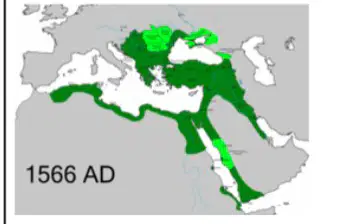
Label the correct Gunpowder Empire:
Ottoman Empire
Mughal Empire
Safavid Empire
None of the above
Select the 3 similarities of the Gunpowder Empire
Utilization of gunpowder weaponry, centralized administration, and an elite military force.
Isolationist policies, decentralized government, and reliance on feudal cavalry.
Nomadic warfare, tribal leadership, and minimalist control.
Religious theocracy, agrarian economy, and decentralized power.
Devshirme system
It is a system of forced recruitment of Christian boys for military service.
It is a system of voluntary military training for local youths.
It is a trade route system established during the Ottoman era.
It refers to a taxation system for collecting revenues.
Janissaries were?
They were elite military units of the Ottoman Empire.
They were peasant militias.
They were naval sailors.
They were desert nomads.
The Ottomans were of which branch of Islam?
Sunni Islam
Shia Islam
Ibadi Islam
Sufism
Identify the significance of Suleiman the Magnificent.
He was known for his military conquests only.
He was known for legal reforms, military conquests, and cultural patronage.
He was known for his religious innovations only.
He was known for his administrative failures only.
What were the two causes of the decline of the Ottoman Empire?
Political instability and military defeats
Economic prosperity and cultural renaissance
Advancements in technology and effective administration
Strong leadership and territorial expansion
What branch of Islam were the Safavids?
Sunni Islam
Shia Islam
Sufi Islam
Ibadi Islam
The titles of Safavids leaders were:
Shah
Sultan
Emperor
King
Who was the greatest Safavid leader? Choose the leader known for founding the dynasty.
Shah Ismail I
Shah Abbas I
Shah Tahmasp I
Sultan Husayn
Some luxury goods from the Safavids and other gunpowder empires included
Exquisite textiles, carpets, and fine metalwork.
Basic pottery and tools.
Folk art and simple garments.
None of these.
The decline of the Safavids was caused by
Internal conflicts and external invasions
Economic prosperity and military strength
Cultural renaissance and expansion
Centralized administration and stability
The Mughals were of which branch of Islam?
Sunni
Shia
Sufism
Ibadi
Babur's contribution to the Mughals was?
He established the Mughal Empire
He composed poetry for the empire
He served as a military advisor
He promoted art and literature
Determine the greatest Mughal leader
Babur: for founding the Mughal Empire.
Akbar: for his exceptional leadership and policies.
Jahangir: for his commitment to justice.
Aurangzeb: for his military strategies.
The Taj Mahal is
It is a symbol of eternal love.
It is a palace for political gatherings.
It is a major commercial center.
It is a sports stadium.
What is the geography of Japan?
It is a large landmass in Europe
It is an archipelago with mountainous terrain, volcanic activity, and coastal plains
It is a desert plateau
It is a tropical island
The Japanese adopted ______ from China.
Writing system
Trading practices
Romantic literature
Political institutions
Which of the following best describes feudalism in Japan?
A political and social system where land was exchanged for military service, leading to decentralized power and strong loyalty between lords and vassals.
A centralized government with a modern bureaucratic system.
A democratic system where citizens elect representatives.
An economic system based solely on free trade and market competition.
What were Daimyo's?
Feudal lords in Japan
Samurai warriors in Japan
Shoguns in Japan
Peasant rebels in Japan
Daimyos were required to live in:
Edo
Kyoto
Osaka
Nikko
Who is the Shogun and what is their role in Japan?
Military dictator
Ceremonial leader
Religious figure
Economic advisor
Determine who has the most power: Emperor or Shogun.
Emperor
Shogun
Tokugawa Shogun was started by:
Oda Nobunaga
Toyotomi Hideyoshi
Tokugawa Ieyasu
Minamoto no Yoritomo
What did the Tokugawa Shogunate do?
They unified Japan and established a long-lasting period of peace through isolationist policies.
They invaded neighboring countries to expand territory.
They abolished the feudal system without any period of isolation.
They focused on industrialization and rapid modernization.
Japanese Isolation is what?
A policy of seclusion adopted during the Edo period
A modern economic strategy
A traditional art form
A style of Japanese cuisine
The downfall of the Shogun was ______.
Political instability
Economic collapse
Military defeat
Betrayal by vassals
What is the Forbidden City?
It is a historic palace complex located in Beijing, China.
It is a modern shopping mall in Beijing.
It is a contemporary art museum in Beijing.
It is a residential complex in Beijing.
Emperor Kangxi belonged to the ______ dynasty.
Ming dynasty
Qing dynasty
Tang dynasty
Song dynasty
Emperor Kangxi kept classic ideas such as when the Manchurians took over China.
Confucian principles
Buddhist meditation
European Enlightenment ideas
Scientific rationality
Define Civil Services.
A system of administrative and bureaucratic services provided by the government
A temporary team of political leaders
A group of privately managed organizations
An informal network of consultants
Foreigners must follow specific rules to trade with the Qing, such as what?
They must obtain permission, trade in designated ports, and pay taxes.
They could trade anywhere freely.
They were completely banned from trade.
They only had to pay tribute without restrictions.
The fall of the Qing was what?
It was the collapse of the last imperial dynasty in China.
It was a period marked by cultural renewal.
It was an economic reform initiative.
It was the beginning of communist rule in China.
Absolutism (Absolute Monarchs) is what?
A political system where a monarch exercises complete and unrestricted control.
A system where power is shared between a monarch and a parliamentary body.
A democratic system with elected officials.
A feudal system where power is decentralized among nobles.
The Divine Right refers to what?
It is the belief that a monarch's right to rule comes directly from God.
It is a system where the people elect their ruler.
It is a principle where rulers are chosen based on merit.
It is a system where power is derived solely from military might.
Which country did King Louis XIV belong to?
France
Spain
England
Belgium
King Louis made himself an absolute monarch by doing what?
By centralizing power
By sharing power with the nobles
By forming alliances with neighboring countries
By promoting democracy
King Louis' nickname is
The Sun King
The Moon King
The Star King
The Earth King
The Edict of Nantes was a decree declaring what?
A decree that abolished religious freedom
A decree granting religious tolerance to Huguenots
A decree establishing Catholic dominance
A decree exempting French territories from religious rule
King Louis did what with the Edict of Nantes?
Revoked
Supported
Modified
Ignored
Which statement best how King Louis XIV affected the economy?
He hurt the economy by overspending on extravagant projects, leading to massive national debt.
He improved the economy by imposing fair taxes.
He boosted the economy by expanding trade.
He had no significant impact on the economy.
The Palace of Versailles was built to serve as what for Louis XIV?
A royal residence and government center
A museum for art collections
A military fortress
A university campus
The leaders of Russia are called:
President
Prime Minister
Tsar
Chairman
State the main reason why Russia was not as advanced as the rest of Europe.
It remained under autocratic rule with a serf-based economy, inhibiting modernization.
It focused mainly on cultural development rather than technological progress.
It benefited from early industrialization which led to delayed modernization.
It was geographically isolated from the centers of innovation in Europe.
What did Peter the Great do?
Implemented Westernization reforms in government, military, and cultural sectors.
Did nothing significant.
Focused solely on agriculture reforms.
Reinforced traditional Russian customs without change.
What did Peter the Great do?
He reduced the power of the nobles and reformed the Orthodox church.
He increased the power of the nobles and maintained the old traditions of the Orthodox church.
He completely abolished the privileges of the nobles while ignoring reforms in the Orthodox church.
He maintained the status quo with both the nobles and the Orthodox church.
What are similarities between King Louis XIV and Peter the Great?
They did not share any similarities.
They centralized state power, reformed their military, and ruled as absolute monarchs.
They both abdicated their thrones early in life.
They both focused solely on religious reforms.
Enlightenment thinkers did what?
Traditional authority
Modern science
Economic theory
Literature
John Locke's idea of Natural Laws are what?
They are inherent principles derived from nature that regulate society and protect individual rights.
They are arbitrary rules created by governments.
They are outdated traditions without practical relevance.
They are myths without a basis in reason.
John Locke said kings are what?
representatives of the people
appointed by God
subject to the law
absolute rulers
What kind of government does John Locke support? (Select the one that best captures his view.)
Limited government
Absolute monarchy
Theocracy
Military dictatorship
Identify the two main ideas of Voltaire
Religious tolerance and freedom of expression
Economic equality and environmentalism
Political centralization and censorship
Traditionalism and conservatism
What is tyranny?
A government where a ruler exercises absolute power in an oppressive manner
A democratic system with checks and balances
A government led by elected representatives
A form of government that promotes individual freedoms
What are the three branches of government according to Montesquieu?
Legislative, Executive, and Judicial
Federal, State, and Local
Presidential, Congressional, and Judicial
Administrative, Legislative, and Judicial
The idea of check and balances is meant to do what?
No single branch holds power and each branch can limit the actions of the others
It divides power equally between all branches
It promotes judicial supremacy
It encourages a strong central government
The General Will of Rousseau represents what?
It denotes an individual's personal desires.
It signifies the collective interest of the people aimed at the common good.
It results in the power of a single ruler.
It is based on economic ambitions.
Adam Smith’s idea of Laissez-faire is what?
A state controlled market
A free market with minimal government interference
A complete absence of market regulation
Government guided market processes
The purpose of the encyclopedia is to do what?
It provides comprehensive reference information
It offers entertainment
It delivers opinions
It gives news updates
The American Revolution resulted in what?
Only economic growth
American independence and establishment of a republic
American annexation of Canada
Re-establishment of British colonial rule
The significance of the American Revolution is:
It led to the independence of the United States and the emergence of democratic governance.
It had minimal impact on global politics.
It was only a minor local conflict.
It reinforced monarchical rule in Britain.
King Louis XVI was...
executed
abdicated
exiled
remained in power
The social hierarchy of Latin America caused revolutions by doing what?
It unified the people
It created inequality and discontent
It ensured equal wealth distribution
It eliminated social classes
The Haitian Revolution was started by what?
Slave revolt against French colonial rule
A European power struggle
A natural disaster
A desire for economic control
The Latin Revolution was caused by:
Political instability
Economic hardship
Social injustice
Foreign domination
Mexican Revolution was caused by:
Social inequality
Economic factors
Political corruption
All of the above
Napoleon's background is:
Corsican noble, French military general and emperor
A commoner
A merchant
A scientist
Coup d’etat is a
an orderly transition of power
a sudden seizure of power
a long-term revolution
a peaceful protest
Select the 4 reforms that Napoleon made
Napoleonic Code, Administrative Reorganization, Educational Reforms, Fiscal Reforms
Military innovations, Agricultural improvements, Religious policies, Artistic developments
Economic reforms, Diplomatic changes, Social restructuring, Scientific advancements
None of the above
Napoleonic Codes refers to
The set of civil laws established by Napoleon Bonaparte.
Military strategy guidelines by Napoleon Bonaparte.
Economic reforms in France.
Philosophical treatises by Enlightenment thinkers.
The problem with invading Russia is?
Harsh winters
Large distances
Logistical difficulties
Well-prepared defenses
Which of the following states used gunpowder technology to establish their empires?
(Choose ALL correct answers)
The Mughal Empire
The Byzantine Empire
The Ottoman Empire
The Safavid Empire
The main consequence of gunpowder technology being spread across land-based empires was...
increased cooperation of Muslim states against Europe
decrease of trade over land and sea routes
decrease of populations due to the collapse of empires
increased violence and conflict between growing militaries
Gunpowder empires of this era include all of the following EXCEPT:
Mughal
Ottoman
Swahili
Safavid
The Ottoman army included 30,000 elite soldiers called ________ who were slaves that were trained to be loyal to the government.
Janissaries
Jizyas
Slavs
None of the Above
The geographic area of Persia/Iran was controlled by which Gunpowder Empire?
Ottoman
Safavid
Mughal
The geographic area of India was controlled by which Gunpowder Empire?
Ottoman
Safavid
Mughal
Daimyo were...
Land owners, nobles
warriors
farmers
military leaders
Samurai were...
Military leaders
warriors
landowners
farmers
Shogun were...
military leaders
warriors
landowners
farmers
Bushido code...
was the military leader of Japan
the moral code of honor for samurai
number of people per square mile
a warrior
Japan is a...
continent
penninsula
feudalism
a set of islands, or archipelago
the most common geographic feature in Japan is...
oceans
rivers
mountains
coastal plains
Feudalism is...
electing officials to important government jobs
the exchange of land for labor and loyalty
how much money someone has
a traditional religion
During the Age of Absolutism, European monarchs looked to
Develop better relations with muslim rulers
Centralize political power in their nations
Encourage the growth of political farms
Increase human rights for citizens
Who was Peter the Great?
This man promoted Westernization campaigns to make his country more European
This man demonstrated absolutism by building the city Versailles as a way of distracting the French nobility
This man didn't believe that the average person was intelligent enough to participate in government, which led him to believe that enlightened monarchy was best
This man thought that humans were naturally greedy and chaotic and would need a large government to control them
Who was Louis XIV?
This man promoted Westernization campaigns to make his country more European
This man demonstrated absolutism by building Versailles as a way of distracting the French nobility
This man believed that humans were naturally good and would not need a large government to rule over them.
This man did not believe that the average person was intelligent enough to participate in government, which led him to believe that an enlightened monarchy was best.
The English Bill of Rights
created a constitutional monarchy.
resolved all of England's seventeenth-century religious questions.
reaffirmed the divine-right theory of kingship while limiting the king's power.
confirmed the king's right to raise standing armies without parliamentary consent.
The economic theory based on a country's ability to export more goods than import which contributed to the rise of absolutism was
capitalism.
laissez faire economics.
mercantilism.
socialism.


Which of the following was a problem with the age of absolutism?
Wars were fought for status, religion, territory, and power
Taxes were raised to build roads, canals, factories, and merchant ships
Countries gained vast territories of land throughout Europe
Tremendous wealth was gained by utilizing their colonies raw materials
Westernization means …
Traveling West in search of natural resources
To adopt or be influenced by the cultural, economic, or political systems of Europe
Which monarchy started the Church of England and proclaimed himself the Supreme Head of the Church?
Phillip II
Henry VIII
Elizabeth I
Mary I
A right, such as life and liberty, that a person is born wth
divine right
philosophes
natural rights
contract
An agreement between rulers and the people to cooperate for mutual social benefits in pursuit of a better society
divine right
free enterprise
laissez-faire
social contract
Separation of Powers
Separating the ruler from the military.
Dividing powers equally among organizations
Dividing powers equally among three people
Dividing powers equally among three branches of government.
A person(s) who had unlimited authority and almost no legal limit.
A Monk
Absolute Monarch
A Philosophe
A Salon Manager

WHAT ARE THE NATURAL RIGHTS JOHN LOCKE SAID ALL PEOPLE ARE BORN WITH?
(CHOOSE ALL THAT APPLY)
LIFE
LIBERTY
WEALTH
PROPERTY

WHAT DOES JOHN LOCKE SAY THE PEOPLE HAVE A RIGHT TO DO IF THE GOVERNMENT FAILS TO PROTECT THEIR RIGHTS?
NOTHING
START OVER
ASK THEM TO STOP
THEY HAVE THE RIGHT TO REVOLT OR OVERTHROW THE GOVERNMENT
fought for freedom of speech and opposed religious intolerance and corruption in government
John Locke
Thomas Hobbes
Montesquieu
Rousseau
Voltaire
Social Contract. People are born good but corrupted by society. Limited and freely elected government
John Locke
Thomas Hobbes
Montesquieu
Rousseau
Voltaire
Belief that authority comes from reason and not God
Enlightenment
Constitution
Absolutism
Philosophers
The American, French, and Latin American Revolutions were inspired by
The Age of Absolutism
The Enlightenment
King Louis XVI
U.S Constitution
Old Regime French society that was divided into three classes was called
The Estates System
The Treaty of Paris
National Assembly
In Old Regime French society, the First Estate and Second Estate constituted of
Peasants, commoners, middle class (professionals)
Clergy and Nobility
Politicians
King Louis XVI
In Old Regime France, the Third Estate constituted of
The clergy and nobility
Politicians
King Louis XVI
Peasants, commoners, middle class
What was a reason why Latin American countries wanted to revolt and declare their independence?
The Estates System
Social inequality
Absolute monarchy
The social hierarchy that the Spanish established in Latin America consisted of...
-Peninsulares
-Creoles
-Mestizos
-Native American and African people
First Estate
Second Estate
Third Estate
Encomienda System
What was the result of the French Revolution?
It ended the French monarchy and established a new government
France declared its independence from Britain
The French won the French and Indian War
The American Revolution inspired the French Revolution and Latin American Revolutions
True
False
This person was a former slave who fought in the Haitian Revolution and emancipated the slave population
Miguel Hidalgo
Simon Bolivar
Toussaint L'Overture
Jose de San Martin
The revolutionary movement led by Simon Bolivar was influenced by
religious ideas introduced during the Great Awakening
Karl Max's criticism of industrial society
ideas about government promoted during the Enlightenment
Adam Smith's free-market principles
Launched Mexico's fight for independence with the "Cry of Dolores"
Simon Bolivar
Jose de San Martin
Toussaint L'Overture
Miguel Hidalgo
Helped Argentina, Chile and Peru gain independence from Spain
Miguel Hidalgo
Jose de San Martin
Simon Bolivar
Toussaint L'Overture
Liberated Venezuela from Spanish rule
Simon Bolivar
Miguel Hidalgo
Jose de San Martin
Toussaint L'Overture

What idea is being portrayed in this image?
Mercantilism-the mother country benefits from the colonies
Federalism
Absolute monarchy-the French government controls the American colonies
The Estate System
Which two major ideas are contained in the writings of Karl Marx?
survival of the fittest and natural selection
class struggle and revolutionary change
separation of powers and checks and balances
monotheism and religious tolerance
Transportation in the 1800s was revolutionized by the development of the
caravel
astrolabe
airplane
steam engine
A major reason the Industrial Revolution developed in Great Britain in the 1700s was because of Great Britain’s
geographic features
immigration policies
use of collectivization
access to imported oil
Which phrase best illustrates the theory of laissez-faire capitalism?
businesses operating with little government regulation
the state establishing production quotas
central planning committees setting prices on goods
decisions related to distribution being based on community traditions
During the Industrial Revolution, which development resulted from the other three?
Factory conditions affected people’s health.
Labor unions were formed.
Unskilled laborers received low wages.
Machinery replaced workers.
Which statement is supported by the ideas of Karl Marx?
Private ownership of businesses helps workers.
Industrialization benefits the wealthy and exploits the poor.
Countries should benefit from the wealth of their colonies.
Industrial capitalism allows workers and employers to work together for a common purpose.
A long-term result of the Industrial Revolution in Europe was
an increase in the number of small farms
a decline in international trade
a general rise in the standard of living
a strengthening of the economic power of the nobility
During the 1800s, reform legislation passed in Great Britain, France, and Germany led to
formation of zaibatsu, greater equality for men, and establishment of a banking system
legalizing trade unions, setting minimum wages, and limiting child labor
government-owned factories, establishment of five-year plans, and limits placed on immigration
bans on overseas trade, mandatory military service, and universal suffrage for women
During the Industrial Revolution, locating factories near concentrations of natural resources and transportation routes most directly promoted
annexations and unequal treaties
migration and urbanization
legislative reforms and formation of unions
communal fields and the domestic system
It was a town of red brick, or of brick that would have been red if the smoke and ashes had allowed but as matters stood it was a town of unnatural and black like the painted face of a savage. It town of machinery and tall chimneys, out of which interminable serpents of smoke trailed themselves for ever and ever, and never got uncoiled. It black canal in it, and a river that ran purple with ill smelling dye. . . .”
— Charles Dickens
Which problem is the subject of this passage?
economic inequality
urban pollution
lack of child labor laws
poor transportation systems
Karl Marx and Friedrich Engels encouraged workers to improve their lives by
electing union representatives
participating in local government
overthrowing the capitalist system
demanding pensions and disability insurance
Laissez-faire economists of the 19th century argued that
the government should regulate the economy and foreign trade
individuals should be allowed to pursue their self-interest in a free market
governments should develop a state-run banking system to prevent instability
anarchy would result if universal male suffrage was granted


Countries want to use imperialism to gain colonies for all of the following reasons except
gain new resources
show their power
learn about other cultures
spreading their greatness

