
 Worksheets
Revision
Total questions: 75
Worksheet time: 4hrs 36mins

The positive ions tend to _____________ electrons.
lose
gain
The negative ions tend to _____________ electrons.
lose
gain
Why do all bonds form?
so the number of protons equals the number of electrons
so an atom can become unstable
to fill the outermost energy level
When an atom loses an electron, it becomes a
positive ion
negative ion
neutral ion
neutral atom
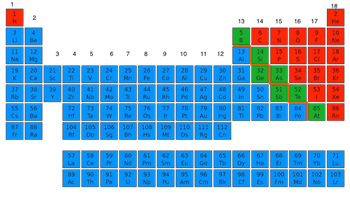
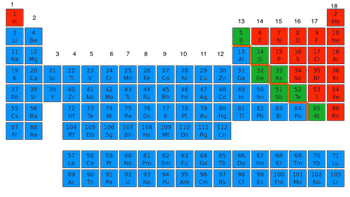

What type of elements form cations?
metals
nonmetals
metalloids?
Anions
Gain electrons, has an overall positive charge
Lose electrons, has an overall positive charge
Lose electrons, has an overall negative charge
Gain electrons, has an overall negative charge
Cations
Gain electrons, has an overall positive charge
Lose electrons, has an overall positive charge
Lose electrons, has an overall negative charge
Gain electrons, has an overall negative charge
How does calcium become an calcium ion?
it loses 2 electrons
it gains 2 electrons
How does magnesium become an magnesium ion?
it loses 2 electrons
it gains 2 electrons
How does oxygen become an oxide ion?
it loses 2 electrons
it gains 2 electrons


What is responsible for bringing cations and anions together?
the size of the ions
the opposite charges are attracted to one another
the similar charges are attracted to one another
depends on what period they're in
When ionic compounds form what is the overall charge?
neutral
positive
negative
In the compound aluminum oxide, which is the cation?
[ Al ] +3
Al
[ O ] -2
O

Nitrogen, N, will form which of the following ions?
N
N-3
N-5
N+5

Looking at the periodic table, when the halogens form an ion what charge do they have?
1-
1+
2-
2+
3-
Looking at the periodic table, when the alkaline earth metals form an ion what charge do they have?
1-
1+
2-
2+
3-
Looking at the periodic table, when the alkali metals form an ion what charge do they have?
1-
1+
2-
2+
3-
If I had an anion with a charge of 3- how would you describe the formation of that ion?
gained 2 electrons
lost 2 electrons
gained 3 electrons
lost 3 electrons
If I had a cation with a charge of 2+ how would you describe the formation of that ion?
gained 2 electrons
lost 2 electrons
gained 4 electrons
lost 4 electrons
An ionic bond is the attraction between: (Select ALL that apply)
oppositely charged ions
similarly charged ions
metals and nonmetals
neutral atoms
cations and anions
This image shows the bonding between Lithium and Fluorine. What does the red arrow show?
electrons being shared
electrons being transferred to Fluorine
electrons being transferred to Lithium
electrons being destroyed
Covalent bonds are formed between...
two or more metal atoms
two or more non-metal atoms
a metal and a non-metal atom
Covalent bonds are formed when electrons are transferred between atoms.
True
False

The structure of ammonia is shown in the diagram. What is the formula for ammonia?
NH3
HN3
N3H
HN3

This type of bonding occurs when atoms share electrons.
chemical
covalent
ionic
metallic

Single bonds are formed when ____ pair(s) of valence electrons are shared.
one
three
two
four

Triple bonds are formed when atoms share _____ pairs of valence electrons.
two
four
three
six

What is a diatomic molecule?
Two atoms that are the same and share one or more electrons.
Two atoms that share a different valence electron.
Two atoms that share protons.
Two ions that share a completed outer energy level.

Many _____ exist as diatomic molecules.
alkali metals
alkali earth metals
metalloids
nonmetals

Except for noble gases, elements on the right side of the table have a greater attraction to
elements that are metalloids.
elements that are halogens.
elements that are in the transition zone of the table.
elements that are on the left side of the table.

A covalent bond in which electrons are not shared equally is called a(n)
polar covalent bond.
metallic covalent bond.
ionic bond.
unequal bond.

When atoms form polar covalent bonds, atoms with the greater attraction for electrons has a(n)
slight positive charge.
slight negative charge.
neutral charge.
opposite charge.

The type of atom and its shape are factors in determining
if a molecule is covalent or polar.
whether a molecule is polar or nonpolar.
if the atoms are negative or positive.
whether the molecule has valence electrons.

The shape of the carbon dioxide molecule allows it to be classified as
polar.
linear.
nonpolar.
charged.

Which of these elements do not bond to form molecules?
helium
chlorine
oxygen
neon
Carbon has 4 electrons in it's outer shell. How many covalent bonds does it need to make to complete it's outer shell electrons?
1
2
3
4

What is the correct formula for this molecule?
CH
C1H4
CH4
C4H
Chlorine has 7 electrons in it's outer shell. How many covalent bonds does it need to make to complete it's outer shell electrons?
1
2
3
4
How many electrons are involved in a double bond?
One pair of electrons
Two pairs of electrons
6 electrons
8 electrons
What is the ability of a substance to be pulled into a wire?
Malleability
Ductility
Conductivity
Solubility
Which of these are considered properties of metals? (choose ALL that apply)
brittleness
low melting point
luster (shininess)
malleability
ductility
X is a solid at room temperature.
X has a high melting point.
Solid X conducts electricity.
Which diagram shows how the particles are arranged in solid X?


Iron is a metal.
Its structure consists of a giant lattice of positive ions in a ‘sea of electrons’.
Which statements about solid iron are correct?
Iron conducts electricity because the electrons are free to move
Iron conducts heat because the positive ions are free to move.
Iron has a high melting point due to the strong covalent bonds.
Iron is malleable because the layers of ions can slide over one another.
Metals are malleable. Which statement explains why metals are malleable?
Metallic bonding is very strong.
Metals are good conductors of electricity.
Positive metal ions are arranged in a regular lattice structure
The layers of positive metal ions can slide over each other.

The diagram represents the general structure of a solid Z.
What is Z?
aluminium
iodine
silicon dioxide
sulfur
True or False: Metals can be shaped into thin sheets
True
False
Metal ions are surrounded by a "sea" of POSITIVE charge
True
False
True or False: A metallic bond may form between a metal and any other element
True
False
Why do metallic compounds conduct electricity as solids?
core electrons are mobile, allowing electricity to flow through the metal
valence electrons are mobile, allowing electricity to flow through the metal
positive ions are mobile, allowing electricity to flow through the metal
the metal cations are mobile, allowing electricity to flow through the metal

