Font size
 Worksheets
7°_HIS_Partial_Test_24-25_p2
Total questions: 70
Worksheet time: 4hrs 54mins
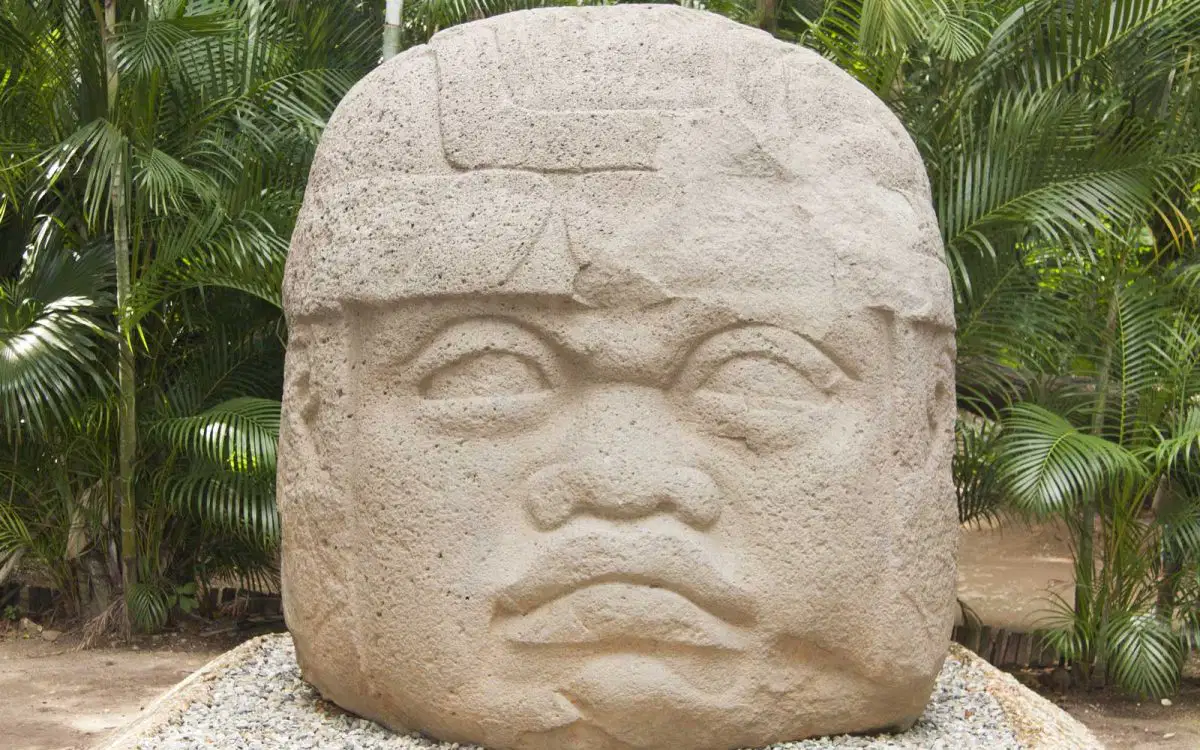
Is it true that the word Mexico in the Nahuatl language means "the navel of the moon"?

True

Which of the following words means moon?
Metztli
xictli
co
God who tells the Aztecs where to migrate and establish their empire.
Quetzalcóatl
Chicomecóatl
Huitzilopochtli
Huitzilihuitl
After a long migration, where did the Aztecs arrive?
Valley of Mexico
Teotihuacan
Lake of Texcoco
Tlacopan
What was the sign to find the place promised by his God?


Eventually the place where they settled acquired the name of _____________, capital of the Mexica empire.
Teotihuacan
Tlatelolco
Tlacopan
Tenochtitlan
According to what you have studied and now know about Mexico, is it true to say that Mexico is the center or the navel of the moon?


So what did our ancestors mean with this phrase? Mexico the navel of the moon.
Which they actually believed it was.
Which was a way of expressing that dominance and control came from the city they created.
These concepts are related to the following words:
complex molecule that contains all of the information necessary to build and maintain an organism.
a place, typically one that has been a place, typically one that has hitherto been uninhabited, where people establish a community., where people establish a community.
pieces or parts of something that continue to exist when most of it has been used, destroyed, or taken away.
REMAINS
SETTLEMENT
DNA
SETTLEMENT
DNA
REMAINS
DNA
SETTLEMENT
REMAINS
Prehistory means the time...
... after writing was developed.
... before writing was developed.

Remains or impression of a prehistoric organism preserved in petrified form or as a mold or cast in rock.
Rock
Writting
Fossil
Bone
What happened first in the life of the first humans? the development of agriculture, fire or the creation of the first tools.
Agriculture
Fire
Tools
The first known hominid emerged in...
Americas
Europe
Africa
Asia
What was the primary way of life for the first settlers of America?
Fishing
Agriculture
Nomadism
Urban living
What was the main source of food for the first settlers?
Cooking
Farming
Hunting and gathering
Trading
What was the average size of the family bands that populated America?
10 people
50 people
100 people
200 people
What was the first way of life developed by humans, characterized by moving around territories according to the seasons for subsistence?
Sedentism
Agriculture
Hunter-gatherer lifestyle
Nomadism
What evidence do migration models explaining the dispersion of humanity depend on?
Human fossil evidence
Archaeological artifacts
Genetic studies
All of the above
When did the first human groups arrive in the American continent?
10,000 years ago
20,000 years ago
30,000 years ago
40,000 years ago
From which continent did the first humans likely migrate to America?
Australia
Africa
Europe
Asia
What was a common hunting technique used by the first settlers?
Fishing nets
Trapping
Stampeding herds
Poisoning
According to the most accepted theory of the settlement of America, the first humans on the continent came directly from Africa.
TRUE
FALSE
Beringia is the junction in the northern part of the continent between Siberia and Alaska formed millions of years ago during the ice age.

TRUE

FALSE
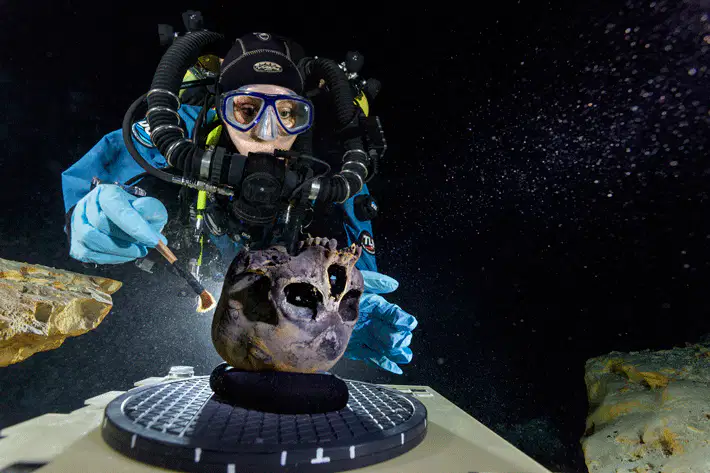
In Mexico there is historical evidence of the oldest ________ ancestor on the continent. The name of this remain was "Naia".
MALE
FEMALE
In Mexico, we have evidence of the existence of the human species in specimens such as...
Naya
Tepecpan man and Naya
Naia and the Tepexpan man
Australopithecus
This sport helped the speleologists find the remains of Naia.
Olympic walking
Swimming
Equestrianism
Diving
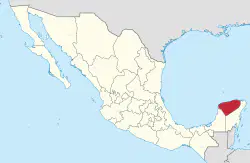
Naia was located in this State of the republic...
State of Mexico
Querétaro
Mexico City
Yucatán

The discovery of Naia is important because...
it allows us to know how he looked physically
being the oldest human in the continent helps us understand his way of life
it brings us recognition
there is more tourism
Naia's chronological age corresponds to...
a baby
an adult woman
a teenager
an elderly woman
The chronological age of the man from Tepexpan corresponds to...
a baby
an adult being
an adolescent
an elderly being
Was the place where Naia died at that time covered by water?
Yes
No

Naia, apart from being the oldest, can be considered as the skeleton...
most known
most complete
smallest
most alone
Along with Naia, other bone elements were found but corresponding to...
other humans
megafauna
decomposing animals
Studies done on Naia reveal that she had an easy life.
False
True
There is no complete certainty about the gender of this ancestor.
Naia
Man of Tepexpan
The man from Tepexpan was located very close to the remains of this great woolly mammal...
Camel
Mammoth
Elephant
Year in which the Tepexpan Man was discovered.
2018
1918
1947
2007
What significant information does the study of Naia provide about early human migration?
It confirms the existence of other species
It reveals the tools used by early humans
It indicates the diet of early humans
It shows the route taken by early humans
Naia's remains were found in a location that was once...
a riverbed
a forest
a desert
a cave
After being small isolated villages, the ancient settlers began to create more durable __________, organizing themselves based on _______.
things/cities
constructions/cities
cities/agriculture
Stratified society means...
Divide the population according to an age range
The classification of society according to their possessions and the level of power they had, being free or not free.
Classify according to race and religion
In ancient societies it was important to establish a ________ order to be able to advance and improve in many aspects of daily life.
economical
cultural
political
To be considered a civilization this is an importan requirement:


With writing, it was possible to develop systems for counting time such as...
Zodiac
Numeric systems
Calendars
This geographical condition among ancient societies was transcendental to ensure having food...


The developmemt of ____________ brought to have a ___________ system.
agriculture/self-sufficient
trade/domestic
economy/self-sufficient
During thousands of years, this area was populated by Olmecs,Zapotec, Maya Toltec,and Aztec people.
Where is this characteristic?
Aridoamerica
The climatic conditions forced them to lead a nomadic life based on hunting, fishing and gathering.
MESOAMERICA
OASISAMERICA
ARIDOAMERICA
It was an effectively dry region, but with important injections of water in the form of important rivers and lagoons.
MESOAMERICA
ARIDOAMERICA
OASISAMERICA
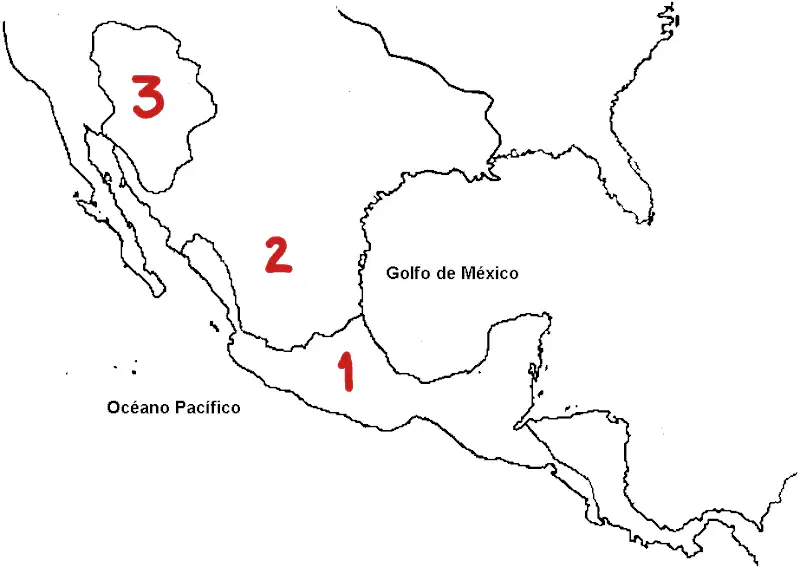
Locate correctly the following historical areas.
1 - Aridoamerica
2 - Oasisamerica
3 - Mesoamerica
1 - Mesoamerica
2 - Oasisamerica
3 - Aridoamerica
1 - Mesoamerica
2 - Aridoamerica
3 - Oasisamerica
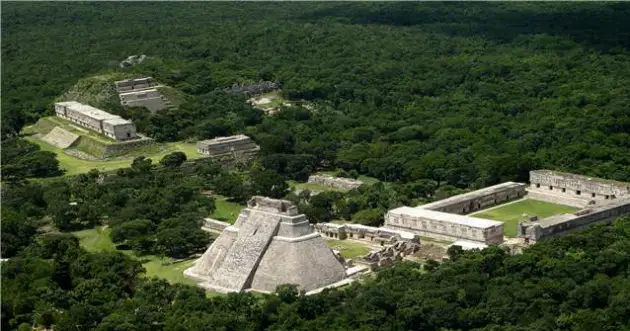
From the area known as Mesoamerica, what would be an example of the landscape where its inhabitants were established?

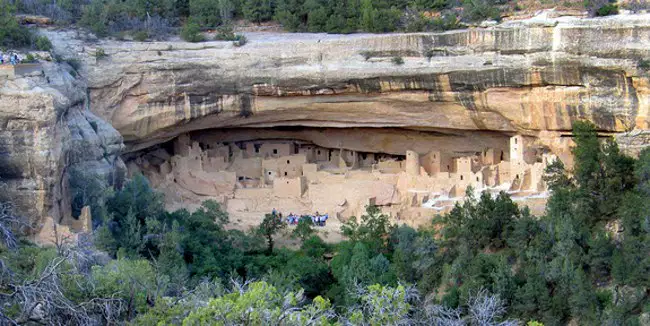
From the area known as Oasisamerica, what would be an example of the landscape where its inhabitants were established?