
 Worksheets
Grade 7 Heat and Temperature Unit Review
Total questions: 72
Worksheet time: 52mins
Which of the following is NOT a way heat is transferred?
Conduction
Convection
Radiation
condensation
What state of matter would a chocolate chip cookie be?
Solid
Delicious
Liquid
Gas
In a (a) the particles are packed tight and in a pattern.
In a (a) the particles are close together but can flow and change shape.
In a (a) the particles are free and move away from each other as much as possible.
What happens to particles when they are heated up?
The contract
They move slow
The expand
The make noise
What happens to particles when they are cooled?
They expand
They move quicker
They contract
They put on sweaters
Temperature is the (a) kinetic energy of the particles of a substance
Heat energy is the transfer from matter that has a (a) temperature to something at a lower temperature
When I stir hot soup with a metal spoon, and the spoon burns my hand, that is an example of _______?
convection
radiation
conduction
thermal heat
Putting a furnace in the basement so the hot air rises throughout the house is an example of _____?
convection
radiation
conduction
thermal radiation
Heat from the sun warming up Earth is an example of ______?
convection
radiation
conduction
Thermal heat
What form of heat transfer can only occur in space?
conduction
radiation
convection
What form of heat transfer CANNOT occur in a liquid?
conduction
radiation
convection
What form of heat transfer can only occur in a gas?
conduction
radiation
convection
What is the name of the device used to regulate the temperature of your house?
furnace
thermostat
electric heater
What can you put in the walls and roof of your house to keep the heat in or out of your house?
thermostat
insulation
curtains
Why is it important to conserve energy?
So we spend more money on heating/cooling
To make hour houses look cool
To save resources in our environment
Heat is...
the movement of thermal energy from an area of higher temperature to an area of lower
the movement of thermal energy from an area of lower temperature to an area of higher
the movement of thermal energy from an area of higher temperature to an area of higher
the movement of thermal energy from an area of lower temperature to an area of lower
Which temperature scale is used by scientists?
Fahrenheit
Celsius
Frankenstein
Stauffenheit
The transfer of thermal energy caused by collisions between particles is called
conduction
convection
radiation
irrigation
navigation
The transfer of thermal energy caused by electromagnetic waves
convection
conduction
radiation
recreation
avocation
The transfer of thermal energy caused by the movement of particles from one part of a material to another is called
conduction
convection
constipation
transportation
obfuscation
An object that energy moves through quickly is called a
insulator
conductor
obstructor
contractor
doctor
An object that energy moves through slowly is called a
conductor
insulator
chiropractor
retractor
detector
Sean ordered a cup of hot chocolate at a coffee shop. As he began to take a sip he realized that it was too hot to drink but he does not want to wait to drink it. What should Sean do to lower the temperature of the hot chocolate?
He can pour it in to a bigger cup.
He can remove heat by adding ice.
He can add more hot chocolate to the cup.
He can remove some of the hot chocolate from the cup.
At room temperature, the metal mercury is a liquid. How could mercury be changed into a solid?
by adding heat
by removing heat
by decreasing the density of the mercury
by isolating the mercury from outside forces
In order to make iced tea Lois brings a pitcher of water to a boil, adds tea and allows it to steep for 5 minutes. After 5 minutes have passed Lois removes the tea bag and adds ice to cool the tea. Which of the following best describes the direction of the flow of thermal energy?
Thermal energy flows from the tea to the ice.
Thermal energy flows from the ice to the tea.
Thermal energy flows between the ice to the air equally.
Thermal energy flows between the ice and the tea equally.
An air conditioner cools a room. The cool air sinks and the warmer air rises. This is an example of
radiation
conduction
convection
constipation
reiteration
Joe places two solid objects in contact with each other. Which property determines the direction of the flow of heat between the two objects?
material of the objects
volume of objects
density of objects
temperature of objects


How does a device made up of two different metals joined together operate to control devices or appliances?
By generating a magnetic field.
By emitting light when heated.
By producing heat directly.
By expanding and contracting in response to temperature changes.
What is the result of particles within a substance moving more due to the gain of heat energy?
More space between them
Less space between them
No change in space
They become solid
In which state of matter (solids, liquids, or gases) does the volume change the most with temperature?
solids
liquids
gases
all states change equally
What term is used to describe the process when a substance changes from a liquid to a gas?
Evaporation
Condensation
Freezing
Melting
When a substance changes from a gas to a liquid, what is this process called?
Sublimation
Condensation
Evaporation
Freezing
During which change of state does a substance absorb heat energy from its surroundings?
Condensation
Freezing
Deposition
Evaporation
If you have a piece of dry ice and it turns directly into water vapor without becoming a liquid first, what process is this?
Melting
Sublimation
Freezing
Condensation
What describes the process of convection currents in fluids?
The random movement of individual particles within the fluid.
The direct collisions between particles leading to fluid movement.
The upward movement of warmer, less dense fluid and the downward movement of cooler, denser fluid.
The transfer of thermal energy through electromagnetic waves within the fluid.

How does the thermal energy of the liquid in the larger beaker compare to the thermal energy of the liquid in the smaller beaker?
The liquid in the larger beaker has less thermal energy than the liquid in the smaller beaker.
The liquid in the larger beaker has more thermal energy than the liquid in the smaller beaker.
The liquid in the larger beaker has the same amount of thermal energy as the liquid in the smaller beaker.
The exact volume of the liquid in each beaker must be known to compare the thermal energy of the liquids.

A device that measures temperature.
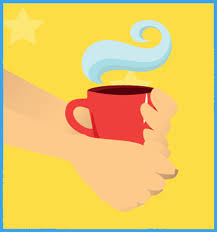
When I drink coffee in the morning, I warm my hands on the mug by what type of heat transfer?
conduction
convection
radiation
coziness
Which characteristic is included in the particle theory of matter?
All matter is made up of tiny particles
All particles in a pure substance are the same
Particles are always moving
All of the above
Which characteristic is included in the particle theory of matter?
All matter is made up of tiny particles
All particles in a pure substance are the same
Particles are always moving
All of the above
Which phase change takes place when a liquid turns into a solid...
melting
condensation
freezing
evaporation
What phase change occurs when a gas turns into a liquid
freezing
condensation
melting
evaporation
Temperature depends on --------------------- of the particle?
Kinetic energy
Thermal Energy
Power Energy
Which state of matter does not have a definite shape but does have a definite volume?
Solid
Liquid
Gas

What effect will the heat have on the air inside the bottle/balloon?
Thermal contraction.
Temperature decrease.
Thermal expansion.
Change in state.

Analyze the image. What effect will heat have on object 1 after a while?
Temperature decrease.
Temperature increase.
Thermal expansion.
Change in state.



