
 Worksheets
Grade 8 Light and Optics Unit Review
Total questions: 79
Worksheet time: 2hrs 28mins


Which lens represents the path light takes through a diverging lens?


Which figure represents the path light takes through a converging lens?
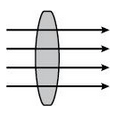
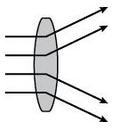
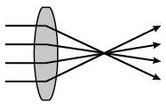
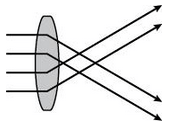
Which optical device bends light inward?
convex lens
concave lens
plane mirror
convex mirror
A lens that is thicker in the middle than on the outside is called ___.
diverging
concave
convex
achromatic
A lens that is thinner in the middle than on the outside is called ___.
diverging
concave
convex
achromatic

Which technology CAPTURES and MAGNIFIES light?
Telescope
Microscope
Camera
All of them

Which optical technology do we use to observe small things?
Telescope
Microscope
Camera
ALL of them

Which technology do we use to observe FARAWAY objects?
Telescope
Microscope
Camera
All of them

Which technology focuses light onto film/sensor so it can create a picture?
Telescope
Microscope
Camera
All of them

What do all optical technologies need?
Light
Something to focus
A machine
A magnifying glass
Which statement is true?
Rods detect light.
Rods detect colour.
Rods are the material which colours the eye.
All of the above
Pixel stands for
image dot
picture element
image element
none of the above


We see objects because light is reflected off of them.
True
False
Which of the following is NOT a true statement about light?
Light can be absorbed.
Light can be abstracted.
Light can be bent.
Light can be reflected.
Light changes _____________ as it moves from air to water.
its mind
direction
color
focus

Your eyes are ____________ lenses.
convex
concave
contact
all of the above
Light is a form of ___________ that travel in a straight line.
energy
resources

which type of lens will help correct this vision problem
convex
concave
opaque
plano

The angle of incidence is equal to the angle of reflection
Law of Reflection
Law of Light
Incidence Ray
The Normal

This is an example of
Refraction.
Transparent
Opaque
None.
In a straight line
What is the law of reflection?
The angle of incidence is greater than the angle of reflection.
The angle of reflection is perpendicular to the angle of incidence.
The angle of reflection is less than the angle of incidence.
The angle of incidence is equal to the angle of reflection.
A beam of light drawn as straight lines with arrows
Incidence Ray
Reflected Ray
X-ray
Ray

The picture shows which type of reflection?
Specular
X-ray
Diffuse
Normal

The ray of light that strikes a mirror
Reflected Ray
Incidence Ray
Angle of Incidence
Angle of Reflection

The ray that bounces off the mirror.
Angle of Reflection
Incidience Ray
Reflected Ray
Angle of Reflection

The angle between the incident ray and the normal. (X on the diagram)
Angle of X-Ray
Angle of Reflection
Angle of Incidence
Angle of Normal

The angle between the reflected ray and the normal (labelled Y on the diagram).
Angle of Incidence
Angle of Reflection
Angle of Normal
Angle of Light

An imaginary line that is drawn at a right angle (90 degrees) to a mirror (Green line)
Reflection Ray
Normal
Incidence Ray
Light Ray

If the angle of incidence in the diagram is 80°, the angle of reflection will be:
10°
100°
90°
80°

True or False: This diagram shows the correct position of the mirrors so that the light hits the target
True
False
Which of the following concepts is associated with Sir Isaac Newton?
Sight occurred when light beams from the eyes struck an object.
Sight occurs when light bounces off an object to the eye.
Light travels in straight lines, and the law of reflection.
White light is a mixture of colors.
The best explanation for shadows is
black light is projected onto an object
light bends only part way round solid objects
when light hits an opaque object, it cannot go any further
when light strikes an object, the object projects a black light
Lin’s theatre group wants to create a dark and gloomy forest scene. They cut out a silhouette of trees from thick, black paper and hold it in front of a stage light to create a shadowy effect. The problem is the shadow cast on the backdrop is too small. What could they do to increase the size of the shadow?
Move the light away from the paper cutout.
Move the paper cutout closer to the curtain.
Move the paper cutout closer to the light.
Trim the paper cutout to a smaller size.
The primary colors of light are
red, green, indigo
red, green, blue
black, white, yellow
magenta, cyan, yellow

What causes the light to refract as it passes from air to water?
a change in temperature of the light
a change in illumination of the light
a change in speed of the light
a change in brightness of the light

#1 Refers to the clear tissue that covers the front of the eye
Retina
Cornea
Pupil
Iris

# 5 refers to the layer of receptor cells at the back of the eye in which the image is focused
Retina
Lens
Optic Nerve
Lens

#3 Refers to the circular structure that surrounds the pupil and regulates the amount of light entering the eye.
Cornea
Pupil
Retina
Iris

#2 refers to
optic nerve
cornea
iris
pupil
Which type of vision allows you to see distance clearly but nearby objects appear blurry?
farsighted
nearsighted
Which cells distinguish between black, white and shades of gray?
Cones
Rods
Optic Nerves
Iris
What do you call the spot where there is a lack of cones and rods, where the optic nerve begins at the back of the eye?
Optical Nerve entrance
Optical Divide
Blackspot
Blindspot

Which of the following would result in a larger shadow to be cast on the screen?
Move the screen nearer the object.
Move the object closer to the screen.
Move the light source nearer the object.
Move the light source away from the object.

Given that the angle of incidence = 30 degrees
Which is the correct diagam?
A
B
C
D
If you were using a plane mirror to help put in an earring, which of the following statements would be true?
Your image appears larger and inverted.
Your image appears smaller and inverted vertically.
Your image is the same size and upright
Your image is the same size and inverted vertically.
What occurs to light rays after they hit a convex mirror?
They converge
They diverge
They reflect at right angles.
They are absorbed.
Light travels fastest through which of the following materials?
Diamond
Glass
Water
Air

On the diagram, E is:
The angle of incidence
The normal
The angle of reflection
The angle of refraction

In the ray diagram below, which angle represents the refracted angle?
A
B
C

Based on the diagram, which is statement is correct?
P and Q are media with different densities
P and Q shares equal densities
Q is denser than P
P is denser than Q

If medium Q is more optically dense than medium P, which of the following is a possible refracted ray?
A
B
C
D


Which one of the following is true both for human eye and digital camera?
the sensor detects light.
the aperture controls the amount of light that enters.
the lens focuses the light.

What is the responding variable in this experiment?
distance between lens and eraser
length of eraser
type of lens in visualizer
length of image

Why does your pupil increase in size when you enter a dark room?
To protect the eye
to allow more light to enter the eye
to allow less light to enter the eye
to creep people out

