
 Worksheets
Chemistry Diagnostic v1
Total questions: 30
Worksheet time: 33mins
All matter is made of what...
energy
atoms
electrons
compounds
The positive particles of an atom are
electrons
positrons
neutrons
protons
The central region of an atom where its neutrons and protons are is its
nucleus
electron cloud
core
center
Particles in an atom that are neutral and have no charge are
negatrons
electrons
neutrons
protons

What does the 1.00794 stand for?
Hydrogen
atomic number
atomic mass
atomic explosion
In the modern periodic table, elements are arranged by:
atomic mass
atomic number
valence electrons
number of isotopes
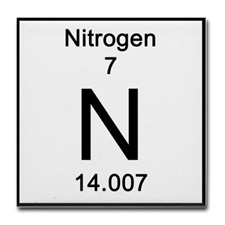
What is the number of protons that the element in this image contain?
14
7
15
18
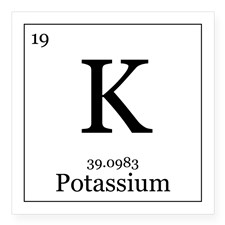
How many neutrons are in the atom "K"?
7
2
39
20
What two sub-atomic particles belong in the nucleus of an atom?
electrons and protons
protons and neutrons
electrons and neutrons
The reactant that is completely used up in a chemical reaction is called the:
limiting reactant
limiting product
excess reactant
excess product
The coefficients in a chemical equation represent the
masses, in grams, of all reactants and products.
relative numbers of moles of reactants and products
number of atoms in each compound in a reaction
number of valence electrons involved in the reaction
How many atoms of hydrogen are in a molecule of ammonia, NH3
1
2
3
4
Which of the following is a sign of a chemical reaction?
Combustion (burning)
State or phase change
A change in shape
A change in texture
Compounds are chemically bonded together.
False
True
Usually true
Usually false
Which of the following is a chemical property?
Ability to rust
Ability to conduct heat
Volume
Ability to be magnetic
Materials that do not transfer energy easily
Insulators
Conductors
Energy
Heat
Materials that transfer energy easily are
Conductors
Insulators
Heat
Energy
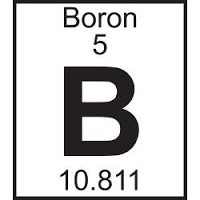
Using the information provided, determine how many electrons the a Boron atom contains.
2.5
5
6
10.81

Calculate the number of neutrons for potassium.
20
19
39
58
The number of protons is equal to the number of electrons.
True
False
Protons + __________ = atomic mass
electrons
neutrons
neither

What does a represent?
Proton
Neutron
Electron
What does b represent?
Proton
Neutron
Electron
What does c represent?
Proton
Neutron
Electron

