
 Worksheets
Unit 7 Exam Review
Total questions: 61
Worksheet time: 31mins

Based on the provided data, which of the following correctly identifies a renewable natural resource?
Oil
Coal
Solar Energy
Uranium

Fill in the blank: _______ is classified as a non-renewable resource.
Wind Energy
Timber
Uranium
Geothermal Energy
Which of the following best defines a natural resource?
Any material that is man-made or synthetic.
Resources found only in urban areas such as buildings and roads.
Materials or substances that occur in nature and can be used for economic gain or to meet human needs.
Items that are primarily used for recreational purposes.

Why is resource management crucial in reducing global energy consumption?
To ensure only wealthy nations have access to energy
To encourage wasteful use of energy resources
To promote the efficient use of energy and reduce waste
Restrict access to energy for certain communities
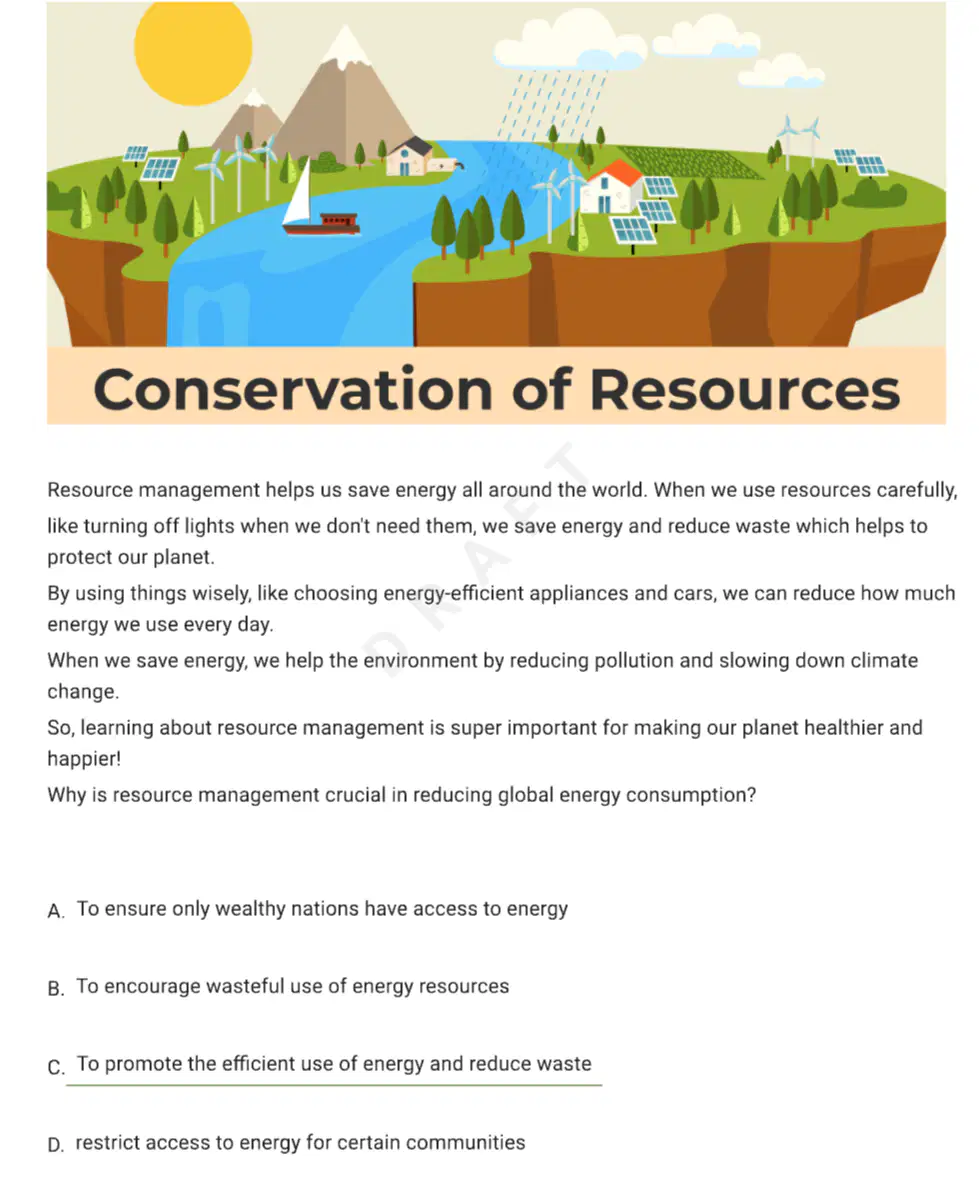
By using energy-efficient appliances and cars, we can reduce how much energy we use every ____. A. year B. month C. day D. hour
year
month
day
hour
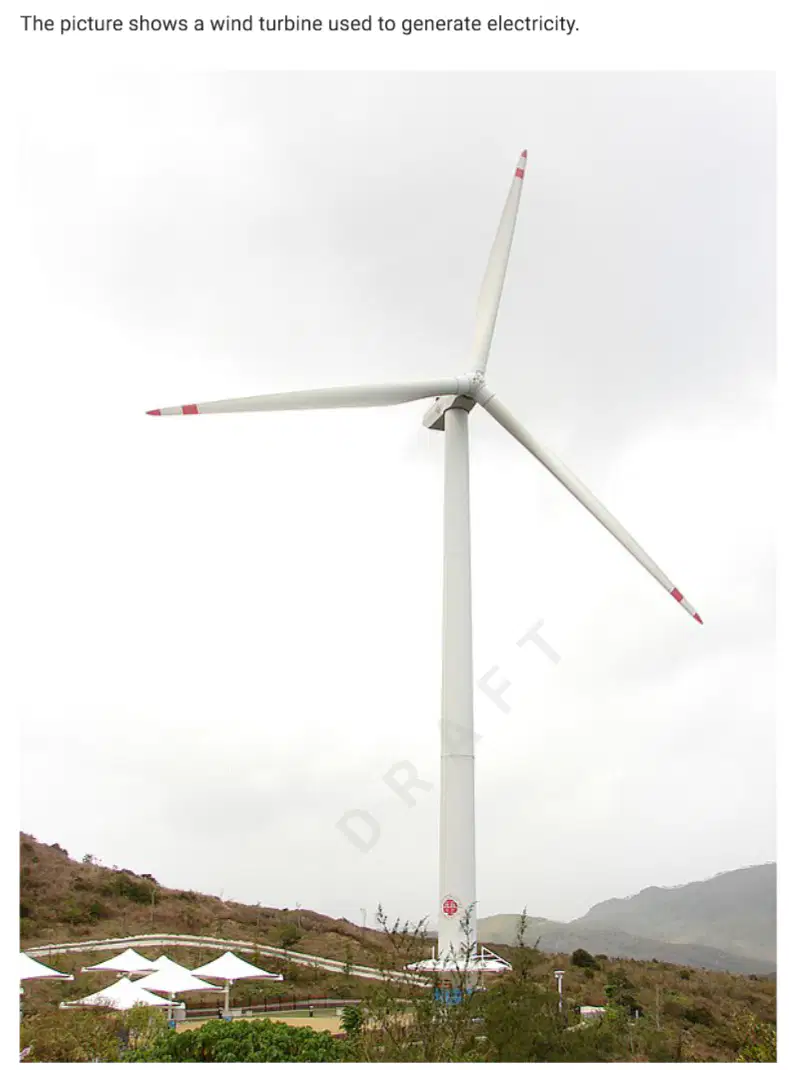
Which of the following is an advantage of using wind turbines to generate energy for a city?
Wind turbines are quiet and improve scenic areas.
Wind turbines are suitable for any location in the country.
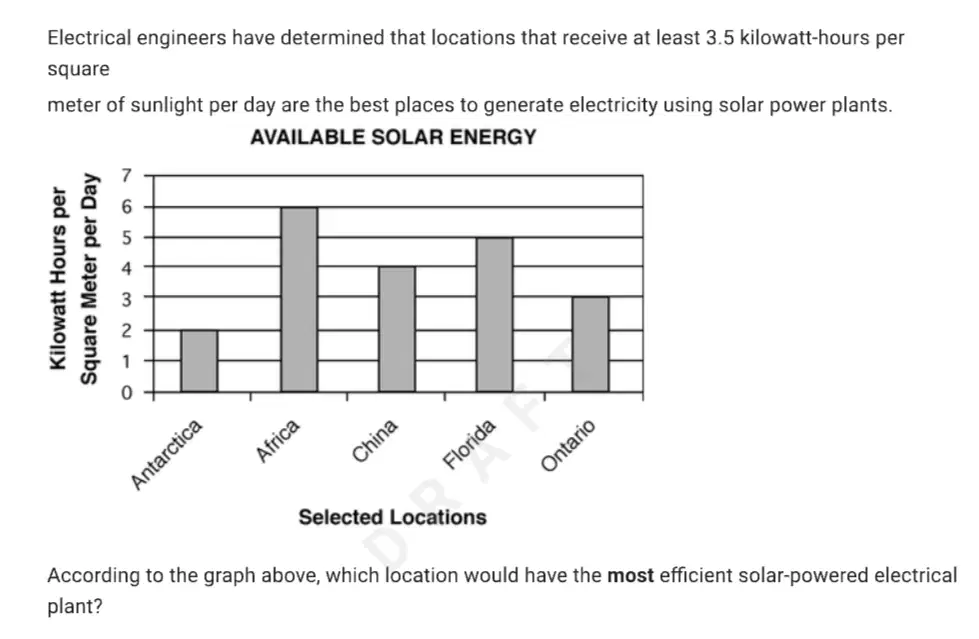
According to the graph, which location receives the highest kilowatt-hours per square meter per day?
Africa
Antarctica
China
Florida

Fill in the blank: Locations that receive at least ___ kilowatt-hours per square meter per day are ideal for solar power plants.
2.5
3.5
4.5
5.5
Which statement is true about wind turbines?
They require a lot of space.
They produce carbon dioxide.
They produce continuous power.
They require sunshine.
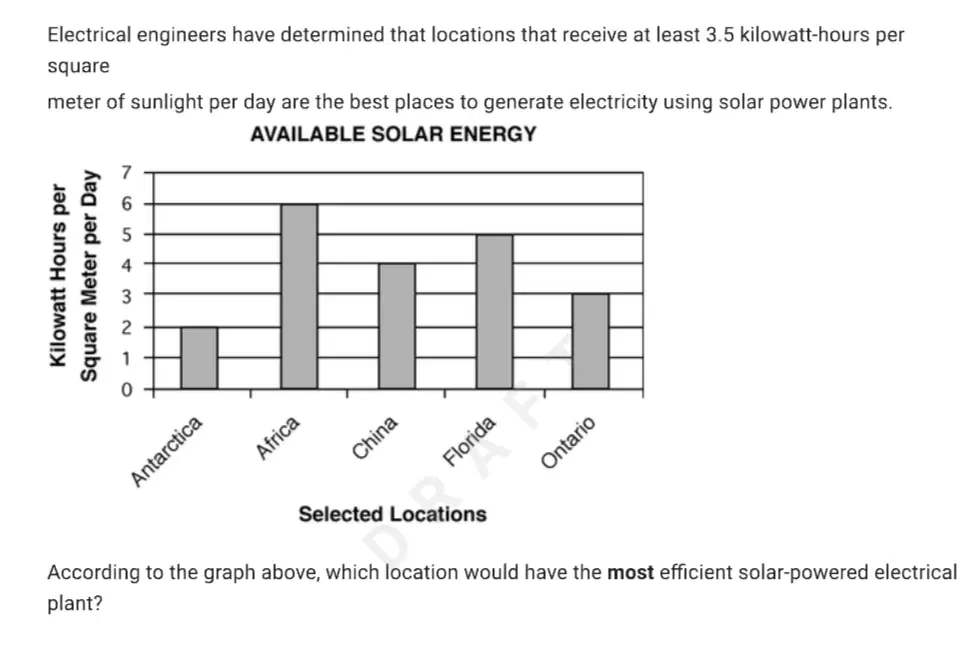
According to the graph, which location would have the most efficient solar-powered electrical plant?
Africa
Antarctica
China
Florida

Which of the following is a renewable resource?
Coal
Petroleum
Wind Energy
Natural Gas
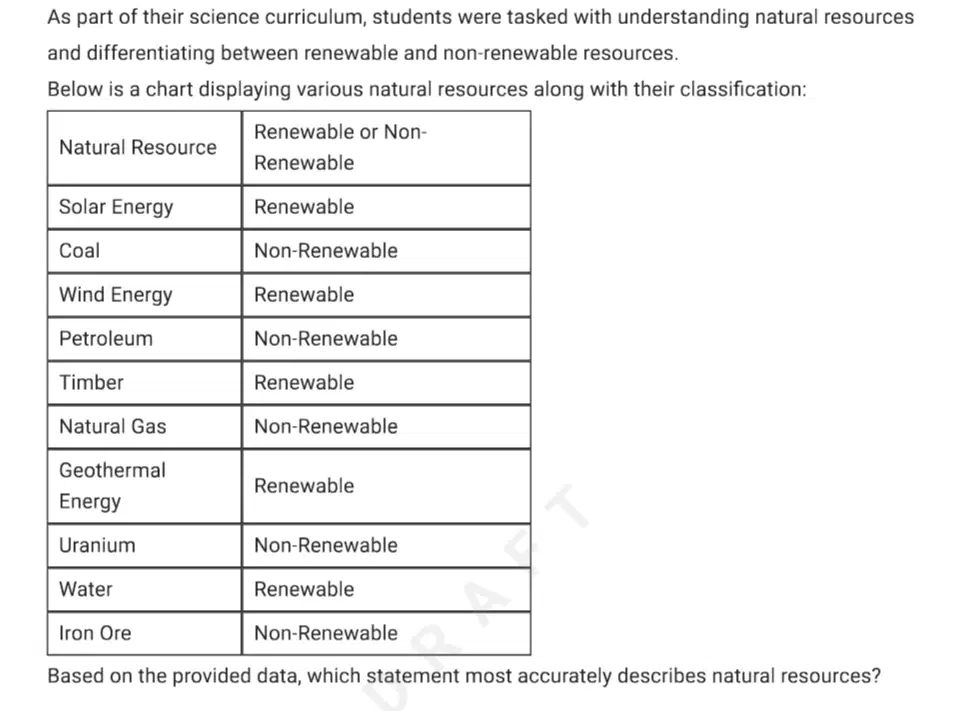
Fill in the blank: _______ is a non-renewable resource.
A) Solar Energy
B) Timber
C) Uranium
D) Water

Which energy resource has the potential for conflict with other needs?
Solar Energy
Wind Energy
Geothermal Energy
Water Resources
Fill in the blank: The community is exploring options for a _______ future.
darker
greener
limited
restricted
Which energy resource captures the kinetic energy of water to generate electricity?
Hydroelectric Dam
Geothermal Resources
Wind Energy
Solar Energy
How could a community apply the principles of conservation to manage water resources effectively?
Installing rainwater harvesting systems
Increasing water usage for recreational activities
Building more swimming pools for public use
Using water-intensive crops in agriculture
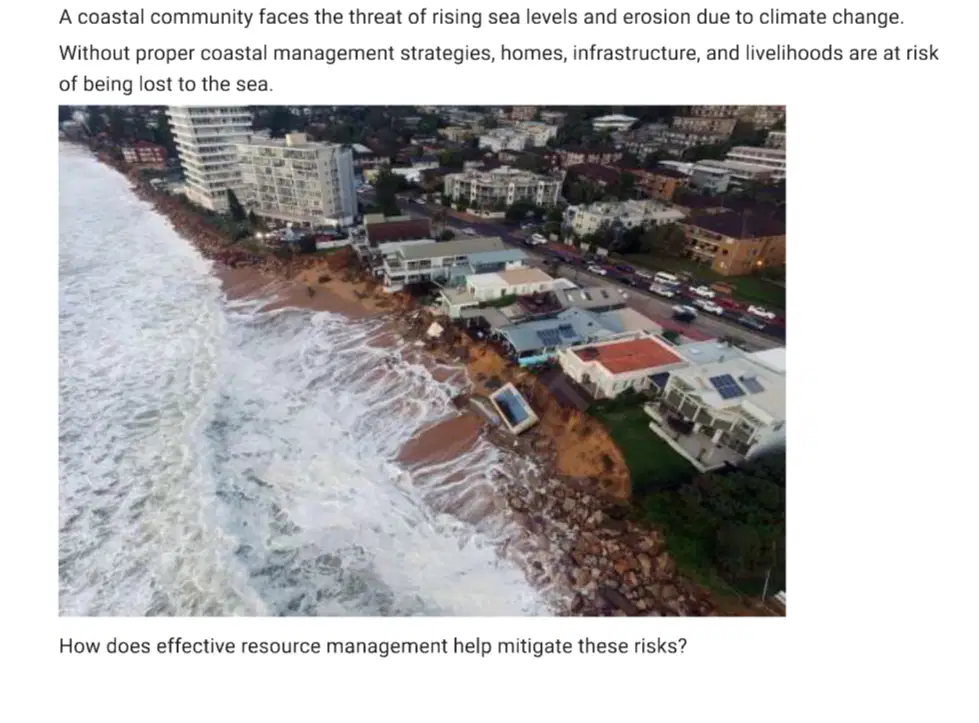
A coastal community is at risk of being lost to the sea due to rising sea levels. What strategy should be implemented to protect it?
Increase coastal tourism
Implement coastal protection measures
Encourage coastal development
Ignore climate change

How does Jake's neighborhood's initiative exemplify the principles of conservation, increased efficiency, and technology in managing air resources?
A. By increasing reliance on fossil fuel-powered vehicles
B. By neglecting the impact of transportation on air quality
C. By introducing cleaner transportation options to reduce air pollution
D. By promoting the use of high-emission vehicles
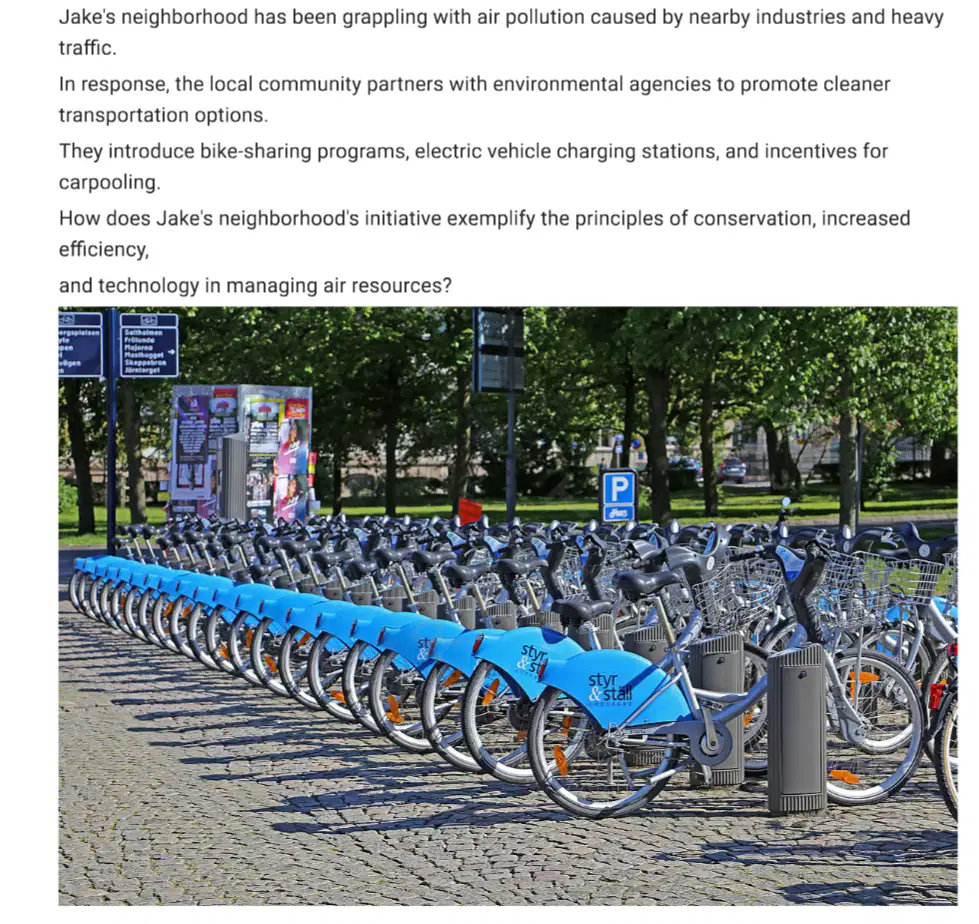
Jake's neighborhood is addressing air pollution by ______.
increasing the use of fossil fuels
promoting cleaner transportation options
ignoring environmental concerns
building more roads
What are natural resources?
Materials that come from nature
Man made materials
Resources created in laboratories
Material found only in cities
Why is understanding resource management crucial in addressing this issue?
Understanding resource management ensures equitable distribution of timber among logging companies.
Understanding resource management promotes the conservation of forests through sustainable forestry practices.
Understanding resource management encourages further deforestation to stimulate economic growth.
Understanding resource management neglects the impact of deforestation on biodiversity and ecosystems.
Why is resource management important for addressing global environmental challenges?
Because it worsens environmental degradation by promoting unsustainable practices
Because it ensures the sustainable use of natural resources, minimizing harm to the environment
Because it solely focuses on economic development, disregarding environmental impacts
Because it encourages unchecked exploitation of resources, leading to increased pollution levels
How does Emily's school's energy-saving initiatives demonstrate the principles of increased efficiency and technology in managing energy resources?
By increasing energy consumption through inefficient lighting
By investing in renewable energy sources like solar power
By promoting the use of energy-intensive appliances in school facilities
By neglecting energy conservation measures during renovations

When assessing the sustainability of agricultural practices in a desert environment, which factor would be most important to consider in terms of preserving natural resources?
Implementing organic farming techniques to reduce chemical inputs
Introducing genetically modified crops to increase yield per acre.
Using drip irrigation systems to minimize water wastage.
Clearing large areas of natural vegetation for monoculture farming.
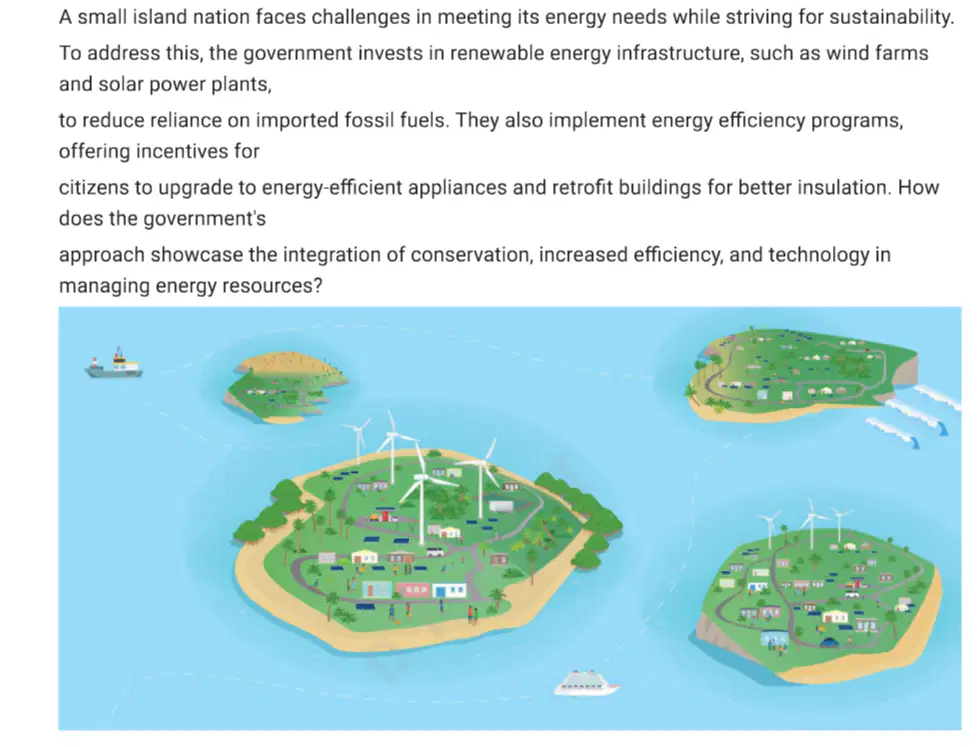
How does the government's approach showcase the integration of conservation, increased efficiency, and technology in managing energy resources?
By investing in renewable energy infrastructure and promoting energy efficiency programs to transition towards a more sustainable energy future.
By continuing to rely heavily on imported fossil fuels, perpetuating energy insecurity and environmental degradation.
By neglecting renewable energy options in favor of traditional fossil fuels, hindering progress towards sustainability.
By advocating for the construction of more coal-fired power plants, which are harmful to both public health and the environment.
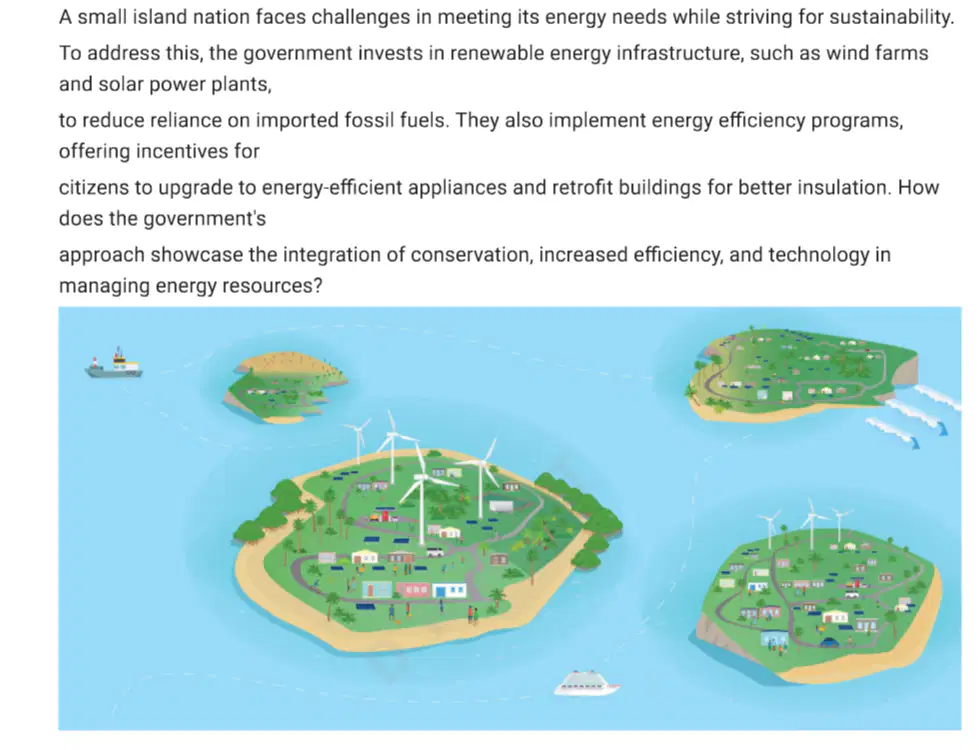
The government invests in renewable energy infrastructure, such as wind farms and solar power plants, to reduce reliance on ________.
Imported fossil fuels
Renewable energy sources
Energy efficiency programs
Coal-fired power plants
Which of the following is an example of a non-renewable resource?
Solar energy
Water
Fossil Fuels
Wind Energy

Based on the data provided, which renewable energy resource would be the most suitable choice for the developing nation to transition to as they move away from fossil fuels?
Wind Energy
Hydropower
Solar Energy
Geothermal Energy

Which natural resource has high availability and is very suitable for renewable energy?
Solar Energy
Wind Energy
Biomass
Hydropower
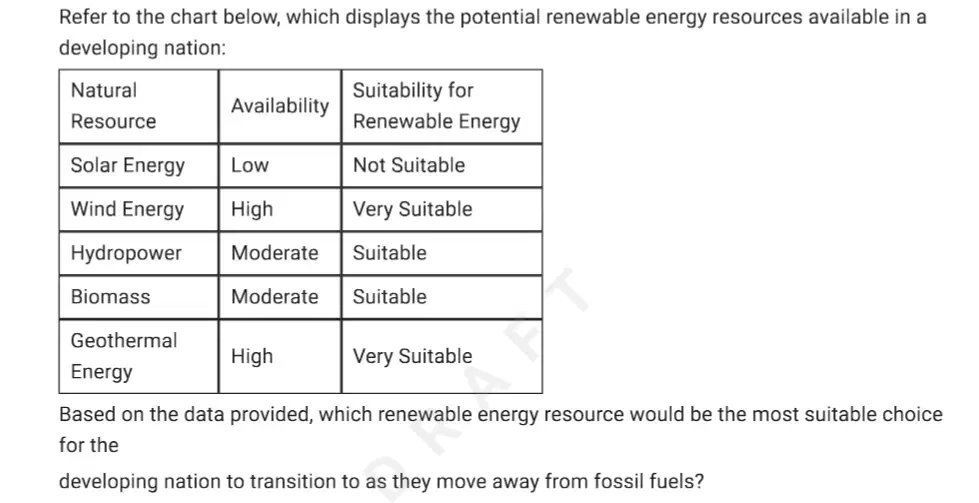
Fill in the blank: _______ has moderate availability and is suitable for renewable energy.
Solar Energy
Wind Energy
Biomass
Geothermal Energy
What is a key benefit of using solar panels for energy production?
They provide a renewable source of energy.
They require constant maintenance.
They produce harmful emissions.
They are only effective in cold climates.
Which of the following strategies can help reduce water consumption in agriculture?
Drip irrigation
Expanding farmland
Increasing pesticide use
Flood irrigation
What is the primary reason for promoting the use of electric vehicles?
To reduce air pollution and greenhouse gas emissions
To decrease the use of renewable energy
To increase fossil fuel consumption
To make vehicles more expensive
What is a significant benefit of using geothermal energy?
It is dependent on weather conditions.
It produces a constant supply of energy.
It requires large areas of land.
It emits high levels of greenhouse gases.
Which of the following practices can help in conserving water resources?
Using flood irrigation in agriculture
Implementing rainwater harvesting systems
Increasing industrial water usage
Expanding urban development without planning
Why is it important to transition to renewable energy sources?
To limit energy access to certain regions
To increase dependency on fossil fuels
To reduce environmental pollution and conserve natural resources
To make energy more expensive
What is a key advantage of using wind energy over fossil fuels?
Wind energy is non-renewable.
Wind energy is only available in urban areas.
Wind energy produces no greenhouse gas emissions.
Wind energy is more expensive to produce.
Which method can be used to improve energy efficiency in residential buildings?
Using single-pane windows
Increasing the use of incandescent bulbs
Expanding the use of fossil fuels for heating
Installing energy-efficient appliances
Why is it important to manage forest resources sustainably?
To increase deforestation rates
To ensure long-term availability of timber and maintain biodiversity
To promote the use of non-renewable resources
To reduce the cost of logging operations
It is estimated that at current rates of use, the world will run out of mineable oil within the next 40-70 years. What do you think will happen to the price of oil as oil reserves begin to be used up?
Oil prices will go down. When oil is less available, people won’t want it as much.
Oil prices will go up. When there is less oil, they can charge more for it.
Oil prices won’t change. Availability doesn’t affect price.
We won’t know how prices will change until it actually happens
One likely reason some experimental automobiles have been developed to use electricity rather than gasoline is that:
Gasoline is made from petroleum, a nonrenewable resource
Earth has an unlimited supply of fossil fuels
The use of electricity will eliminate the need for all anti-pollution laws
The use of electricity will increase the manufacturing of devices that will cause cars to pollute less
Erica's neighborhood is getting together to plant
trees in a local park. She says this will help to
control air pollution. Which answer best
describes how this helps to control air pollution?
Trees use their leaves to make food for
themselves, leaving more food for other animals.
Trees use their leaves to catch rain, reducing the
amount of flooding in the area.
Trees use their leaves to provide shade for
animals, helping to increase animal populations.
Trees use their leaves to help decrease carbon
dioxide and increase oxygen in the air.

Many human activities are powered by burning
fossil fuels. Burning fossil fuels releases CO2, a
greenhouse gas, into Earth's atmosphere. The
graph below shows a relationship between
human emissions of CO2 and atmospheric CO2
concentrations during part of the last century.
The table lists the concentrations of CO2 in
Earth's atmosphere and average surface
temperatures on Earth at two times in the past
century.
Which argument can BEST be made about the
contribution of human activities to changes in
global temperatures based on the data shown?
Human activities are decreasing the
concentration of CO2 in Earth's atmosphere,
which is decreasing global temperatures.
Human activities are increasing the
concentration of CO2 in Earth's atmosphere,
which is increasing global temperatures.
Human activities are increasing the
concentration of CO2 in Earth's atmosphere,
which is decreasing global temperatures.
Human activities are decreasing the
concentration of CO2 in Earth's atmosphere,
which is increasing global temperatures.
__________ is an energy resource that WILL NOT run out in the next several hundred years.
Renewable Energy Resource
Non-Renewable Energy Resource
__________ is an energy resource that WILL run out in the next several hundred years.
Renewable Energy Resource
Non-renewable Energy Resource
Which of the following is a renewable resource?
Oil
Solar
Coal
Natural Gas
Oil
renewable
non renewable
Water
Renewable- but we need to use it with caution
Non-renewable
The earth makes new water every day so we can use as much as we want
Making sure that people have what they need today, but also that the next generations have what they need, too.
conservation
sustainability
non renewable
The wise use of our resources
sustainability
renewable
conservation
The sun's energy
renewable
non-renewable
minerals like copper, aluminum, and gold
renwable
non-renewable
both renewable and non-renewable
Recycling is an example of what?
renewable resources
conservation
non-renewable resources
What is a natural resource?
Material from the Earth that people use for their needs.
A place hidden in the mountains.
An object made from natural things.
__________ is an energy resource that WILL NOT run out in the next several hundred years.
Renewable Energy Resource
Non-Renewable Energy Resource
__________ is an energy resource that WILL run out in the next several hundred years.
Renewable Energy Resource
Non-renewable Energy Resource
Which of the following is a renewable resource?
Oil
Solar
Coal
Natural Gas
Natural Gas is a __________ energy resource.
Renewable
Non-renewable
What is a key benefit of using solar panels for energy production?
They are only effective in cold climates.
They reduce reliance on fossil fuels and lower greenhouse gas emissions.
They produce energy only during the night.
They require a large amount of water to operate.
Which practice can help in reducing soil erosion in agricultural fields?
Increasing the use of chemical fertilizers
Clear-cutting all vegetation
Expanding monoculture farming
Implementing contour plowing
Why is it important to protect wetlands as a natural resource?
They are ideal locations for urban development.
They provide critical habitats for wildlife and help in water purification.
They are primarily used for recreational activities.
They are a major source of fossil fuels.

