
 Worksheets
Y8 Chemistry Unit Review
Total questions: 82
Worksheet time: 46mins
A chemical change can alter a substance by:
changing its physical state without altering its chemical composition.
rearranging its atoms to form a new substance with different properties.
dissolving it in water to form a solution.
breaking it into smaller pieces without changing its chemical identity.
State the different ways a chemical change can be detected.
Change in color, temperature, formation of a precipitate, and gas production
Only change in color
Only change in temperature
Only formation of a precipitate
A chemical reaction is a process that involves the transformation of one or more substances into different substances. What is a chemical reaction?
A process that involves the transformation of one or more substances into different substances
A process that involves the transformation of energy into matter
A process that involves the transformation of matter into energy
A process that involves the transformation of substances into energy
Identify reactants and products in a chemical reaction.
Reactants are substances that start a chemical reaction, and products are substances that are produced in the reaction.
Reactants are substances that are produced in the reaction, and products are substances that start a chemical reaction.
Reactants and products are the same in a chemical reaction.
Reactants and products cannot be identified in a chemical reaction.
Write a word reaction for a chemical change.
A + B -> AB
AB -> A + B
A + B <-> AB
A + B -> A + B
Define the term 'Irreversible'.
Irreversible means something that cannot be undone or altered.
Irreversible means something that can be easily changed.
Irreversible refers to a temporary state.
Irreversible is a term used for reversible processes.
Define the term 'Chemical reactions'.
A process that involves rearrangement of the molecular or ionic structure of a substance.
A type of physical change that alters the form of a substance without changing its identity.
A method of separating mixtures based on differences in their volatilities.
A technique used to determine the age of an artifact.
Define the term 'Fuel'.
A substance that is used to provide heat or power, usually by being burned.
A type of food that is consumed for energy.
A chemical element that is used in the production of plastics.
A liquid used for cleaning purposes.
Define the term 'Combustion'.
The process of burning something.
The process of freezing something.
The process of melting something.
The process of evaporating something.
Which of the following is a characteristic of a physical change?
A) New substances are formed
B) Often easy to reverse
C) Bonds between particles change
D) All of the above
True or False: In a physical change, bonds between particles don’t change.
True
False
One way to identify a physical change is:
Change in color
Formation of a new substance
Change in state
Emission of light
What is a chemical change?
A change that results in the formation of new chemical substances.
A change in the state of matter without altering the chemical composition.
A temporary change that can be easily reversed.
A change in size or shape without forming new substances.
Which of the following is an indicator of a chemical change?
A) Colour change
B) Shape change
C) Size change
D) Weight change
What can temperature changes indicate in a substance?
Phase change
Color change
Volume change
Mass change
Which of the following is NOT a sign of a chemical change?
Sound and/or light being produced
Solids disappearing
New solids (precipitate) being formed
Change in texture
What does bubbling and gas production indicate in a chemical reaction?
Formation of a new substance
Change in temperature
Change in color
Change in state
What is formed when new solids appear in a chemical reaction?
New solids are formed as products in a chemical reaction.
Gases are formed as products in a chemical reaction.
Liquids are formed as products in a chemical reaction.
Energy is released as products in a chemical reaction.
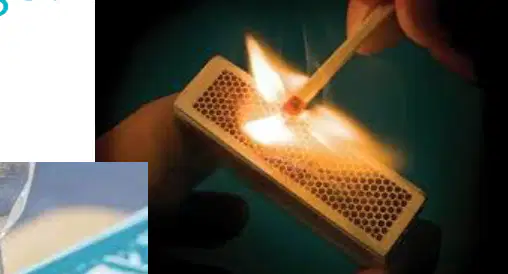
Is lighting a match a chemical or physical change?
Chemical Change
Physical Change
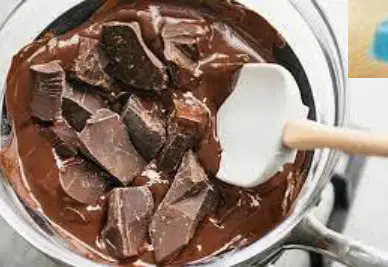
Is melting chocolate a chemical or physical change?
Chemical Change
Physical Change
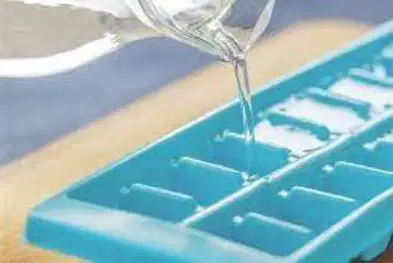
Is freezing water to make ice a chemical or physical change?
Chemical Change
Physical Change
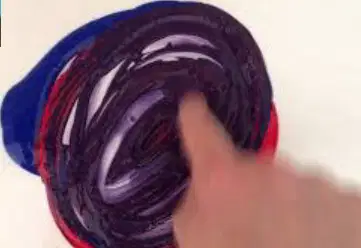
Is mixing paint to make a new colour a chemical or physical change?
Chemical Change
Physical Change
During a chemical change, what happens to the substances involved?
They remain the same
One or more new substances are formed
They disappear
They become colder.
Fill in the blank: Rearranging of atoms is called a __________.
chemical reaction.
physical change.
nuclear fusion.
ionization.
Chemical changes can't be easily reversed because:
they involve the formation of new substances.
they are physical changes.
they do not involve energy changes.
they are temporary changes.
What is needed for chemical bonds to be broken?
Water
Energy
Air
Light
What are reactants in a chemical reaction?
New substances formed
Old substances you started with
Atoms rearranged
Products
What are products in a chemical reaction?
Old substances you started with
New substances formed
Atoms rearranged
Reactants
During a chemical reaction, atoms in reactants rearrange to form _______.
products
reactants
elements
compounds
Explain where to place the reactants in a word equation. A shorthand description showing relationships between reactants and products.
Reactants are placed on the left side of the equation.
Reactants are placed on the right side of the equation.
Reactants are placed above the arrow in the equation.
Reactants are placed below the arrow in the equation.
Describe the role of the arrow in a word equation and where to place external factors. A shorthand description showing relationships between reactants and products.
The arrow indicates the direction of the reaction, and external factors are placed above or below the arrow.
The arrow shows the equality between reactants and products, and external factors are placed beside the reactants.
The arrow is used to separate reactants from products, and external factors are placed within the equation.
The arrow is decorative and has no role, and external factors are placed at the end of the equation.
Where should the products be placed in a word equation? A shorthand description showing relationships between reactants and products.
At the beginning of the equation
In the middle of the equation
At the end of the equation
Above the arrow in the equation
Word Equations: Identify the reactants and products in the given chemical equation.
A + B --> C + D
Reactants: A, B; Products: C, D
Reactants: C, D; Products: A, B
Reactants: A, C; Products: B, D
Reactants: B, D; Products: A, C
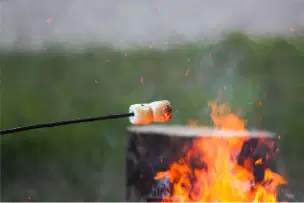
What occurs when something burns?
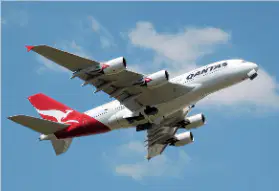
What is the name used for anything that burns?
Fuel
Water
Metal
Plastic
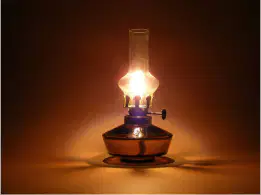
Fuel combines with oxygen to make new substances and release what?
energy
water
carbon dioxide
heat
What type of reaction occurs when a substance burns?
Define the term 'Chemical Change' as covered in this lesson.
A change that involves the formation of new substances
A change that does not involve the formation of new substances
A change that can be easily reversed
A change that only involves physical properties
Elements are arranged on the periodic table based on their:
atomic number
atomic mass
chemical symbol
electron configuration
Identify chemical symbols for the first 20 elements.
H, He, Li, Be, B, C, N, O, F, Ne, Na, Mg, Al, Si, P, S, Cl, Ar, K, Ca
H, He, Li, Be, B, C, N, O, F, Ne, Na, Mg, Al, Si, P, S, Cl, Ar, K, Sc
H, He, Li, Be, B, C, N, O, F, Ne, Na, Mg, Al, Si, P, S, Cl, Ar, K, Ti
H, He, Li, Be, B, C, N, O, F, Ne, Na, Mg, Al, Si, P, S, Cl, Ar, K, V
Locate elements on the modern periodic table.
Hydrogen, Helium, Lithium
Mercury, Venus, Earth
North, South, East
Red, Green, Blue
The term 'Atomic number' is defined as:
The number of protons in the nucleus of an atom
The number of neutrons in the nucleus of an atom
The total number of protons and neutrons in an atom
The number of electrons in a neutral atom
A 'Group' is defined as:
A collection of individuals who interact with each other.
A single individual with no interaction.
A random assortment of objects.
A mathematical term with no real-world application.
Noble gases are defined as:
A group of chemical elements with similar properties that are all odorless, colorless, monatomic gases with very low chemical reactivity.
A group of metals known for their high density and high melting points.
A type of gas that is highly reactive and forms compounds easily.
A group of elements that are liquid at room temperature.
Define the term 'Non-reactive'.
A term used to describe a substance that does not undergo a chemical reaction.
A term used to describe a substance that reacts violently.
A term used to describe a substance that changes color when exposed to air.
A term used to describe a substance that is highly flammable.
The term 'Period' is defined as:
a punctuation mark used at the end of a sentence
a length or portion of time
a phase in a cycle
a specific point in time
The term 'Periodic table' is defined as:
A chart of the elements arranged according to their atomic number, usually in rows, so that elements with similar atomic structure (and hence similar chemical properties) appear in vertical columns.
A table that lists all known chemical compounds and their properties.
A chart that organizes elements based on their date of discovery.
A table that categorizes elements by their melting points.
The term 'Reactive' is defined as:
A state of being responsive or reacting to stimuli.
A proactive approach to problem-solving.
A method of passive observation.
A technique for active engagement.
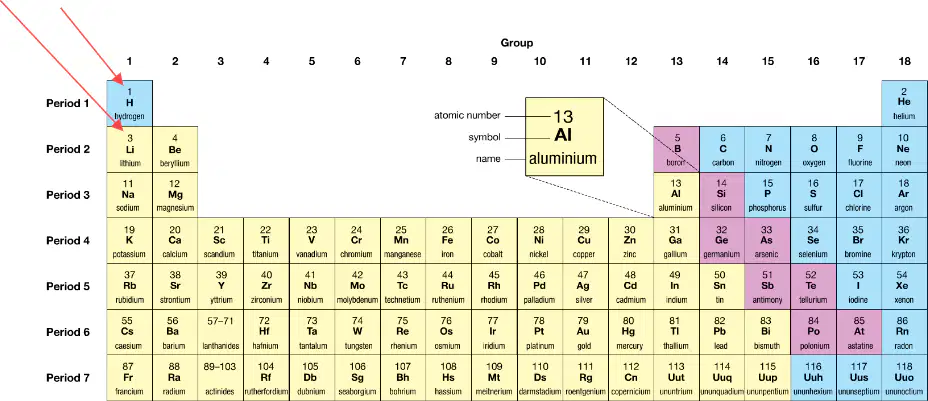
What is the atomic number for the following elements: Hydrogen (H)?
1
2
3
4
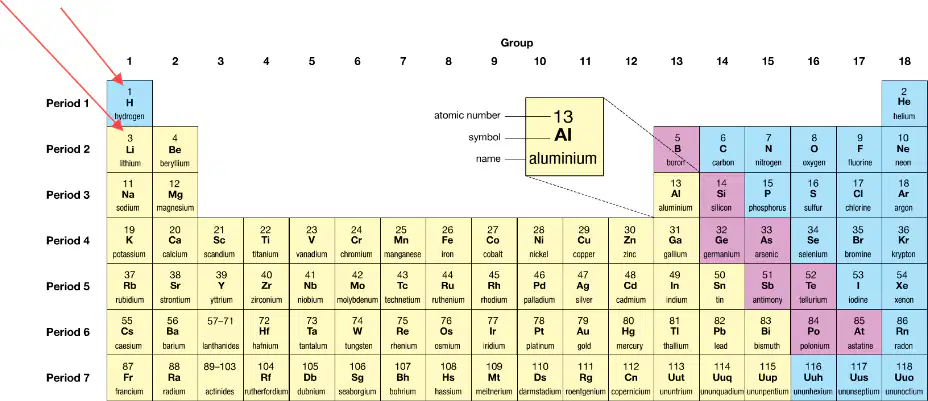
What is the atomic number for the following elements: Lithium (Li)?
The atomic number for Lithium (Li) is 3.
The atomic number for Lithium (Li) is 6.
The atomic number for Lithium (Li) is 9.
The atomic number for Lithium (Li) is 12.
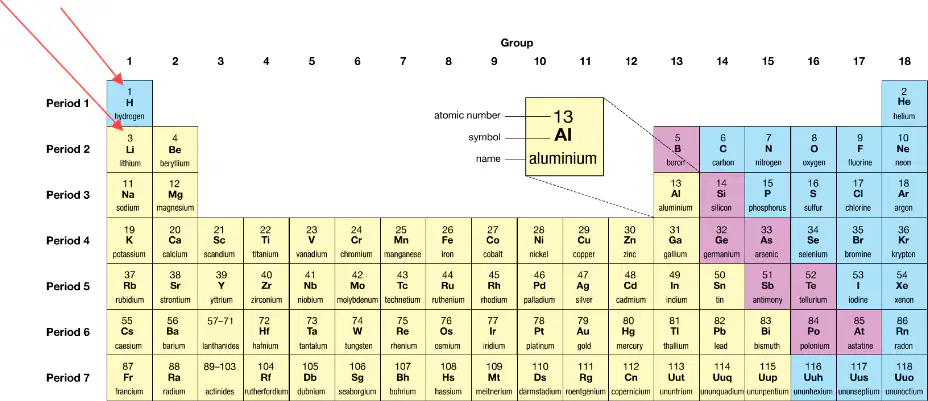
What is the atomic number for the following elements: Sodium (Na)?
The atomic number for Sodium (Na) is 11.
The atomic number for Sodium (Na) is 10.
The atomic number for Sodium (Na) is 12.
The atomic number for Sodium (Na) is 13.
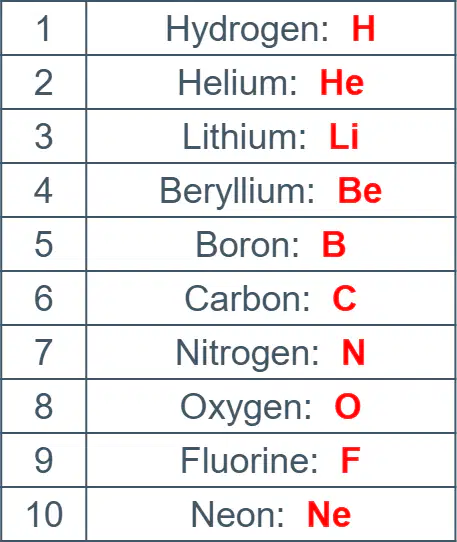
What is the symbol for Hydrogen?
H
He
O
N
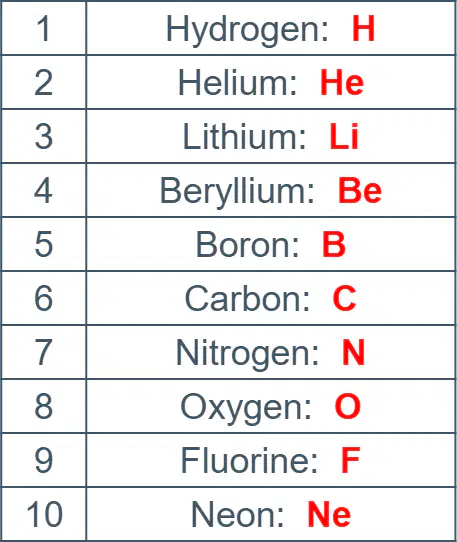
What is the symbol for Helium?
He
H
Li
Be
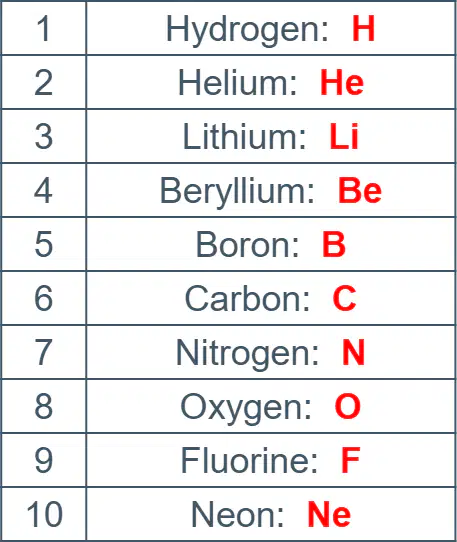
What is the symbol for Lithium?
Li
L
Lt
Lm
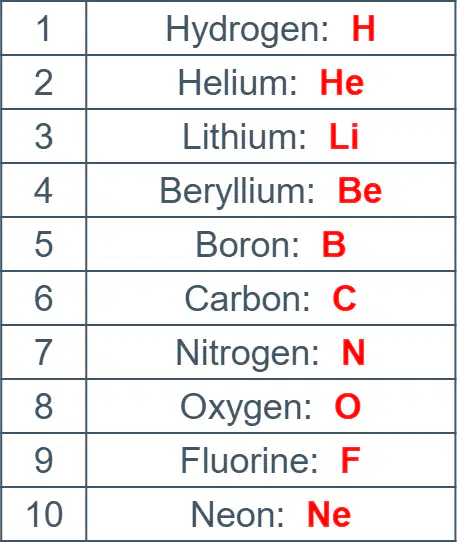
What is the symbol for Beryllium?
Be
B
Br
Ba
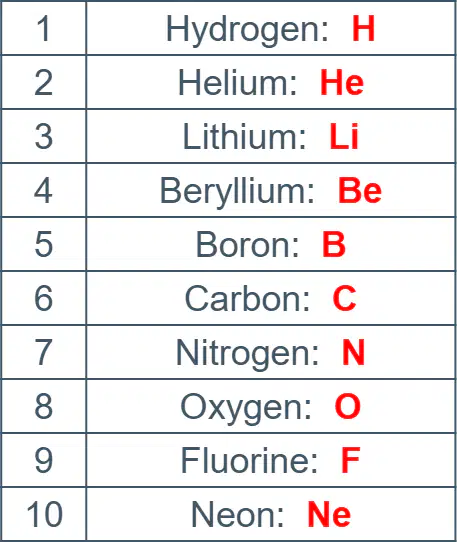
What is the symbol for Boron?
B
Bo
Br
Bn
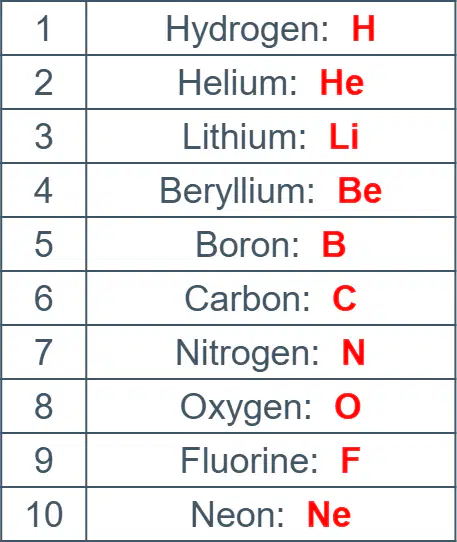
What is the symbol for Carbon?
C
Ca
O
N
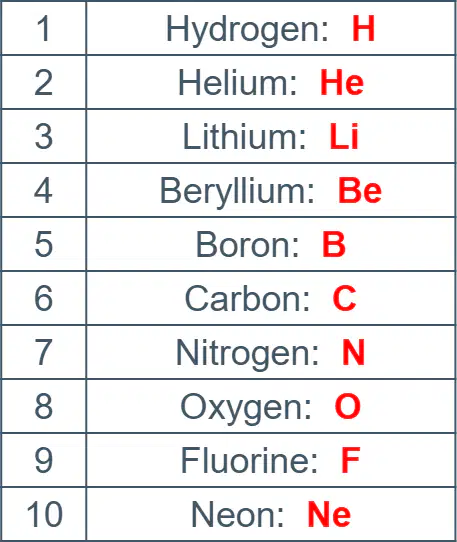
What is the symbol for Nitrogen?
N
O
C
H
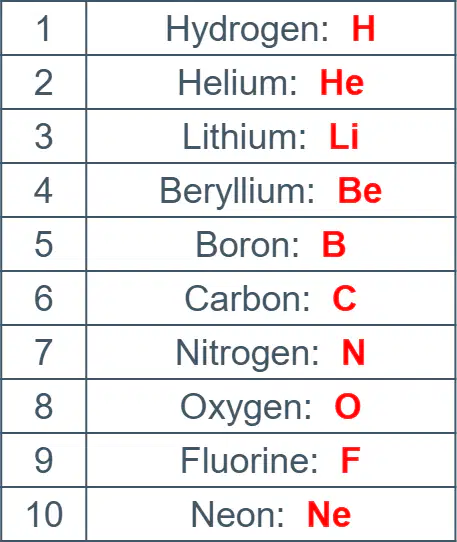
What is the symbol for Oxygen?
O
Ox
Oy
Og
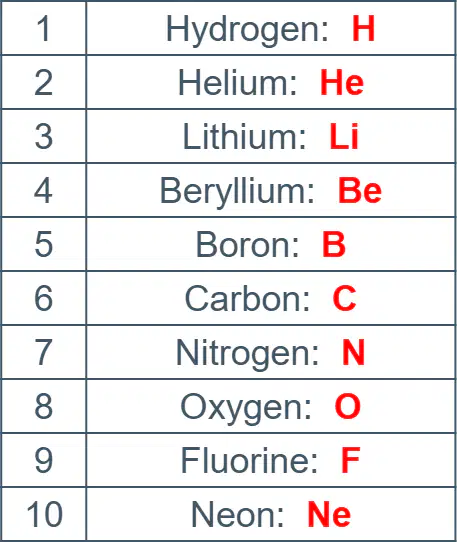
What is the symbol for Fluorine?
F
Fl
Fe
Fn
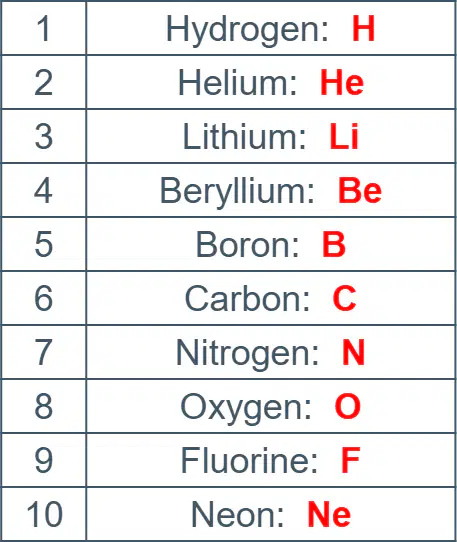
What is the symbol for Neon?
Ne
Na
N
No
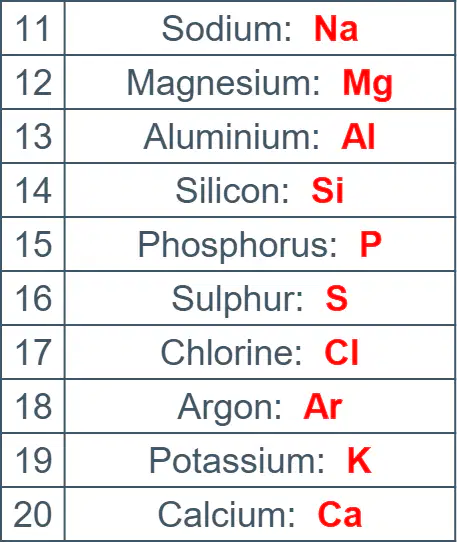
What is the symbol for Sodium?
Na
So
Sd
Sm
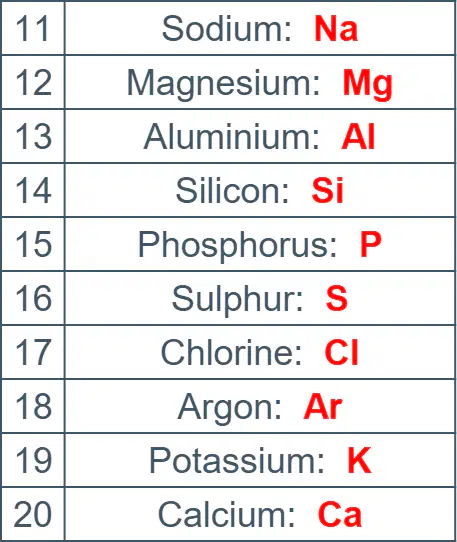
What is the symbol for Magnesium?
Mg
Mn
Ma
Mg2
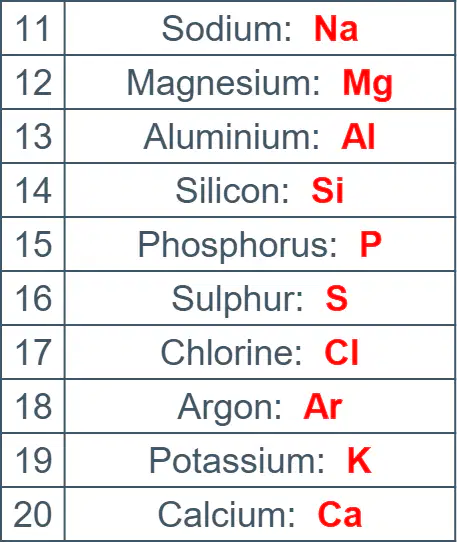
What is the symbol for Aluminium?
Al
Fe
Cu
Ag
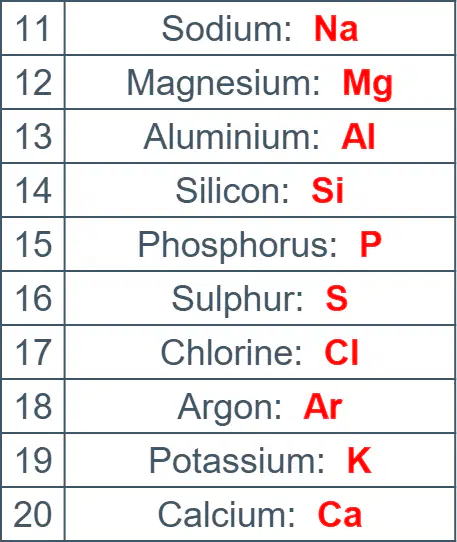
What is the symbol for Silicon?
Si
S
Sl
Sc
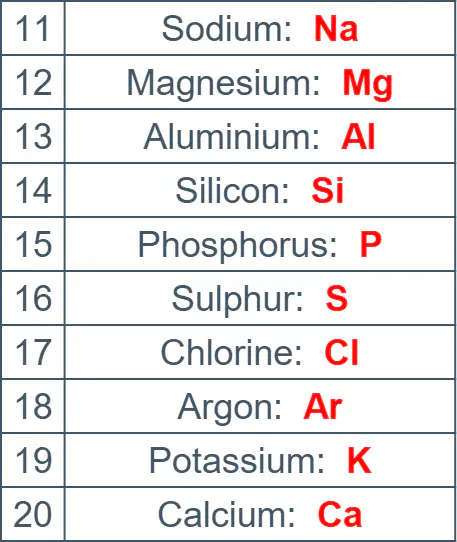
What is the symbol for Phosphorus?
P
Ph
Ps
Po
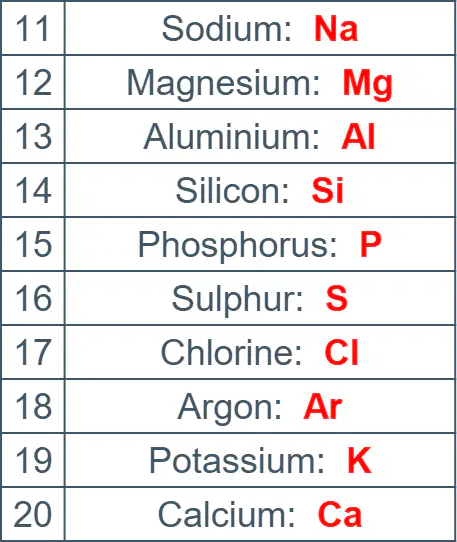
What is the symbol for Sulphur?
S
O
N
P
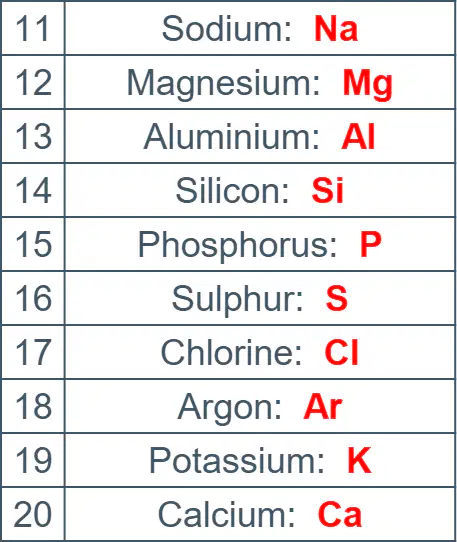
What is the symbol for Chlorine?
Cl
Ch
C
Cr
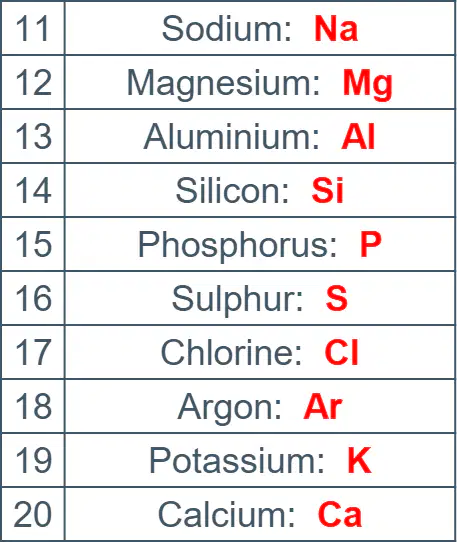
What is the symbol for Argon?
Ar
Ag
Au
Al
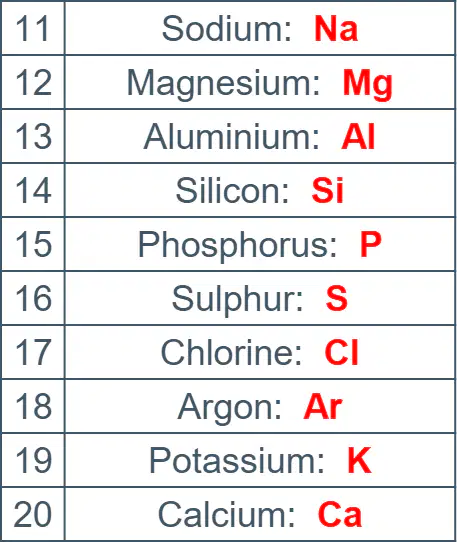
What is the symbol for Potassium?
K
P
Po
Pt
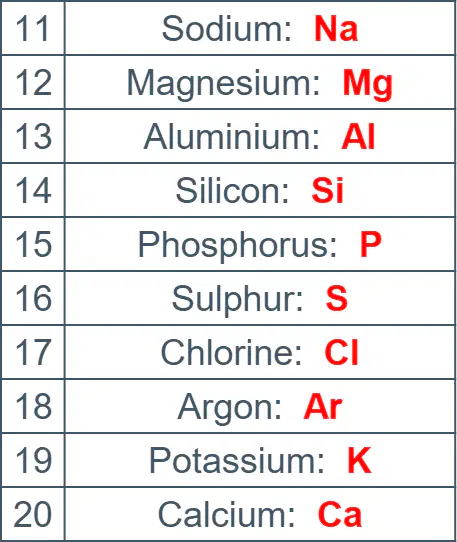
What is the symbol for Calcium?
Ca
C
Cl
K
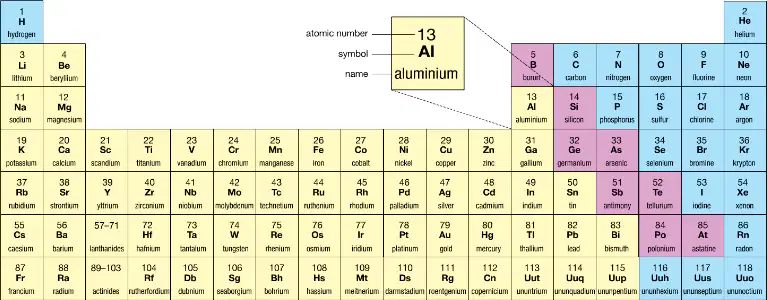
What is each vertical column in the periodic table called?
A) Period
B) Group
C) Row
D) Element
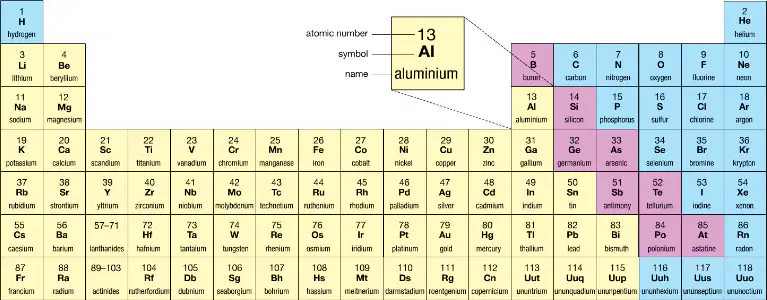
What is each horizontal row in the periodic table called?
A) Period
B) Group
C) Column
D) Element
Fill in the blank: Elements in the same group have similar _______.
properties
colors
shapes
sizes
Fill in the blank: Elements in the same period do not typically have the same _______.
properties
atomic number
electron configuration
valence electrons
Where are metals located on the periodic table?
On the right
On the left
In the middle
At the bottom
Where are non-metals located on the periodic table?
On the left
On the right
In the middle
At the top
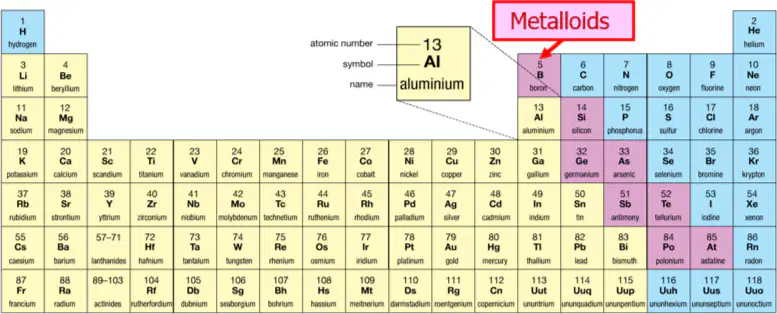
Metalloids are found between _______ and non-metals on the periodic table.
metals
gases
liquids
noble gases
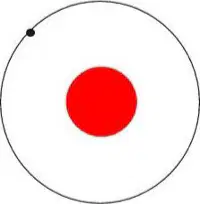
Fill in the blank: Hydrogen has ___ proton.
1
2
3
4
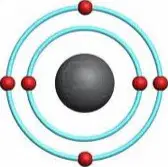
Fill in the blank: Carbon has ___ protons.
6
5
7
8
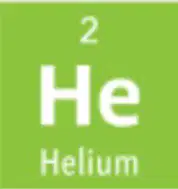
The atomic number indicates the number of protons they have. How many protons does a helium atom have?
1
2
3
4
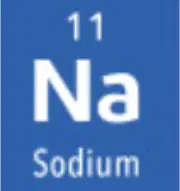
The atomic number indicates the number of protons they have. How many protons does a sodium atom have?
10
11
12
13

